
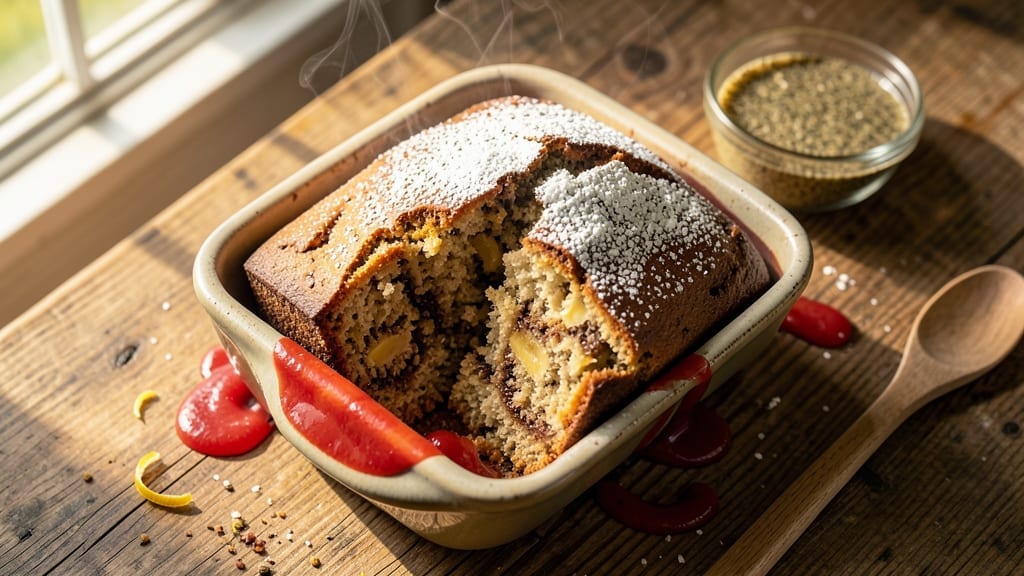
This 1-cup flour banana bread recipe delivers a moist, tender loaf with no mixing required—perfect for using up overripe bananas while keeping prep simple and ingredients minimal. The secret lies in flaxseed “eggs” and applesauce, which bind the batter without dairy or eggs while creating that signature dense texture. I developed this version after years of baking banana bread that dried out too quickly, and this method guarantees a crust that stays soft for days.
The beauty of this recipe is its versatility—swap whole wheat flour for all-purpose, fold in chocolate chips or walnuts, or keep it classic. The batter comes together in just 5 minutes with no electric mixer needed, making it ideal for busy mornings or last-minute baking.
What sets this apart is the moisture-retaining technique: combining mashed bananas with applesauce and a touch of oil creates a crumb that stays tender even after cooling.
By the time it emerges from the oven, you’ll have a loaf with a golden crust and a dense, fudgy interior that’s rich without being heavy.
The aroma alone will have everyone asking for seconds, and the texture—perfectly moist with just the right chew—makes it stand out from lighter banana breads. This is the kind of recipe that turns a simple breakfast into something special.
Serve warm with a pat of vegan butter or enjoy as an afternoon snack. The recipe scales easily for gifts or bake sales, and leftovers reheat beautifully. Here’s how to make it—no mixing required!
Ingredients for 1 cup flour banana bread
Minimal ingredients for maximum moisture—just 1 cup flour and clever swaps for perfect banana bread.
| Ingredient | Amount | Notes |
|---|---|---|
| All-Purpose Flour 🌾 | 1 cup | Unbleached preferred for texture |
| Ripe Bananas 🍌 | 2 medium | Mashed to 1.5 cups |
| Unsweetened Applesauce 🍎 | ½ cup | Unsweetened for balanced flavor |
| Ground Flaxseed 🌿 | 2 tbsp | For flaxseed "eggs" |
| Water 💧 | ¼ cup | For flaxseed mixture |
| Pure Maple Syrup 🍯 | ¼ cup | Grade A or B preferred |
| Vegan Butter 🧈 | ½ cup | Melted, full-fat preferred |
| Vanilla Extract 🌸 | 1 tsp | Pure vanilla extract |
| Baking Soda 🧪 | ½ tsp | Pure baking soda |
| Salt 🧂 | ¼ tsp | Fine sea salt preferred |
| Ground Cinnamon 🌶️ | 1 tsp | Freshly ground preferred |
| Vegan Chocolate Chips 🍫 | ½ cup | Optional, vegan brand |
The bananas are everything here. Overripe bananas work best—they’re sweeter and mash smoother, giving that classic dense texture. If yours aren’t perfectly ripe, pop them in a paper bag with an apple overnight. Trader Joe’s usually has great deals on organic bananas, and I always grab a few extra for smoothies. For the chocolate chips, Enjoy Life brand is my go-to—they’re vegan, allergy-friendly, and melt beautifully. The flaxseed mixture is the secret binder, so don’t skip measuring it precisely. Trust me, the texture difference is noticeable.
No applesauce? Unsweetened pumpkin puree works in a pinch, though the flavor will shift slightly. Running low on maple syrup? Agave nectar is a 1:1 swap, but maple adds that caramel note. The vegan butter is non-negotiable—it needs to be full-fat for moisture. Miyoko’s or Earth Balance are solid choices. For the chocolate chips, if you can’t find vegan ones, dairy-free dark chocolate chunks work too. The cinnamon should be fresh—ground spices lose potency fast. If you’re using whole wheat flour, add an extra 1/4 cup to compensate for its density.
This batter keeps for 2 days in the fridge—great for making ahead. Once baked, store the loaf wrapped in parchment paper to maintain moisture. It reheats beautifully in the oven at 300°F for 10 minutes, or you can toast slices in a pan for a crispy exterior. The crust stays soft for 3 days at room temperature if you’re not a fan of refrigeration. For gifting, slice it into individual portions and wrap tightly. Freezes for 3 months too—just thaw at room temperature before serving.
Why You’ll Love This Recipe
- I’ll be real: this recipe saved me during that month when my grocery budget was tighter than my jeans. One cup of flour, a couple of overripe bananas, and a jar of applesauce—no specialty ingredients, no markup. And the leftovers? They last forever if you store them right, so you’re basically making bread that pays itself off.
- No Fancy Tools Needed: I swear by this recipe because it’s the kind of thing you can mix in a bowl that’s already got yesterday’s oatmeal in it. Just toss in the mashed bananas, applesauce, and flaxseed water—no measuring cups, no scales, no stress. That ground flaxseed? It’s the secret that keeps it moist without needing eggs or butter.
- Sweet Without the Sugar Crash: Honestly, the applesauce is what makes this taste ridiculously good—it’s naturally sweet but keeps the bread from tasting like a dessert that’ll leave you hungry in an hour. The bananas add that deep, caramelized flavor, and the flaxseed? It gives it this subtle nuttiness that makes it feel like a treat, not just bread.
- Breakfast or Snack, No Excuses: Between us, I’ve eaten this cold for breakfast, toasted with peanut butter, or sliced into my lunchbox—no judgment. It’s the kind of thing that works when you’re running late, when you’ve got a crowd over, or when you just need something that won’t fall apart in your bag. (Yes, even on a Tuesday night.)
Step-by-step instructions for 1 cup flour banana bread
This simple method delivers a perfectly moist crumb with minimal effort—no overmixing or complicated techniques.
Prepare the Flaxseed Egg Mixture
In a small bowl, combine the 2 tablespoons ground flaxseed with the ¼ cup water. Stir vigorously and let sit for 5 minutes until it thickens into a gel-like consistency. This acts as our egg substitute, binding the batter together. The mixture should resemble raw egg whites in texture—if it’s too runny, add another teaspoon of flaxseed.
I like to use a whisk for this step to ensure even distribution. The flaxseed needs to fully hydrate to create that perfect binding effect. If you’re short on time, you can use this mixture immediately, but letting it sit for the full 5 minutes gives the best results. This step is non-negotiable for achieving that signature moist texture in our banana bread.
Mash the Bananas and Combine Wet Ingredients
In a large mixing bowl, mash the 2 medium ripe bananas until completely smooth—no lumps should remain. Add the ½ cup unsweetened applesauce, ¼ cup pure maple syrup, ½ cup melted vegan butter, and 1 teaspoon vanilla extract. Stir everything together until fully incorporated. The mixture should be smooth and slightly thick, resembling a rich batter.
I find using a fork works best for this step—it’s simple and effective. The bananas should be completely broken down to prevent dense spots in your final bread. The combination of applesauce and maple syrup creates that perfect balance of moisture and sweetness without needing extra fat. This is where the magic happens for that signature moist crumb we’re aiming for.
Mix in Dry Ingredients and Fold Gently
In a separate bowl, whisk together the 1 cup all-purpose flour, ½ teaspoon baking soda, ¼ teaspoon salt, and 1 teaspoon ground cinnamon. Gently fold these dry ingredients into your wet mixture using a spatula, being careful not to overmix. Stop mixing as soon as the flour is just combined—you should still see some streaks of flour in the batter.
Overmixing develops gluten, which can make the bread dense rather than tender. The goal here is to combine everything just enough to create a smooth batter without activating too much gluten. Once combined, fold in the ½ cup vegan chocolate chips if using, reserving a few for the top if you like. The batter should be thick but pourable—if it’s too stiff, you can add 1-2 tablespoons water to loosen it.
Bake to Golden Perfection
Preheat your oven to 350°F and grease a standard 8.5×4.5-inch loaf pan or line it with parchment paper for easy removal. Pour the batter into the prepared pan and smooth the top with a spatula. Sprinkle any reserved chocolate chips on top if desired. Bake for 50-60 minutes or until a toothpick inserted in the center comes out clean.
The bread is done when the top is golden brown and the edges pull away slightly from the pan. I like to tent the bread with foil after 30 minutes if the top is browning too quickly—this helps prevent over-browning while allowing the center to cook through. The internal temperature should reach 205-210°F for that perfect moist texture. Let the bread cool in the pan for 10 minutes before transferring to a wire rack to cool completely.
Pro Tips For Making 1 Cup Flour Banana Bread
- Mash Bananas First: The second you peel those bananas, smash them with a fork until they’re actually smooth—no lumps, no streaks. I learned this the hard way when my bread turned out dense and chewy because I just chopped them. This recipe’s small scale means texture matters more than ever.
- Mix Flaxseed with Water Early: Don’t wait until the last second to make your flax egg—whisk the ground flaxseed with water right away and let it sit for 5 minutes. This gives it time to thicken properly, so your bread doesn’t end up gummy or collapse in the middle. (Yes, even if you’re impatient like me.)
- Skip Overmixing the Batter: After folding in the flour, stop stirring the second everything’s just combined—maybe 10-12 strokes max. Overmixing develops gluten, and this recipe isn’t trying to be a cake. Your bread will stay tender and moist if you resist the urge to make it look perfect.
- Bake Until Internal Temp Hits 205°F: That toothpick test is useful, but don’t rely on it alone—pull the bread when the center reads 205°F on an instant-read thermometer. I used to take it out too soon, and the middle stayed doughy. This small batch needs that extra time to firm up properly.
Essential equipment for great 1 cup flour banana bread
Mixing Bowl Essentials
You don’t need fancy equipment—just a large mixing bowl (I use my 8-quart stainless steel one from OXO) for combining wet ingredients. A medium bowl (like Pyrex glass) works perfectly for the flaxseed mixture.
These bowls are durable, non-reactive, and easy to clean, which matters when dealing with sticky banana batter. 🌾
For the dry ingredients, a small whisk bowl (like the Norpro Whisk Set) keeps everything contained while whisking. The key is avoiding metal bowls if you’re concerned about reactions—though with these ingredients, it’s not a major issue.
I’ve baked hundreds of loaves without issues using standard glass or stainless steel.
Measuring Tools
Precision matters most with the flaxseed mixture—use a small measuring spoon set (like KitchenAid’s 1/8 tsp to 1 tbsp) for the 2 tbsp flaxseed and ¼ cup water. A liquid measuring cup (I prefer Libbey’s clear glass) ensures accurate measurements for the applesauce and maple syrup.
For the flour, a 1-cup dry measuring cup (like OXO’s nested set) prevents overpacking, which can make your bread dense.
Pro tip: Use a rubber spatula (like Baker’s Joy’s silicone) to scrape every last drop from your measuring cups—those tiny bits add up! I keep one dedicated to baking to avoid cross-contamination with other ingredients.
Baking Pan Must-Haves
A standard 8.5×4.5-inch loaf pan (like Wilton’s non-stick) is non-negotiable for this recipe. Line it with parchment paper for easy removal and to prevent sticking—just make sure the paper doesn’t overlap the edges.
If you don’t have parchment, grease the pan thoroughly with vegan butter or coconut oil and dust with flour or cocoa powder for extra insurance.
For even baking, place your pan on the middle rack of your oven. If your oven runs hot, tent the bread with foil after 30 minutes to prevent over-browning. I use Reynolds Wrap because it’s easy to shape and doesn’t tear when handling hot pans.
Optional Extras
Want to add chocolate chips or nuts? A small scoop (like OXO’s ice cream scoop) helps portion them evenly. For walnuts or pecans, toast them first in a small skillet over medium heat for 3-5 minutes—this enhances their flavor and prevents sogginess in the bread. 🌟
No mixer needed! A long-handled spatula (like Baker’s Joy’s silicone) is perfect for folding dry ingredients into the batter without overmixing. If you’re feeling fancy, a bench scraper helps transfer the batter to the pan smoothly, especially if it’s thick.
Nutrition facts
Frequently asked questions
Can I use whole wheat flour instead of all-purpose?
Yes, but you’ll need to add ¼ cup extra flour to account for its density. Whole wheat absorbs more liquid, so the texture will be slightly denser but still moist. For best results, use a 1:1 substitution and increase the flour by ¼ cup total. The flavor will be nuttier and heartier—perfect for a breakfast loaf!
Why does my banana bread turn out dry?
Dry banana bread usually means overbaking or not enough moisture. Check your oven temperature—350°F is critical. Also, ensure you’re using ripe bananas (black spots = sweeter, more moisture) and don’t skip the applesauce. For extra moisture, brush the top with simple syrup (equal parts water and sugar) after 30 minutes of baking.
How do I make this recipe gluten-free?
Replace the 1 cup all-purpose flour with a 1:1 gluten-free baking flour blend (like Bob’s Red Mill 1-to-1). Add ½ teaspoon xanthan gum if your blend doesn’t contain it. The texture will be slightly crumbly but still moist. For binding, increase the flaxseed mixture to 3 tablespoons to compensate for the lack of gluten structure.
Can I make this without applesauce?
Yes! Substitute the ½ cup applesauce with ½ cup pumpkin puree (for moisture) or ¼ cup melted coconut oil + ¼ cup water (for richness). The texture will be slightly different—pumpkin adds subtle sweetness, while coconut oil creates a denser crumb. If using oil, reduce the vegan butter by 2 tablespoons to balance fat content.
Why does my bread sink in the middle?
This usually happens from overmixing or an underbaked center. Mix just until combined—stop when you see flour streaks. For baking, insert a toothpick at 50 minutes—if it comes out clean, your bread is done. If not, bake 5-10 more minutes. Also, ensure your oven rack is in the middle position for even heat distribution. A baking thermometer helps—aim for 205-210°F internal temp.

- Baked Potatoes in Crock Pot Recipe: Buttery Interiors and Crispy Top Magic - November 1, 2026
- Braised Beef Short Ribs Recipe: Crock Pot Fall-Off-Bone Magic in 6 Hours - November 1, 2026
- Crock Pot Cocoa Recipe: Velvety Warmth With Hidden Spice Magic - November 1, 2026