
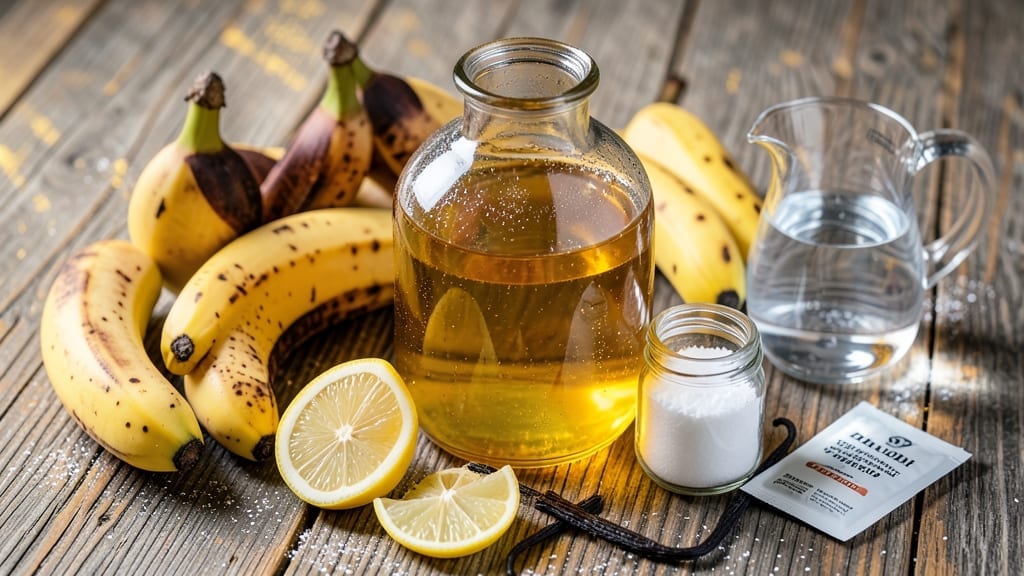
Creating this 1 gallon banana wine recipe turns overripe bananas into a rich, velvety beverage with natural sweetness and complex vanilla undertones. This 1-gallon recipe delivers a smooth, aromatic result perfect for sipping or gifting—just follow precise sanitation steps and patience for depth of flavor.
The process requires only basic equipment but rewards you with a homemade drink that rivals commercial options.
At its core, this recipe relies on a balanced sugar-to-yeast ratio to ensure proper fermentation without overpowering the banana’s natural sweetness. You’ll start with ripe bananas, yeast, and water, then let nature do the work over several weeks.
The key to success lies in maintaining a clean environment and monitoring temperature—too warm can lead to off-flavors, while cool conditions slow development.
By the time you strain and bottle the finished wine, you’ll have a golden liquid with bold vanilla notes and a smooth, slightly effervescent texture. The aging process enhances its complexity, turning simple ingredients into something truly special.
Whether you enjoy it chilled or at room temperature, each sip carries the warmth of homemade craftsmanship.
For those who love experimenting, optional additions like cinnamon, nutmeg, or citrus zest can introduce new dimensions. Just remember: fermentation is a science, but creativity is what makes it your own. Let’s get started on your first batch!
Ingredients for 1 gallon banana wine
Overripe bananas, yeast, and patience create this golden, velvety homemade wine.
| Ingredient | Amount | Notes |
|---|---|---|
| Overripe Bananas 🍌 | 2 lb | Brown spots preferred for sweetness |
| Granulated White Sugar 🍚 | 3 cups | Organic preferred for fermentation |
| Active Dry Yeast 🍄 | ¼ oz | Wine or champagne yeast ideal |
| Distilled Water 💧 | 1 gallon | Chlorine-free for fermentation |
| Vanilla Bean 🌿 | 1 whole | Split for maximum flavor infusion |
| Lemon Juice 🍋 | ¼ cup | Freshly squeezed for acidity |
| Plastic Food-Grade Carboy 🥫 | 1 gallon | With airlock for fermentation |
| Cheesecloth 🧵 | 1 piece | For straining banana puree |
| Cinnamon Stick 🌱 | 1 whole | Optional for spiced variation |
| Nutmeg 🌿 | ¼ tsp | Freshly grated for aroma |
| Campden Tablets 💊 | 1 tablet | Sterilizes fermentation vessel |
| Plastic Bottles 🥤 | 4 whole | Food-grade, 16 oz each |
The bananas are the star—look for ones so ripe they’re practically mushy. Trader Joe’s and Whole Foods often have perfect ones for this. Sugar is non-negotiable here; organic cane sugar ferments cleaner than beet sugar. The yeast makes all the difference—champagne yeast gives finer bubbles, but active dry works too. Just make sure it’s fresh, not expired. For the water, tap water with chlorine can kill your yeast, so either use distilled or let tap water sit out for 24 hours to off-gas the chlorine. The vanilla bean? Split it lengthwise and scrape out the seeds—double flavor infusion.
No vanilla bean? Pure vanilla extract at half the amount works in a pinch, but you’ll miss that complex depth. Short on sugar? Maple syrup at 1:1 ratio adds subtle caramel notes. The Campden tablet is crucial—it sterilizes your carboy and prevents off-flavors. If you can’t find it, potassium metabisulfite powder is the next best thing. For the bottles, Grolsch or Nalgene food-grade bottles work perfectly—they’re designed for carbonation. And if you’re worried about the carboy, any BPA-free plastic jug from a hardware store will do, just sanitize it well.
This wine improves with age—3-6 months for best flavor. Store bottles in a cool, dark place (like a pantry) away from temperature swings. Once opened, finish within 3 days—it’s too good to waste. The banana puree can be made ahead and refrigerated for 2 days before fermentation. And if you’re feeling fancy, add a splash of apple cider vinegar during bottling for extra preservation.
Why You’ll Love This Recipe
- Uses Up Groceries: I swear by this recipe for turning brown, squishy bananas into something magical—no waste, just flavor. The yeast works its magic while you’re busy, and suddenly you’ve got a sweet, boozy project instead of a sad fruit bowl.
- Vanilla-Spiked Magic: That split vanilla bean? It’s the secret weapon—warm, floral notes that make this taste like a cozy dessert instead of fermented fruit. Honestly, I’ll add extra just because it’s so good.
- Budget Boozy Joy: White sugar and overripe bananas are cheap, and you end up with a whole gallon of wine for less than store-bought. Between us? This is how I treat myself after a long week—no fancy ingredients, just pure satisfaction.
Step-by-step instructions for fermenting banana wine
Transform overripe bananas into rich, aromatic banana wine with this precise fermentation method.
Prepare and Sterilize Your Equipment
Begin by sterilizing your 1 gallon plastic food-grade carboy and 4 whole plastic bottles to prevent contamination. Dissolve the 1 tablet Campden Tablets in a small amount of the 1 gallon distilled water and pour this solution into the carboy and bottles. Swirl to coat all surfaces, then rinse thoroughly with clean distilled water. This step ensures your fermentation environment stays pristine—any bacteria or wild yeast could ruin your batch.
While the equipment sterilizes, split the 1 whole vanilla bean lengthwise and scrape out the seeds. You’ll use both the seeds and the pod later in the process. The vanilla will infuse your wine with its signature floral depth, making this more than just a simple fruit wine. Keep the scraped pod and seeds separate for now—they’ll play different roles in the fermentation process.
Create the Banana Puree and Initial Mixture
Peel and mash the 2 lb overripe bananas until completely smooth, using the 1 piece cheesecloth to strain out any fibrous pulp. You should end up with about 1 quart of banana puree—this will be the foundation of your wine. The overripe bananas are crucial here; their natural sugars and soft texture make them perfect for fermentation, while underripe bananas would yield a more astringent result.
In a clean, sanitized container, combine the banana puree with the 3 cups granulated white sugar and 0.25 cup lemon juice. Stir vigorously until the sugar dissolves completely. The lemon juice adds necessary acidity that helps preserve the wine and balances the sweetness. This mixture should be smooth and homogeneous—no sugar granules should remain undissolved. The cinnamon stick and 0.25 tsp freshly grated nutmeg can be added now if you’re making the spiced variation, but they’re optional and can be omitted for a more traditional flavor profile.
Activate the Yeast and Begin Primary Fermentation
In a separate bowl, create a yeast starter by combining the 0.25 oz active dry yeast with 1 cup of warm distilled water (around 105°F). Let this sit for 10-15 minutes until it becomes foamy—this indicates the yeast is active and ready to work. Pour this yeast starter into the banana mixture and stir well. The yeast will begin converting the sugars into alcohol almost immediately, so don’t delay this step.
Transfer the entire mixture to the sterilized 1 gallon plastic food-grade carboy, leaving about 1 inch of headspace at the top. The headspace is crucial—it prevents overflow as carbon dioxide builds during fermentation. Attach the airlock (if your carboy has one) or loosely cover with a clean cloth secured with a rubber band. Place the carboy in a dark, warm location (around 70-75°F) where it won’t be disturbed. Fermentation should begin within 24 hours, visible by bubbles in the airlock or slight foaming in the carboy.
Monitor and Transfer to Secondary Fermentation
After 5-7 days, the primary fermentation should slow significantly, with minimal bubbling in the airlock. Taste the mixture—you should detect a slight alcoholic tang and reduced sweetness. If it still tastes very sweet, you may need to add another 1 cup granulated white sugar and let it ferment another 3-5 days. The goal is to achieve a balance between residual sweetness and alcohol content that you enjoy.
Once fermentation has slowed, carefully siphon the liquid from the carboy into one of the sterilized plastic bottles, leaving behind any sediment. This is called racking, and it helps clarify the wine by separating it from spent yeast and other solids. Seal the bottle tightly and return it to the warm location for secondary fermentation, which can take 4-8 weeks. During this time, the wine will continue to develop flavor and carbonation. Check the bottle occasionally—if it’s under pressure, you may hear a slight hissing sound, which is normal as the wine releases carbon dioxide.
Age and Bottle for Serving
After secondary fermentation has completed (when the wine is clear and no longer bubbly in the airlock), it’s time to age. Transfer the wine to another clean bottle and store it in a cool, dark place for at least 3 months—longer aging will mellow the flavors and reduce any remaining sharpness. The vanilla seeds and pod can be added now if you haven’t already; simply drop them into the bottle before sealing. The vanilla will infuse over time, adding complexity to the wine’s profile.
When ready to serve, pour the wine through a fine strainer to remove any remaining sediment. Chill slightly before serving to enhance the vanilla and banana flavors. This banana wine will keep indefinitely in the refrigerator, though it’s best enjoyed within 6-12 months for peak flavor. The result should be a smooth, aromatic wine with notes of ripe banana, warm vanilla, and a hint of spice if you included the cinnamon and nutmeg.
Pro Tips For Making 1 Gallon Banana Wine
- MASH THE BANANAS COLD: Grab a bowl and freeze it for 10 minutes first—this keeps the pulp from turning into a sticky mess when you’re scooping it into your fermenter. I learned this the hard way after wrestling with banana glue in my hands for what felt like hours. Works like a charm.
- SANITIZE THE YEAST WELL: Active dry yeast is finicky—sprinkle it over warm (not hot) water first, then wait exactly 5 minutes before adding it to your banana mix. I’ve killed yeast by rushing this step, and trust me, you’ll smell the difference when it doesn’t activate.
- SUGAR IN STAGES: Don’t dump all 3-4 cups of sugar at once—split it. Add half with the bananas, then the rest after the first 24 hours. This keeps the yeast from getting overwhelmed and crashing your fermentation faster than you can say “sour batch.”
- SCRUB THE VANILLA BEAN: Split the vanilla bean lengthwise, then scrape out the seeds and rub the pod against the inside of your fermenter. The leftover resin sticks to the glass and infuses the wine as it ferments—way more flavor than just dropping in the seeds. (Yes, it’s weird, but it works.)
Creative variations of this dish
Spiced Vanilla Twist
Add a cinnamon stick and ¼ tsp freshly grated nutmeg during primary fermentation for a warm, aromatic twist. The spices infuse beautifully over 4-8 weeks, creating layers of complexity that complement the banana’s natural sweetness.
I find Whole Foods’ ground nutmeg works best—it’s fresher than pre-ground options. For extra depth, lightly toast the spices in a dry pan for 30 seconds before adding to release their oils. 🌿
Citrus Zest Infusion
Brighten your banana wine with 1 tsp orange zest or ½ tsp lime zest during secondary fermentation. The citrus cuts through the richness while adding a refreshing tang. I prefer organic Meyer lemon zest—it has a sweeter, more complex flavor than regular lemons.
Add the zest with the vanilla pod during aging for a balanced, vibrant finish. The zest will sink, so no need to strain it out before serving.
Honey-Sweetened Option
Swap 1 cup of granulated sugar for 1 cup raw honey to create a floral, slightly viscous variation. Honey ferments slower, resulting in a smoother, less alcoholic wine with subtle herbal notes. I recommend local wildflower honey for the most unique flavor profile.
Add the honey to the banana puree mixture before yeast activation—it dissolves more easily when warm. This version pairs beautifully with dark chocolate desserts.
Tropical Fruit Fusion
Blend in ½ cup mango puree or ½ cup pineapple juice during primary fermentation for a tropical twist. The acidity from pineapple or the sweetness from mango adds exciting new dimensions. I use Dole brand crushed pineapple (unsweetened) for consistency.
For a stronger tropical profile, add ½ tsp ginger juice—it enhances fermentation while adding a spicy kick. This variation works especially well when served over ice.
Herbal Tea Infusion
Steep 2 chamomile tea bags or 1 Earl Grey tea bag in ½ cup hot water, then cool and add to the banana mixture before fermentation. The floral notes from chamomile or bergamot from Earl Grey create an elegant, sophisticated wine.
I prefer Harney & Sons chamomile tea—it’s organic and has a clean, sweet flavor. Steep for 5 minutes, then remove the tea bags before adding to your mixture to avoid bitterness.
Smoked Vanilla Version
For a unique twist, lightly smoke the vanilla pod before adding it to the wine. Hold the pod over a cold wood chip smoker (like apple or cherry) for 10-15 seconds to impart subtle smokiness. This works beautifully with the banana’s natural sweetness, creating a complex, almost dessert-like profile.
Store the smoked pod in the freezer for 5 minutes to cool before adding to your wine. This variation pairs perfectly with dark chocolate truffles.
Nutrition facts
Frequently asked questions
How do I know when my banana wine is fully fermented?
Your wine is ready when fermentation slows to just a few bubbles per day in the airlock (about 4-8 weeks) and the liquid is clear. Taste it—if it’s still sweet, add ½ cup sugar and let it ferment another 3-5 days. The key is patience: proper fermentation takes time to develop that smooth, velvety texture.
Can I use regular tap water instead of distilled?
No—tap water often contains chlorine or chloramine that kills yeast. If you must use tap water, let it sit uncovered for 24 hours to off-gas chlorine, or use a water filter designed to remove chlorine. Distilled water is safest for consistent results. Yeast needs clean water to thrive!
What if my banana wine smells like vinegar?
This usually means fermentation failed due to contamination (bacteria) or yeast death from temperature extremes. If it smells tangy but not sour, try adding ½ cup sugar and fresh yeast to restart fermentation. For vinegar-like smells, discard the batch—it’s unsafe to consume. Always maintain 70-75°F temperatures to prevent this.
How long should I age the wine before drinking?
Minimum 3 months for best flavor, but 6 months yields richer vanilla notes. Aging mellows harshness and lets flavors meld. Store bottles in a cool (55-65°F), dark place like a pantry. The longer it ages, the smoother it becomes—think of it like letting a fine wine mature!
Can I make this recipe without a carboy?
Yes! Use a 1 gallon BPA-free plastic jug (like a sanitized milk jug) with an airlock substitute—poke a hole in the lid and insert a rubber stopper with a bent straw as an airlock. Just ensure all equipment is thoroughly sanitized to prevent contamination. The process works the same way!

- Baked Potatoes in Crock Pot Recipe: Buttery Interiors and Crispy Top Magic - November 1, 2026
- Braised Beef Short Ribs Recipe: Crock Pot Fall-Off-Bone Magic in 6 Hours - November 1, 2026
- Crock Pot Cocoa Recipe: Velvety Warmth With Hidden Spice Magic - November 1, 2026