
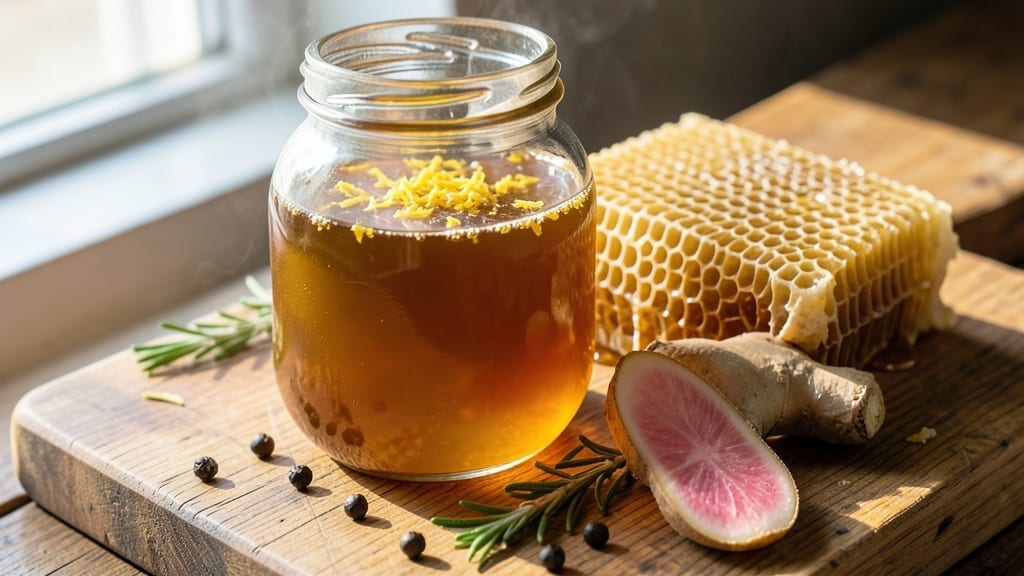
Crafting your own 1 gallon lemon ginger mead transforms simple honey into a vibrant, fermented elixir with bright citrus and spicy ginger notes. This recipe delivers a balanced, refreshing beverage that’s perfect for sipping or gifting—just follow precise fermentation steps for consistent results every time.
The honey base provides natural sweetness while lemon and ginger add complexity, creating a drink that’s both sophisticated and approachable.
What sets this mead apart is the careful balance of ingredients and fermentation time, which develops depth without overpowering tartness. You’ll start with raw honey, fresh lemon juice, and ginger root for authentic flavor, then use a clean fermentation process to ensure safety and smoothness.
The recipe includes clear sanitation guidelines to prevent contamination, so even beginners can achieve professional-quality results.
By the time fermentation completes, you’ll have a golden, aromatic mead with a crisp finish—ideal for toasting or pairing with spicy dishes. The aging process enhances its complexity, but you can enjoy it immediately if you prefer a fresher profile.
This method scales easily, so you can double the batch for gatherings or store extras for later.
Whether you’re new to mead-making or refining your technique, this recipe offers a foolproof approach with professional-level outcomes. Let’s get started on your first batch—your taste buds will thank you.
Ingredients for 1 gallon lemon ginger mead
Honey, citrus, and ginger form the vibrant foundation for this fermented elixir.
| Ingredient | Amount | Notes |
|---|---|---|
| Raw Honey 🍯 | 3 ½ lbs | Unpasteurized for fermentation |
| Lemon Juice 🍋 | 1 ½ cups | Freshly squeezed, no pulp |
| Fresh Ginger Root 🌿 | ½ cup | Grated, organic preferred |
| Distilled Water 💧 | 1 gallon | Chlorine-free for fermentation |
| Campden Tablets 💊 | 2 pieces | Metallicide for fermentation |
| Wine Yeast 🍷 | 1 package | Lalvin EC-1118 preferred |
| White Granulated Sugar 🍚 | 1 ½ cups | For priming fermentation |
| Lemon Peel 🍋 | 1 tbsp | Zest only, organic preferred |
| Ground Cinnamon 🌶️ | ¼ tsp | Optional for warmth |
| Star Anise 🌟 | 1 whole | Optional spice infusion |
| Sanitizer Solution 🧼 | 1 cup | Star San or equivalent |
| Plastic Food-Grade Tub 📦 | 1 piece | 5-gallon capacity |
| Air Lock Fermentation Lock 🔒 | 1 piece | For sealed fermentation |
| Cheesecloth 🧵 | 1 sheet | For straining |
The honey is the heart of this mead—raw, unpasteurized is non-negotiable for fermentation. Grab a 5-pound jar from a local apiary or trusted grocery store like Whole Foods for the best quality. If you can’t find raw, regular honey works, but expect slightly less complexity. Fresh lemon juice is critical—organic lemons from the farmers market have more flavor than store-bought. For ginger, organic root is ideal; peel and grate it just before adding to preserve its potency. The Campden tablets might look intimidating, but they’re essential for killing wild yeast and bacteria—Amazon or homebrew stores carry them reliably.
No Campden tablets? Potassium metabisulfite at 1/8 tsp per gallon works as a substitute. Running out of lemon juice? Lime juice at the same amount gives a similar tang, though the flavor profile shifts slightly. Fresh ginger too spicy? Powdered ginger at half the amount mellows the heat. The wine yeast is the workhorse here—Lalvin EC-1118 is my go-to, but Red Star Premier Cuvee works too. If you’re making a larger batch, consider investing in a hydrometer to track fermentation progress—MoreBeer or Homebrew Supply sell reliable ones. For the optional spices, cinnamon and star anise add warmth, but skip them if you prefer a cleaner citrus profile.
Sanitation is everything with mead-making. Star San sanitizer is my go-to—it’s non-toxic and works in seconds. Clean all equipment with it, including the tub and airlock. Once fermented, your mead will be golden and aromatic. Store it in a cool, dark place for 4-6 weeks to mature, or enjoy it fresh after 2-3 weeks of fermentation. If you’re gifting, bottle it in swing-top bottles—they’re easy to open and look professional. Leftovers? Mead keeps for years in the fridge once bottled, so make extra—you won’t regret it.
Why You’ll Love This Recipe
- No-Fuss Fermentation: I swear by this recipe because it’s basically set-it-and-forget-it. Just toss in the honey, lemon juice, and grated ginger—no fancy equipment, no constant stirring. The Campden tablets take care of sanitation in minutes, so I’m not babysitting a pot for hours.
- Zesty Brightness: That first sip? Chef’s kiss. The raw honey gives it a rich sweetness, but the fresh ginger and lemon juice cut right through it—like a sunny day in a glass. Honestly, I’ve never made mead that doesn’t taste like a hug for my taste buds.
- Batch-and-Bottle Joy: Make a gallon once, and you’ve got drinks for parties, gifts for friends, or your own stash for whenever. I’ve used it in cocktails, as a non-alcoholic mixer, or just sipped straight—no guilt, no waste. Plus, the leftovers keep forever if you store them right.
- Honey’s Secret Savings: Raw honey is my budget hack—it’s cheaper than buying pre-made mead, and you control the quality. A gallon costs me less than half what store-bought would, and I get to flex my homemade skills. Between us, my wallet and my taste buds win every time.
Step-by-step instructions for crafting lemon ginger mead
Here’s how to transform raw honey into vibrant, zesty mead with perfect fermentation balance.
Sanitize and Prepare Your Equipment
Begin by thoroughly cleaning the plastic food-grade tub and air lock fermentation lock with the sanitizer solution. I like to use a dedicated sanitizer like Star San—this ensures no unwanted bacteria or wild yeast can interfere with your fermentation. Fill the tub with the 1 gallon distilled water and let the sanitizer work for 10 minutes while you prepare the other ingredients.
Next, dissolve the 2 pieces Campden Tablets in a small amount of the distilled water (about ½ cup). This metallicide will eliminate any trace metals and prevent oxidation during fermentation. Stir well until completely dissolved, then pour this solution into the tub. The water should now have a faint yellow tint—this confirms the Campden Tablets are fully integrated.
Combine Honey and Aromatics
In a separate heat-safe bowl, gently warm the 3.5 lbs raw honey over a double boiler until it reaches 160°F. This temperature ensures all the honey’s natural enzymes are activated without cooking it. While warming, grate the 0.5 cup fresh ginger root and finely chop the 1 tbsp lemon peel (zest only). Add these to the warm honey along with the 1 whole star anise and 0.25 tsp ground cinnamon.
Stir the mixture continuously for 5 minutes until the honey becomes smooth and the aromatics are fully incorporated. The ginger will release its sharp, citrusy notes while the cinnamon adds subtle warmth. Here’s the thing—don’t rush this step. The longer you stir, the more the flavors meld together, creating a cohesive base for your mead.
Mix and Ferment the Base
Slowly pour the honey-aromatic mixture into the sanitized tub containing the Campden-treated water. Stir vigorously for 3-4 minutes until the honey is completely dissolved—you’ll notice the liquid become syrupy and slightly cloudy. This indicates proper integration of all components. The temperature should now be between 70-75°F, which is ideal for yeast activation.
Cover the tub loosely with a clean cloth (not airtight) and let it sit at room temperature for 24 hours. This resting period allows the Campden Tablets to fully work their magic and prepares the must for fermentation. You’ll see a slight separation of liquids, but don’t worry—this is normal and will resolve during fermentation.
Pitch the Yeast and Begin Fermentation
After the 24-hour rest, remove the cloth and add the package of wine yeast to the tub. Stir gently to distribute the yeast evenly throughout the liquid. Attach the air lock fermentation lock to the tub and secure it tightly. The air lock allows carbon dioxide to escape while preventing oxygen from entering—this is crucial for a clean fermentation.
Place the tub in a dark, temperature-controlled space (around 70-75°F) where it won’t be disturbed. Fermentation should begin within 12-24 hours, which you’ll notice by bubbles forming in the air lock and a slight foaming on the surface. This active phase typically lasts 5-7 days, during which you should stir the mixture gently once daily to prevent a skin from forming.
Prime and Bottle the Mead
Once fermentation slows (bubbles in the air lock occur less than twice daily), it’s time to prime your mead. Dissolve the 1.5 cups white granulated sugar in ½ cup warm distilled water, then stir this mixture into the tub. The sugar will feed any remaining yeast and create carbonation. Stir well and let the mead sit for 48 hours to allow the sugar to fully integrate.
After the priming period, strain the mead through the cheesecloth into sanitized bottles, leaving behind any sediment. The final product should be clear with vibrant lemon-ginger notes and a honey-sweet finish. Let the bottles sit at room temperature for 2-3 days before refrigerating—this secondary fermentation period ensures proper carbonation and flavor development.
Pro Tips For Making 1 Gallon Lemon Ginger Mead
- Grate Ginger Fine: Use a microplane or fine grater—no chunks, just pulp. I learned this the hard way after straining out ginger bits that made my mead taste like it had rocks in it. Aim for about 2 tablespoons of fresh ginger per gallon, and don’t skimp on the prep.
- Sterilize Everything Twice: Sanitize your primary fermenter and your tools with a 1:10 bleach-water solution, then rinse thoroughly—bleach residue kills yeast. I once rushed this and ended up with a funky batch that took months to recover. Campden tablets won’t save you from dirty equipment.
- Dissolve Honey Slowly: Heat the honey to 160°F (71°C) in a separate pot first—it mixes smoother and avoids clumping. Pour it into the warm water gradually while stirring, or you’ll end up with a gloppy mess that’s impossible to blend. Patience here makes fermentation easier.
- Acid Test First: Check your lemon juice pH before adding Campden tablets—aim for 3.3 or lower. I once over-stabilized a batch because I assumed store-bought juice was acidic enough, and the mead turned weirdly flat. A cheap pH strip is worth the 50 cents.
Perfect pairings for these flavors
Citrus-Forward Cocktails
This lemon ginger mead pairs beautifully with classic cocktails that amplify its bright acidity. Try mixing ½ oz mead with 1.5 oz vodka, ½ oz St. Germain elderflower liqueur, and 2 oz sparkling water over ice.
The effervescence cuts through the mead’s honeyed richness while the elderflower adds floral contrast. For a non-alcoholic twist, stir 1 oz mead with ½ oz fresh lime juice, ½ oz simple syrup, and 3 oz tonic water—the ginger’s spice shines alongside the tonic’s bitterness. 🍋
Spiced Tea Pairings
Warm up your mead with herbal teas that echo its aromatic profile. A chamomile-ginger tea (steep 1 tbsp dried chamomile and ½ tsp grated ginger in 8 oz hot water for 5 minutes) complements the mead’s spicy-sweet balance.
For a bolder match, brew hibiscus tea (steep 2 tbsp dried hibiscus in 8 oz boiling water for 10 minutes)—its tartness mirrors the lemon’s brightness. Serve both at 160°F to enhance the mead’s citrus notes. 🍵
Cheese and Charcuterie
Pair your mead with a charcuterie board featuring aged cheddar (like Point Reyes Original) and smoked gouda—their nutty depth contrasts the mead’s honeyed tang. Add prosciutto di Parma for salty crunch and fig jam to bridge the sweet-spicy gap.
The ginger’s heat also cuts through creamy brie or camembert, while marinated olives (like Kalamata) add briny balance. Serve the mead slightly chilled (50-55°F) to highlight its crisp finish. 🧀
Herbal Infusions
Infuse your mead with complementary botanicals for deeper flavor layers. Add 2 sprigs fresh rosemary and 1 cinnamon stick during the 24-hour rest before fermentation—this imparts earthy warmth. For a floral twist, steep 1 tbsp dried lavender in ½ cup warm mead for 1 hour, then strain.
The lavender softens the ginger’s edge while adding a subtle perfume. Store infused mead in amber glass bottles to protect from light. 🌿
Dessert Pairings
Balance the mead’s brightness with dark chocolate desserts—try 70% dark chocolate ganache (melt 8 oz dark chocolate with ½ cup heavy cream) drizzled over vanilla bean ice cream. The chocolate’s bitterness mirrors the lemon’s acidity, while the vanilla rounds out the ginger’s spice.
For a lighter option, serve with lemon shortbread cookies—their buttery crumb soaks up the mead’s honeyed notes. Chill the mead to 45°F before serving with desserts. 🍫
Nutrition facts
Frequently asked questions about lemon ginger mead
How long does it take to ferment this lemon ginger mead?
The active fermentation typically takes 5-7 days, but the full process including priming and conditioning lasts 3-4 weeks. You can enjoy it after 2-3 weeks for a fresher profile, or age it 4-6 weeks for deeper flavor complexity. Patience pays off with smoother results!
Can I use powdered ginger instead of fresh?
Yes, but adjust the amount to ½ teaspoon powdered ginger for every ¼ cup fresh ginger. Fresh ginger provides more vibrant flavor and aroma, but powder works in a pinch. For best results, toast the powdered ginger lightly in a dry pan for 1 minute to enhance its spicy notes before adding.
What if my mead smells like vinegar?
This usually means fermentation went too long or the yeast was stressed. If it happens, you can try blending it with fresh fruit juice or honey to mask the taste, but it’s best to start over with proper sanitation. Always maintain 70-75°F temperatures and use 1 gallon containers to avoid overcrowding yeast.
How should I store unfermented mead must?
Store the unfermented mixture in a clean, airtight container in the refrigerator for up to 3 days before pitching yeast. The Campden tablets help preserve it, but refrigeration slows any potential bacterial growth. Label clearly with the date to track freshness.
Can I make this mead without Campden tablets?
Yes, but you’ll need to use potassium metabisulfite (1/8 tsp per gallon) as a substitute. Without either, you risk contamination from wild yeast and bacteria. If you skip them, be extra vigilant about sanitation and monitor fermentation closely for any signs of spoilage.

- 12 Bean Chili Recipe: Hearty Slow-Cooked Depth With 12 Legumes - October 17, 2026
- 5 Seed Bread Recipe: Nutty Crunch and Artisan Flavor in One Loaf - October 17, 2026
- 1 Lb Macaroni Salad Recipe: Bold, Crunchy, and Crowd-Pleasing - October 17, 2026