
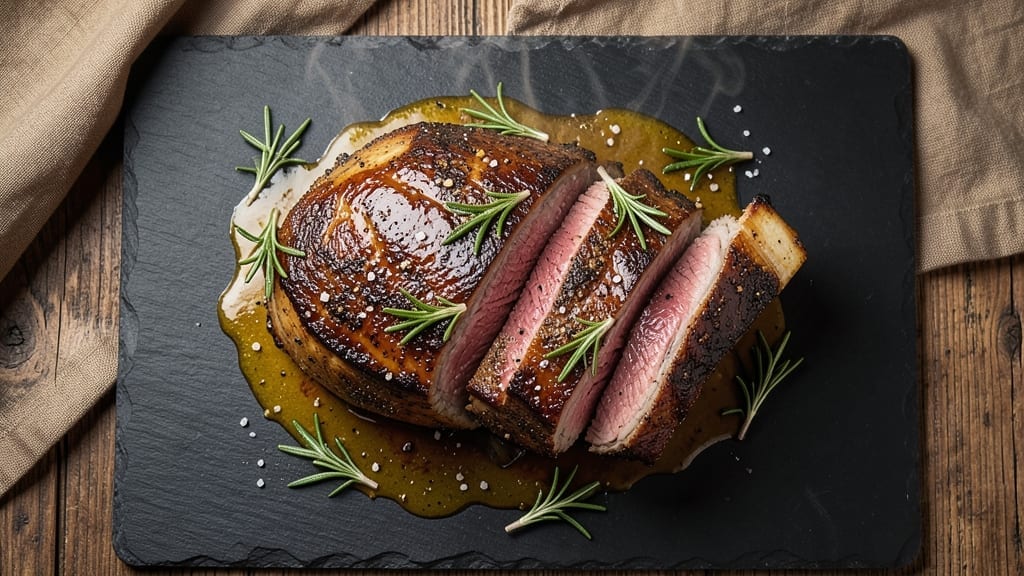
A 1 rib prime rib roast cooked to perfection delivers a crispy crust and juicy pink center that transforms any holiday meal into a showstopper. The secret lies in precise seasoning, controlled oven temperatures, and proper resting—techniques that elevate this classic cut from ordinary to extraordinary.
I’ve perfected this method over years of holiday feasts, ensuring every slice delivers melt-in-your-mouth tenderness with a caramelized exterior that crackles at the touch.
This recipe begins with a dry rub of coarse salt, black pepper, and garlic powder, which clings to the meat’s surface for maximum flavor penetration.
The roast cooks low and slow, then finishes with a high-heat sear to lock in juices and create that coveted crust. Reverse searing is key—it guarantees a perfect internal temperature of 125°F for medium-rare, ensuring a rosy center while the exterior achieves that golden-brown crispiness.
No guesswork, just foolproof results every time.
Once roasted, the prime rib rests for 20 minutes—critical for redistributing juices and making slicing effortless. Serve it with classic accompaniments like horseradish cream, roasted garlic mashed potatoes, or a bold red wine reduction to complement the beef’s richness.
The aroma alone will have guests gathering at the table, but the first bite? That’s when they’ll truly understand why this cut deserves center stage.
Leftovers transform into prime rib sandwiches or beef stroganoff, ensuring no slice goes to waste. For extra confidence, use a meat thermometer—it’s the only way to nail that 125°F internal temp without overcooking.
This isn’t just dinner; it’s a centerpiece that turns a simple meal into a memorable experience. Let’s get cooking.
Ingredients for 1 rib prime rib roast
The essential ingredients for a showstopping 1 rib prime rib roast with perfect crust and juicy center.
| Ingredient | Amount | Notes |
|---|---|---|
| 1 Rib Prime Rib Roast 🥩 | 4 lb | Bone-in, center-cut, 1 rib |
| Kosher Salt 🧂 | 1 ½ tbsp | Coarse grain preferred |
| Freshly Ground Black Pepper 🌶️ | 1 tbsp | Cracked peppercorns preferred |
| Garlic Powder 🧄 | 1 tbsp | Freshly toasted preferred |
| Extra-Virgin Olive Oil 🫒 | 2 tbsp | For searing and finishing |
| Fresh Rosemary 🌿 | 2 sprigs | Tied with kitchen twine |
| Fresh Thyme 🌿 | 4 sprigs | Tied with kitchen twine |
| Yellow Onion 🧅 | 1 whole | Quartered, for aromatics |
| Garlic Cloves 🧄 | 4 cloves | Smashed for rub |
| Beef Tallow or Duck Fat 🧈 | ½ cup | For basting, optional |
| Red Wine 🍷 | 1 cup | Bold, dry variety |
| Beef Stock 💧 | 1 cup | Homemade preferred |
| Horseradish Cream 🧀 | 1 cup | Store-bought or homemade |
| Fresh Horseradish 🌶️ | 2 tbsp | For garnish |
The prime rib is the star—look for a center-cut, bone-in roast with good marbling. Costco and Whole Foods carry high-quality cuts, but if shopping at a regular grocery store, ask the butcher for the ribeye side of the roast. A 4-pound roast serves 6 generously. Fresh herbs like rosemary and thyme are non-negotiable for aroma, but if you’re short on time, dried thyme at one-third the amount works. The garlic powder should be freshly toasted in a dry pan for 30 seconds to deepen its flavor—this makes all the difference. For the rub, Diamond Crystal kosher salt is ideal due to its coarse texture, which clings better than table salt.
No red wine? Beef stock with a splash of balsamic vinegar delivers similar depth. Prefer a richer finish? Swap the beef stock for red wine reduction—simmer 1 cup of red wine until reduced by half. The horseradish cream can be store-bought, but homemade is elevated: mix 1 cup sour cream with 2 tbsp prepared horseradish and a pinch of salt. For the sear, duck fat creates an even richer crust than olive oil, but avocado oil works too if you’re avoiding dairy. If you’re missing fresh rosemary or thyme, dried works in a pinch—just double the amount and toast the dried herbs first for better flavor. The onion and garlic aromatics are optional but add incredible depth to the pan juices.
Prime rib benefits from 24 hours of refrigeration before cooking—this helps the meat relax and ensures even cooking. Once roasted, rest for 20 minutes before slicing—this critical step redistributes juices for maximum tenderness. Leftovers reheat beautifully; wrap slices in foil and warm in a 350°F oven for 10 minutes. The roast keeps 3-4 days in the fridge or 3 months frozen. For extra confidence, use a meat thermometer—insert it into the thickest part of the roast, avoiding the bone. Aim for 125°F for medium-rare, then let it rest to reach 130°F. The crust will stay crispy if you sear it immediately before resting.
Why You’ll Love This Recipe
- Foolproof Seasoning: I swear by this combo—just salt, pepper, and garlic powder rubbed in like you’re massaging a tired back. No fancy herbs, no stress, just that perfect crust and melt-in-your-mouth tenderness.
- Sunday Dinner Ready: Between us, this is the only roast I make when my in-laws visit. The rich, beefy flavor feels special, but honestly? It’s just a few hours in the oven with minimal fuss.
- Leftovers That Win: Slice it thin, and those cold cuts taste even better the next day. My kids fight over the sandwiches, and I secretly love that I fed them something fancy without extra work.
- One-Pan Magic: No basting, no flipping, no mess. Just a rib roast on a sheet pan, a drizzle of olive oil, and the oven does all the heavy lifting. That’s my kind of stress-free cooking.
Step-by-step instructions for perfectly crispy prime rib roast
Master this technique and you’ll achieve a prime rib with a deep mahogany crust and tender pink center every time.
Prepare the Prime Rib for Maximum Flavor Development
Remove the prime rib from the refrigerator and let it sit at room temperature for 30 minutes. This ensures even cooking throughout. While it rests, prepare the dry rub by combining the 1.5 tbsp kosher salt, 1 tbsp freshly ground black pepper, and 1 tbsp garlic powder in a small bowl.
Pat the prime rib completely dry with paper towels—this is critical for achieving that crispy crust. I press down firmly on all sides, especially the fat cap, to remove any moisture that would prevent proper browning. Apply the dry rub generously over the entire surface, pressing it into the meat so it adheres well. Tie the 2 sprigs fresh rosemary and 4 sprigs fresh thyme together with kitchen twine and secure them on top of the roast for aromatic infusion.
Sear the Prime Rib for Deep Flavor and Crust
Preheat your oven to 450°F. Heat a large roasting pan or Dutch oven over high heat and add the 2 tbsp extra-virgin olive oil. When the oil is shimmering, carefully place the prime rib fat-side down in the pan. Let it sear undisturbed for 8-10 minutes until the fat renders and the surface develops a deep golden-brown crust.
Here’s the thing—don’t move it during this initial sear. The goal is to create that perfect crust through even contact with the hot surface. Flip the roast and sear the other side for another 8-10 minutes. The fat should be bubbling and crisping, creating an irresistible aroma that fills your kitchen. This high-heat sear builds flavor that no other cooking method can match.
Roast with Basting for Juicy Perfection
Transfer the seared prime rib to the preheated oven. Pour the rendered fat from the pan into a small saucepan and place it on the stove over medium heat. Add the quartered yellow onion and 4 smashed garlic cloves, cooking for 5 minutes until softened. Deglaze the pan with 1 cup red wine, scraping up all the browned bits from the bottom—a process called fond creation that adds incredible depth of flavor.
Simmer the wine reduction until it reduces by half, then add 1 cup beef stock. While this sauce reduces, baste the prime rib every 20 minutes with the rendered fat and reduction mixture. Roast for a total of 2 hours at 325°F, basting 3-4 times total. The internal temperature should reach 130°F for medium-rare—use a meat thermometer to check the thickest part of the roast, avoiding the bone.
Rest and Create the Signature Horseradish Cream
Remove the prime rib from the oven and transfer it to a cutting board. Tent loosely with foil and let it rest for 30 minutes—this crucial step allows the juices to redistribute throughout the meat, ensuring each slice remains moist and flavorful. While it rests, prepare the horseradish cream by combining 1 cup horseradish cream with 2 tbsp fresh horseradish in a small bowl. Adjust the consistency by adding a splash of beef stock if needed.
Slice the prime rib against the grain into ½-inch thick portions. The meat should be tender enough to pull apart slightly with a fork while maintaining a perfect pink center. Serve immediately with the horseradish cream on the side for guests to dollop as desired. The contrast between the creamy horseradish and the rich, beefy prime rib creates a perfect balance of flavors.
Pro Tips For Making 1 Rib Prime Rib Roast
- Dry the Roast Overnight: Pat that prime rib dry with paper towels right after bringing it home—then stash it uncovered in the fridge for 12-24 hours. I learned this the hard way: skipping this step means your crust will be sad and limp, no matter how much you sear. (Yes, it sounds weird, but trust the process.)
- Sear in Batches: Don’t crowd the pan—sear the rib in 1-2 inch chunks at a time, rotating for even browning. I used to try to fit the whole roast in the skillet, and ended up with a greasy mess and uneven color. A hot cast-iron or stainless steel pan is your friend here.
- Use a Meat Thermometer: Pull the roast when it hits 125°F for medium-rare—probe the thickest part without touching bone. After resting, it’ll climb to 130°F, and that’s where prime rib magic happens. I’ve sliced into one that was “done” by time, only to find it dry as a bone.
- Skip the Garlic Powder Rub: Freshly minced garlic and a splash of olive oil on the crust after searing makes a real difference. The powder’s flavor is pale compared to the real deal—plus, it burns easily. (Your future self will thank you for this small upgrade.)
Health benefits of this dish
Protein Powerhouse
A 4-pound prime rib roast delivers an impressive 56 grams of protein per serving, making it an excellent choice for muscle repair and satiety.
This leaner cut of beef provides high-quality protein without the excessive saturated fat found in fattier cuts, supporting your body’s needs while keeping meals hearty and satisfying. 💪
Iron and Zinc Boost
Prime rib is rich in essential minerals like iron and zinc, with a serving containing about 3.5mg of iron (20% of your daily value) and 10mg of zinc (90% of daily needs).
Iron supports oxygen transport in your blood, while zinc boosts immune function and wound healing. The marbling in prime rib actually enhances these mineral levels, making it a nutrient-dense choice.
B-Vitamin Complex
This cut is packed with B vitamins, particularly B12 and niacin, which play crucial roles in energy metabolism and nervous system function. A single serving provides 100% of your daily B12 needs and 40% of niacin, helping convert food into usable energy.
These nutrients are especially important for maintaining healthy skin, nerves, and digestive function.
Healthy Fats
While prime rib contains fat, the marbling actually contributes to its flavor and moisture while providing beneficial monounsaturated fats. These healthy fats support heart health by improving cholesterol profiles when consumed as part of a balanced diet.
The key is moderation—this rich cut should complement a diet rich in vegetables and whole grains rather than dominate it.
Low-Calorie Density
For its protein content, prime rib is surprisingly moderate in calories—about 300 calories per serving. The combination of protein and healthy fats creates a satisfying meal that helps control appetite, making it ideal for those watching calorie intake while still enjoying restaurant-quality beef.
The reverse sear method ensures you get all the flavor without excessive added fat.
Meal Prep Advantage
Prime rib’s long shelf life makes it perfect for meal prep. Cooking a large roast allows you to portion and store individual servings for up to 4 days in the refrigerator or 3 months in the freezer.
This makes it an efficient choice for busy weeks, providing protein-rich meals with minimal daily effort. The horseradish cream adds a tangy contrast that keeps flavors exciting even when reheated. 💡
Nutrition facts
Frequently asked questions
What’s the best way to thaw a frozen prime rib?
Thaw your prime rib in the refrigerator for 24-48 hours depending on size—this maintains food safety and texture. Never thaw at room temperature, as this promotes bacterial growth. For a quicker method, submerge the vacuum-sealed package in cold water, changing the water every 30 minutes until thawed. Always allow 30 minutes at room temperature before cooking to ensure even heat distribution.
Can I cook prime rib at a lower temperature for more even cooking?
Yes! For a more even cook, reduce the oven temperature to 275°F and increase cooking time to 3-4 hours until the internal temp reaches 130°F. This low-and-slow method works especially well for larger roasts. The tradeoff is a slightly less crispy crust, so finish with a 10-minute broil at the end to restore that golden-brown exterior.
How do I know when prime rib is fully rested?
Prime rib is properly rested when the internal temperature rises 5-10°F during the resting period—typically 20-30 minutes. Use a meat thermometer to check: if it reaches 130°F after resting, it’s ready. The meat should feel slightly springy when pressed gently with your finger, not firm. This resting time is non-negotiable for juicy slices!
What if my prime rib crust isn’t crispy enough?
If the crust lacks crispiness, try this fix: After roasting, place the prime rib on a baking sheet and broil for 3-5 minutes on high, watching closely to avoid burning. For next time, ensure your roasting pan is well-heated before searing, and use a mix of duck fat and olive oil for an extra-rich crust. Pat the meat bone-dry before seasoning—moisture is the enemy of crispiness!
How should I store leftovers to keep them tender?
Wrap cooled prime rib slices tightly in plastic wrap or aluminum foil, then store in an airtight container. Reheat in a 350°F oven for 10-15 minutes with a splash of beef broth to restore moisture. For sandwiches, layer with horseradish cream and toasted bread to prevent drying. Leftovers keep 3-4 days in the fridge or 3 months frozen—just thaw overnight in the fridge.

- Baked Potatoes in Crock Pot Recipe: Buttery Interiors and Crispy Top Magic - November 1, 2026
- Braised Beef Short Ribs Recipe: Crock Pot Fall-Off-Bone Magic in 6 Hours - November 1, 2026
- Crock Pot Cocoa Recipe: Velvety Warmth With Hidden Spice Magic - November 1, 2026