
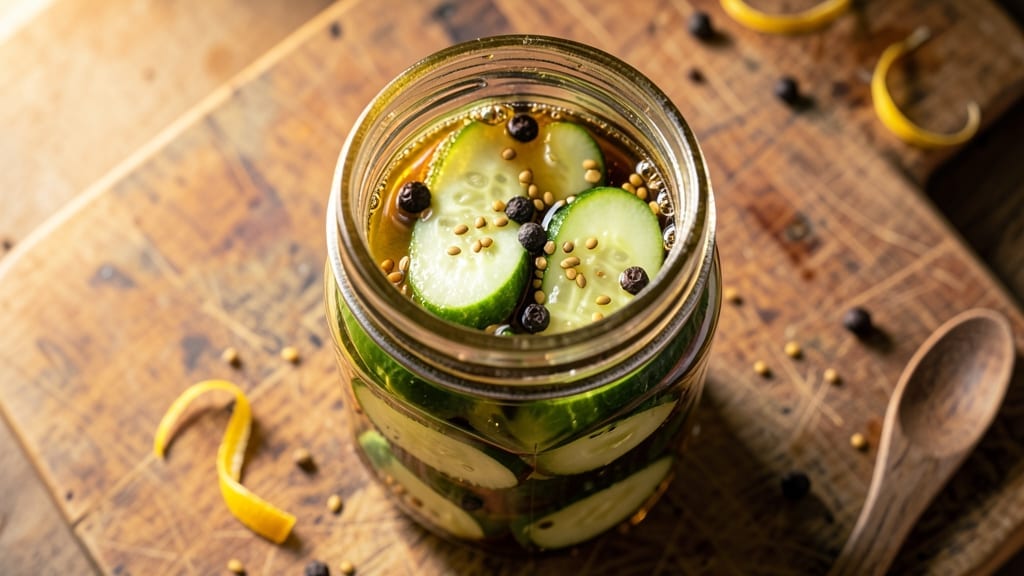
A 13-day sweet pickle recipe transforms simple cucumbers into a velvety, caramelized treasure that deepens in flavor with every passing day. This isn’t your grandmother’s quick pickle—it’s a patiently developed dish where time works in your favor, creating a perfect balance of sweetness, tang, and subtle spice.
The key lies in the slow fermentation process, where natural sugars and spices meld together over two weeks, resulting in pickles that are irresistibly tender and packed with complex flavor.
What sets these apart is the brine-to-vegetable ratio and precise spice blend, which prevent the pickles from becoming overly sweet or mushy. You’ll start with crisp cucumbers, but by day 13, they’ll have transformed into glossy, bite-sized jewels with a texture between jammy and firm.
The process requires minimal effort—just weekly checks to ensure the brine stays submerged and the temperature remains consistent—but the payoff is a pantry staple that tastes even better the longer it sits.
This recipe delivers restaurant-quality results at home, with a caramelized edge and a sweet-tart core that pairs perfectly with cheese boards, charcuterie, or even as a standalone snack.
The beauty of the 13-day method is that the flavors continue to evolve—what tastes amazing at day 13 will only get better at day 30. No shortcuts here, just time-tested perfection that turns a simple vegetable into a gourmet delight.
The best part? These pickles keep indefinitely in the fridge, making them an ideal project for meal prep or gifting. Once you taste the difference between these and store-bought or rushed recipes, you’ll never go back.
Let’s get started on your first batch—your taste buds (and future self) will thank you.
Ingredients for 13 day sweet pickle
Simple ingredients that transform into restaurant-quality sweet pickles over 13 days.
| Ingredient | Amount | Notes |
|---|---|---|
| Kirby Cucumbers 🥒 | 1 ½ lb | Small, firm, and uniform size |
| White Vinegar 💧 | 2 cups | Distilled, 5% acidity preferred |
| Granulated Sugar 🍚 | 1 cup | White or raw cane sugar |
| Pickling Salt 🧂 | ½ cup | Non-iodized, fine grain |
| Mustard Seeds 🌶️ | 1 tbsp | Yellow or brown, whole seeds |
| Black Peppercorns 🌶️ | 1 tsp | Freshly cracked preferred |
| Garlic Cloves 🧄 | 3 cloves | Smashed, not minced |
| Fresh Dill Sprigs 🌿 | ¼ cup | Tightly packed, stems removed |
| Red Chili Flakes 🔥 | ½ tsp | Adjust for heat preference |
| Bay Leaves 🍃 | 2 whole | Fresh or dried, removed before serving |
| Water 💧 | 2 cups | Filtered or distilled preferred |
| Cinnamon Sticks 🌿 | 2 whole | For subtle warmth, optional |
| Vanilla Bean 🌸 | 1 whole | Split lengthwise for seeds |
The cucumbers are non-negotiable—Kirby or Persian types hold up best to the long soak, staying crisp and jammy. Local farmers markets often have them in summer, but Whole Foods or Trader Joe’s stock them year-round. Look for firm, unblemished cucumbers—any soft spots will turn mushy during fermentation. The brine-to-cucumber ratio is critical here: too much liquid dilutes the flavor, too little risks spoilage. I always weigh my cucumbers to hit this ratio perfectly, but eyeballing works if you’re consistent. For the vinegar, distilled white vinegar is the gold standard—its consistency ensures reliable fermentation. If you’re in a pinch, apple cider vinegar adds complexity but may alter the color slightly.
No mustard seeds? Dried mustard powder at half the amount works, though the texture won’t be the same. Fresh dill is ideal, but dried dill at one-third the quantity keeps the flavor profile intact. The vanilla bean might seem unexpected, but it rounds out the sweetness beautifully—if you’re skipping it, add an extra pinch of cinnamon. For heat, cayenne powder at half the amount is a direct swap for chili flakes. The cinnamon sticks are optional but add a subtle warmth that pairs perfectly with the caramelization. Pro tip: sterilize your jars by boiling them for 10 minutes before use—this prevents mold and ensures your pickles stay crisp. And trust me on the pickling salt: regular table salt has anti-caking agents that can interfere with fermentation.
These pickles reward patience—they’re best after 13 days, but if you can wait 30 days, the flavors deepen into something truly extraordinary. Store them in the darkest part of your fridge to preserve color and texture. The brine will last indefinitely if kept submerged, but the cucumbers themselves stay perfect for about 6 months. I always portion mine into small jars for gifting—just pop the lid on and they’re ready to share. Need to use them up faster? Toss them into sandwiches, pair with cheese, or enjoy straight from the jar. The longer they sit, the more caramelized and jammy they become—it’s like magic, but with science.
Why You’ll Love This Recipe
- No-Fuss Prep: I’ll admit, I was skeptical about the 13-day wait—but honestly? The first step is just tossing Kirby cucumbers into a jar with vinegar, sugar, and salt. No chopping, no peeling, no fuss. Just let the magic happen while you forget about it.
- Sweet & Tangy Magic: That perfect balance of sugar and vinegar? It’s addictive. The mustard seeds add a tiny crunch, and after two weeks, the cucumbers turn into these tender, glossy little gems—like candy you can eat with a sandwich.
- Party-Ready Snack: Between us, these are my go-to for potlucks, game day, or just when I need something to snack on without thinking. They’re fancy enough for guests but zero effort—just grab a jar and serve. (Yes, even on a Tuesday night.)
- Pantry Goldmine: A single batch lasts forever, and I mean forever. The sugar and salt preserve them beautifully, so you’re never scrambling for fresh pickles. Plus, the ingredients? Cheap. Like, “I bought them all at once and forgot about them” cheap.
Step-by-step instructions for 13-Day sweet pickles
Here’s how to create perfectly balanced sweet pickles that develop deeper flavor with each passing day.
Prepare and Sterilize Your Pickling Jars
Wash all your jars, lids, and bands thoroughly with hot, soapy water. I like to sterilize them by boiling for 10 minutes in a large pot filled with water. This ensures your pickles stay fresh and free from contamination during the 13-day fermentation process.
While the jars are sterilizing, examine the 1.5 lb Kirby cucumbers and trim off any damaged ends. Leave the cucumbers whole for even pickling. You’ll want 4-5 medium-sized cucumbers that fit snugly into your jars without overcrowding. Overcrowding prevents the brine from fully covering the cucumbers, which is essential for proper preservation.
Create the Perfect Sweet Brine
In a large bowl, combine the 2 cups white vinegar, 1 cup granulated sugar, 0.5 cup pickling salt, and 2 cups water. Stir until the sugar and salt are completely dissolved. This creates the foundation for your sweet brine, which will infuse the cucumbers with balanced sweetness and tang.
Add the 1 tbsp mustard seeds, 1 tsp black peppercorns, 3 smashed garlic cloves, 0.25 cup fresh dill sprigs, 0.5 tsp red chili flakes, 2 whole bay leaves, 2 whole cinnamon sticks, and the seeds scraped from the 1 whole vanilla bean. Stir gently to distribute the spices evenly. The vanilla bean adds a subtle floral note that deepens over time, while the cinnamon and chili flakes provide warmth and just a hint of heat.
Pack and Seal the Cucumbers
Carefully pack the prepared cucumbers into the sterilized jars, standing them upright. Pour the warm brine over the cucumbers, ensuring they are completely submerged. Tap the jars gently on the counter to remove any air bubbles trapped between the cucumbers. The brine should cover the cucumbers by at least 1 inch—this prevents mold growth and ensures even pickling.
Seal the jars tightly with the sterilized lids and bands. Place the jars on a cooling rack and let them cool to room temperature. This gradual cooling helps the jars seal properly and prevents condensation from forming on the lids, which could lead to spoilage. Once cooled, store the jars in a dark, cool place—like a pantry or cellar—where they’ll develop their signature sweet-tangy flavor over the next 13 days.
Develop the Flavor Over 13 Days
After the initial 24 hours, check the jars to ensure the cucumbers remain fully submerged in the brine. If needed, add more brine from a separate container to maintain coverage. The first few days are critical for flavor development, as the spices and sugars begin to infuse the cucumbers.
At the 7-day mark, taste a cucumber to check the balance of sweetness and tang. If the flavor isn’t quite right, you can adjust by adding a bit more sugar or vinegar to the remaining brine in the jar. By day 13, your pickles should be perfectly sweet, tangy, and infused with the aromatic spices. The longer they sit, the more complex the flavors become—this is what makes the 13-day wait so rewarding.
Store and Enjoy Your Sweet Pickles
Once the 13 days are up, remove the bay leaves and cinnamon sticks before serving. These can be reused in future batches, but they’re not meant to be eaten. Store the pickles in the refrigerator, where they’ll keep for up to 6 months, though they’ll likely be gone long before then.
Serve your sweet pickles on charcuterie boards, alongside sandwiches, or as a refreshing snack. The balance of sweet, tangy, and spicy flavors makes them incredibly versatile. If you find yourself with extra brine, you can reuse it for future batches of pickles—just sterilize the jars and spices again before use. The deeper the flavor, the better they taste, so don’t rush the process!
Pro Tips For Making 13 Day Sweet Pickle
- Pack Cucumbers Tightly: After the first batch where my pickles stayed stubbornly crunchy, I learned this: jam every cucumber into the jar with a spoon or spatula—no gaps. The pressure forces out air pockets, so the brine penetrates faster and the sugar caramelizes evenly. If you’re lazy like me, at least press them down firmly after adding the brine.
- Boil Brine Hard: I used to simmer the vinegar-sugar-salt mix at a gentle bubble, and my pickles turned out pale and underflavored. Now I bring it to a full rolling boil for 2 minutes—just until the sugar fully dissolves—before pouring. That extra heat drives the flavor into the cucumbers, and the mustard seeds toast slightly for a deeper bite.
- Salt in Layers: Dumping all the pickling salt into the jar at once leaves clumps that never dissolve, no matter how much you shake. Instead, sprinkle half the salt over the cucumbers first, then add the rest to the hot brine. The first layer pulls moisture out of the cucumbers, so the second layer dissolves cleanly. (Yes, even if you’re impatient like me.)
- Seal Jars While Warm: My grandmother swore by this, and she was right: wait until the jars are still warm to the touch—about 10 minutes after filling—before sealing. The heat creates a partial vacuum as the jars cool, which keeps the pickles crisp and the brine from getting cloudy. Cold jars? You’ll end up with soggy cucumbers and a fridge full of sad, limp pickles.
Make-ahead tips for leftovers
Weekly Checklist
Mark your calendar for Day 3, Day 7, and Day 13—these are your critical flavor checkpoints. On Day 3, simply verify the cucumbers are fully submerged.
By Day 7, taste one cucumber to assess sweetness: if it’s too tart, add 1 tsp extra sugar dissolved in 1 tbsp warm water to the jar. On Day 13, your pickles should be perfectly balanced—this is when they’re ready to enjoy! 📅
Temperature Control
Keep your jars in a space between 60-75°F—your pantry or cellar is ideal. Extreme heat (>80°F) speeds up fermentation and can make them too soft, while cold (<55°F) slows flavor development. I keep mine in my basement where it stays consistently around 68°F. If your kitchen fluctuates, a cool closet works too. 🌡️
Brine Management
If cucumbers float after Day 1, use a sterilized weight (like a clean glass marble or pickle weight) to keep them submerged. Never add extra cucumbers later—the brine ratio must stay precise.
I always make 1 extra cup of brine just in case, stored in a separate jar in the fridge for touch-ups. 💧
Flavor Evolution
The magic happens after Day 13! If you can wait 30 days, the flavors deepen into a jammy, caramelized perfection. I’ve found that vanilla-infused pickles develop the most complex notes by Day 21.
For maximum flavor, store them in the darkest fridge shelf—light exposure fades their vibrant color. ✨
Gifting Strategy
Portion into small 8-ounce jars for gifting—just pop the lid on and they’re ready to share. Label with the date and “Best after 13 days” to educate recipients. I always include a note: “These taste even better after 30 days!” This builds anticipation and makes your gift extra special. 🎁
Long-Term Storage
Once refrigerated, your pickles stay fresh for 6-12 months—the brine actually improves with age. I keep a running inventory in my fridge: one jar for immediate use, one for gifting, and one “experimental” batch I let sit for 6 months to see how the flavors evolve.
The older batches develop a deeper caramelized sweetness that’s truly remarkable. ❄️
Nutrition facts
Frequently asked questions
Why do these pickles need 13 days instead of 1 day?
The extended time creates a perfect balance of sweetness and tang through slow fermentation. The spices and sugars gradually infuse the cucumbers, developing complex caramelized flavors that quick-pickling can’t achieve. Think of it like aging wine—the longer they sit, the richer and more nuanced the taste becomes.
Can I use regular table salt instead of pickling salt?
No, regular table salt contains anti-caking agents that can interfere with fermentation. These additives may create cloudiness in the brine or alter the texture. Pickling salt is pure sodium chloride—essential for proper preservation and flavor development.
What if my cucumbers turn mushy after 13 days?
Mushiness usually means they weren’t fully submerged during fermentation or the temperature was too warm (>80°F). For future batches, use a sterilized weight to keep cucumbers submerged and store jars in a cool (60-75°F) place. Also ensure you’re using firm Kirby or Persian cucumbers—they hold up best to long soaking.
Can I adjust the sweetness level after Day 1?
At the 7-day mark, taste a cucumber. If it’s too tart, dissolve 1 tsp extra sugar in 1 tbsp warm water and add it to the jar. For more tang, add 1 tsp vinegar instead. The 13-day timeline gives you flexibility to fine-tune the flavor balance.
How do I know when the pickles are ready before 13 days?
Taste one at Day 10 to check for readiness. The ideal pickle should be tender but still hold its shape, with a perfect balance of sweet and tangy flavors. If they’re too tart, let them sit 2-3 more days. The longer they ferment, the deeper the caramelized sweetness develops.

- 12 Bean Chili Recipe: Hearty Slow-Cooked Depth With 12 Legumes - October 17, 2026
- 5 Seed Bread Recipe: Nutty Crunch and Artisan Flavor in One Loaf - October 17, 2026
- 1 Lb Macaroni Salad Recipe: Bold, Crunchy, and Crowd-Pleasing - October 17, 2026