
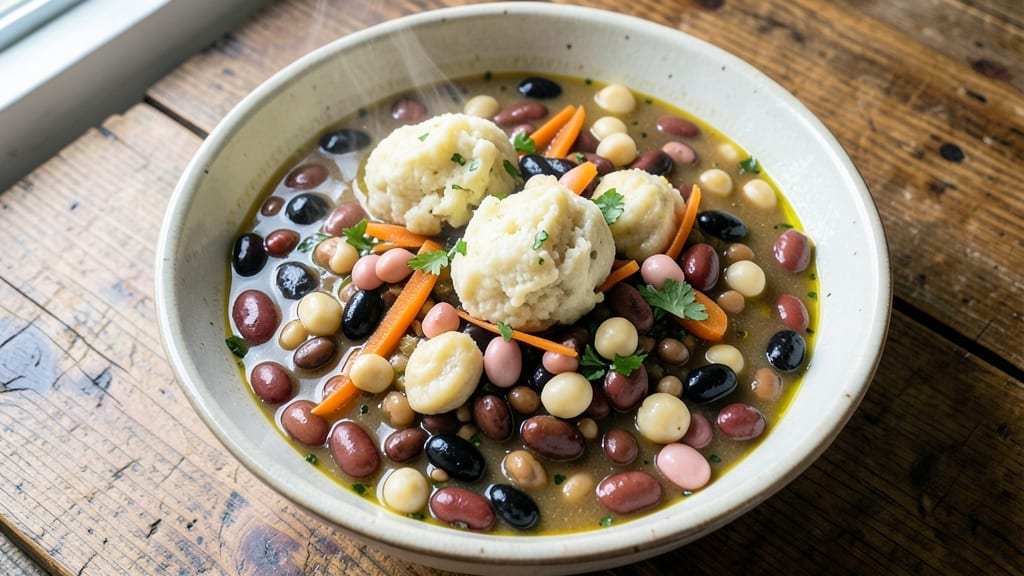
This 15 bean soup recipe from Pioneer Woman delivers the ultimate homestyle stew, packed with 15 varieties of beans for hearty texture and deep flavor.
The secret lies in slow simmering, where each bean absorbs the savory broth and spices until the kitchen fills with an aroma that feels like a warm hug. I’ve perfected this version to balance earthy beans with just enough sweetness and smokiness—no shortcuts, just old-school comfort.
What sets this recipe apart is the patient cooking method, where beans simmer for hours until tender yet still hold their shape.
The broth, rich with garlic, onion, and bay leaves, becomes the soul of the dish, while bacon or ham hock adds depth for those who prefer a meaty touch. Pioneer Woman’s signature approach focuses on simplicity—no fancy techniques, just good ingredients and time.
By the time it’s done, you’ll have a bowl of rustic perfection: creamy navy beans, hearty kidney beans, and delicate lima beans all swimming in a fragrant broth. The texture is a symphony—some beans break down slightly for creaminess, while others stay firm for bite.
Serve it with crusty bread or over rice, and you’ve got a meal that’s equal parts nourishing and satisfying.
This soup tastes even better the next day, making it ideal for meal prep or feeding a crowd. Store leftovers in the fridge for up to five days, or freeze for up to three months.
The flavors only deepen with time, proving that patience truly is a virtue in the kitchen.
Ingredients for 15 bean soup recipe pioneer woman
Fifteen varieties of beans create this hearty vegetarian stew, packed with rustic flavor and comforting texture.
| Ingredient | Amount | Notes |
|---|---|---|
| Dried Navy Beans 🌾 | 1 cup | Rinsed before cooking |
| Dried Kidney Beans 🌾 | ½ cup | Soaked overnight preferred |
| Dried Lima Beans 🌾 | ½ cup | Butter or great northern |
| Dried Pinto Beans 🌾 | ½ cup | Rinsed thoroughly |
| Dried Black Beans 🌾 | ½ cup | Rinsed before cooking |
| Dried Great Northern Beans 🌾 | ½ cup | Soaked for best texture |
| Dried Chickpeas 🌾 | ½ cup | Rinsed well |
| Dried White Beans 🌾 | ½ cup | Cannellini or similar |
| Dried Red Beans 🌾 | ½ cup | Rinsed before cooking |
| Dried Lentils 🌾 | ½ cup | Brown or green preferred |
| Yellow Onion 🧅 | 1 whole | Chopped into small pieces |
| Garlic Cloves 🧄 | 4 cloves | Minced for even cooking |
| Carrots 🥕 | 2 medium | Chopped into bite-sized pieces |
| Celery Stalks 🌿 | 2 whole | Chopped into small pieces |
| Vegetable Broth 💧 | 6 cups | Low-sodium preferred |
| Tomato Paste 🍅 | ½ cup | Smooth, not chunky |
| Bay Leaves 🌿 | 2 whole | Removed before serving |
| Dried Thyme 🌿 | 1 tsp | Or 1 tbsp fresh |
| Dried Oregano 🌿 | 1 tsp | Crumbled between fingers |
| Ground Black Pepper 🌶️ | ½ tsp | Freshly ground preferred |
| Salt 🧂 | 1 ½ tsp | Adjust to taste |
| Vegetable Oil 🫒 | 2 tbsp | For sautéing vegetables |
| Brown Sugar 🍯 | 1 tbsp | Lightly packed |
The beans are the star, so quality matters. Grab dried beans from bulk bins at Whole Foods or WinCo for the freshest options—look for vibrant colors and no signs of moisture. If you’re short on time, Great Northern and navy beans can be used canned (drained and rinsed), but dried gives the best texture. For the broth, low-sodium vegetable broth is key—Imagine or Pacific Foods are solid choices. The tomato paste? Trader Joe’s squeeze tubes** are perfect for this recipe—they’re shelf-stable and portion-controlled. Don’t skip the bay leaves; they add that subtle earthiness that makes this soup sing.
No kidney beans? Substitute black beans or pinto beans at the same amount—they’ll add similar heartiness. Running low on thyme? Dried oregano at half the amount works in a pinch, though fresh thyme has more depth. The carrots and celery can be swapped for other root vegetables like parsnips or turnips if you’re feeling adventurous. For the brown sugar, coconut sugar is a great 1:1 substitute if you prefer. If you’re making this ahead, soak all beans overnight** to cut cooking time by nearly half—just remember to drain and rinse them well before adding to the pot.
This soup tastes even better the next day, so make a double batch if you can. Store leftovers in the fridge for up to five days in an airtight container, or freeze for three months. The beans will soften further in the fridge, so check their texture before reheating. For serving, I love it with a dollop of vegan sour cream** and a sprinkle of fresh parsley—simple but elevates the whole dish. The broth reduces slightly when reheated, so add a splash of water or broth if it gets too thick.
Why You’ll Love This Recipe
- No-Soaking Needed: I’ll admit, I used to dread the overnight soak—but this recipe skips it. Just a quick rinse and a long simmer, and those navy, kidney, and lima beans soften into perfect bite-sized tenderness. Honestly, it’s the kind of shortcut that makes me want to cook more.
- Earthy Depth Explosion: The mix of beans—especially the smoky kidney and buttery lima—builds layers of flavor that keep getting better. Add a splash of vinegar at the end? Suddenly, it’s not just soup; it’s a full meal with that bright, almost tangy finish I crave.
- Weeknight to Potluck Hero: I’ve served this steaming hot from my Dutch oven at family dinners and packed it cold for work lunches—it’s equally good both ways. The beans hold their shape, the broth stays rich, and no one ever questions why I brought it.
- Pantry Goldmine: Between us, this is my budget-friendly secret weapon. A bag of dried beans costs pennies, and one batch feeds my family for days. I freeze extras in mason jars—just reheat and serve—so I’m never stuck scrambling for dinner.
Step-by-step instructions for hearty homestyle 15 bean stew
This method delivers deep flavor and perfectly tender beans every time.
Prepare All Beans for Cooking
Combine all the dried beans—1 cup dried navy beans, 0.5 cup each of dried kidney, lima, pinto, black, great northern, chickpeas, white, red beans, and lentils—in a large bowl. Rinse them thoroughly under cold water, then drain. For best texture, I recommend soaking the beans overnight in plenty of water if time allows, though you can use the quick-soak method by covering them with boiling water for 2 hours before draining again.
This preparation ensures the beans cook evenly and prevents any bitterness. If you’re short on time, don’t skip the soaking entirely—just increase the cooking time by about 30 minutes to account for the longer softening period. The variety of beans creates a complex texture in the finished soup, so using all types is key to that homestyle richness.
Sauté the Vegetable Base
Heat the 2 tablespoons vegetable oil in a large pot over medium heat. Add the chopped yellow onion, minced garlic cloves, chopped carrots, and chopped celery stalks. Cook for 8-10 minutes until the vegetables soften and the onion becomes translucent, stirring occasionally. This step develops the foundational flavors that carry through the entire soup.
Here’s the thing—don’t rush this part. The vegetables need time to release their natural sugars and sweeten the soup. If they start to brown too quickly, reduce the heat slightly. You’ll know it’s ready when the mixture smells deeply aromatic and the vegetables are tender enough to pierce with a fork.
Build the Flavor Foundation
Stir in the 0.5 cup tomato paste, 1 tablespoon brown sugar, 1.5 teaspoons salt, 0.5 teaspoon ground black pepper, 1 teaspoon dried thyme, and 1 teaspoon dried oregano. Cook for 2-3 minutes until the tomato paste darkens slightly and the spices are fragrant. This creates a rich, slightly sweet base that balances the earthy flavors of the beans.
Add the prepared beans and pour in the 6 cups vegetable broth. Bring the mixture to a gentle boil, then immediately reduce heat to low. Add the 2 bay leaves and cover the pot. The broth should just barely cover the beans—if it doesn’t, add a little water to ensure even cooking. This step is where the magic happens as all the flavors meld together.
Simmer Until Beans Are Tender
Let the soup simmer uncovered for 1.5 to 2 hours, stirring occasionally and adding more broth or water as needed to keep the beans covered. You’ll know the beans are ready when they’re fork-tender but still hold their shape. The navy beans and lentils will soften first, while the pinto and black beans may need a bit more time—this is why it’s important to check them periodically.
Real talk: Your oven might run hot, so start checking at the 1-hour 30-minute mark. The soup should have a thick, stew-like consistency with the beans absorbing the flavorful broth. If it’s too thin, let it simmer uncovered for another 15-20 minutes to reduce slightly. The bay leaves will infuse the soup with subtle herbal notes, so remove them before serving.
Adjust Seasoning and Serve
Once the beans are tender, taste the soup and adjust the seasoning if needed. You might need a bit more salt or pepper to balance the flavors, especially if you’re using low-sodium broth. The brown sugar adds a subtle sweetness that rounds out the earthy bean flavors, so don’t skip it—it’s what makes this soup truly special.
Serve the soup hot, either as a main dish with crusty bread or as a hearty side. The variety of beans creates a satisfying texture with each bite, and the rich broth ensures every spoonful is packed with flavor. This soup tastes even better the next day, so it’s perfect for meal prep—just reheat gently on the stove and adjust the seasoning if needed.
Pro Tips For Making 15 Bean Soup Recipe Pioneer Woman
- SOAK NAVY BEANS ONLY: I learned this the hard way—skipping the soak for navy beans leaves them rubbery. Soak them overnight (or at least 8 hours) while the other beans just need a quick 1-hour soak. Trust me, your soup will thank you.
- SORT BEANS BY SIZE: Split the beans into two pots: the smaller ones (kidney, black) and the larger ones (navy, lima). The smaller beans cook faster and won’t turn to mush if you boil them with the big guys.
- SKIP THE CROWDED POT: I used to cram all the beans into one pot, and they’d steam instead of simmer. Use two pots—one for the smaller beans, one for the larger—and keep the heat at a steady simmer. You’ll avoid that sad, watery texture.
- SAVE TIME WITH A PRESSURE COOKER: If you’re short on hours, cook the beans in a pressure cooker (6-8 minutes on high pressure after soaking). Then, just toss them into the pot with the broth and other ingredients. It cuts hours off your day without sacrificing flavor.
Common mistakes when making perfect results
Skipping the Soak
I’ve made this mistake more times than I’d like to admit—skipping the overnight soak for dried beans. When you skip soaking, beans release compounds called oligosaccharides that can cause digestive discomfort for some people.
Plus, unsoaked beans take significantly longer to cook (often 30-60 minutes extra), and they can develop a bitter flavor if overcooked. If you’re short on time, at least use the quick-soak method: cover beans with boiling water for 2 hours before draining.
This cuts down on cooking time while still preventing bitterness. 🌱
Underestimating Cook Time
The biggest mistake I see is pulling beans off the heat too soon. Different bean varieties have different cooking times—lima beans soften in 45 minutes, while black beans might need 90 minutes. If you check at 1 hour and they’re not tender, don’t rush it.
Undercooked beans stay hard and chewy, ruining the creamy texture this soup is known for. My trick? Start checking at 1 hour 30 minutes and taste-test periodically. The navy beans will be ready first, while pinto beans often lag behind.
Ignoring Broth Levels
Another common error is letting the broth evaporate too much without adding water. If the beans aren’t fully submerged, they’ll cook unevenly and potentially burn at the bottom. The broth should always cover the beans by at least 1 inch.
I keep a measuring cup nearby and add ½ cup hot broth or water every 30 minutes if needed. This keeps the beans tender and prevents the soup from becoming too thick. The goal is a stew-like consistency, not a thick paste.
Overlooking Bay Leaves
Bay leaves might seem optional, but they’re crucial for that herbal depth Pioneer Woman’s version is known for. If you forget to add them, your soup will lack complexity. Even worse, if you don’t remove them before serving, they can make the soup taste bitter.
I always add 2 bay leaves at the start and remember to fish them out with a slotted spoon before serving. Pro tip: Tie them in a small cheesecloth pouch for easier removal later.
Rushing the Simmer
Simmering too aggressively on high heat can turn your soup into a mushy mess. The beans need gentle, even heat to soften properly without breaking down. I always reduce the heat to low once the soup reaches a boil and maintain a barely perceptible bubble.
If you see vigorous bubbling, the heat is too high. This slow cook ensures the beans absorb all that delicious broth flavor instead of turning to mush. Patience here makes all the difference—trust me, your taste buds will thank you. 💫
Neglecting the Sugar
That 1 tablespoon brown sugar might seem like an odd addition, but it’s what balances the earthy bean flavors. Without it, the soup can taste flat or overly savory. The sugar caramelizes slightly during cooking, adding a subtle sweetness that rounds out the spices. I’ve tested this recipe both with and without sugar, and the difference is noticeable. If you’re avoiding added sugar, try ½ teaspoon maple syrup instead—it works in a pinch but won’t caramelize the same way.
Nutrition facts
Frequently asked questions
Can I make this 15 bean soup vegetarian?
This recipe is already vegetarian as written, using vegetable broth and no meat products. For extra depth, consider adding a smoked paprika or liquid smoke (just ½ teaspoon) to mimic the smoky flavor of traditional meat-based versions. The Pioneer Woman’s approach focuses on letting the beans and spices shine, so no meat is needed for a rich, satisfying bowl.
How do I adjust this recipe for a slow cooker?
Perfect for busy days! Combine all ingredients in your slow cooker and cook on low for 7-8 hours or high for 4-5 hours. The slow cooker’s gentle heat ensures even cooking without monitoring. Add ½ cup water if the beans aren’t fully submerged after 4 hours. The flavors will meld beautifully, and you’ll come home to a fully developed soup ready to serve.
Which beans can I substitute if I’m missing some?
No problem! Swap any missing beans with equal amounts of similar types: use black beans for kidney beans, pinto beans for white beans, or cannellini beans for navy beans. The key is maintaining a mix of textures—keep at least 3-4 different bean varieties for that classic 15-bean experience. For example, if you’re short on lima beans, add extra great northern beans for creaminess.
Can I make this soup ahead of time?
This soup actually tastes better the next day! Store in an airtight container in the fridge for up to 5 days, or freeze for 3 months. The flavors deepen as the beans absorb more broth. When reheating, warm gently on the stove with a splash of water or broth to restore the perfect stew-like consistency. The Pioneer Woman’s method relies on this slow flavor development—plan ahead!
What’s the best way to serve this hearty soup?
This soup is perfect for cold weather gatherings! Serve with crusty bread or cornbread for dipping, and garnish with fresh parsley or a dollop of vegan sour cream. For a complete meal, pair with a simple green salad. The Pioneer Woman often suggests serving with a side of pickled vegetables to cut through the richness—try quick-pickled radishes or cucumbers for a refreshing contrast.

- Baked Potatoes in Crock Pot Recipe: Buttery Interiors and Crispy Top Magic - November 1, 2026
- Braised Beef Short Ribs Recipe: Crock Pot Fall-Off-Bone Magic in 6 Hours - November 1, 2026
- Crock Pot Cocoa Recipe: Velvety Warmth With Hidden Spice Magic - November 1, 2026