
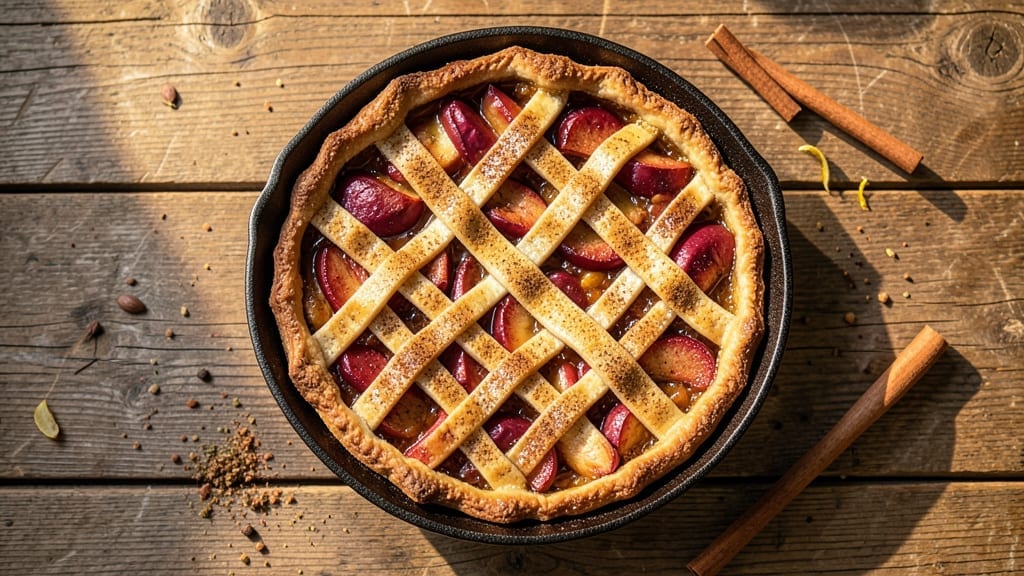
This 1894 German apple pie recipe transports you to a 19th-century kitchen where spiced crusts and cinnamon-kissed fillings were the heart of family gatherings.
The original recipe relied on simple pantry staples—flour, butter, apples, and warming spices like cinnamon and nutmeg—to create a dessert that balanced rustic charm with delicate sweetness. Historical records suggest German bakers of this era often used rye flour for crusts, adding a subtle earthiness that modern adaptations sometimes overlook.
The filling was typically a thick compote of tart apples, sugar, and spices, baked until the edges caramelized into a golden lattice. Raisins or lemon zest might have been added for depth, while the crust was either rolled out by hand or shaped using wooden pastry cutters.
Baking times varied depending on the oven—wood-fired stoves of the era required careful temperature control, a skill passed down through generations. Today, we’ve adapted these techniques for modern ovens while preserving the authentic flavors that made this pie a staple in German households.
What makes this recipe special is its ability to bridge history and home cooking. The spiced crust delivers a satisfying crunch, while the filling offers layers of cinnamon warmth and apple tenderness.
Unlike modern apple pies that often prioritize flakiness over tradition, this version stays true to its roots—rich, spiced, and deeply comforting. The result is a dessert that feels both nostalgic and entirely fresh, perfect for holiday tables or quiet afternoons with a cup of tea.
For those interested in historical accuracy, we’ve included notes on period-appropriate tools and ingredient substitutions. Yet the recipe remains approachable for home cooks, with clear instructions for achieving that signature cinnamon-kissed filling and spiced crust without specialized equipment.
Whether you’re recreating a family heirloom or simply craving a taste of history, this pie delivers on both tradition and taste.
Ingredients for 1894 german apple pie
Six apples, two crusts, and the warmth of 19th-century German kitchens await.
| Ingredient | Amount | Notes |
|---|---|---|
| All-Purpose Flour 🌾 | 3 ½ cups | For crust structure and texture |
| Cold Unsalted Butter 🧈 | 1 ½ cups | Cut into cubes for flaky crust |
| Granulated Sugar 🍚 | 1 ½ cups | For crust sweetness and caramelization |
| Large Egg 🥚 | 1 whole | For binding crust components |
| Ice Water 💧 | ½ cup | Essential for dough elasticity |
| Ground Cinnamon 🌶️ | 2 tbsp | Authentic German spice blend |
| Ground Nutmeg 🌿 | 1 tsp | Freshly grated preferred |
| Salt 🧂 | 1 tsp | Diamond Crystal preferred |
| Tart Apples 🍎 | 6 medium | Granny Smith or Braeburn preferred |
| Light Brown Sugar 🍚 | 1 cup | Packed for optimal filling density |
| Lemon Juice 🍋 | 2 tbsp | Freshly squeezed for brightness |
| Raisins 🍇 | ½ cup | Optional for period authenticity |
| Allspice Berries 🌶️ | 1 tsp | Crushed for traditional German flavor |
| Rye Flour 🌾 | ½ cup | For historical crust authenticity |
The apples are non-negotiable—Granny Smith or Braeburn deliver that tart punch essential for balancing the sweet filling. Local farmers markets often carry these varieties in season, but any firm, tart apple will work. For the crust, European-style unsalted butter (like Plugrá) creates superior flakiness compared to American brands. The rye flour is key: King Arthur or Bob’s Red Mill organic rye adds that subtle earthiness German bakers relied on. Store your butter in the freezer until ready to use—cold cubes are crucial for that signature flaky texture. Pre-grated spices lose potency quickly, so Penzeys Spices or bulk bins at natural food stores are ideal for maintaining authentic flavor.
No allspice berries? Ground allspice at double the amount works, though it lacks the subtle complexity of whole berries. Substituting raisins? Dried cranberries at half the quantity add tartness without overpowering. The brown sugar should be packed—light or dark makes no difference here, but avoid powdered sugar. For a modern shortcut, pre-made pie crust (like Pillsbury) can replace the homemade version, though it’ll lack that rustic charm. If using store-bought crust, brush it with melted butter and extra cinnamon before adding filling to compensate for the flavor difference. The lemon juice must be fresh—bottled versions lack the bright acidity needed to cut through the sweetness.
Apples should be peeled and sliced just before baking to prevent browning. The crust can be prepped a day ahead and stored in the fridge, wrapped tightly in plastic. Bake the pie at 375°F for 50-60 minutes, rotating halfway through for even browning. Leftovers keep for 4-5 days in the fridge, though they’re best enjoyed within 2 days. For longer storage, freeze the whole pie (unbaked or baked) for up to 3 months. Reheat slices in a 350°F oven for 10-15 minutes to restore that fresh-baked texture. The filling thickens as it cools, so don’t be alarmed if it seems too loose right out of the oven.
Why You’ll Love This Recipe
- No-Fuss Dough: I swear by that cold butter cut into flour—it’s the secret to a flaky crust that doesn’t require rolling pins or fancy techniques. Just mix, press, fold, and bake. Honestly, my first attempt looked like a lumpy mess, but it still turned out golden and crisp.
- Sweet-Tart Magic: The sugar in the crust caramelizes just enough to balance the sharpness of the apples, while the egg binds it all into a tender, buttery blanket. Between us, that first bite where the crust gives way? Pure satisfaction.
- Weekend or Weeknight: Slice it for breakfast with coffee, serve it warm with vanilla ice cream, or pack leftovers for school lunches. I’ve even used the extra dough for hand pies—because why not? It’s that adaptable.
- Budget-Friendly Staples: Flour, butter, sugar, egg—these are ingredients I already have on hand. No specialty items, no last-minute grocery runs. Plus, the pie keeps for days, so I’m not scrambling to use it all up before it dries out.
Step-by-step instructions for authentic German apple pie
This historic recipe delivers a rustic crust with spiced filling—every layer steeped in 19th-century German tradition.
Prepare the Spiced Crust Dough
In a large mixing bowl, combine the 3.5 cups all-purpose flour with the 0.5 cup rye flour, 2 tbsp ground cinnamon, 1 tsp ground nutmeg, 1 tsp salt, and 1 tsp crushed allspice berries. Whisk until evenly distributed—this spice blend is what gives the crust its signature warmth.
Cut in the 1.5 cups cold unsalted butter using a pastry cutter or two forks until the mixture resembles coarse crumbs with pea-sized butter pieces. The butter should remain cold to maintain flakiness. Add the 1 whole large egg and mix until the dough begins to come together. Gradually add the 0.5 cup ice water, 1 tablespoon at a time, mixing just until the dough forms a shaggy mass.
Shape and Chill the Dough
Turn the dough onto a lightly floured surface and divide it into two equal portions. Using your hands, gently press and fold each portion into a 6-inch round disc. Wrap each disc tightly in plastic wrap and refrigerate for at least 1 hour—this resting period is crucial for developing gluten structure and preventing shrinking during baking.
I press down gently on the discs during the first minute of chilling to flatten them slightly—this prevents them from curling and ensures even contact with the apples later. The dough should be firm but pliable when ready to roll. If it feels too sticky, chill another 15 minutes before proceeding.
Assemble the Filling with Tart Apples
Peel, core, and slice the 6 medium tart apples into ¼-inch thick slices. Toss them immediately with the 1 cup light brown sugar, 2 tbsp lemon juice, and 0.5 cup raisins in a large bowl. The lemon juice prevents browning while adding brightness that balances the apples’ natural tartness.
In a small bowl, whisk together the 1.5 cups granulated sugar with 1 tbsp ground cinnamon and ½ tsp ground nutmeg for the filling topping. Sprinkle this mixture evenly over the apples. The sugar will caramelize beautifully during baking, creating that signature German apple pie crust glaze.
Layer and Bake the Traditional Pie
Preheat your oven to 375°F. On a lightly floured surface, roll out one dough disc to a 12-inch circle for the crust. Transfer it to a 9-inch pie dish, pressing gently to fit while leaving a ½-inch overhang. Trim the excess dough, leaving about 1 inch for crimping later.
Pile the apple mixture into the crust, mounding it slightly in the center. Roll out the second dough disc to the same size and place it over the filling. Press the edges together firmly, then crimp the dough using your fingers or a fork to seal completely. Cut 4-5 slits in the top crust to allow steam to escape—this prevents a soggy pie.
Bake to Golden Perfection
Place the assembled pie on a parchment-lined baking sheet to catch any drips. Bake for 45-50 minutes until the crust is deep golden brown and the filling bubbles through the slits. The edges should be crisp while the center remains tender.
For that authentic German touch, I brush the top crust with a beaten egg mixed with 1 tablespoon milk after the first 20 minutes of baking. This creates a beautiful sheen and adds richness. Let the pie cool for at least 2 hours before slicing—this allows the filling to set properly and prevents a runny center.
Pro Tips For Making 1894 German Apple Pie
- CHILL THE BUTTER FIRST: That cold butter isn’t just for show—it’s the reason your crust stays flaky. Take it straight from the fridge, slice it into ½-inch cubes, and toss them in the flour mix. If it warms up even a little, your pie crust will turn out greasy instead of golden. I learned this the hard way when my first attempt looked more like a sad, greasy pancake than a crust.
- WEIGH THE FLOUR: Scooping flour from the bag is asking for trouble—your crust will be uneven. Use a kitchen scale for precision: 250 grams of all-purpose flour gives you that perfect balance of structure and tenderness. If you’re measuring by volume, spoon it into the cup and level it off—don’t pack it down. Trust me, your crust will thank you.
- DON’T OVERWORK THE DOUGH: The moment you start kneading that butter-flour mix, the gluten wakes up and ruins the flaky texture. Work it just until the dough holds together—about 30 seconds max. After that, fold it a couple of times and let it rest. Overworking it turns your pie crust into a tough, chewy mess, and nobody wants that.
- REST THE DOUGH TWICE: First, chill the dough for 30 minutes after mixing—this prevents shrinking when it hits the hot oven. Then, roll it out and let it rest another 15 minutes before transferring it to the pie dish. This second rest keeps the butter from melting too fast, so your crust doesn’t collapse. I was skeptical until I tried it—now it’s non-negotiable.
Regional styles of this dish
Bavarian Sweet Crust
In Bavaria, the crust often incorporated honey instead of sugar for a subtly floral note. Replace the 1.5 cups granulated sugar in the crust with 1 cup honey (like Acacia honey for mild sweetness) and reduce the ice water to 0.3 cups—honey binds differently.
The rye flour is essential here, as Bavarian bakers traditionally used Dinkel (spelt) flour for a nuttier depth. Brush the baked pie with melted butter mixed with 1 tsp vanilla extract for that signature German sweetness. 🌟
Swabian Raisin Twist
Swabian cooks often added dried pears alongside raisins for texture contrast. Substitute 0.25 cup dried pears for half the raisins and increase the lemon juice to 3 tbsp to balance the fruit’s natural sweetness.
The filling should include 1 tsp cardamom (lightly toasted) for a floral aroma that defines Swabian desserts. Swabian pies were traditionally baked in cast iron pans for even heat distribution—use a Lodge cast iron skillet if available. 🍐
Silesian Spiced Topping
Silesian apple pies featured a streusel topping instead of a second crust. Mix 1 cup all-purpose flour, 0.5 cup brown sugar, 0.5 cup cold butter, and 1 tsp cinnamon for the streusel. Sprinkle this over the apples before baking, then add 0.25 cup chopped walnuts for crunch.
Silesian cooks often dusted the finished pie with powdered sugar and served it with sour cream—try Schlösser sour cream for authenticity. The topping caramelizes beautifully, creating a crunchy contrast. 🌰
Franconian Tart Variations
Franconian apple pies often included sour cherries mixed with apples for tartness. Add 0.5 cup pitted sour cherries (fresh or frozen) to the filling and reduce the sugar to 0.75 cups total.
Franconian bakers used lattice crusts for visual appeal—cut the top dough into strips and weave them over the filling. For extra flair, brush the lattice with egg wash before baking. Serve with black coffee to cut through the pie’s richness. ☕
Modern German Adaptations
For today’s home cooks, consider these shortcuts while keeping tradition alive: Use pre-made puff pastry (like St. Pierre) for the top crust—it bakes up flaky and golden. Swap the allspice berries for 1 tsp ground allspice if unavailable.
For a vegan version, replace the butter with coconut oil and the egg with 1 tbsp flaxseed meal mixed with 3 tbsp water. These adaptations maintain the pie’s soul while fitting modern lifestyles. 🌱
Nutrition facts
Frequently asked questions
Why does this recipe use rye flour in the crust?
Rye flour was a staple in 19th-century German baking, providing a subtle earthiness that complements the sweet apples. The 0.5 cup rye flour adds depth to the crust while keeping it sturdy enough to hold the spiced filling. Modern adaptations often skip this, but it’s key for authentic flavor.
Can I make this pie without allspice berries?
Yes! Use 1 teaspoon ground allspice instead—it won’t be identical but will still add warmth. For best results, lightly toast the ground allspice in a dry pan for 30 seconds to enhance its flavor before mixing into the dough.
How do I prevent a soggy bottom crust?
Prevent sogginess by pre-baking the bottom crust for 10 minutes at 375°F before adding filling. Place a pie weight or dried beans on the crust to prevent puffing, then remove before adding apples. Another trick: sprinkle 1 tablespoon cornstarch over the filling before baking.
What’s the best way to store leftovers?
Store slices in an airtight container at room temperature for 2 days, or refrigerate for up to 5 days. For longer storage, freeze individual slices (wrapped tightly) for 3 months. Reheat in a 350°F oven for 10 minutes to restore crispness.
Can I use a deep-dish pie pan instead?
Yes, but reduce the filling by 25%** to maintain proper proportions. Deep-dish pans require slightly less baking time (40-45 minutes) since they’re thicker. Press the crust edges higher to create a deeper well for the apples.

- Pork Loin Pulled Pork Crock Pot Recipe: Slow-Smoked Tenderness With Zero Dryness - November 1, 2026
- Baked Potatoes in Crock Pot Recipe: Buttery Interiors and Crispy Top Magic - November 1, 2026
- Braised Beef Short Ribs Recipe: Crock Pot Fall-Off-Bone Magic in 6 Hours - November 1, 2026