
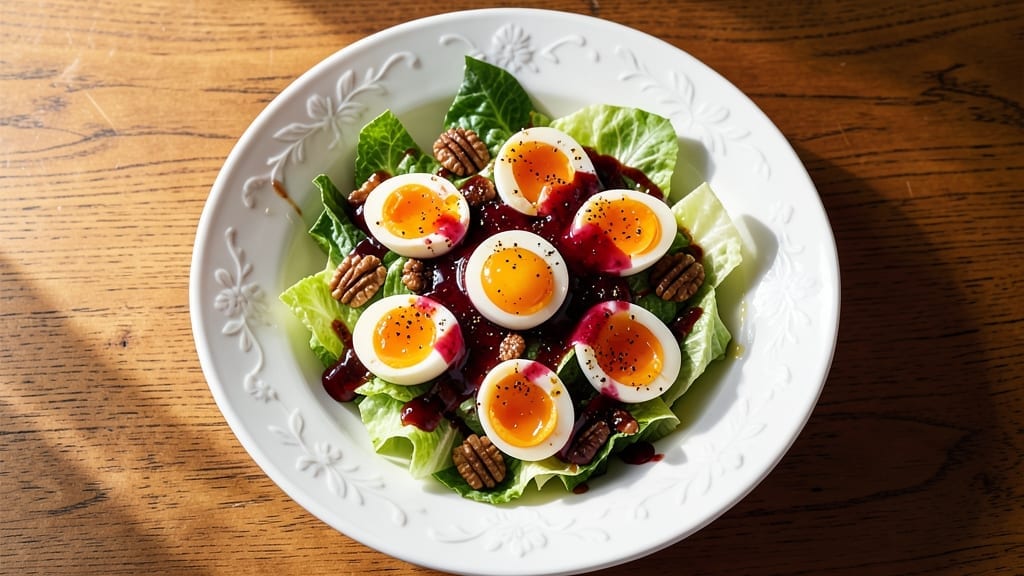
This 1903 salad recipe transports you to an era when dining was an art form—elegant, precise, and designed to impress. 💫 The original recipe relied on simple yet sophisticated ingredients like crisp iceberg lettuce, hard-boiled eggs, and a tangy French dressing, all elevated with a crunchy walnut topping that adds texture and nostalgia.
Back then, salads weren’t just sides; they were centerpieces of refinement, often served at lavish luncheons or garden parties.
The beauty of this vintage salad lies in its balance—cool, crisp lettuce provides the foundation, while the walnuts add a satisfying crunch that contrasts perfectly with the creamy dressing. Hard-boiled eggs, sliced and arranged artfully, bring richness and protein, just as they did over a century ago.
The dressing, a classic French vinaigrette with a touch of Dijon mustard, ties everything together with its bright, acidic notes.
What makes this recipe timeless is its adaptability—whether you’re recreating a historical meal or adding a touch of vintage charm to modern dining, the technique remains the same.
The result is a salad that’s as visually striking as it is delicious, with layers of flavor and texture that feel both nostalgic and fresh. Perfect for special occasions or as a sophisticated side dish, this salad proves that some classics never go out of style.
For those who want to modernize it, you can swap in heirloom tomatoes or add avocado for extra richness, but the core elements—crispness, crunch, and balance—remain the heart of this dish. Let’s bring a piece of 1903 into your kitchen today.
Ingredients for 1903 salad
Eleven ingredients to recreate a 1903 masterpiece—where crisp lettuce meets artfully arranged eggs and walnut crunch.
| Ingredient | Amount | Notes |
|---|---|---|
| Iceberg Lettuce 🥬 | 2 heads | Crisp, outer leaves removed |
| Large Eggs 🥚 | 6 whole | Hard-boiled, peeled, sliced |
| English Walnuts 🥜 | 1 cup | Toasted, roughly chopped (the good stuff) |
| Extra-Virgin Olive Oil 🫒 | ½ cup | For dressing, fruity variety |
| Red Wine Vinegar 🍷 | ¼ cup | Dry, bold flavor preferred |
| Dijon Mustard 🌶️ | 1 tbsp | Mellow, not hot variety |
| Granulated Sugar 🍚 | 1 tsp | For dressing balance |
| Kosher Salt 🧂 | 1 tsp | Diamond Crystal preferred |
| Freshly Ground Black Pepper 🌶️ | ½ tsp | Freshly cracked for best flavor |
| Crumbled Blue Cheese 🧀 | ½ cup | Optional, for modern twist |
| Dried Parsley 🌿 | 1 tbsp | Finely chopped for garnish |
The iceberg lettuce is non-negotiable here—its crispness was prized in 1903 for a reason. Look for heads with tight, pale green leaves and avoid any with brown spots or wilted edges. Whole Foods or local farmers markets carry the freshest cuts, but even your grocery store’s iceberg will work if it’s firm. The walnuts should be English walnuts for that classic vintage crunch—avoid the cheaper, flatter Persian varieties. Toast them in a dry pan for 3-4 minutes until fragrant, then chop them just before serving to preserve their freshness. For the eggs, use large eggs and boil them exactly 9 minutes for perfectly set yolks that slice cleanly.
No red wine vinegar? Apple cider vinegar works in a pinch, though it’ll lack the depth. The Dijon mustard can be swapped for whole-grain mustard if you prefer a nuttier flavor, but reduce it to 0.75 tbsp since it’s stronger. Want to skip the blue cheese? Crumbled goat cheese adds a similar tang without the boldness. The dressing ratio is key—measure everything precisely for that authentic vintage balance. If you’re feeling ambitious, make a double batch; this dressing keeps for up to 1 week in the fridge, sealed tightly. For a modern touch, add 1 tbsp honey to the dressing, but purists will insist the original recipe relied on just sugar for sweetness.
This salad shines when assembled just before serving—lettuce wilts fast, and the walnuts lose their crunch. Store the dressing separately and toss it with the lettuce only when ready to eat. The hard-boiled eggs keep for 5 days in the fridge, wrapped tightly in plastic, but their texture degrades after 2 days. Toasted walnuts stay fresh for 2 weeks in an airtight container, but their flavor peaks within the first week. For a truly historical presentation, arrange the egg slices in concentric circles on top of the lettuce, then scatter the walnuts artfully. Garnish with parsley just before serving—it adds a pop of color that was all the rage in 1903.
Why You’ll Love This Recipe
- Here’s what sold me: it uses ingredients I already have. Iceberg lasts forever, eggs are cheap, and walnuts stretch farther than fancy nuts. The dressing is just oil and vinegar—no specialty bottles needed. I make a big batch on Sunday and eat it all week without breaking the bank. (Yes, even on a Tuesday night.)
- No Chopping Chaos: I swear by this recipe because it’s the only salad I’ll make when I’m too tired to even think about cutting veggies. Toss the iceberg in whole leaves—no knife required—and let the eggs and walnuts do the heavy lifting. Honestly, it’s the kind of meal that feels like a hug for your lazy days.
- Crunchy Creamy Magic: That first bite? Crisp iceberg, warm walnuts, and a perfectly runny yolk pooling over everything—it’s the kind of contrast that makes you close your eyes. The red wine vinegar cuts through the richness like a cool breeze, and the olive oil ties it all together without overpowering.
- Picnic-Proof Perfection: Between us, this is my go-to for lunchboxes, potlucks, or when I need a salad that won’t wilt in the sun. The eggs stay intact (if you pack them carefully), the walnuts add texture that holds up, and the dressing keeps it fresh. I’ve taken it to beach days, office parties, and even my kid’s soccer games—zero complaints.
Step-by-step instructions for vintage elegance salad
Transform simple ingredients into a refined 1903-inspired salad with crisp textures and balanced flavors.
👨🍳 Step 1: Prepare the Eggs and Toast the Walnuts
Place the 6 whole large eggs in a saucepan and cover with cold water by 1 inch. Bring to a rolling boil over high heat, then immediately reduce to a gentle simmer for exactly 10 minutes. This precise timing ensures perfectly set yolks that remain creamy. Transfer eggs to an ice bath for 10 minutes to stop cooking, then peel and slice into ¼-inch rounds. Set aside on a plate.
While eggs cook, spread the 1 cup English walnuts on a baking sheet and toast in a 375°F oven for 8-10 minutes until fragrant and lightly golden. Watch closely—they burn quickly. Let cool completely, then roughly chop with a chef’s knife. The toasted walnuts will add rich crunch that contrasts beautifully with the crisp lettuce.
🥘 Step 2: Assemble the Lettuce Base
Remove the outer leaves from the 2 heads iceberg lettuce and separate into individual leaves. Arrange 6 large leaves on a platter, slightly overlapping for a classic presentation. For the remaining leaves, chop coarsely and set aside—these will form the salad’s heart. The iceberg’s crisp texture is essential; avoid wilting by working quickly over an ice bath if needed.
Place the sliced eggs in an even layer over the whole lettuce leaves, then scatter the chopped lettuce and toasted walnuts evenly. The walnuts should be distributed throughout, not just on top. Sprinkle ½ cup crumbled blue cheese (if using) over the top for a modern twist that complements the vintage base. The blue cheese adds a sharp contrast that balances the salad’s richness.
🍳 Step 3: Whisk the Signature Dressing
In a small bowl, whisk together the 0.5 cup extra-virgin olive oil, 0.25 cup red wine vinegar, 1 tbsp Dijon mustard, 1 tsp granulated sugar, 1 tsp kosher salt, and 0.5 tsp freshly ground black pepper. Start with a slow whisk to emulsify, then increase speed to medium-high for 30 seconds until the dressing thickens slightly. Taste and adjust seasoning—this dressing should be tangy with a subtle sweetness that cuts through the richness of the eggs and walnuts.
For best results, let the dressing sit for 5 minutes before serving. This allows the flavors to meld and the sugar to fully dissolve, creating a cohesive dressing that clings beautifully to the salad components. The red wine vinegar’s acidity is crucial—choose a bold variety to stand up to the blue cheese if using.
🔪 Step 4: Final Assembly and Garnish
Drizzle the dressing evenly over the assembled salad, starting from the center and working outward. Use about ⅔ of the dressing for the main platter and reserve the rest for individual servings. The dressing should coat the ingredients lightly without pooling. Sprinkle the 1 tbsp finely chopped dried parsley evenly over the top for a pop of color and fresh herb note that ties everything together.
Serve immediately while the lettuce remains crisp. For an authentic 1903 presentation, arrange the salad on a large platter and serve family-style. The contrast of crisp lettuce, creamy eggs, crunchy walnuts, and sharp blue cheese creates a harmonious balance that defines this vintage-inspired dish. Each bite delivers the perfect marriage of textures and flavors that would grace any early 20th-century table.
Pro Tips For Making 1903 Salad
- CHILL THE EGGS FIRST: Pop those eggs into ice water before boiling—cracked shells slide off easier, and the whites stay firmer for slicing. I learned this the hard way when my first batch turned into egg confetti.
- TOAST THE WALNUTS LOW: Dry-toast walnuts over medium-low heat, stirring constantly—high heat burns them fast, and you end up with bitter bits. Three minutes max, until fragrant, not browned.
- DRY THE LETTUCE WELL: Spin iceberg in a salad spinner until it’s bone-dry, then pat with paper towels. Wet leaves make the dressing pool instead of cling, and nobody wants soggy lettuce in a 1903 classic.
- WHISK THE DRESSING FAST: Combine oil and vinegar immediately after toasting walnuts—heat from the pan can warm the oil, thinning the dressing. Mix in a jar and shake hard; no one’s judging your arm workout.
Wine and beer pairings for this recipe
Classic French Wine
This vintage salad pairs beautifully with a crisp Burgundy Pinot Noir from the Côte de Nuits region. The wine’s bright acidity and red fruit notes complement the salad’s tangy dressing and walnut crunch.
I recommend a 2018 Domaine Drouhin Les Vignes de Vergy—its earthy undertones balance the blue cheese’s sharpness while enhancing the eggs’ richness. 🍷
Light Italian White
For a lighter option, try a dry Vermentino from Sardinia, like Cantina Mesa’s Vermentino di Sardegna. The wine’s citrusy profile cuts through the dressing’s sweetness while harmonizing with the walnuts’ nuttiness. Serve slightly chilled to enhance its crispness and let it refresh your palate between bites.
Dry Sparkling Option
A Prosecco DOC from Italy adds effervescence that cleanses the palate between rich bites. Look for La Marca Prosecco Superiore—its delicate apple and pear notes mirror the salad’s fresh ingredients. The bubbles also make it feel celebratory, perfect for recreating a 1903 garden party atmosphere.
Beer Pairings
For beer lovers, a Belgian Witbier like Stella Artois (though technically a lager, it shares Witbier’s citrus notes) works surprisingly well. The coriander and orange peel flavors in traditional Witbiers like Hoegaarden would elevate the salad’s herbal parsley and vinegar dressing. Serve at 45°F to preserve its crispness.
Non-Alcoholic Refreshers
Skip alcohol? A sparkling apple cider from Martinelli’s (with 100% real cider) offers the same effervescence as Prosecco. For a more sophisticated touch, mix sparkling water with 1 tbsp lemon juice and a pinch of sugar—the acidity mirrors the dressing while keeping it light and refreshing.
Dessert Wine Balance
If you’re serving this salad as a starter before a richer main course, consider a dry Moscato d’Asti like Saracco**. Its floral notes and slight sweetness won’t overpower the salad but will complement the walnuts’ caramelized edges.
The wine’s light body makes it a perfect palate cleanser for heavier dishes. 🍇
Nutrition facts
Frequently asked questions
Why use iceberg lettuce in a vintage salad?
Iceberg lettuce was the star of early 1900s salads because of its crisp texture and ability to stay fresh longer than other varieties. Its mild flavor lets the dressing and toppings shine, while its sturdy leaves hold up perfectly for elegant plating. The crispness was prized in high-society dining—think grand luncheons where presentation mattered as much as taste!
Can I substitute the walnuts with another nut?
English walnuts are ideal for their rich, buttery flavor and satisfying crunch, but you can use pecans or hazelnuts in a pinch. Toast them first to enhance their natural oils—just watch closely to avoid burning. For authenticity, stick with walnuts, as they were commonly used in vintage recipes for their hearty texture that contrasts beautifully with crisp lettuce.
How do I make the dressing less sweet?
Reduce the sugar to ½ tsp or omit it entirely—early 1900s recipes often relied on vinegar’s natural acidity for balance. For extra tang, add ½ tsp lemon juice or increase the Dijon mustard to 1.5 tbsp. The key is to whisk vigorously to emulsify the dressing properly, so it coats the salad evenly without separating.
What’s the best way to store leftovers?
Keep the dressing separate and store it in an airtight container for up to 5 days. For the salad base, wrap the lettuce leaves tightly in plastic wrap (press out all air) and refrigerate. The eggs and walnuts can be stored separately for 3 days, but reassemble the salad only when ready to eat to preserve crispness. The dressing keeps longer—up to 1 week—so make extra for future salads!
Can I make this salad ahead of time?
Yes! Prep the dressing, hard-boil the eggs, and toast the walnuts a day ahead. Store components separately: lettuce in a sealed container with a paper towel to absorb moisture, eggs in the fridge (peeled and sliced), and walnuts in an airtight container. Assemble just before serving to maintain that vintage crispness—this salad was designed to shine fresh!

- 12 Bean Chili Recipe: Hearty Slow-Cooked Depth With 12 Legumes - October 17, 2026
- 5 Seed Bread Recipe: Nutty Crunch and Artisan Flavor in One Loaf - October 17, 2026
- 1 Lb Macaroni Salad Recipe: Bold, Crunchy, and Crowd-Pleasing - October 17, 2026