
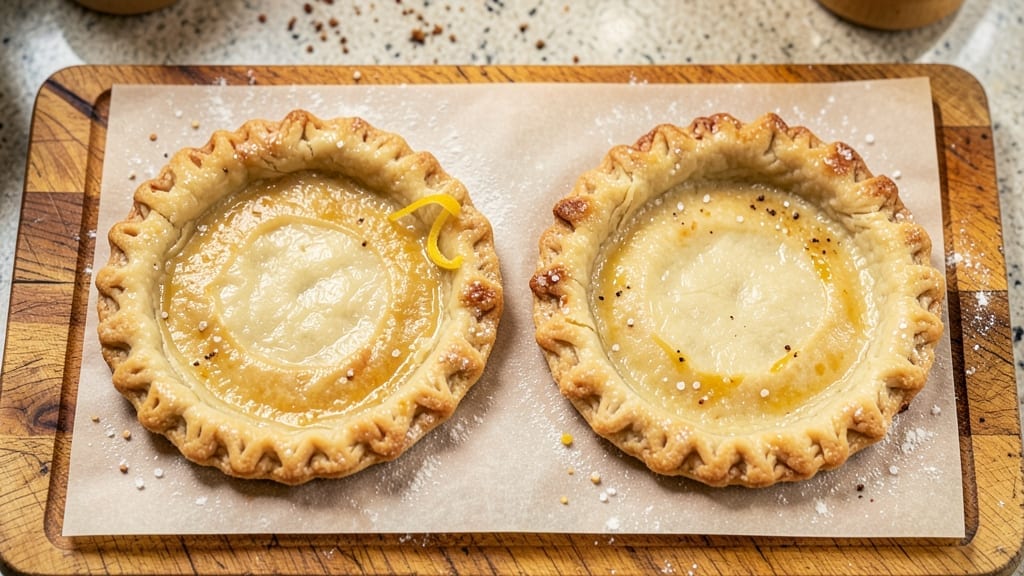
Mastering a flaky 9-inch pie crust for two pies is easier than you think—this recipe delivers perfect golden layers every time without the stress. The secret lies in chilled butter and precise handling, transforming simple ingredients into a buttery, crisp foundation.
I’ve perfected this method after years of baking, and it’s the crust I reach for when I need foolproof results.
This recipe uses a classic all-butter crust with just five ingredients, including all-purpose flour, cold unsalted butter, ice water, and a pinch of salt. The dough rests in the fridge for at least an hour, which relaxes the gluten and ensures tender, flaky layers.
Baking at 375°F for 15-18 minutes yields a crisp, golden edge with a tender center—ideal for both sweet and savory pies.
What sets this apart is the technique: rolling the dough just enough to keep it cohesive but not too thin, and docking it with a fork to prevent puffing. The result is a sturdy, delicate crust that holds its shape under fillings while still offering that satisfying crunch.
Whether you’re making apple, pumpkin, or even a savory quiche, this crust is your go-to.
Once you’ve mastered the crust, the possibilities are endless. Pair it with your favorite filling or use both crusts for a double-crust pie. The key is patience—let the dough rest, and don’t rush the rolling. Here’s how to get started.
Ingredients for 2 9 inch pie crust
Five simple ingredients make two perfect 9-inch crusts—no fuss, just golden flakiness.
| Ingredient | Amount | Notes |
|---|---|---|
| All-Purpose Flour 🌾 | 4 cups | Sifted for light texture |
| Unsalted Butter 🧈 | 1 cup | Cold, cubed, not softened |
| Ice Water 💧 | ½ cup | Chilled in freezer |
| Kosher Salt 🧂 | ½ tsp | Fine grain preferred |
| Granulated Sugar 🍚 | 1 tbsp | For golden crust edge |
The butter is the star here. Cold cubes are non-negotiable—if it’s too soft, pop it in the freezer for 15 minutes. I always grab Land O’Lakes unsalted from the store, but any good-quality brand works. The flour? King Arthur or Gold Medal are my go-tos—they’re consistent. Pro tip: don’t overwork the dough. Just mix until it comes together, then handle it as little as possible. That’s how you get those perfect flaky layers.
No ice water? Cold tap water works too, but ice keeps things colder longer. Running short on butter? Shortening like Crisco gives a flakier crust, but butter’s flavor wins. Want a sweeter crust? Add 2 tbsp sugar per crust. The salt is key—Diamond Crystal is my pick, but any kosher salt works. And if you’re short on time, pre-chill your rolling pin for 10 minutes before rolling. Trust me, it makes a difference.
This dough keeps for 3 days in the fridge, wrapped tight in plastic. For longer storage, freeze it for up to 3 months. I like to roll one crust at a time—keep the unused dough wrapped and chilled. Once baked, store cooled crusts in an airtight container. Reheat at 350°F for 5-10 minutes if needed. Perfect for prepping ahead!
Why You’ll Love This Recipe
- No-Fuss Dough: I swear by this method—just flour, cold butter, and ice water. No food processor, no overworking, just a quick cut-in and fold. The butter stays pea-sized, so every bite is flaky perfection without the fuss.
- Buttery Crisp Magic: That cold butter in the dough? It melts into golden, shatteringly crisp layers. Add a pinch of sugar, and suddenly your crust has this subtle sweetness that makes it irresistible—no extra work, just pure flavor.
- Double the Crust: Two 9-inch crusts mean I can make a pie and hand pies—or freeze one for later. Honestly, I’ve used these for quiches, pot pies, even a savory tart. The dough’s so reliable, I never stress about last-minute baking.
- Pantry Staple Power: Five ingredients, all shelf-stable. No weird substitutions, no last-minute store runs. Between us, this is my go-to when I need a crust fast—whether it’s a weeknight dessert or a holiday showstopper. Budget-friendly and foolproof.
Step-by-step instructions for golden, flaky pie crusts
This method delivers restaurant-quality crusts every time—crisp, flaky layers that hold their shape perfectly.
Mix Dry Ingredients for Perfect Texture
In a large bowl, combine the 4 cups All-Purpose Flour, 0.5 tsp Kosher Salt, and 1 tbsp Granulated Sugar. Use your fingers to gently break up any flour lumps, then sift the mixture through a fine-mesh sieve directly back into the bowl. This aerates the flour and creates a lighter, more tender crust.
I like to press the flour through the sieve twice to ensure even distribution of the sugar and salt. The sugar will contribute to that beautiful golden edge, while the salt enhances all the flavors in your pie filling. Keep the bowl ready—we’ll work quickly to keep the butter cold.
Cut in Cold Butter for Maximum Flakiness
Add the 1 cup Unsalted Butter, still in its cold cubes, to the flour mixture. Using a pastry cutter or two forks, cut the butter into the flour until you reach pea-sized crumbs with some slightly larger pieces remaining. This texture is crucial—it creates those signature flaky layers when baked.
Work quickly but don’t rush. You want the butter to remain cold and in chunks. If the mixture starts to look like wet sand, it means the butter is melting too fast. In that case, return the bowl to the refrigerator for 5 minutes to firm up before continuing. The goal is to maintain that cold butter until we incorporate the ice water.
Add Ice Water Gradually for Firm Dough
Measure out the 0.5 cup Ice Water and add it to the flour-butter mixture 1 tablespoon at a time. Use a fork to gently stir after each addition until the dough just comes together. Be careful not to overwork it—just until it forms a shaggy mass that holds when pressed.
Here’s the thing—ice water is essential. It keeps the dough cold and firm, which prevents the butter from melting during shaping. If your dough feels too dry, add another teaspoon of ice water. If it’s too sticky, sprinkle in 1 tablespoon of flour and mix lightly. The dough should be just pliable enough to handle without sticking to your hands.
Shape and Chill for Perfect Crusts
Divide the dough into two equal portions (about 2 cups each) and shape each into a disk about 1 inch thick. Wrap each disk tightly in plastic wrap and refrigerate for at least 1 hour. This chilling step is non-negotiable—it firms up the dough and makes it much easier to roll out without tearing.
While the dough chills, flatten each disk slightly with your hand to make rolling easier. I like to place them on a floured surface and use a rolling pin to gently press them into 9-inch circles, about 1/8-inch thick. If the dough starts to stick, sprinkle more flour on the surface and your rolling pin. The goal is to create two even, smooth circles that will hold their shape in the pie dish.
Transfer and Blind-Bake for Support
Carefully transfer one chilled crust to a 9-inch pie dish, gently shaping it to fit the bottom and sides. Press the edges up slightly to create a 1-inch rim, then prick the bottom all over with a fork to prevent puffing. Line the crust with parchment paper, fill it with pie weights or dried beans, and bake at 375°F for 15 minutes. This blind-baking step ensures your crust stays crisp and holds its shape when you add the filling.
Remove the weights and parchment, then bake the crust for another 5-7 minutes until it’s golden brown and fully set. For a double crust, repeat the process with the second disk. If making a top crust, you can skip the blind-baking and simply roll it out after the filling is added. The key is to keep everything cold and work quickly to maintain that perfect flaky texture.
Pro Tips For Making 2 9 Inch Pie Crust
- CHILL THE BUTTER FIRST: Pull that butter out of the fridge 30 minutes before mixing—cold butter makes flaky layers, but if it’s too hard, the dough gets tough. I learned this the hard way after struggling to cut in butter that was rock-solid; now I just grab a glass of water and wait.
- WEIGH YOUR FLOUR: Scoop and level? No. Use a kitchen scale for 4 cups of flour (about 480g). Packing flour changes moisture levels, and this recipe is fussy about consistency. I was skeptical until I tried it—no more dough that’s either too sticky or dry.
- WORK FAST WITH ICE WATER: Keep your ice water in the freezer until the last minute—it melts faster than you think. Add it 1 tablespoon at a time to avoid overworking the dough. Sounds weird, but it works: the dough stays cool longer, and you won’t end up with a greasy mess.
- REST THE DOUGH TWICE: Give the dough a 30-minute rest in the fridge after mixing, then roll it out and rest it another 15 minutes before baking. This isn’t the prettiest method, but it’s the tastiest—prevents shrinking and ensures even baking. (Yes, even if you’re impatient like me.)
Creative variations of this recipe
Sweet vs. Savory
This versatile crust works for both sweet and savory pies. For apple or berry pies, add 1 tbsp cinnamon to the dough for warmth. For savory options like quiche or chicken pot pie, reduce sugar to ½ tbsp and add 1 tbsp fresh thyme or rosemary to the dough.
The butter flavor shines in both—just adjust the seasoning to match your filling. 🍏
Gluten-Free Adaptation
Swap the all-purpose flour for a 1:1 gluten-free blend like King Arthur Measure for Measure. Add 1 tbsp xanthan gum to help bind the dough. Keep the butter cold and handle gently—gluten-free dough tears more easily.
Chill for 2 extra hours before rolling to improve texture. The crust will be slightly denser but still flaky. 🌾
Herb-Infused Crusts
Incorporate 2 tbsp finely chopped herbs (like chives, dill, or basil) into the dough for a fresh twist. For garlic lovers, mix 1 tsp garlic powder into the dry ingredients.
These work beautifully with savory fillings like spinach and ricotta or herb-roasted chicken. The herbs add subtle complexity without overpowering. 🌿
Spiced Variations
Add ½ tsp pumpkin pie spice for a cozy fall flavor, perfect with pumpkin or pecan pies. For a Mexican-inspired twist, mix in ½ tsp cumin and ¼ tsp cayenne—ideal for chicken mole or chile verde. The spices blend seamlessly into the butter and flour. 🌶️
Double-Crust Shortcuts
Make one crust as directed, then roll the second dough thinner (1/16-inch) for a delicate lattice top. For ease, use a pastry cutter to create decorative slits in the second crust before baking.
Pre-bake the bottom crust, fill, then add the top crust unbaked—it’ll crisp as it bakes. 🔥
Freezer-Friendly Filling Prep
Prepare the crust dough ahead and freeze it for up to 3 months. Thaw overnight in the fridge, then proceed with rolling. For filling prep, assemble your pie filling (like apple or pumpkin) in the pie dish, cover tightly, and freeze.
Bake straight from frozen—add 5-10 extra minutes to the baking time. Perfect for last-minute holidays! ❄️
Nutrition facts
Frequently asked questions
Why does the dough need to chill for 1 hour?
Chilling relaxes the gluten, prevents shrinking, and keeps the butter cold for maximum flakiness. Skipping this step often leads to tough, dense crusts that crack during baking. The longer it rests (up to 24 hours), the better the texture.
Can I make this crust without a rolling pin?
Use a wine bottle, glass jar, or even your palms to press the dough. For extra control, wrap a smooth wooden spoon in plastic wrap and use that instead. Just work quickly to keep everything cold.
What if my crust puffs up in the oven?
Prick the bottom with a fork before baking to release steam. If it still puffs, your oven runs hot—reduce temperature to 350°F. For stubborn puffing, weigh down the crust with pie weights or dried beans during blind-baking.
How do I fix a cracked crust?
Brush with a thin layer of egg wash (1 egg + 1 tbsp water) and bake at 400°F for 5 minutes to set the cracks. For a quick fix, sprinkle crushed nuts or extra sugar on the cracks before baking for decoration.
Can I use shortening instead of butter?
Yes, but the flavor will be different. Shortening creates a flakier crust that stays crisp longer, ideal for savory pies. For butter flavor, use a 50/50 butter-shortening mix. Never substitute oil—it makes the crust greasy.

- Pea Soup Instant Pot Recipe: Velvety Green Smoothness in 20 Minutes - November 1, 2026
- Pork Loin Pulled Pork Crock Pot Recipe: Slow-Smoked Tenderness With Zero Dryness - November 1, 2026
- Baked Potatoes in Crock Pot Recipe: Buttery Interiors and Crispy Top Magic - November 1, 2026