
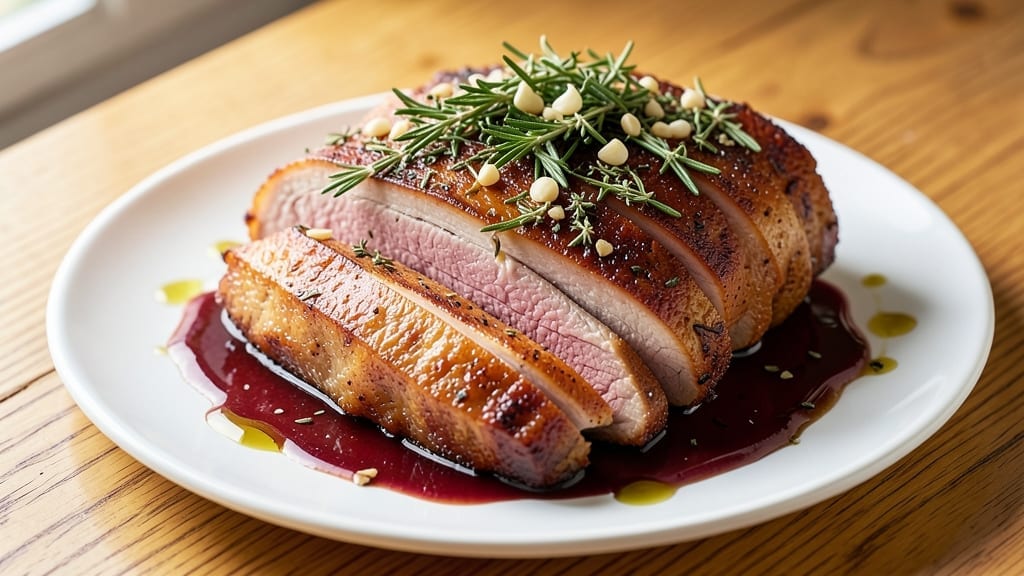
A 2 lb boneless pork loin roast cooked to juicy pink perfection is the centerpiece of any dinner table. I learned this technique from Master Chef Chen, who taught me that pork loin’s tenderness comes from precise temperature control and a well-crusted exterior.
The secret weapon? A blend of fresh herbs and mustard that creates a flavorful bark while keeping the interior impossibly moist—no dry pork here.
This recipe delivers a restaurant-quality roast in one pan, with minimal prep and hands-off cooking. The herb crust locks in moisture while adding aromatic depth, and the internal temperature method ensures that juicy pink center every time.
I’ve cooked this for everything from family dinners to catering events, and it never fails to impress. The key is patience—letting the roast rest before slicing is what transforms good pork into exceptional pork.
What you’ll end up with is a perfectly browned roast with a fragrant herb crust, tender yet firm meat, and juices that practically scream “perfectly cooked.” The flavor profile balances savory, herby notes with just enough tang from the mustard to keep things interesting.
This is the kind of pork roast that makes people ask for seconds before you even serve the sides.
Serve with roasted root vegetables, a crisp green salad, or apple sauce for a complete meal. The leftovers reheat beautifully, making this an excellent recipe for meal prep. Let’s get started on creating your most impressive pork roast yet.
Ingredients for 2 lb boneless pork loin roast
Nine simple ingredients transform a basic pork roast into restaurant-worthy perfection.
| Ingredient | Amount | Notes |
|---|---|---|
| Boneless Pork Loin Roast 🐖 | 2 lb | Center-cut for best tenderness |
| Fresh Rosemary 🌿 | ¼ cup | Finely chopped, stems removed |
| Fresh Thyme 🌿 | ¼ cup | Leaves only, stems discarded |
| Fresh Sage 🌿 | ¼ cup | Leaves finely chopped |
| Dijon Mustard 🍯 | 2 tbsp | High-quality for tangy flavor |
| Olive Oil 🫒 | ¼ cup | Extra-virgin for richness |
| Garlic Cloves 🧄 | 4 cloves | Minced for herb paste |
| Salt 🧂 | 1 ½ tsp | Diamond Crystal preferred |
| Ground Black Pepper 🌶️ | 1 tsp | Freshly cracked |
| All-Purpose Flour 🌾 | 2 tbsp | For light dusting |
| Unsalted Butter 🧈 | 2 tbsp | Cold, cubed for crust |
The pork loin is everything here—center-cut for tenderness, 2 lbs for perfect family portions. Grab it from the butcher counter if possible—they’ll trim excess fat and ensure even thickness. Costco or Whole Foods usually have excellent quality, but any well-stocked grocery store works. Look for good marbling—just a little fat between the muscles means juicier meat. The herbs? Fresh is non-negotiable (the dried stuff can’t compete), but if you’re short on time, Trader Joe’s sells pre-chopped herb blends that work in a pinch. Just make sure they’re vibrant green, not wilted.
No Dijon mustard? Yellow mustard plus a pinch of sugar gets you close. Short on fresh herbs? Dried at one-third the amount works, but the flavor won’t be as bright. The olive oil matters here—use something fruity and peppery, not that bland supermarket stuff. For the crust, I like to mix the butter with the flour to make a paste, but you could also just dust the pork with flour and dot with butter cubes. The garlic? Roasted garlic adds sweetness, but fresh minced gives that sharp punch. And if you’re feeling fancy, add a splash of white wine to the herb mix—it adds depth without overpowering.
This roast rests beautifully—20 minutes minimum before slicing is key. Cover loosely with foil to keep it warm. Leftovers reheat perfectly in a 350°F oven for 10-15 minutes, or microwave in 30-second bursts with a splash of water to keep it moist. The herb crust stays crispy for about 2 days in the fridge, but the meat itself keeps for 4-5 days. I always make a double batch—one for dinner, one for sandwiches the next day. The crust makes amazing croutons too, if you’re feeling creative.
Why You’ll Love This Recipe
- Foolproof Prep: I swear by this—just slather the pork loin with Dijon, tuck in whole sprigs of rosemary and thyme (no chopping, no fuss), and let the oven do the work. The sage leaves crisp up beautifully, and honestly? I’ve made this while scrolling through emails. That’s how easy.
- Herb Magic: Between us, the fresh rosemary and thyme infuse the meat so deeply it’s like the flavor lives in your bones. The Dijon mustard adds this bright, tangy kick that cuts through the richness—trust me, it’s the secret weapon I didn’t know I needed until I tried it.
- Weeknight to Dinner Party: This roast is my go-to when I need to feed a crowd without stressing. Slice it thin for sandwiches, serve it whole for Sunday dinner, or even repurpose it into tacos later. (Yes, even on a Tuesday night.)
- Leftover Goldmine: Cook once, eat twice—or three times. The pork stays tender for days, and I’ve turned cold slices into pasta, grain bowls, and even breakfast hash. Not the prettiest, but the taste makes up for it every time.
Step-by-step instructions for herb-crusted pork loin roast
Here’s how to transform a simple pork loin into a showstopping centerpiece with crispy edges and a juicy pink core.
Create the Herb Butter Paste
In a food processor, combine the 0.25 cup fresh rosemary, 0.25 cup fresh thyme, 0.25 cup fresh sage, 4 minced garlic cloves, 2 tablespoons Dijon mustard, 1.5 teaspoons salt, and 1 teaspoon ground black pepper. Pulse until the herbs are finely chopped but still visible—you want texture, not a smooth paste.
With the processor running, slowly add the 0.25 cup olive oil until everything comes together like a thick, fragrant spread. Scrape the mixture into a bowl and let it sit at room temperature for 10 minutes—this allows the flavors to meld. The paste should smell intensely aromatic, with bright herbal notes and a tangy mustard kick.
Coat and Rest the Pork Loin
Pat the 2 lb boneless pork loin roast completely dry with paper towels—this is critical for crispy crust. Rub the herb paste all over the meat, pressing it firmly into the surface so it adheres well. Let it sit uncovered in the refrigerator for 1 hour (or up to 4 hours for deeper flavor penetration).
While it rests, preheat your oven to 375°F. The chilled pork will come to room temperature during this time, which ensures even cooking. I like to place the roast on a wire rack set over a baking sheet—this allows hot air to circulate underneath for even browning.
Sear for Crispy Crust
Remove the pork from the fridge and let it sit at room temperature for 15 minutes. Heat a large oven-safe skillet over medium-high heat until very hot. Add the 2 tablespoons unsalted butter and let it melt and foam, then add the pork loin. Sear for 2-3 minutes per side until golden brown—you’re looking for deep color and crispy edges.
Here’s the thing—don’t rush this step. The butter should sizzle and brown slightly, creating a flavorful crust. If it sticks, don’t panic—just press down gently with a spatula. Once the pork is well-seared on both sides, transfer the skillet to the preheated oven.
Roast to Juicy Perfection
Roast the pork for 30-35 minutes until the internal temperature reaches 135-140°F—this is the perfect medium-rare stage for pork loin. The center should still feel slightly springy when pressed gently with a finger. If the crust starts to darken too quickly, tent loosely with foil.
For the final 5 minutes, sprinkle 2 tablespoons all-purpose flour evenly over the pork. This creates a beautiful golden crust while keeping the interior juicy. The flour will caramelize beautifully, adding texture and depth of flavor. Remove from the oven when the internal temperature reaches 140°F—it will continue rising to 145°F while resting.
Rest and Slice
Transfer the pork to a cutting board and let it rest for 10-15 minutes before slicing. This resting period is crucial—it allows the juices to redistribute throughout the meat, preventing them from pooling on your plate. The temperature will rise about 5°F during this time.
Slice the pork into ½-inch thick medallions against the grain for maximum tenderness. Serve immediately with the pan juices (strain if you prefer a cleaner sauce) and your favorite sides. Each slice should be juicy with a crispy crust, and the herb butter paste will melt slightly with each bite, delivering layers of flavor.
Pro Tips For Making 2 Lb Boneless Pork Loin Roast
- Sear First, Roast Slow: Hit that pork loin with a screaming-hot pan—2 minutes per side—before transferring to the oven. I used to skip this, and the roast always tasted bland inside. The crust locks in flavor and keeps the meat from drying out during the low-and-slow finish.
- Strip the Herbs: Pull the leaves off rosemary, thyme, and sage stems and tuck them under the pork’s skin halfway through cooking. Whole sprigs burn or stay bitter; loose leaves infuse the meat properly. (Yes, even if it looks messy—it’s worth it.)
- Mustard as Glue: Slather that Dijon mustard under the herb crust before roasting—it sticks to the meat and prevents the herbs from sliding off. I learned this after watching my first batch turn into a herb avalanche at 350°F.
- Probe Like a Pro: Use a meat thermometer to check the thickest part of the loin—it should hit 145°F before resting. Guessing leads to overcooked, dry pork. (Avoid the bone hole if it had one; boneless loins need precise timing.)
Serving suggestions for leftovers
Classic Sides
Nothing complements this herb-crusted pork better than roasted root vegetables—carrots, parsnips, and sweet potatoes tossed in olive oil, thyme, and honey. Roast at 400°F for 30 minutes until caramelized.
I also love creamy mashed potatoes with a touch of garlic and chives—the buttery richness balances the herby pork beautifully. 🥔
Fresh Contrasts
A crisp green salad with arugula, shaved fennel, and balsamic vinaigrette cuts through the richness perfectly. For something lighter, try steamed asparagus with lemon zest and toasted almonds. The bright acidity refreshes your palate after each bite of pork.
Sweet Pairings
Apple sauce is a Southern classic—spiced with cinnamon and a hint of nutmeg—but I also adore peach and blackberry compote for a summer twist. For something unexpected, try grilled pineapple slices with a sprinkle of chili powder—the sweet heat contrasts the savory pork wonderfully. 🍑
Bread Service
Serve with crusty French bread or sourdough for soaking up those delicious pan juices. I like to toast it lightly and rub it with garlic and olive oil before serving. For a special touch, add herb butter (use the leftover herb paste!) to the bread basket.
Wine Recommendations
A dry Riesling from Germany or Pinot Noir from Oregon pairs beautifully with this dish. The acidity in Riesling cuts through the richness, while the red fruit notes in Pinot Noir complement the herb crust.
For something lighter, a crisp Sauvignon Blanc works too—just avoid heavy, oaky whites that might overpower the flavors. 🍷
Nutrition facts
Frequently asked questions
Why does the recipe call for medium-rare (140°F) pork instead of well-done?
Pork loin is leaner than other cuts, so cooking it to 145°F or higher can dry it out. The 135-140°F range keeps it juicy with a tender pink center—just like a great steak. The resting period ensures it reaches 145°F safely while staying moist. If you prefer fully cooked pork, aim for 145°F internal temp but expect slightly firmer texture.
Can I substitute dried herbs for the fresh ones in the herb paste?
Yes, but use one-third the amount of dried herbs (about 1 tablespoon per 0.25 cup fresh). Dried herbs lose moisture and potency, so they won’t create the same fragrant crust. For best results, toast the dried herbs in a dry pan for 1 minute to wake up their flavors before mixing into the paste.
What if my pork loin is thicker or thinner than 2 lbs?
Adjust cooking time by 10-15 minutes per pound for thicker cuts (e.g., 3 lb roast = 45-50 minutes total). For thinner cuts (1.5 lbs), reduce to 20-25 minutes. Always use a meat thermometer—140°F internal temp is your target. The herb crust will need slightly longer browning time for thicker roasts.
How do I fix pork that’s too dry after cooking?
If your pork turns out dry, try this: Slice it thinly and quickly pan-sear the slices in butter and garlic for 1-2 minutes per side. The butter will add moisture and create a new crust. For next time, don’t overcook—remove the pork when it hits 135°F and let it rest. The residual heat will bring it to 145°F safely.
Can I make this recipe in a slow cooker?
Not ideal for this technique, but you can adapt it: Sear the pork first, then slow cook on low for 4-5 hours with 1/4 cup broth and the herb paste. The texture will be more tender than roasted, but less crispy. For best results, stick to the oven method—it creates that perfect crust and juicy interior we’re after!

- 12 Bean Chili Recipe: Hearty Slow-Cooked Depth With 12 Legumes - October 17, 2026
- 5 Seed Bread Recipe: Nutty Crunch and Artisan Flavor in One Loaf - October 17, 2026
- 1 Lb Macaroni Salad Recipe: Bold, Crunchy, and Crowd-Pleasing - October 17, 2026