
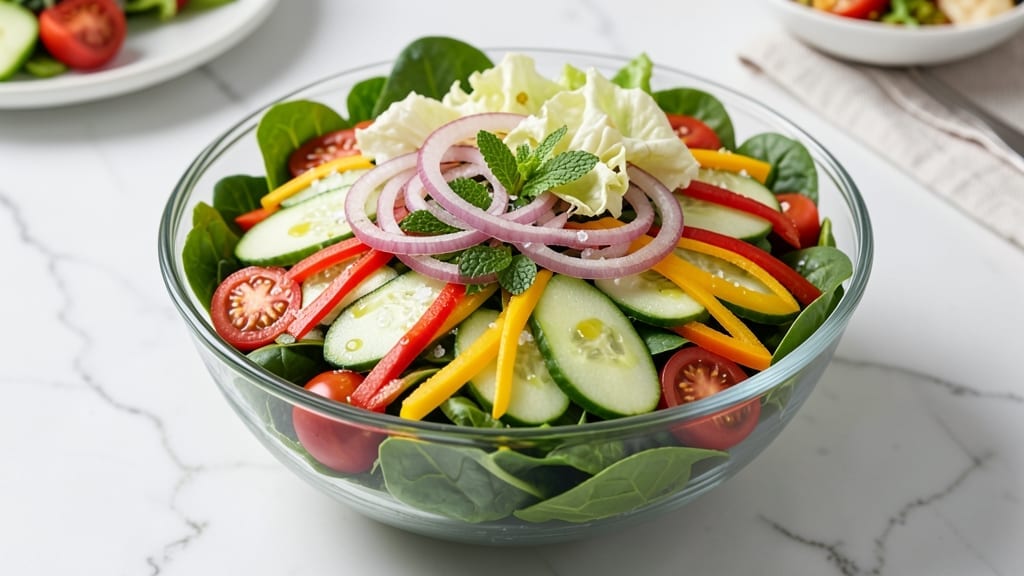
Creating a 24-hour layered lettuce salad transforms ordinary greens into a restaurant-worthy dish with crisp layers that stay fresh and vibrant. The secret lies in strategic assembly and overnight chilling—letting flavors meld while maintaining perfect texture.
This isn’t just a side; it’s a complete meal that shines at picnics, potlucks, or as a light lunch when paired with protein. The beauty of this recipe is its simplicity: no cooking required, just layering ingredients in a specific order to prevent sogginess.
Start with sturdy vegetables like cucumbers and bell peppers at the bottom, followed by leafy greens, and finish with creamy toppings that stay fresh for hours. The key is balancing moisture—draining ingredients thoroughly and using a dressing that enhances rather than overwhelms.
After 24 hours, you’ll uncover a salad with crisp layers that hold their shape, flavors that deepen, and a texture that’s impossibly fresh. The lettuce stays crisp, the vegetables retain their crunch, and the dressing binds everything together without making it soggy.
This is the kind of salad that makes you look like a pro—no wilting, no sad greens, just perfect layers every time. Serve as a standalone meal with grilled chicken or shrimp, or as a side that elevates any protein.
The recipe is vegetarian by default but easily adaptable for vegan diets with simple swaps. Let’s build this salad the right way—once you try it, you’ll never go back to last-minute tossing.
Ingredients for 24 hour layered lettuce salad
Sixteen ingredients for a salad that stays crisp and vibrant for 24 hours.
| Ingredient | Amount | Notes |
|---|---|---|
| Romaine Lettuce 🥬 | 1 whole | Heads separated into crisp leaves |
| English Cucumber 🥒 | 1 whole | Thinly sliced, seeds removed |
| Red Bell Pepper 🌶️ | 1 whole | Thinly sliced, seeds removed |
| Yellow Bell Pepper 🌶️ | 1 whole | Thinly sliced, seeds removed |
| Cherry Tomatoes 🍅 | ½ lb | Halved, drained well |
| Red Onion 🧅 | 1 whole | Thinly sliced, soaked 10 mins |
| Baby Spinach 🌿 | 4 oz | Washed, dried thoroughly |
| Extra-Virgin Olive Oil 🫒 | ¼ cup | High quality, fruity |
| Apple Cider Vinegar 🍎 | 2 tbsp | Raw, unfiltered preferred |
| Maple Syrup 🍁 | 1 tbsp | Pure, grade B |
| Dijon Mustard 🌶️ | 1 tsp | Mild variety |
| Salt 🧂 | ½ tsp | Diamond Crystal preferred |
| Black Pepper 🌶️ | ¼ tsp | Freshly ground |
| Crumbled Feta Cheese 🧀 | ½ cup | Vegetarian, optional |
| Toasted Walnuts 🥜 | ¼ cup | Chopped, skin-on |
The lettuce is your foundation—Romaine holds up best to overnight chilling. Grab the full heads at Whole Foods or your local grocery store’s produce section, where they’re usually pre-washed but still crisp. The bell peppers should be firm with vibrant color—Trader Joe’s carries great organic ones year-round. For the cucumbers, English varieties are less seedy and more tender. Soak the red onion slices for 10 minutes to mellow their bite, then drain thoroughly. Baby spinach is a game-changer here—it stays vibrant longer than iceberg or romaine. The key is draining everything before assembly to prevent sogginess.
No feta? Vegan feta or goat cheese works beautifully. Running low on walnuts? Pecans or candied pecans add a similar crunch. The dressing can be made ahead—store it in a jar for up to 1 week. For a tangier salad, add an extra tablespoon of vinegar. The maple syrup balances acidity perfectly, but agave nectar or honey are great swaps. If you’re vegan, use maple syrup instead of honey. The mustard adds depth—skip it if you prefer a simpler dressing. For extra protein, add grilled chicken or chickpeas to the top layer before chilling.
This salad tastes even better the next day—flavors meld beautifully after 24 hours. Store in an airtight container in the fridge, with layers separated by parchment paper to maintain crispness. Keeps for 3-4 days this way. For serving, gently rearrange the layers if needed. The dressing will separate slightly—just give it a quick stir before drizzling. Portion into individual containers for easy grab-and-go meals. The walnuts and cheese stay fresh for 5-7 days in the fridge, so add them just before serving.
Why You’ll Love This Recipe
- No-Chop Nightmare: I swear, the hardest part is picking which veggies to layer first. Slice the cucumbers and peppers into thick rounds—no fancy knife work—then just stack them like a lazy rainbow. The Romaine stays crisp even after 24 hours, so you’re basically getting a head start on dinner without the fuss.
- Crunchy Magic: That first bite? Chef’s kiss. The English cucumber’s cool snap contrasts the sweet cherry tomatoes, while the bell peppers add a subtle crunch that doesn’t wilt. Honestly, the longer it sits, the better the flavors meld—like a party in your mouth where everyone’s invited.
- Office Lunch Hero: Between us, this is my go-to for meal prep Sundays. Pack it in jars or containers, and it’s still fresh by Friday—no sad, soggy salads here. Bring it to potlucks, work lunches, or even a picnic; it’s the one dish that never lets you down.
- Budget Brightener: Fresh veggies don’t get much more affordable than this. A single head of Romaine and a handful of bell peppers stretch across multiple servings, and the cucumbers? They’re practically free at farmers’ markets. Plus, no dressing needed—just salt, pepper, and a squeeze of lemon if you’re feeling fancy.
Step-by-step instructions for 24 hour layered lettuce salad
Here’s how to assemble a salad that stays crisp and vibrant for a full day.
Prepare the Base Layers for Maximum Freshness
Start by separating the 1 whole Romaine Lettuce into crisp leaves, removing any wilted outer layers. This is your foundation layer that will hold everything together. Place the leaves in a large glass or ceramic bowl—glass helps maintain crispness longer than metal. Arrange them with stems pointing outward to create an attractive presentation while maximizing surface area for even dressing distribution.
Next, thinly slice the 1 whole English Cucumber and drain it well to remove excess moisture. This prevents sogginess in the lower layers. Spread these slices evenly over the Romaine leaves, creating a continuous layer that will absorb the dressing without becoming waterlogged. The cucumber’s cool crunch will contrast perfectly with the heartier vegetables you’ll add later.
Layer Vegetables Strategically for Texture and Color
Halve the 0.5 lb Cherry Tomatoes and drain them thoroughly on paper towels to prevent the salad from becoming watery. Arrange them in a single layer over the cucumber slices, leaving small gaps between each half. This creates both visual appeal and ensures each bite contains multiple textures.
Thinly slice the 1 whole Red Bell Pepper and 1 whole Yellow Bell Pepper, removing seeds and membranes. Distribute these slices evenly over the tomatoes, alternating colors for visual interest. The peppers will add sweetness and a satisfying crunch that holds up well over time. For the 1 whole Red Onion, thinly slice and soak in cold water for 10 minutes to mellow its sharpness before draining and adding to the top layer.
Create the Dressing and Assemble the Final Layers
In a small bowl, whisk together the 0.25 cup Extra-Virgin Olive Oil, 2 tbsp Apple Cider Vinegar, 1 tbsp Maple Syrup, 1 tsp Dijon Mustard, 0.5 tsp Salt, and 0.25 tsp Black Pepper. This dressing balances sweet, tangy, and savory flavors while maintaining the salad’s crispness. Taste and adjust seasoning—you want it to complement rather than overpower the fresh vegetables.
Lightly toss the 4 oz Baby Spinach with just enough dressing to wilt it slightly but maintain its vibrant color. Spread this over the vegetable layers, then sprinkle with the 0.5 cup Crumbled Feta Cheese and 0.25 cup Toasted Walnuts. The walnuts add a satisfying crunch that contrasts with the tender spinach, while the feta provides a salty contrast to the sweet vegetables.
Dress and Store for Optimal Freshness
Drizzle the remaining dressing evenly over the entire salad, being careful not to oversaturate the bottom layers. The key to maintaining crispness is proper dressing technique—always dress the salad just before serving if possible, but for a 24-hour salad, this method ensures it stays fresh. Cover tightly with plastic wrap and refrigerate immediately.
For best results, store the salad in the refrigerator for at least 4 hours before serving. This allows the flavors to meld slightly while maintaining the crisp texture of the vegetables. When ready to serve, gently toss the salad to redistribute the dressing and toppings. The layered approach ensures each bite contains a perfect balance of textures and flavors, from the crisp Romaine to the crunchy walnuts and creamy feta.
Pro Tips For Making 24 Hour Layered Lettuce Salad
- CHILL THE CUCUMBER FIRST: English cucumbers hold more water than you’d think, and slicing them straight into the salad means soggy layers by day two. Toss the sliced cucumber in ice water for 10 minutes before draining—this shocks out excess moisture without wilting the texture. (Yes, it’s weird, but it guarantees crispness for the full 24 hours.)
- DRESS THE PEPPERS LAST: Bell peppers soften fast in acid or oil, so resist the urge to marinate them with the dressing. Instead, slice them thinly right before assembling and place them on top—this keeps their crunch intact while the dressing soaks into the lettuce and tomatoes below. (I learned this after my first batch turned mushy by lunch.)
- DRY THE LETTUCE THOROUGHLY: Romaine’s natural moisture is the salad’s enemy. After washing, spin it in a salad spinner twice—once to remove water, then again after shaking out the outer leaves. Pat the core with a paper towel if it feels damp. Wet lettuce = limp layers by morning. (Your future self will notice the difference.)
- LAYER IN THIS ORDER: Start with the sturdiest veggies at the bottom (bell peppers, cucumber) and work up to the most fragile (cherry tomatoes, lettuce). The dressing will seep down evenly, and the tomatoes won’t get crushed under the weight. Pro move: Use a wide, shallow container so nothing gets smushed. (I used to stack it like a lasagna—don’t make my mistake.)
Perfect pairings for this dish
Protein Pairings
This salad shines as a light meal when paired with grilled lemon-herb chicken or seared shrimp skewers. The crisp layers hold up perfectly against the juicy protein, creating a balanced plate.
For a vegetarian option, add white beans or toasted chickpeas to the top layer before chilling. The protein adds substance while keeping the dish refreshing. 🥗
Bread Pairings
Serve with warm crusty bread or garlic focaccia to soak up any extra dressing. I love sourdough from my local bakery—its tangy flavor complements the salad’s sweetness. For a lighter option, try rosemary flatbread or water crackers to maintain the salad’s freshness.
The bread should be sturdy enough to handle the salad’s moisture without becoming soggy.
Dressing Variations
Swap the dressing for balsamic vinaigrette if you prefer a deeper tang. Mix 3 tbsp balsamic vinegar, 2 tbsp olive oil, 1 tsp honey, and a pinch of salt for a rich, sweet contrast.
For a creamy option, blend ¼ cup Greek yogurt with 1 tbsp lemon juice and 1 tsp Dijon mustard. Both work beautifully with the layered vegetables. 🍷
Cheese Alternatives
Skip the feta for goat cheese crumbles or vegan feta to keep it vegetarian. Goat cheese adds a tangy depth, while vegan feta provides a creamy texture. For a nutty twist, try shaved Parmesan or crumbled blue cheese—both elevate the salad’s complexity.
Always add cheese just before serving to prevent sogginess in the layers.
Seasonal Additions
In summer, add sliced avocado or corn kernels for extra freshness. For fall, incorporate roasted butternut squash cubes or pomegranate seeds for a festive touch. Winter calls for candied pecans or dried cranberries to add warmth. Each seasonal addition keeps the salad exciting year-round while maintaining its crisp texture. ❄️
Dessert Pairings
End the meal with citrus sorbet or honey-drizzled fruit to balance the salad’s savory-sweet flavors. A light lemon tart or berry compote provides a refreshing finish. The acidity in the dessert complements the salad’s dressing, creating a harmonious dining experience.
For a non-dairy option, try chilled mango slices with a sprinkle of Tajín. 🍋
Nutrition facts
Frequently asked questions
Why does this salad need 24 hours to develop flavor?
The overnight chilling allows the dressing to penetrate each layer evenly, while the vegetables release their natural juices and flavors. This creates a harmonious blend where the sweetness of the maple syrup and peppers balances perfectly with the tangy dressing. The lettuce stays crisp because the moisture is controlled through layering and draining ingredients thoroughly. This is how you get that restaurant-quality taste at home!
Can I make this salad ahead of time for a party?
This is perfect for meal prep. Assemble the salad up to 24 hours ahead and store it in an airtight container with parchment paper between layers to maintain crispness. Just before serving, gently rearrange the layers and add any toppings like cheese or nuts that might get soggy. The flavors will have melded beautifully, and it’ll look impressive when served.
What if my lettuce gets soggy after 24 hours?
Sogginess usually happens from excess moisture. To prevent it, always drain all ingredients thoroughly (especially tomatoes, cucumbers, and onions) and use a glass or ceramic bowl instead of metal. Also, dress the salad lightly before storing—add more dressing just before serving. If needed, sprinkle a pinch of salt on the lettuce before layering to draw out excess water. The key is balance: crisp vegetables need just enough moisture to taste fresh, not drowned!
How do I keep the dressing from separating overnight?
The dressing in this recipe is designed to be stable, but if you notice separation, simply give it a quick whisk before drizzling. For extra insurance, store the dressing separately in a sealed jar and mix it just before assembling the salad. The ingredients (olive oil, vinegar, and mustard) naturally create an emulsion that holds up well, but gentle mixing ensures perfect consistency every time.
Can I make this salad vegan?
Yes! Simply omit the feta cheese or use a vegan feta alternative. For extra protein, add toasted chickpeas or white beans to the top layer before chilling. The dressing is already vegan-friendly, and all other ingredients are plant-based. The salad will still be just as flavorful and satisfying without any animal products.

- 12 Bean Chili Recipe: Hearty Slow-Cooked Depth With 12 Legumes - October 17, 2026
- 5 Seed Bread Recipe: Nutty Crunch and Artisan Flavor in One Loaf - October 17, 2026
- 1 Lb Macaroni Salad Recipe: Bold, Crunchy, and Crowd-Pleasing - October 17, 2026