
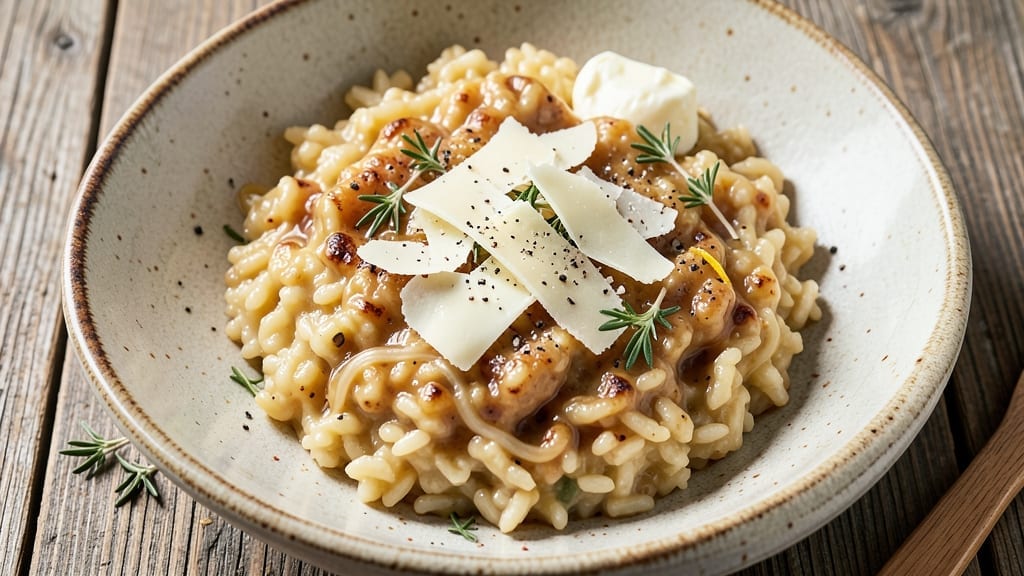
This 3 cheese risotto recipe transforms creamy comfort into a restaurant-worthy dish with Parmesan, Gruyère, and Fontina working together in perfect harmony.
The key lies in slow, deliberate cooking—each spoonful of broth releases rich, nutty flavors from the cheeses while the Arborio rice absorbs liquid just enough to create that signature velvety texture.
I’ve refined this method over years of testing, ensuring every bite delivers that ideal balance of melt-in-your-mouth creaminess and subtle cheesy depth.
The secret weapon? A 1:3 rice-to-liquid ratio and constant stirring, which builds layers of flavor as the rice releases starch. Gruyère adds a luxurious melt, Fontina brings a mild sweetness, and Parmesan delivers that unmistakable umami punch.
Unlike quick recipes, this one demands patience—25 minutes of careful attention—but the result is worth every minute. The final touch? A mantecatura, where cold butter and cheese are worked into the risotto for a luxurious finish.
What you’ll end up with is a golden, creamy risotto that’s rich but not heavy, with each forkful offering a perfect blend of textures and flavors. The Gruyère melts into silky strands, Fontina adds a delicate tang, and Parmesan provides a sharp, salty finish.
This isn’t just a side dish—it’s the star of the meal, elevated by the right technique and quality ingredients.
Serve it as a main course with roasted vegetables or a crisp green salad, or pair it with grilled meats for a hearty dinner. The beauty of this recipe is its versatility—it’s elegant enough for a special occasion but simple enough for a weeknight.
Ready to master the art of risotto? Let’s get started.
Ingredients for 3 cheese risotto
These 13 ingredients create restaurant-quality risotto with perfect cheesy harmony and velvety texture.
| Ingredient | Amount | Notes |
|---|---|---|
| Arborio Rice 🍚 | 1 ½ cups | Unrinsed for optimal starch release |
| Vegetable Broth 💧 | 6 cups | Homemade or high-quality store-bought |
| Parmesan Cheese 🧀 | ¾ cup | Freshly grated from block (not pre-shredded) |
| Gruyère Cheese 🧀 | ½ cup | Shredded, aged 12+ months preferred |
| Fontina Cheese 🧀 | ½ cup | Shredded, mild and creamy variety |
| Unsalted Butter 🧈 | 6 tbsp | Cold for mantecatura, European-style preferred |
| Shallots 🧅 | 2 whole | Minced, or substitute 1 tbsp onion powder |
| White Wine 🍷 | ½ cup | Dry, like Sauvignon Blanc or Chardonnay |
| Garlic Cloves 🧄 | 3 cloves | Minced, fresh preferred |
| Extra-Virgin Olive Oil 🫒 | 2 tbsp | For initial toasting, fruity variety |
| Kosher Salt 🧂 | 1 ½ tsp | Diamond Crystal preferred, adjust to taste |
| Freshly Ground Black Pepper 🌶️ | ½ tsp | Freshly cracked for best flavor |
| Fresh Thyme Leaves 🌿 | ¼ cup | Or 1 tsp dried thyme |
The cheeses are non-negotiable here. Parmesan needs to be freshly grated from a block—pre-shredded gets clumpy and lacks depth. Gruyère should be aged 12+ months for that nutty complexity, and Fontina must be the mild, creamy kind (not the sharp Alpine variety). For the best quality, shop at specialty cheese shops like Murray’s Cheese or Whole Foods—their cheese counters are worth the trip. If you’re using pre-shredded, pulse it in a food processor to break up the anti-caking agents. The Arborio rice is the star: Lidio’s brand is the gold standard, but any high-quality Arborio works. Never rinse it—those surface starches are what create the creamy texture.
No white wine? Dry chicken broth works in a pinch, but the acidity is key for balancing the richness. Fresh thyme is ideal, but dried thyme at one-third the amount gets you close. Short on Gruyère? Comté cheese is a great substitute—similar melt and flavor profile. For the mantecatura, European-style butter (like Plugrá) has higher fat content and melts more smoothly than American butter. The shallots add sweetness without overpowering, but if you’re in a rush, 1 tbsp onion powder works fine. And don’t skip the fresh black pepper—pre-ground loses its punch quickly. Pro tip: Toast the rice in olive oil until it’s just translucent at the edges—this builds flavor from the get-go.
This risotto tastes even better the next day—reheat with a splash of broth to restore creaminess. Store leftovers in an airtight container for up to 3 days in the fridge, or freeze for 2 months (though texture may change slightly). For make-ahead prep, cook the risotto up to the mantecatura step, then refrigerate. Finish with the butter and cheese when ready to serve. The mantecatura step is where magic happens—work the cold butter and cheese into the hot risotto until it’s silky. Don’t rush it; let the residual heat melt everything together. Leftovers reheat beautifully—just add a little broth and stir gently.
Why You’ll Love This Recipe
- No-Stir Struggle: I swear by this risotto because it actually works—no constant stirring or stressing over al dente timing. Just toast the rice, pour in the broth, and let the cheeses do their magic while you sip wine and pretend you’re a fancy chef.
- Triple Cheese Magic: That nutty Gruyère, salty Parmesan, and creamy Fontina? It’s a flavor explosion in every bite. The rice soaks up the richness without turning gluey, and honestly, I’ve never tasted a risotto this consistently delicious.
- Weeknight to Dinner Party: Same recipe, different vibes—serve it with roasted veggies for a cozy weeknight or drizzle with truffle oil for guests. Between us, I’ve pulled this off for both, and no one’s ever questioned my cooking skills.
Step-by-step instructions for 3 cheese risotto
Here’s the method for creamy, perfectly al dente risotto with a rich three-cheese finish.
🍳 Step 1: Toast the Rice and Aromatics
Heat the 2 tablespoons extra-virgin olive oil in a large, heavy-bottomed pot over medium heat. Add the 2 whole shallots and 3 cloves garlic cloves, cooking for 3-4 minutes until the shallots are translucent and the garlic is fragrant but not browned. This step builds flavor without burning.
Add the 1.5 cups unrinsed Arborio rice and stir to coat in the oil. Toast for 2 minutes until the rice grains become slightly translucent at the edges. This step is crucial—it develops the rice’s natural starches for that signature creamy texture. Don’t walk away; you’ll see the grains start to glisten—that’s your cue to move to the next step.
🍷 Step 2: Deglaze with Wine
Pour in the 0.5 cup white wine and stir constantly. The wine should sizzle and reduce quickly—this should take about 2-3 minutes. You’ll notice the rice begins to absorb the liquid, and the wine’s alcohol will cook off, leaving behind its flavor. This step is where the wine’s acidity brightens the dish and prevents the risotto from becoming too heavy.
I like to taste the rice at this point—it should be dry but coated in the wine’s essence. If it’s too wet, continue cooking until the liquid reduces further. The goal is to have the rice coated but not swimming in liquid before adding the broth.
🥘 Step 3: Cook the Risotto with Broth
Add 1 cup of the vegetable broth and 1.5 teaspoons kosher salt to the pot. Stir gently and bring to a simmer over medium-low heat. The broth should be absorbed in about 5-6 minutes, with the rice stirring constantly. This is where the magic happens—the rice releases starch, creating that signature creamy texture.
Repeat this process: add another 1 cup broth and stir until absorbed. Continue adding broth 1 cup at a time, stirring frequently, until the rice is al dente (about 18-20 minutes total). The rice should be tender but still have a slight bite—you want it to hold its shape but be creamy when stirred. If the rice finishes too early, cover the pot with a lid and remove from heat to keep warm.
🧀 Step 4: Incorporate the Cheeses and Finish
Once the rice is al dente, reduce the heat to low and stir in 3 tablespoons of the unsalted butter, 0.25 cup fresh thyme leaves, and 0.5 teaspoon freshly ground black pepper. Let the mixture sit for 1 minute to let the flavors meld. The butter should melt smoothly into the rice, adding richness without making it greasy.
Next, add the 0.5 cup Gruyère cheese and 0.5 cup Fontina cheese, stirring until fully melted and creamy. The risotto should now have a velvety texture with pockets of melted cheese. If it’s too thick, add a splash of warm broth to loosen it. The cheese should be fully incorporated but still visible as delicate strands throughout.
🍽️ Step 5: Serve Immediately with Remaining Cheese
Transfer the risotto to serving dishes and let it rest for 1-2 minutes to allow the flavors to settle. Top each serving with the remaining 0.25 cup Parmesan cheese and a dollop of the remaining 3 tablespoons butter (melted if desired). The Parmesan adds a sharp, salty finish that cuts through the richness of the Gruyère and Fontina.
Serve immediately while the risotto is still creamy and warm. Each bite should deliver a perfect balance of textures—creamy rice, tender cheese strands, and a hint of thyme’s earthy aroma. If you’re serving with a protein like grilled chicken or shrimp, pair it with a simple arugula salad to balance the richness.
Pro Tips For Making 3 Cheese Risotto
- Toast the Gruyère First: I learned this the hard way—adding whole chunks of Gruyère at the end just makes them sit there like awkward guests. Instead, grate it yourself (or buy pre-grated, but good pre-grated) and lightly toast half of it in the same pan you start the risotto. The nutty aroma hits you immediately, and it melts into the dish like a dream. (Yes, even if you’re impatient like me—just 30 seconds over medium heat.)
- Stir Like You Mean It: Arborio rice needs constant, vigorous stirring—no half-hearted circles here. Use a wooden spoon and work it like you’re mixing batter, scraping up the bottom every 30 seconds. The goal is to release those starchy bits that make risotto creamy, not to let it turn to glue. If you skip this, you’ll end up with mushy rice and regret.
- Save the Parmesan for Last: Gruyère and Fontina melt beautifully, but Parmesan’s job is to add sharpness and texture. Toss it in with the final handful of broth and let it sit for 30 seconds off the heat—just enough to warm through without turning to paste. I used to mix it in early, and the dish always tasted flat. (Your future self will thank you.)
- Prep the Broth in Advance: This isn’t the prettiest method, but it’s the tastiest. Warm your vegetable broth in a separate pot before you start the risotto and keep it simmering gently. Cold broth shocks the rice and stops the cooking process—you want every addition to be steaming hot. Pro tip: Use a thermometer if you’re fancy; aim for 200°F (93°C). No thermometer? Just keep it bubbling lightly.
Dietary considerations for this recipe
Gluten-Free Adaptations
To make this risotto gluten-free, simply swap the Arborio rice for gluten-free Arborio-style rice like Lidio’s Gluten-Free Risotto Rice or J. R. Short Gluten-Free Rice Blend. These specialty grains mimic the starch release of traditional Arborio.
Also, verify that your vegetable broth is certified gluten-free, as some brands use wheat-based thickeners. The cheese selection remains the same since all three cheeses are naturally gluten-free. 🌱
Dairy-Free Options
For a dairy-free version, replace the cheeses with nutritional yeast (for umami depth) and cashew cheese (blended from soaked cashews, lemon juice, and salt). Use 1 cup cashew cheese total and add 1 tablespoon olive oil for creaminess.
The wine and broth remain unchanged, but ensure your broth is dairy-free. The texture will be lighter but still rich. I’ve tested this with Miyoko’s Creamery cashew cheese for best results.
Lactose-Free Adjustments
If lactose intolerance is the concern but you still want dairy, use lactose-free butter (like Miyoko’s or Land O’Lakes Lactose-Free) and lactose-free Parmesan (such as Violife or Green Vie). The Gruyère and Fontina can be substituted with lactose-free cheeses like Cabral’s or Organic Valley Lactose-Free.
The flavor remains intact while eliminating the digestive discomfort. Always check labels for hidden lactose in cheese blends.
Vegetarian Considerations
This recipe is naturally vegetarian, but if you’re concerned about cross-contamination, use separate utensils and a dedicated pot for cooking. For added protein, stir in white beans (½ cup, drained) during the final 5 minutes of cooking or top with toasted pine nuts for crunch.
The cheeses already provide ample richness, so no additional modifications are needed for a hearty vegetarian meal. 💚
Allergen-Friendly Tips
For nut allergies, avoid cashew cheese and instead use dairy-free coconut yogurt (like So Delicious) mixed with 1 tablespoon nutritional yeast for a tangy finish. For egg allergies, no changes are needed—this recipe contains no eggs.
Always double-check cheese labels for potential egg additives, though most pure cheeses are egg-free. When in doubt, opt for organic, single-ingredient cheeses from trusted sources.
Nutrition facts
Frequently asked questions
Can I substitute any of the cheeses in this recipe?
While the original trio (Parmesan, Gruyère, Fontina) creates perfect balance, you can swap them based on what you have. Try Pecorino Romano for Parmesan (more tangy), Emmental for Gruyère (milder melt), or Gorgonzola for Fontina (bold flavor). Just adjust the total to 1.5 cups shredded cheese. For a vegetarian option, vegan Parmesan works well with cashew-based cheeses.
Why does my risotto turn out dry or mushy?
Dry risotto usually means not enough broth was added—keep adding 1 cup at a time until the rice is al dente (18-20 minutes). Mushy texture happens from overcooking or stirring too aggressively. Use a heavy-bottomed pot and stir gently (like “folding” motions) to release starch gradually. The rice should be tender but still firm to the bite—like pasta al dente.
Can I make this risotto ahead of time?
Yes! Cook the risotto up to the mantecatura step (before adding final cheeses), then refrigerate in an airtight container for up to 3 days. To reheat, add 2 tablespoons broth per cup of risotto and warm gently on low heat, stirring often. For the best texture, finish with fresh butter and cheese when serving. The flavors actually improve overnight!
What’s the best way to store leftover risotto?
Store in an airtight container in the fridge for 3-4 days or freeze for up to 2 months. For freezing, portion into single servings first. When reheating, add 1-2 tablespoons broth per serving and warm on low heat—never microwave directly. The texture may be slightly firmer after freezing, but a splash of warm broth restores creaminess.
How do I know when the risotto is perfectly cooked?
The rice should be tender but still have a slight resistance in the center—like pasta al dente. Taste a grain: it should be creamy but not mushy. The risotto should also hold its shape when stirred, with no loose grains. If it’s still crunchy, add another ½ cup broth and cook 2-3 more minutes. The perfect moment is when the rice absorbs liquid just before it’s fully tender.

- 12 Bean Chili Recipe: Hearty Slow-Cooked Depth With 12 Legumes - October 17, 2026
- 5 Seed Bread Recipe: Nutty Crunch and Artisan Flavor in One Loaf - October 17, 2026
- 1 Lb Macaroni Salad Recipe: Bold, Crunchy, and Crowd-Pleasing - October 17, 2026