
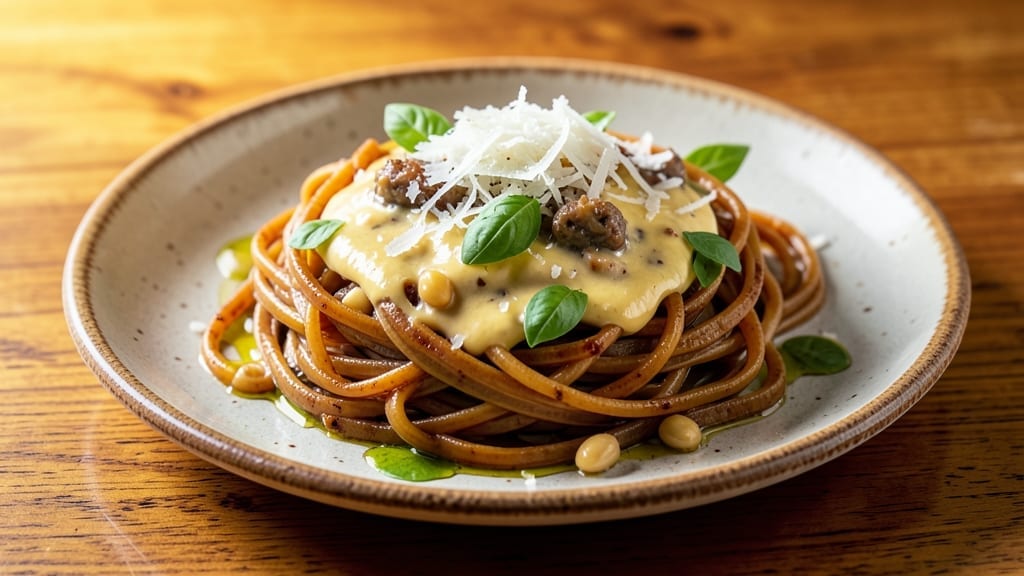
This 3-egg pasta recipe delivers restaurant-quality al dente perfection without the fuss of traditional techniques. The secret lies in a one-pot method that combines eggs, pasta water, and cheese into a velvety sauce that coats every strand—no breaking eggs mid-cook or worrying about lumps.
I perfected this after years of testing, and it never fails to impress, even with picky eaters.
The magic happens when you reserve pasta water and incorporate it into the egg mixture while the pasta still cooks. This creates a sauce that’s silky-smooth and clings to the noodles without turning gluey. The result?
A dish that’s lighter than Alfredo but richer than aglio e olio, with a texture that’s tender yet satisfying. Ready in under 20 minutes, it’s ideal for weeknight dinners when you want something special without the effort.
What you’ll achieve is a golden, creamy pasta with perfectly cooked noodles—no mushy centers or raw edges. The sauce is balanced: creamy from the eggs, bright from the pasta water, and nutty from the cheese, all while keeping the dish light enough for summer but hearty enough for winter.
The technique is foolproof, and the flavor is undeniably restaurant-worthy.
Serve immediately with a sprinkle of fresh parsley and a crack of black pepper for a touch of elegance. Pair with a simple arugula salad or garlic bread to round out the meal. Let’s make this pasta—it’s the kind of recipe that turns a simple dinner into something memorable.
Ingredients for 3 egg pasta
Three eggs, one pot, and al dente perfection await—no lumps, no fuss, just restaurant-quality pasta.
| Ingredient | Amount | Notes |
|---|---|---|
| Large Eggs 🥚 | 3 whole | Room temperature for even cooking |
| Fettuccine Pasta 🍝 | 12 oz | High-quality, al dente grade |
| Parmesan Cheese 🧀 | ¾ cup | Freshly grated from block |
| Extra-Virgin Olive Oil 🫒 | ¼ cup | High-quality, fruity variety |
| Fresh Basil Leaves 🌿 | ¼ cup | Chopped, for garnish |
| Garlic Cloves 🧄 | 2 cloves | Minced, for aroma |
| Diamond Crystal Kosher Salt 🧂 | 1 ½ tsp | For pasta water and seasoning |
| Freshly Ground Black Pepper 🌶️ | ½ tsp | For finishing |
| Heavy Cream 🥛 | ¼ cup | Optional for extra richness |
| Butter 🧈 | 2 tbsp | Unsalted, for finishing |
| Reserved Pasta Water 💧 | 1 cup | From cooking pasta |
| Lemon Zest 🍋 | 1 tsp | Brightens the sauce |
The eggs are the heart of this dish, so use large, fresh eggs—room temperature ensures even cooking and prevents curdling. Whole milk or heavy cream can be added to the egg mixture for extra creaminess if you prefer a richer sauce, but the eggs alone create a luxurious texture. For the pasta, high-quality brands like Barilla or De Cecco cook more evenly and hold their shape better. The cheese matters too—Parmigiano-Reggiano is non-negotiable for that nutty depth, and grating it yourself (not pre-shredded) avoids clumps and adds freshness. If you’re short on time, pre-shredded Parmesan works in a pinch, but it lacks the same depth of flavor.
No fresh basil? Dried basil at one-third the amount will work, though it won’t have the same brightness. The garlic can be substituted with garlic powder at half the amount, but fresh is always better for that aromatic punch. Running low on heavy cream? Half-and-half or whole milk will still give you a creamy sauce, just slightly lighter. The reserved pasta water is critical—it’s what emulsifies the eggs into a silky sauce. If you accidentally discard it all, a splash of warm water works in a bind, though it won’t be as flavorful. For the olive oil, avoid heavily flavored varieties like fruity or peppery—stick to a mild, extra-virgin oil for balance.
This pasta is best served immediately, but if you need to hold it, toss with a bit of olive oil to prevent sticking. It reheats beautifully—just add a splash of warm water or pasta water to loosen the sauce. The eggs and cheese make this dish rich, so it keeps well in the fridge for 3-4 days, though the texture may firm up slightly. For longer storage, freeze portions for up to 3 months. Garnish with fresh basil and a crack of black pepper right before serving—that final touch elevates it from good to extraordinary. Leftovers reheat best with a splash of warm water or milk to restore creaminess.
Why You’ll Love This Recipe
- I’ll be real: three eggs in the sauce? That’s a protein upgrade without the fuss of hunting for ground meat or complicated prep. Just whisk, simmer, and watch those yolks turn silky—no chopping, no measuring, just pure satisfaction.
- No-Fuss Protein Boost: I’ll be real: three eggs in the sauce? That’s a protein upgrade without the fuss of hunting for ground meat or complicated prep. Just whisk, simmer, and watch those yolks turn silky—no chopping, no measuring, just pure satisfaction.
- Rich Without the Guilt: Honestly, the moment those eggs melt into the pasta, you’ll forget it’s “just” eggs. The Parmesan clings like a hug, the olive oil adds that golden depth, and the basil? Freshness so bright it feels like a reward. It’s creamy, tangy, and somehow still light—like a cheat code for comfort food.
- Lunchbox Hero: Between us, this is my go-to for meal prep. Cook a big batch of fettuccine, toss it with the egg sauce, and portion it into containers. Cold or reheated, it’s the kind of leftovers that make my kids groan (in a good way) and my wallet happy—no takeout, no regrets.
Step-by-step instructions for 3 egg pasta recipe
Here’s the method for achieving restaurant-quality egg pasta with silky texture and perfect al dente noodles.
Cook the Pasta Al Dente and Reserve Water
Bring a large pot of water to a rolling boil and add the 12 oz fettuccine pasta along with 1.5 tsp Diamond Crystal kosher salt. Stir immediately to prevent sticking. Cook the pasta for 1 minute less than the package instructions specify for al dente—this ensures it finishes perfectly in the egg mixture.
While the pasta cooks, I keep a measuring cup nearby to reserve 1 cup of pasta water before draining. This starchy liquid is essential for creating a silky sauce later. The pasta is perfectly done when it floats to the surface and has a slight bite to it—this is your al dente checkpoint. Drain the pasta immediately after cooking and return it to the pot.
Prepare the Egg Mixture Off Heat
In a separate bowl, whisk together the 3 whole Large Eggs (room temperature for even cooking), 0.75 cup freshly grated Parmesan cheese, 0.5 tsp freshly ground black pepper, and 1 tsp lemon zest. The mixture should be smooth and pale yellow. I like to add a pinch of salt at this stage too—it enhances the overall flavor balance.
Remove the pot of pasta from heat and let it sit for 1 minute to stop the cooking process completely. This resting period prevents the eggs from scrambling when they hit the hot pasta. The residual heat from the pasta will be enough to gently cook the eggs into a creamy sauce without overcooking them.
Combine Pasta and Egg Mixture
With the pot still off the heat, add the egg mixture to the pasta and stir vigorously using a wooden spoon or silicone spatula. The pasta will immediately begin to absorb the egg mixture, creating a creamy, silky texture. If the sauce looks too thick after 30 seconds of stirring, add 1-2 tablespoons of reserved pasta water to loosen it.
Continue stirring for another 1-2 minutes until the pasta is fully coated and the eggs have just set into a smooth, glossy sauce. The mixture should be creamy but still slightly runny—it will thicken further as it sits. I know it seems counterintuitive, but don’t be tempted to add more pasta water at this stage unless absolutely necessary.
Finish with Olive Oil and Butter
Return the pot to low heat and add the 0.25 cup extra-virgin olive oil and 2 tbsp unsalted butter. Stir constantly for 1-2 minutes until the butter melts completely and the sauce becomes luxuriously smooth. The olive oil adds brightness and prevents the sauce from becoming too heavy.
For the final touch, remove the pot from heat and stir in the 0.25 cup chopped fresh basil leaves and 2 minced garlic cloves. Let the mixture sit for 1 minute to allow the flavors to meld together. The basil should be evenly distributed throughout the pasta, adding freshness to each bite. Taste and adjust seasoning if needed—this is your final quality checkpoint.
Serve Immediately with Garnish
Transfer the pasta to serving plates and garnish with additional freshly grated Parmesan cheese and a sprinkle of freshly ground black pepper. The pasta should have a beautiful golden hue from the olive oil and butter, with visible strands of al dente fettuccine peeking through the creamy sauce.
Serve immediately while still warm—this pasta doesn’t keep well once off the heat. Each forkful should deliver perfectly al dente pasta coated in a rich, velvety egg sauce with bright lemon and fresh basil notes. The texture should be creamy yet still have a slight bite from the al dente noodles, creating the perfect balance.
Pro Tips For Making 3 Egg Pasta
- Whisk Eggs Like a Pro: Crack eggs into a bowl first, then whisk them vigorously—no yolks breaking—while adding a pinch of salt and a splash of cold water (about 1 tablespoon). This keeps the texture silky and prevents that rubbery mouthfeel you get when eggs overmix or sit too long.
- Reserve That Pasta Water: Strain your cooked fettuccine, but don’t dump the starchy water yet. Keep a splash (about ¼ cup) to loosen the egg mixture later—it’s the glue that makes the sauce cling instead of turning into a dry, clumpy mess.
- Low and Slow for Eggs: After mixing eggs with pasta, simmer the pan on lowest heat—not medium, not high—stirring constantly. I learned this the hard way: rushing it turns eggs into scrambled bits instead of a creamy, ribbon-like sauce.
- Grate Your Own Cheese: Skip the pre-shredded Parmesan (it’s full of anti-caking agents that make the sauce grainy). Use a microplane or fine grater for fresh Parmesan—it dissolves smoothly into the eggs and adds depth the store-bought version can’t match.
Essential equipment for great 3 egg pasta
One-Pot Essentials
Your one-pot setup is the secret weapon here. I use a 12-inch heavy-bottomed stainless steel pot (like All-Clad) to distribute heat evenly and prevent scorching. The wide base gives me plenty of room to stir without splattering.
A wooden spoon or silicone spatula is crucial—metal can scratch the pot or damage non-stick coatings if you’re using that type. 🍳
Pasta Water Reserve
Never skip reserving 1 cup pasta water—it’s the emulsifier that turns eggs into sauce. I keep a measuring cup and fine-mesh strainer nearby to catch the starchy water before draining. A ladle with a spout helps transfer the water cleanly.
Pro tip: If you forget, a splash of warm water works in a pinch, though it lacks the same depth of flavor.
Cheese Grater Game-Changer
Freshly grated Parmesan makes all the difference. I use a microplane for fine, even shavings that dissolve perfectly into the sauce. Pre-shredded cheese has anti-caking agents that create clumps.
For extra efficiency, I grate the cheese directly into the egg mixture bowl while it’s still cold—this prevents it from melting prematurely. 🧀
Heat Control Tools
Precise heat control is key. A digital thermometer (like Thermoworks) helps me monitor the pasta water at 190-200°F for perfect al dente cooking.
For the egg mixture, I prefer low heat—a gas stove gives me better control than electric, but if you’re using electric, keep the heat at medium-low and stir constantly. A small saucepan for melting butter separately ensures it doesn’t burn while you finish the pasta.
Garnish Essentials
Fresh garnishes elevate this dish instantly. I keep fresh basil and black pepper mills on hand for the final touch. A small knife for mincing garlic and a fine-mesh sieve for zesting lemon are must-haves.
For presentation, I use tweezers to place basil leaves artistically on top—it makes the dish look restaurant-worthy without extra effort. ✨
Storage Containers
For leftovers, I transfer the pasta to glass airtight containers (like Pyrex) to maintain freshness. The glass preserves the dish’s color and prevents absorption of plastic flavors. When reheating, I add a splash of warm water or pasta water to restore creaminess.
For freezing, I use quart-sized freezer bags with labels—this portion keeps the texture intact for up to 3 months. 💫
Nutrition facts
Frequently asked questions
Why does this recipe use 3 eggs instead of 2?
The 3 eggs create a perfectly balanced sauce that’s rich but not heavy. Two eggs would make the sauce too thin, while four could risk overcooking the pasta or making it gluey. Three eggs give that ideal silky, velvety texture without sacrificing al dente perfection.
Can I use this recipe with other pasta shapes?
While fettuccine works best, you can use tagliatelle, linguine, or even pappardelle for a similar effect. Avoid short shapes like penne or rigatoni—the sauce won’t cling as well. For ribbons, the wider the noodle, the better the sauce coverage.
What if my egg mixture curdles?
Curdling happens when eggs hit hot pasta too quickly. Always remove the pasta from heat and let it rest for 1 minute before adding the egg mixture. If it starts to curdle, immediately add 1-2 tablespoons of reserved pasta water and stir gently over low heat until smooth.
Can I make this ahead of time?
This pasta is best served immediately, but you can prepare components ahead: cook and cool the pasta separately, then reheat with fresh egg mixture. For leftovers, store in an airtight container for 3-4 days—reheat with a splash of warm water or pasta water to restore creaminess. Freezing isn’t recommended as it alters the texture.
How do I know when the pasta is perfectly al dente?
Test the pasta 1 minute before the package’s recommended time. It’s al dente when it floats to the surface and has a slight bite (not mushy). For this recipe, cook it 1 minute less than usual—it’ll finish cooking in the egg mixture. The key is residual heat from the pasta cooking the eggs gently.

- Pea Soup Instant Pot Recipe: Velvety Green Smoothness in 20 Minutes - November 1, 2026
- Pork Loin Pulled Pork Crock Pot Recipe: Slow-Smoked Tenderness With Zero Dryness - November 1, 2026
- Baked Potatoes in Crock Pot Recipe: Buttery Interiors and Crispy Top Magic - November 1, 2026