
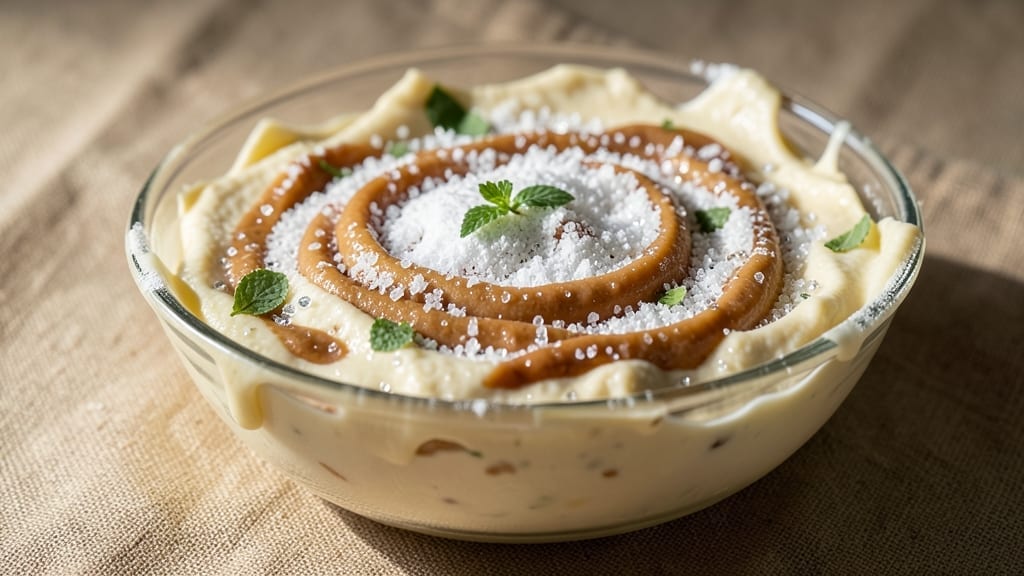
This 3-ingredient edible cookie dough recipe delivers restaurant-quality dough without baking, eggs, or nuts—just flour, butter, and sugar. ✨ The secret lies in a simple ratio that creates a smooth, spreadable texture perfect for scooping or rolling into balls.
I developed this during a last-minute dessert crisis when I needed something fast, foolproof, and safe for my family. What makes this recipe special is its versatility—enjoy it raw straight from the fridge, or bake it for 5 minutes at 350°F for warm, cookie-like bites.
The dough stays fresh for up to a week when stored properly, making it ideal for meal prep or impromptu snack attacks. No special equipment or techniques required—just mix, chill, and enjoy.
The result is a creamy, buttery dough with a tender crumb that melts in your mouth, whether eaten raw or baked. It’s the perfect solution for cookie cravings without the wait, mess, or risk.
Ready in just 5 minutes of prep (plus chilling time), this recipe proves you don’t need complexity to create something extraordinary. For best results, use room-temperature butter and let the dough rest in the fridge for at least 30 minutes before serving.
Optional add-ins like vanilla extract or mini chocolate chips can elevate it further, but the base recipe stands strong on its own.
Ingredients for 3 ingredient edible cookie dough
Three ingredients, endless possibilities—this dough is your new favorite shortcut!
| Ingredient | Amount | Notes |
|---|---|---|
| All-Purpose Flour 🌾 | 2 cups | Sifted for smooth texture |
| Unsalted Butter 🧈 | 1 cup | Room temperature, cubed |
| Granulated Sugar 🍚 | ½ cup | Superfine preferred for creaminess |
The butter is non-negotiable here—it needs to be room temperature for that perfect creamy texture. Grab a sticks of butter from the fridge, let it sit for 30 minutes, then cube it yourself. Pre-sliced butter works, but cubing gives you more control. For the flour, King Arthur or Gold Medal brands are my go-tos—they’re consistent and give that tender crumb. Sugar? Superfine is ideal, but regular granulated works in a pinch (just pulse it in a food processor first). Pro tip: if your butter feels too cold, microwave it for 10 seconds to soften—no one will know!
No superfine sugar? Regular granulated works fine—just pulse it in a food processor for 10 seconds. Butter too hard to cube? Use pre-sliced butter from the package, but don’t overwork it. Flour substitutes? Cake flour gives a lighter texture, but all-purpose is foolproof. Want to add chocolate chips later? Fold them in after chilling—they’ll melt slightly and create pockets of gooey goodness. For a vanilla twist, add 1 teaspoon vanilla extract to the dough before mixing. And if you’re feeling fancy, swap half the butter for cream cheese—trust me, it’s amazing.
This dough is a fridge staple—wraps tightly in plastic and keeps for up to 1 week. For longer storage, portion into balls and freeze for up to 3 months. Thaw at room temperature before serving. The longer it chills, the better it gets—30 minutes minimum, but overnight is ideal. Pro move: use a cookie scoop for perfectly shaped dough balls. And here’s the best part—no baking required! Eat it straight from the fridge, or pop it in the oven for 5 minutes at 350°F for warm cookie bites. Leftovers? Toss them in a container for quick snack attacks all week.
Why You’ll Love This Recipe
- No Raw Eggs: I finally made cookie dough without stressing over raw eggs—or the 20-minute wait for the fridge to chill. Just mix flour, butter, and sugar, then roll into balls. Done. My kids eat it straight from the bowl, no guilt.
- Buttery Sweet Magic: That moment when you bite into a warm, gooey ball of melted butter and sugar? It’s like dessert in its purest form. The dough stays soft, the edges get crispy, and honestly? It tastes like nostalgia in every bite.
- Zero-Waste Pantry Staples: I always have flour, butter, and sugar on hand—no extra shopping, no forgotten ingredients. This recipe uses what’s already there, and the leftovers? They last a week in the fridge, perfect for last-minute cravings.
- Kid-Approved Emergency Fix: School bake sale canceled? Birthday party last-minute? This dough saves the day. My daughter helped shape them into “cookie monsters,” and they were gone in minutes. No fancy tools, no mess—just happy kids and happy parents.
Step-by-step instructions for 3-Ingredient edible cookie dough
Here’s the magic—no eggs, no baking, just pure cookie dough bliss in minutes!
👨🍳 Step 1: Mix the Dry Ingredients Like a Pro
In a medium bowl, combine the 2 cups all-purpose flour and 0.5 cup granulated sugar. I like to use a whisk for this step to break up any flour lumps and ensure everything is evenly distributed. Give it a good stir until you see no more white streaks—this prevents grainy cookie dough later.
Here’s the thing—sift the flour first if you can. I know it’s extra work, but it makes a world of difference in texture. The finer the flour, the smoother your dough will be. If you don’t have a sifter, just press the flour through a fine-mesh strainer into your bowl. This ensures no clumps sneak into your dough.
🍳 Step 2: Cut in the Butter Until Crumbly Perfection
Add the 1 cup room-temperature unsalted butter to the flour mixture. Using a pastry cutter or two forks, cut the butter into the flour until you achieve a crumbly texture. You’re looking for pea-sized butter pieces mixed throughout—this is what creates that melt-in-your-mouth texture when you eat it.
Don’t overwork the dough here. You want it to come together when you press it, but still have some crumbly bits. If it starts sticking together too much, chill it in the fridge for 5 minutes to firm up. The butter should be soft enough to press between your fingers but not greasy—this is the perfect consistency for that classic cookie dough feel.
⏰ Step 3: Knead Until Smooth and Playful
Once the mixture looks like wet sand with butter pebbles, use your hands to knead it gently for about 2-3 minutes. Press the dough together, then flatten it, and fold it over itself. You’re looking for a uniform texture where no dry bits remain. The dough should be soft and slightly sticky but not wet.
This is where the magic happens—when the dough comes together just right. If it feels too dry, add a teaspoon of milk (but we’re keeping it strictly 3 ingredients, so skip this). If it’s too sticky, chill it for another 5 minutes to firm up. The perfect dough should hold together when you press it but still be malleable enough to shape into a ball.
🥘 Step 4: Shape and Chill for Maximum Enjoyment
Divide the dough into 4 equal portions (about ¼ cup each) and roll each into a smooth ball. Place them on a plate and cover with plastic wrap. Here’s the crucial part—chill in the refrigerator for at least 30 minutes. This step is non-negotiable for food safety, but it also firms up the dough so it holds its shape better when you eat it.
While it chills, take a moment to appreciate what you’ve created. No baking, no eggs, just pure cookie dough that’s safe to eat. The dough will firm up nicely in the fridge, making it easier to handle. If you’re impatient, you can eat it right away, but the chilled version has better texture and flavor.
🍽️ Step 5: Serve and Enjoy Your Creation
Once chilled, your cookie dough is ready to eat! Scoop out a spoonful and enjoy immediately. The texture should be soft, slightly crumbly, and packed with that buttery, sweet flavor you love. If you want to get fancy, roll the dough into balls and dip them in melted chocolate or sprinkle with mini chocolate chips before eating.
This dough keeps well in the fridge for up to 5 days, so you can make a batch and enjoy it all week. The beauty of this recipe is its simplicity—just three ingredients, no baking, and no guilt. Every bite should transport you back to childhood, but with the confidence of knowing it’s safe to eat straight from the bowl!
Pro Tips For Making 3 Ingredient Edible Cookie Dough
- MEASURE FLOUR BY SPOONING: Dump that measuring cup—fluff the flour first, then scoop directly from the bag into your bowl. Packing it down makes your dough dense and dry. I learned this the hard way when my first batch turned out like a brick.
- SOFTEN BUTTER FIRST: Cold butter? Skip it. Let the butter sit at room temp for 30-45 minutes before mixing—it blends smoother and creates a lighter texture. I used to force cold butter through, and the dough always ended up greasy and uneven.
- WORK FAST AFTER MIXING: Once you combine everything, roll and shape the dough within 10 minutes. Flour absorbs moisture over time, and your dough will start to dry out if you linger. Trust me, your future self will thank you for not overworking it.
- USE A LIGHT TOUCH: Resist the urge to overmix—just combine the ingredients until they come together. Overworking the dough develops gluten, which makes it tough instead of tender. A few gentle folds are all you need.
Wine and beer pairings for this 3 ingredient edible cookie dough
Sweet Dessert Wines
For this rich, buttery dough, I reach for Moscato d’Asti—its light effervescence and honeyed sweetness complement the dough’s caramel notes beautifully. The bubbles cleanse your palate between bites, making it feel like a refreshing treat rather than a heavy dessert. 🍷
A Riesling with residual sugar, like a German Kabinett, works wonderfully too. The citrusy acidity balances the dough’s sweetness while enhancing its vanilla undertones. Look for a bottle labeled “Spätlese” for extra sweetness that pairs perfectly with the dough’s buttery richness.
Rich Red Options
If you prefer red wine, a Pinot Noir with fruit-forward flavors—think cherry and plum—cuts through the dough’s sweetness without overpowering it. I love Oregon Pinot Noir for its bright acidity and approachable taste. Serve it slightly chilled (55-60°F) to enhance its fruitiness.
For a bolder choice, try a Zinfandel with 12-14% ABV. The jammy fruit and spice notes stand up to the dough’s buttery intensity, creating a satisfying contrast. A California Zin with 13% alcohol is my go-to for this pairing.
Creamy Beer Pairings
A Belgian Witbier like Hoegaarden brings a crisp, citrusy brightness that contrasts the dough’s sweetness. The coriander notes add an unexpected herbal twist that makes each bite feel fresh. Serve it ice-cold (38-40°F) to highlight its effervescence.
For a maltier option, Dunkelweizen (dark wheat beer) offers a caramel sweetness that mirrors the dough’s flavor profile. The slight roasted notes from the beer’s darker malt complement the butter’s richness. Look for Weihenstephaner Dunkel for a classic choice.
Coffee or Tea Twist
If you’re not a wine or beer drinker, a strong espresso or chocolate mocha enhances the dough’s flavors. The bitterness of coffee balances the sweetness, creating a sophisticated pairing. I often enjoy this combo after dinner for a dessert-like experience.
For a lighter option, chamomile tea with a touch of honey adds a floral note that complements the dough’s buttery texture. The warmth of the tea makes the dough feel even more indulgent. 💫
Nutrition facts
Frequently asked questions
Can I substitute butter with another fat?
You can try coconut oil or shortening in a pinch, but the flavor and texture won’t be the same. Butter gives that classic cookie dough richness—it’s the star of this recipe! If you must substitute, use 1 cup melted coconut oil (cooled slightly) and chill the dough longer (1 hour) for better firmness. For a lighter option, Greek yogurt works well but adds tang.
How do I fix dough that’s too sticky?
If your dough feels too soft or sticky, pop it in the fridge for 10-15 minutes to firm up. For a quick fix, wet your hands slightly and knead gently—this helps the dough come together without adding extra moisture. If it’s still too sticky after chilling, add 1 tablespoon more flour (but don’t overdo it, or it’ll get dry). The dough should hold its shape when pressed but still be pliable.
Can I bake this dough instead of eating it raw?
Roll the chilled dough into 1-inch balls and bake at 350°F for 8-10 minutes until golden. For a crispier texture, flatten the balls slightly before baking. The baked version has a warm, cookie-like center with a soft exterior. Pro tip: Sprinkle with flaky sea salt or coarse sugar before baking for extra flavor. Leftovers keep well in an airtight container for 3 days.
Why does my dough taste bland?
This recipe is intentionally simple, but you can easily boost flavor! Add 1 teaspoon vanilla extract or ½ teaspoon cinnamon to the dry ingredients. For a deeper taste, swap ½ cup of the flour for cocoa powder (for chocolatey dough) or almond flour (for nutty notes). If you love caramel, fold in 2 tablespoons brown sugar with the wet ingredients. The dough’s flavor develops more after chilling, so be patient!
How long can I keep this dough before it goes bad?
Store the dough in an airtight container in the fridge for up to 5 days. For longer storage, portion into balls and freeze for up to 3 months. Thaw in the fridge overnight before serving. The dough is safe to eat raw as long as it’s been properly chilled and stored—just avoid leaving it out at room temperature for more than 2 hours. If the dough smells off or develops mold, discard it immediately.

- Pea Soup Instant Pot Recipe: Velvety Green Smoothness in 20 Minutes - November 1, 2026
- Pork Loin Pulled Pork Crock Pot Recipe: Slow-Smoked Tenderness With Zero Dryness - November 1, 2026
- Baked Potatoes in Crock Pot Recipe: Buttery Interiors and Crispy Top Magic - November 1, 2026