
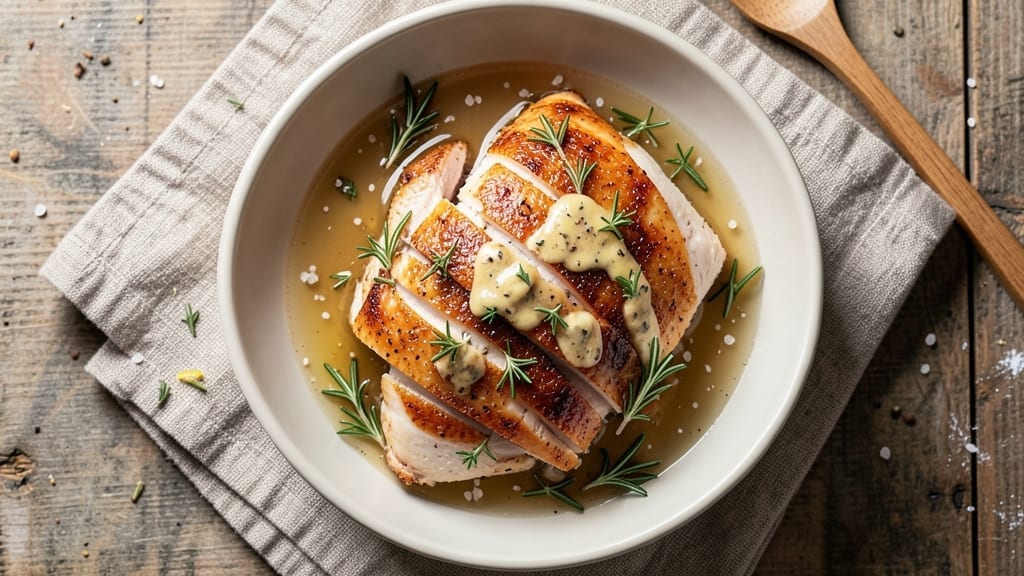
A 3-pound Butterball turkey breast delivers holiday-quality results without the fuss of a whole bird—just 90 minutes to juicy perfection. The secret lies in brining for moisture and a high-heat finish for crispy skin, ensuring every slice stays tender and flavorful.
This method transforms a simple protein into the centerpiece of any meal, whether you’re feeding a family or treating yourself to a special dinner.
Professional cooks rely on precise timing and temperature control to achieve that golden crust and moist interior. Start with a simple brine (just saltwater) to guarantee juiciness, then roast at 325°F until the internal temperature hits 165°F.
The key? A resting period before carving—this crucial step locks in all that flavor and keeps the meat from drying out.
What you’ll end up with is a tender, golden turkey breast that’s crispy on the outside and impossibly juicy inside—no dry slices here. The aroma alone will have everyone gathering at the table, and the clean, elegant presentation makes it ideal for gatherings or a weekend feast.
This recipe proves you don’t need a full turkey to impress.
Pair it with classic sides like roasted vegetables, cranberry sauce, or a simple green salad for a complete meal. The beauty of this method is its flexibility—scale it down for leftovers or double it for a crowd. Let’s get cooking!
Ingredients for 3 pound butterball turkey breast
Nine essential ingredients transform a simple turkey breast into a showstopping centerpiece.
| Ingredient | Amount | Notes |
|---|---|---|
| Butterball Turkey Breast 🦃 | 3 lb | Fresh, skin-on preferred |
| Kosher Salt 🧂 | ½ cup | Diamond Crystal preferred |
| Granulated Sugar 🍚 | ¼ cup | For balanced brine |
| Unsalted Butter 🧈 | ½ cup | Melted for basting |
| Fresh Thyme 🌿 | ¼ cup | Stems removed, chopped |
| Fresh Rosemary 🌿 | ⅛ cup | Needles finely chopped |
| Garlic Cloves 🧄 | 4 cloves | Smashed, skin-on |
| Extra-Virgin Olive Oil 🫒 | 2 tbsp | For basting |
| Fresh Lemon Juice 🍋 | 2 tbsp | Brightens flavor |
| Water 💧 | 4 cups | Filtered preferred |
| All-Purpose Flour 🌾 | 2 tbsp | For skin crisping |
| Ground Black Pepper 🌶️ | 1 tsp | Freshly cracked |
The Butterball turkey breast is your foundation—look for one with even thickness and visible fat cap for moisture. Butterball’s pre-brined option saves time, but if you’re brining from scratch, Diamond Crystal kosher salt dissolves cleanly without graininess. The sugar in the brine isn’t just for flavor; it helps tenderize the meat. For herbs, fresh is non-negotiable—dried won’t deliver that aromatic punch. Trader Joe’s and Whole Foods carry excellent quality, but even your grocery store’s produce section will work if the stems are green and firm. Costco often has bulk kosher salt at a better price than individual packages.
No kosher salt? Substitute with 1.5 teaspoons table salt—but dissolve it completely to avoid grainy brine. Fresh herbs unavailable? Dried thyme and rosemary at one-third the amount will work, though the flavor will be subtler. Olive oil can be swapped for avocado oil if you prefer a milder taste, but don’t skip it—fat is crucial for basting. Butterball’s pre-brined turkey eliminates the need for your own brine, though homemade gives you more control. Smashed garlic cloves release more flavor than minced, but if you’re short on time, two teaspoons garlic powder is a decent shortcut. Lemon juice can be omitted, but the acidity helps balance the richness of the meat.
The turkey breast should rest at room temperature for 30 minutes before roasting to ensure even cooking. Prep the brine the night before—it needs at least 4 hours to work its magic, but overnight is ideal. Fresh herbs keep best in a sealed container with a damp paper towel for up to 5 days in the fridge. Melted butter can be stored in an airtight container in the fridge for up to 1 week, though it’s best used fresh. Leftovers reheat beautifully—wrap tightly and store for up to 3 days. For longer storage, portion into freezer bags with parchment between slices for up to 3 months.
Why You’ll Love This Recipe
- Foolproof Roast: I swear, the Butterball turkey breast is already brined—just season, roast, and boom. No fussing with injections or hours of prep; it’s the kind of dish that lets you actually enjoy the cooking (or not).
- Sweet-Savory Magic: That sugar-butter glaze? It’s the secret weapon—caramelized edges with juicy, herby meat underneath. Honestly, the thyme turns this into something that tastes like a fancy dinner, not just a turkey breast.
- Weeknight to Holiday: Same recipe works for Tuesday’s quick dinner or Thanksgiving leftovers. I’ve used it for sandwiches, salads, and even turkey tacos—because why not? It’s the one protein that does double (or triple) duty.
- Budget-Friendly Feast: Three pounds feeds four easily, with leftovers that taste just as good cold. Between us, this is the only turkey breast I buy—it’s cheaper than whole birds, and I get way less waste. Plus, the butter and thyme stretch the flavor.
Step-by-step instructions for 3-Pound Butterball turkey breast recipe
Master this technique and you’ll achieve a perfectly juicy, golden-crusted turkey breast every time.
Prepare the Herb Brine
In a large mixing bowl, combine the 4 cups water, 0.5 cup kosher salt, and 0.25 cup granulated sugar. Stir until the salt and sugar dissolve completely, creating a clear brine solution. This balance of salt and sugar ensures proper seasoning while preventing overly salty meat.
Add the 0.25 cup chopped fresh thyme, 0.125 cup chopped fresh rosemary, 4 smashed garlic cloves, and 2 tablespoons fresh lemon juice to the brine. Gently stir to distribute the herbs and aromatics throughout the liquid. The lemon juice brightens the flavor while the garlic and herbs infuse the brine with complex aromas. Let this mixture sit at room temperature for 15 minutes to allow the flavors to meld.
Brine the Turkey Breast
Place the 3 lb Butterball turkey breast in a large resealable plastic bag or shallow container. Pour the herb brine over the turkey, ensuring it’s completely submerged. If using a bag, seal it tightly, removing as much air as possible. For a container, weigh the turkey down with a plate to keep it fully immersed.
Refrigerate the turkey in the brine for 12-24 hours, turning it once halfway through. This extended brining period ensures deep flavor penetration and optimal moisture retention. The skin will become slightly translucent, indicating proper hydration. When ready to cook, remove the turkey from the brine and pat it dry thoroughly with paper towels—this critical step promotes crispy skin formation.
Create the Dry Rub and Baste
In a small bowl, combine 2 tablespoons all-purpose flour and 1 teaspoon ground black pepper. Generously coat the dried turkey breast with this mixture, pressing it into the skin to create an even layer. The flour acts as a natural barrier that helps develop the golden crust while the pepper adds subtle heat.
Melt the 0.5 cup unsalted butter in a small saucepan over low heat until completely liquid. Remove from heat and stir in 2 tablespoons extra-virgin olive oil. Brush this basting mixture generously over the turkey, coating it evenly. The butter adds richness while the olive oil enhances the crispiness of the skin. Let the turkey sit at room temperature for 30 minutes before cooking to ensure even heat distribution.
Roast to Perfect Doneness
Preheat your oven to 375°F. Place the turkey breast on a rack set inside a roasting pan to allow air circulation on all sides. Roast for 45 minutes, then reduce the oven temperature to 325°F and continue cooking for an additional 30-45 minutes, or until the internal temperature reaches 160°F when measured at the thickest part of the breast.
During the last 15 minutes of cooking, baste the turkey with its accumulated juices every 10 minutes to keep it moist. The turkey is done when the skin is golden brown and crispy, and the internal temperature reaches 160°F. For best results, use a meat thermometer—this ensures perfect doneness without overcooking. Let the turkey rest for 15 minutes before carving to allow the juices to redistribute throughout the meat.
Carve and Serve
Using a sharp carving knife, slice the turkey breast against the grain into ¼-inch thick slices. The grain runs lengthwise, so cutting perpendicularly creates tender, bite-sized pieces. Arrange the slices on a warmed serving platter and drizzle with any pan juices for added moisture and flavor.
Serve immediately with your favorite sides. The turkey should be juicy and tender with a crispy, golden-brown skin that contrasts beautifully with the moist interior. Each slice should be perfectly seasoned with hints of thyme, rosemary, and garlic from the brine. For presentation, garnish with additional fresh herbs and a squeeze of lemon.
Pro Tips For Making 3 Pound Butterball Turkey Breast
- CRANK THE OVEN HIGH: That turkey breast won’t brown properly if you start at 350°F—trust me, I’ve made that mistake. Preheat your oven to 425°F for the first 15 minutes with the rack in the middle position. This jumpstarts the crust, and you’ll get that golden, caramelized skin without fighting a lukewarm oven.
- SALT THE BREAST 24 HOURS EARLY: The Butterball turkey breast is already injected with solution, but adding a thick layer of kosher salt (about 1 teaspoon per pound) the night before draws out moisture and lets it reabsorb, keeping the meat juicier. Skip this, and you’ll end up with a dry center—no one wants that.
- USE A MEAT THERMOMETER: Guessing doneness with a turkey breast is how you end up with either gray, overcooked meat or raw spots. Aim for 165°F in the thickest part of the breast—insert the probe sideways to avoid hitting bone. Pull it out 5°F early and let it rest; the residual heat finishes the cooking.
- BASIL INSTEAD OF THYME: Fresh thyme is great, but if you’re in a pinch or just don’t love its floral note, swap it for fresh basil. Tear the leaves (don’t chop—you want texture) and mix them into the butter-sugar crust. It adds a bright, herbaceous punch that pairs perfectly with the turkey’s richness. (Yes, it’s unconventional, but it works.)
Pro cooking tips for 3 pound butterball turkey breast
Brine Timing Secrets
The longer you brine, the more flavor and moisture you’ll get—but don’t overdo it. For a 3-pound turkey breast, I recommend 12-24 hours in the fridge. The magic happens after 8 hours, when the salt starts breaking down muscle fibers.
If you’re short on time, a 4-hour brine still works, though the flavor won’t be as deep. Pro tip: Use a thermometer to check the brine stays at 40°F or below—never let it sit at room temperature. 🌡️
Skin-Crisping Hacks
For that perfect golden crust, start by patting the turkey dry with paper towels—no moisture left. Then, coat it with a mix of 2 tbsp flour and 1 tsp black pepper before roasting. The flour creates a barrier that helps trap steam, while the pepper adds subtle heat.
For extra crispiness, broil the turkey for 2-3 minutes at the end—just watch it like a hawk to avoid burning. I like to use a wire cooling rack in my roasting pan to allow air circulation on all sides. ✨
Temperature Control
Start roasting at 375°F for 45 minutes to get the skin nicely browned, then drop the heat to 325°F to finish cooking. This two-stage approach prevents overcooking while ensuring a crispy exterior. Use a meat thermometer to check the internal temperature—160°F at the thickest part is perfect.
If you don’t have one, cut into the thickest part; juices should run clear, not pink. 💡
Resting Like a Pro
This is where most home cooks mess up. After removing the turkey from the oven, let it rest for 15 minutes before carving. This allows the juices to redistribute, keeping every slice moist. I cover the turkey loosely with aluminum foil to retain heat while it rests.
If you’re in a hurry, 10 minutes is the absolute minimum—but you’ll sacrifice some juiciness. Trust me, the wait is worth it. 💪
Carving Against the Grain
Always slice the turkey breast against the grain to create tender, bite-sized pieces. The grain runs lengthwise, so cut perpendicular to it. Use a sharp chef’s knife and make smooth, even strokes. For extra presentation, arrange the slices on a platter and drizzle with pan juices.
I like to garnish with fresh herbs or a squeeze of lemon for a pop of color. A long, thin-bladed carving knife makes this easier—Wüsthof or Victorinox are my go-tos. 🔪
Leftovers Strategy
Turkey breast leftovers are even better the next day! Store them in an airtight container in the fridge for up to 3 days or freeze for 3 months. To reheat, place slices in a skillet over medium-low heat with a splash of water or broth.
Cover and heat for 5-7 minutes, stirring occasionally. For sandwiches, slice thinly and layer with your favorite fixings. I love using leftovers in turkey pot pie or turkey tacos for a quick meal. 🍽️
Nutrition facts
Frequently asked questions
Can I use a pre-brined Butterball turkey breast?
Yes! Butterball’s pre-brined turkey breasts are already seasoned, so you can skip the homemade brine. Just pat it dry thoroughly, coat with the flour-pepper mix, and roast as directed. The pre-brining still benefits from the high-heat roasting method for that crispy skin.
How do I adjust cooking time for a thicker/thinner breast?
Add 15 minutes per extra pound for thicker breasts, or subtract 10 minutes for thinner ones. Always use a meat thermometer—160°F at the thickest part is your target. A 3-pound breast should cook in 90 minutes total, but timing varies based on thickness.
Why is my turkey breast dry after cooking?
Most likely, you skipped the resting period or overcooked it. Always let it rest 15 minutes before carving, and never exceed 165°F internal temp. Another common mistake is cutting too soon—juices need time to redistribute. For extra moisture, baste frequently during the last 15 minutes.
Can I cook this turkey breast in an oven without a rack?
Place the turkey on a wire cooling rack set in a roasting pan, or use a baking sheet lined with foil. For even browning, flip the turkey halfway through cooking. If you don’t have a rack, elevate the turkey on a layer of crumpled foil to allow air circulation underneath.
What are the best sides to serve with this turkey breast?
Classic pairings include roasted Brussels sprouts, mashed sweet potatoes, and cranberry sauce for a holiday feel. For lighter meals, try a fresh green salad with vinaigrette or roasted seasonal vegetables. The crispy skin contrasts beautifully with creamy sides like mac and cheese or wild rice pilaf.

- 12 Bean Chili Recipe: Hearty Slow-Cooked Depth With 12 Legumes - October 17, 2026
- 5 Seed Bread Recipe: Nutty Crunch and Artisan Flavor in One Loaf - October 17, 2026
- 1 Lb Macaroni Salad Recipe: Bold, Crunchy, and Crowd-Pleasing - October 17, 2026