
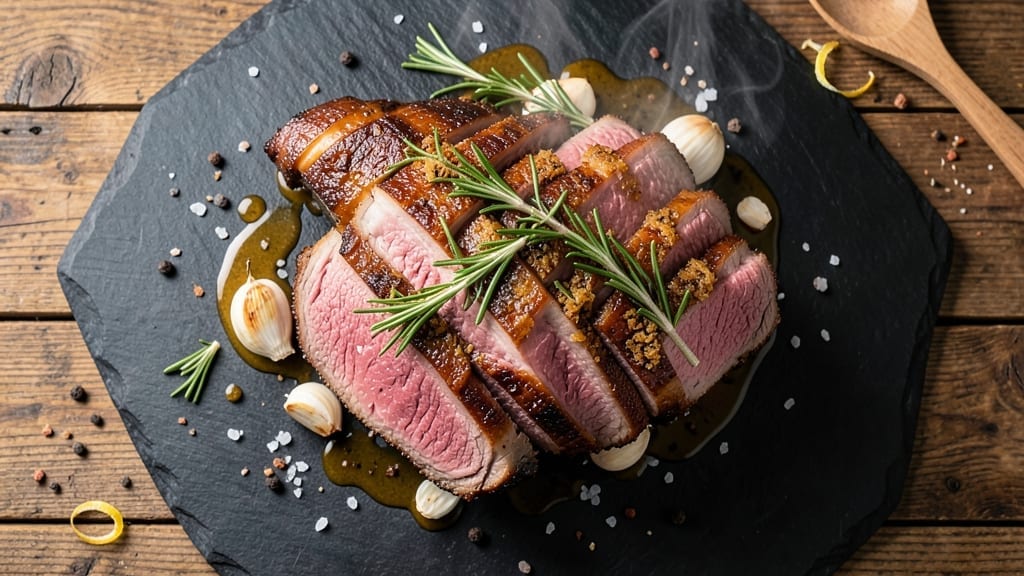
A 3lb prime rib roast cooked to perfect medium-rare with a fragrant rosemary crust is the ultimate centerpiece for any special occasion—whether it’s Thanksgiving, Christmas, or a celebratory dinner.
The secret lies in dry-brining for deep flavor, precise temperature control, and a reverse sear that guarantees a juicy, tender center with a beautifully caramelized crust. I’ve perfected this method over years of holiday feasts, ensuring every slice delivers that luxurious melt-in-your-mouth texture.
This recipe transforms a simple roast into a showstopper with minimal effort: just a few hours of hands-off cooking, a sprinkle of rosemary and garlic for the crust, and a foolproof method for slicing against the grain.
The dry brine enhances natural beef flavors, while the reverse sear method—starting low and slow, then finishing with high heat—locks in moisture and creates that coveted crust. No sous vide machine? No problem; this technique works just as well in a conventional oven.
By the time you serve, you’ll have a restaurant-quality prime rib with a golden, herb-infused crust and a pink center so tender it nearly dissolves.
The aroma alone will have guests anticipating the first bite, and the rich, beefy flavor pairs perfectly with classic sides like roasted garlic mashed potatoes or a crisp green salad. The best part? Leftovers reheat beautifully for sandwiches the next day.
Ready to impress? This recipe scales effortlessly for larger crowds, and the same method works for other cuts like ribeye or New York strip. Let’s get started—your table is about to become the talk of the season.
Ingredients for 3lb prime rib roast
Prime rib perfection starts with these 12 game-changing ingredients—rosemary, garlic, and butter transform a simple roast into a showstopper.
| Ingredient | Amount | Notes |
|---|---|---|
| Prime Rib Roast (Bone-In) 🥩 | 3 lb | Center-cut, 1-inch thick, dry-brined overnight |
| Fresh Rosemary 🌿 | ¼ cup | Finely chopped, stems removed |
| Garlic Cloves 🧄 | 8 cloves | Smashed, skin-on, for crust |
| Kosher Salt 🧂 | 2 tbsp | Diamond Crystal preferred, for dry brine |
| Coarse Black Peppercorns 🌶️ | 1 tbsp | Freshly cracked, for crust |
| Extra-Virgin Olive Oil 🫒 | 2 tbsp | High-quality, for crust |
| Unsalted Butter 🧈 | ½ cup | Cold, cubed, for reverse sear |
| Beef Tallow or Duck Fat 🥓 | 2 tbsp | For extra-rich crust (optional) |
| Red Wine 🍷 | ½ cup | Bold Cabernet Sauvignon, for deglazing |
| Beef Bone Broth 💧 | ½ cup | Homemade or high-quality store-bought |
| Fresh Thyme Sprigs 🌿 | 4 whole | For aroma during cooking |
| Yellow Onion 🧅 | 1 whole | Quartered, for pan juices |
The prime rib is non-negotiable—center-cut, bone-in ensures maximum flavor and tenderness. Whole Foods or high-end butchers carry the best cuts; look for vibrant color and good marbling. Fresh rosemary matters here—dried just won’t cut it. I always grab the thickest stems at Trader Joe’s because they’re packed with flavor. The garlic? Smashed skins-on infuse the crust with deep flavor during cooking. For the dry brine, use Diamond Crystal kosher salt—it dissolves perfectly and enhances beef flavor without overpowering.
No fresh rosemary? Dried at 1/4 the amount works in a pinch, but trust me—fresh is worth the trip. Substituting butter? Ghee or duck fat gives similar richness. The red wine can be swapped for beef broth plus a splash of balsamic vinegar if you’re avoiding alcohol. For the crust, toasted sesame oil adds an unexpected but delicious twist. The onion is optional but caramelizes beautifully in the pan juices, adding depth to the sauce. If you’re prepping ahead, brine the roast 12-24 hours early—it’s a game-changer for flavor.
This roast is a make-ahead masterpiece. Brine it the night before and refrigerate uncovered—the salt draws out moisture, creating the perfect crust later. Cooking day? Pat dry thoroughly before searing. Leftovers reheat beautifully—warm in the oven at 275°F for 15 minutes to keep them juicy. Store in the fridge for 3-4 days or freeze for up to 3 months. For a crowd, double the recipe—a 6lb roast feeds 6-8 and uses the same method.
Why You’ll Love This Recipe
- Foolproof Timing: I swear by this method—just season, sear, and let the oven do the work. No basting, no fussing, and the bone-in roast stays juicy while the crust gets that perfect crack.
- Herb-Crust Magic: That rosemary and garlic combo? It’s like a flavor hug for your meat. The coarse pepper adds a little bite, but the rosemary’s piney aroma sticks around long after the last bite.
- Weeknight Wonder: Between us, this is my go-to for game days, holiday leftovers, or when I’m too tired to cook. The 3lb size feeds a crowd but doesn’t overwhelm—perfect for when friends drop by unannounced.
- Leftovers That Win: Honestly, the second day is just as good. Slice it thin for sandwiches, dice it for hash, or reheat with a splash of beef broth. No one ever complains about extra prime rib.
Step-by-step instructions for 3lb prime rib roast
This method delivers a perfectly medium-rare prime rib with a fragrant rosemary crust and juicy interior every time.
Prepare the Herb Crust and Sear the Rib Roast
Preheat your oven to 250°F and place a wire rack on a rimmed baking sheet. In a small bowl, combine the 0.25 cup finely chopped fresh rosemary, 8 smashed garlic cloves, 2 tablespoons kosher salt, and 1 tablespoon coarsely cracked black peppercorns. This aromatic blend will create that signature crust we’re after.
Pat the 3 lb prime rib roast completely dry with paper towels—this is crucial for that perfect crust. Rub the herb mixture all over the roast, pressing firmly so it adheres. Let it sit at room temperature for 30 minutes while you prepare the next steps. The roast should feel slightly tacky to the touch when ready, indicating the herbs have adhered properly.
Heat a heavy oven-safe skillet (like cast iron) over medium-high heat until smoking hot. Add 2 tablespoons extra-virgin olive oil and swirl to coat. Place the roast fat-side down in the pan and sear for 8-10 minutes until the fat renders and the crust develops a deep golden brown color. Flip the roast and sear the other side for another 8-10 minutes. The goal is to create a flavorful crust while keeping the interior cold enough for that perfect medium-rare finish.
Reverse Sear with Butter and Fat
Remove the roast from the pan and transfer it to the prepared baking sheet. Place the skillet back on the stovetop over medium heat and add the 0.5 cup cold cubed unsalted butter and 2 tablespoons beef tallow or duck fat. Let it melt completely, then pour this rich mixture over the roast, coating it evenly. This step adds incredible flavor and helps create that luscious crust.
Place the roast in the preheated 250°F oven and cook for 1 hour and 15 minutes. This low-and-slow approach ensures even cooking without overcooking the exterior. The internal temperature should reach 115°F when done—this is the ideal starting point for medium-rare.
Create the Pan Sauce and Rest the Roast
While the roast cooks, prepare the pan sauce. After removing the roast from the oven, place the skillet back on the stovetop over medium heat. Add the 1 quartered yellow onion and cook for 5 minutes until softened. Pour in the 0.5 cup red wine and scrape up any browned bits from the bottom of the pan—this is where all the flavor hides. Let it simmer for 3 minutes until reduced by half.
Add the 0.5 cup beef bone broth and 4 fresh thyme sprigs, then simmer for another 5 minutes until the sauce thickens slightly. Strain the sauce through a fine-mesh sieve to remove any impurities, then return it to the pan. Keep the sauce warm while you finish the roast.
Transfer the roast to a cutting board and let it rest for 15-20 minutes before slicing. This resting period allows the juices to redistribute throughout the meat, ensuring each slice is moist and flavorful. The internal temperature will rise to 130-135°F during resting, giving you that perfect medium-rare doneness.
Slice and Serve with Pan Sauce
After resting, slice the roast against the grain into ½-inch thick slices. The grain will be visible as lines running through the meat—cutting against it ensures each bite is tender. Arrange the slices on a warm platter and drizzle generously with the pan sauce. Garnish with additional chopped rosemary if desired.
Serve immediately with your favorite sides—roasted vegetables, creamy mashed potatoes, or a fresh green salad complement this dish beautifully. The combination of the aromatic rosemary crust, rich beef fat, and velvety pan sauce makes this prime rib roast a showstopper for any special occasion.
Pro Tips For Making 3lb Prime Rib Roast
- SEAR HARD FIRST: Get that pan screaming hot—5 minutes on high before even touching the meat. I learned this the hard way after a prime rib that looked pale and sad; now it browns like a steakhouse cut, not a grocery store special.
- CRUSH GARLIC LIKE IT’S 1985: Smash those garlic cloves flat with the side of your knife before adding them—no peeling needed. This releases flavor into the pan, and you’ll taste the difference when the rosemary meets that garlic oil. (Yes, even if you’re impatient like me.)
- SALT THE ROSEMARY: Toss your fresh rosemary sprigs with a pinch of kosher salt before tucking them into the crevices of the roast. The salt clings to the needles, amplifying their aroma as they crisp. My grandmother swore by this, and she was right: it smells like a fancy restaurant.
- REST IT WRAPPED: Skip the foil tent after resting—just wrap the roast loosely in aluminum foil and let it sit for 15 minutes. This keeps the crust intact while redistributing juices, and you won’t end up with a soggy top. (Your future self will thank you.)
Pro cooking tips for perfect results
Dry Brine Magic
Skip the wet brine—this dry brine method is my secret weapon for prime rib. Generously coat your roast with 2 tablespoons kosher salt (Diamond Crystal preferred) and let it sit uncovered in the fridge for 12-24 hours.
The salt draws out moisture, creating the perfect crust later. I always brine mine overnight—it’s worth the wait for that restaurant-quality texture. 💪
Pro tip: Pat the roast completely dry before searing. Use two layers of paper towels and really press—this step makes all the difference for that golden crust. If you’re short on time, a 4-hour brine still works, but 24 hours is ideal for maximum flavor penetration.
Reverse Sear Perfection
The reverse sear is where prime rib truly shines. Start by cooking the roast low and slow at 250°F until it reaches 115°F internal temperature—this ensures a juicy center.
My go-to time is 1 hour 15 minutes, but use a meat thermometer to avoid guessing. A ThermoWorks Smoke thermometer is my favorite for precision.
For the final sear, crank your oven to 450°F and finish for 10-15 minutes until the crust is deep golden brown. This high-heat step caramelizes the sugars while keeping the interior perfectly medium-rare. No broiler? A cast iron skillet on the stovetop works just as well.
Butter Basics
Cold butter is your best friend for that luxurious crust. Cube ½ cup unsalted butter and let it sit at room temperature for 10 minutes before using—this ensures even melting. I also add 2 tablespoons beef tallow for extra richness, but high-quality butter alone works perfectly.
Spread the butter evenly over the roast after the initial sear but before the oven finish.
For a restaurant-style touch, add a splash of red wine or beef broth to the pan after searing. The fond (browned bits) releases incredible flavor—this is where the magic sauce begins. Deglaze with ½ cup red wine and reduce by half for a velvety pan sauce.
Resting Rules
Never skip resting—this is non-negotiable for juicy slices. Transfer your roast to a cutting board and tent loosely with foil. Let it rest for 15-20 minutes while you finish the pan sauce. The internal temperature will rise to 130-135°F, giving you that perfect medium-rare doneness. 🌡️
Pro move: Use this resting time to prep sides or warm plates. I like to set out my serving platter and arrange garnishes (like extra rosemary or cracked pepper) while the roast rests. This keeps everything organized and stress-free during the final moments before serving.
Slicing Against the Grain
Slice your prime rib against the grain for maximum tenderness. The grain runs diagonally across the roast—look for the lines in the meat. Use a sharp chef’s knife and cut ½-inch thick slices at a 45-degree angle for elegant presentation. A Dexter-Russell 12-inch knife makes this effortless. 🔪
For even slices, mark your knife with tape at the desired thickness. Start slicing from the thickest end of the roast and work your way toward the thinner end. This ensures consistent portions and makes plating a breeze. Serve immediately with the pan sauce drizzled generously over each slice.
Nutrition facts
Frequently asked questions
How long should I dry-brine my 3lb prime rib roast?
For maximum flavor, brine your roast uncovered in the fridge for 12-24 hours. The salt draws out moisture, creating the perfect crust later. If you’re short on time, a 4-hour brine still works, but 24 hours is ideal for that restaurant-quality texture.
What’s the best way to check doneness without overcooking?
Use a meat thermometer for precision! For medium-rare, aim for 130-135°F internal temperature. Insert the probe into the thickest part of the roast, avoiding the bone. The reverse sear method ensures even cooking while keeping the center juicy.
Can I cook this recipe without a cast iron skillet?
Use any heavy oven-safe pan with a lid, like stainless steel or Dutch oven. The key is to create a deep sear—just make sure your pan can handle high heat. For the final sear, a broiler works too if you don’t have a stovetop option.
How do I store and reheat leftovers?
Store leftovers in an airtight container in the fridge for 3-4 days or freeze for up to 3 months. To reheat, warm slices in the oven at 275°F for 15 minutes or microwave in 30-second bursts with a damp paper towel covering them. Never microwave dry!
What’s the best way to slice prime rib for maximum tenderness?
Slice against the grain at a 45-degree angle for maximum tenderness. The grain runs diagonally across the roast—look for the lines in the meat. Use a sharp chef’s knife and cut ½-inch thick slices for perfect presentation. Start from the thickest end for even portions.

- 12 Bean Chili Recipe: Hearty Slow-Cooked Depth With 12 Legumes - October 17, 2026
- 5 Seed Bread Recipe: Nutty Crunch and Artisan Flavor in One Loaf - October 17, 2026
- 1 Lb Macaroni Salad Recipe: Bold, Crunchy, and Crowd-Pleasing - October 17, 2026