
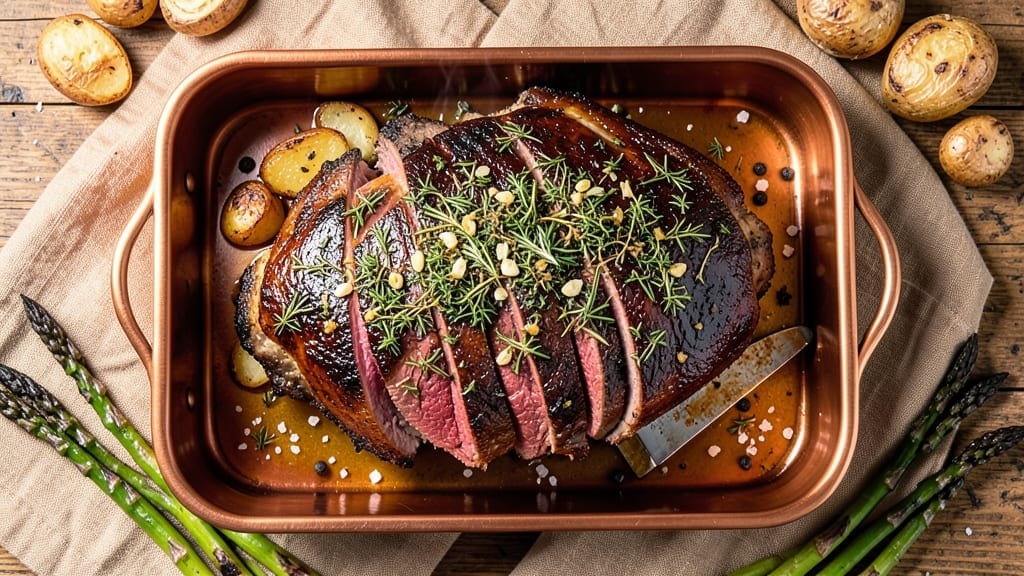
A 4.5 lb prime rib roast transforms any holiday or special occasion into a showstopping centerpiece—where a perfectly herb-crusted crust meets juicy pink centers that melt in your mouth. This recipe delivers restaurant-quality results at home, with a method so precise it’s foolproof even for first-time cooks.
The secret lies in precise temperature control, a flavorful herb crust, and letting the meat rest—steps that guarantee tender, flavorful perfection every time.
What sets this prime rib apart is the balance of technique and simplicity. You’ll work with just a few high-impact ingredients—quality beef, aromatic herbs, and a touch of garlic—to create a crust that’s crispy yet tender, while the interior stays juicy and rich.
The key is cooking low and slow, then letting the meat rest before slicing, which ensures every bite is moist and full of flavor. No guesswork, no overcooking—just a foolproof method that delivers results worthy of a five-star restaurant.
By the time you serve this prime rib, your guests will be impressed by the golden-brown crust, the rich aroma wafting through the room, and the tender, melt-in-your-mouth texture.
The herb crust adds layers of flavor without overpowering the natural richness of the beef, making it a dish that’s both elegant and approachable. Whether you’re hosting a holiday feast or treating yourself to a special dinner, this recipe delivers a centerpiece that’s sure to impress.
Pair it with classic sides like roasted garlic mashed potatoes, sautéed green beans, or a fresh salad to complete the meal. The leftovers reheat beautifully, making this the ultimate recipe for feeding a crowd or enjoying a luxurious dinner at home.
Let’s get started on creating your perfect prime rib roast.
Ingredients for 4.5 lb prime rib roast
Quality beef and aromatic herbs create the perfect foundation for this restaurant-worthy prime rib.
| Ingredient | Amount | Notes |
|---|---|---|
| Prime Rib Roast (Bone-In) 🥩 | 4 ½ lb | Center-cut, 1-inch thick, trimmed of fat |
| Fresh Rosemary 🌿 | ½ cup | Finely chopped, stems removed |
| Fresh Thyme 🌿 | ¼ cup | Leaves only, finely chopped |
| Garlic Cloves 🧄 | 8 cloves | Minced, peeled |
| Coarse Kosher Salt 🧂 | 2 tbsp | Diamond Crystal preferred |
| Freshly Ground Black Peppercorns 🌶️ | 1 ½ tbsp | Coarsely cracked |
| Unsalted Butter 🧈 | ½ cup | Cold, cubed |
| Extra-Virgin Olive Oil 🫒 | 2 tbsp | For crust application |
| Beef Tallow or Duck Fat 🧈 | 2 tbsp | For additional crust richness |
| Fresh Parsley 🌿 | ¼ cup | Chopped, for garnish |
| Red Wine 🍷 | 1 cup | Dry, for pan deglazing |
| Beef Stock 🍲 | 1 cup | Homemade preferred |
The prime rib roast is the star—center-cut and bone-in ensures maximum tenderness. Whole Foods or your local butcher shop carry the best cuts, but even major grocery stores like Kroger or Walmart stock prime rib during holiday seasons. Look for vibrant red color and visible marbling; avoid cuts with grayish hues or excessive fat. The roast should be 1-inch thick for even cooking. If your butcher doesn’t trim it, do it yourself—remove any silver skin and excess fat to prevent flare-ups during searing. For a foolproof crust, combine the herbs with the butter and olive oil to create a flavorful paste that adheres beautifully to the meat.
No fresh rosemary? Dried rosemary at one-third the amount works in a pinch, but fresh delivers superior aroma. Substitute thyme with oregano if needed, though thyme’s earthy notes complement beef perfectly. For the butter, European-style unsalted butter like Plugrá or Land O’Lakes has higher fat content for a richer crust. If you’re avoiding dairy, beef tallow or duck fat provides the same luxurious texture without lactose. The red wine and beef stock aren’t just for flavor—they create a pan sauce that elevates the dish from ordinary to extraordinary. Deglaze the pan immediately after removing the roast to capture all those precious meaty bits.
Prime rib benefits from advance prep—trim and season the roast up to 24 hours ahead, storing it uncovered in the fridge to develop flavor. The herb butter mixture can be made 3 days in advance and kept refrigerated. Once cooked, let the roast rest 20-30 minutes before slicing—this critical step ensures juicy pink centers that don’t dry out. Leftovers reheat beautifully in a low oven (275°F) for 15-20 minutes, covered with foil. For a showstopping presentation, garnish with fresh parsley and serve with the pan sauce drizzled over each slice. The roast keeps for 3-4 days in the fridge or 3 months frozen, making it perfect for meal prep.
Why You’ll Love This Recipe
- One-Pan Magic: I swear by this—just season the bone-in roast with salt, crushed garlic, and a sprig of rosemary and thyme tucked under the fat cap. No basting, no fuss, and the oven does all the work while I sip wine and pretend I’m a fancy chef.
- Crispy-Perfect Edge: That rosemary-infused crust? Chef’s kiss. The bone-in cut renders fat that bastes the meat into golden, crackling perfection—no extra sauce or butter needed. Honestly, the first time I saw it, I nearly dropped the pan.
- Leftovers? More Like Leftovers Party: A 4.5 lb roast means dinner for tonight and tomorrow’s sandwiches (trust me, the day-old slices are even better). Slice it thin for charcuterie, cube it for hash, or just reheat with a pat of butter—it’s that versatile.
- Weeknight Hero: Between us, this is my go-to for game days, date nights, or when I’m too tired to cook. Toss it in the oven at 425°F for 20 minutes, then let it rest—done. No stress, no last-minute grocery runs, just ridiculously good meat. (Yes, even on a Tuesday night.)
Step-by-step instructions for herb-crusted prime rib roast
Master this technique and you’ll achieve a prime rib with a luxurious herb crust and perfect pink centers every time.
Prepare the Herb Crust Mixture
In a food processor, combine the 0.5 cup fresh rosemary, 0.25 cup fresh thyme, 8 cloves minced garlic, 2 tablespoons coarse kosher salt, and 1.5 tablespoons freshly ground black peppercorns. Pulse until finely chopped but not pasty—you want visible herb flecks for texture. Transfer to a bowl and mix in the 0.5 cup cold cubed unsalted butter, 2 tablespoons extra-virgin olive oil, and 2 tablespoons beef tallow or duck fat until fully incorporated. The mixture should resemble wet sand with visible herb bits.
This herb blend forms the foundation of your crust. The fat components (butter, olive oil, and tallow) create a rich, flavorful barrier that prevents moisture loss while developing that signature golden crust. Keep the mixture refrigerated until ready to use—it should firm up slightly, making it easier to handle.
Season and Crust the Prime Rib
Preheat your oven to 450°F with a rack positioned in the lower third. Pat the 4.5 lb prime rib roast completely dry with paper towels—this is critical for crust formation. Spread the herb mixture evenly over the entire surface, pressing firmly to ensure adhesion, especially along the edges. Use your hands to pack the mixture into the crevices and fat cap.
Place the roast fat-side up on a wire rack set in a roasting pan. The rack elevates the meat, allowing hot air to circulate underneath for even cooking. Bake for 20 minutes until the crust begins to set and the edges turn golden brown. This initial high-heat phase creates the foundational crust before we move to lower temperatures for even cooking.
Develop the Crust and Cook to Medium-Rare
After the initial 20 minutes, reduce the oven temperature to 325°F. Continue roasting for 1 hour to 1 hour 15 minutes, or until the internal temperature reaches 120-125°F at the thickest part of the roast. This lower temperature ensures the meat cooks evenly without overcooking the exterior while the crust continues to develop.
Here’s where precision matters: use a meat thermometer for accuracy. The crust should be deep golden brown with visible herb flecks, while the interior should remain juicy with a perfect pink center. If the crust browns too quickly, tent loosely with foil to prevent over-browning while maintaining temperature.
Rest and Create the Pan Sauce
Remove the prime rib from the oven and transfer it to a cutting board. Tent loosely with foil and let it rest for 30 minutes—this crucial step allows the juices to redistribute throughout the meat. While it rests, place the roasting pan on the stovetop over medium heat. Add the 1 cup red wine and deglaze, scraping up all the browned bits from the bottom with a wooden spoon.
Simmer the wine until reduced by half, then add the 1 cup beef stock and continue simmering until the sauce thickens to a glossy consistency. Strain the sauce if you prefer a smooth texture, then return it to the pan. The sauce should coat the back of a spoon—if it’s too thin, reduce further over low heat.
Slice and Serve with Garnish
After resting, slice the prime rib against the grain into ½-inch thick portions. Arrange the slices on a warmed platter and drizzle generously with the pan sauce. Garnish with the 0.25 cup chopped fresh parsley for a pop of color and freshness. Each slice should reveal a beautiful pink center with a crisp herb crust that crumbles slightly with each bite.
Serve immediately with classic accompaniments like roasted garlic mashed potatoes or a simple arugula salad. The contrast between the rich, herbed crust and the tender pink interior creates a dining experience that balances texture and flavor perfectly.
Pro Tips For Making 4.5 Lb Prime Rib Roast
- Sear the Rib First: Hit that bone-in prime rib with a screaming-hot pan for 3-4 minutes per side before roasting—yes, even if you’re nervous about burning. The crust locks in flavor and keeps the meat from drying out later. I learned this the hard way when my first attempt tasted bland because I rushed to the oven too soon.
- Smash the Garlic: Don’t just tuck those cloves under the meat—crush them with the flat side of your knife first. This releases more oils and aroma, which means your prime rib won’t just taste like garlic, it’ll smell like a steakhouse. (And skip the mincing; whole cloves hold up better during roasting.)
- Salt the Night Before: Coat that prime rib in kosher salt 12-24 hours ahead and let it sit uncovered in the fridge. The salt penetrates deeper, and the surface dries out just enough for that perfect crust. I used to salt it right before cooking, and the crust never crisped like it does now—it’s non-negotiable for bone-in cuts.
- Use a Meat Thermometer: Pull the prime rib at 115°F for medium-rare (yes, it’ll rise to 120°F while resting). Guessing leads to overcooked, tough meat, and no one wants that after spending money on prime. I was skeptical until I tried it—I now refuse to serve anything less than perfectly timed.
Creative variations of this 4.5 lb prime rib roast
Classic Horseradish Twist
For a bold, tangy variation, add 1 tablespoon prepared horseradish to your herb crust mixture before pressing it onto the roast. The sharp, peppery kick cuts through the richness beautifully—especially if you prefer your prime rib with a bit of heat.
I like to mix it with the butter and tallow for even distribution, then bake as directed. 🌶️
Whiskey-Glazed Crust
Swap the red wine deglaze for ½ cup bourbon or rye whiskey when making the pan sauce. Simmer the whiskey with the beef stock until reduced by half, then proceed as usual.
The caramelized notes from the whiskey add depth to the sauce, creating a luxurious finish that pairs perfectly with the herb crust. Use a good-quality whiskey like Maker’s Mark or Buffalo Trace for the best results.
Smoked Prime Rib
For a smoky twist, finish your prime rib in a smoker after the oven phase. Once the roast reaches 120°F internal temperature, transfer it to a smoker set to 225°F with applewood or hickory chips.
Smoke for 30-45 minutes until the crust deepens in color and flavor. This method adds a subtle smokiness that complements the herb crust beautifully while keeping the interior perfectly juicy.
Creamy Garlic-Herb Sauce
Instead of a traditional pan sauce, make a creamy garlic-herb sauce by adding ½ cup heavy cream and 2 tablespoons Dijon mustard to the reduced wine and stock. Whisk until smooth, then strain for a velvety texture.
Drizzle this over each slice for a richer, more decadent finish that pairs wonderfully with the herb crust. Garnish with extra parsley for freshness.
Spiced Coffee Crust
Add depth to your herb crust by incorporating 1 teaspoon ground coffee and ½ teaspoon cinnamon into the herb mixture. The coffee adds a subtle earthiness, while the cinnamon brings warmth that enhances the beef’s natural flavors.
This variation is especially popular in Texas-style prime rib preparations and adds a unique twist to the classic herb crust. 💫
Make-Ahead Herb Butter
Prepare your herb butter mixture up to 3 days in advance and store it in an airtight container in the refrigerator. This allows the flavors to meld even more deeply, intensifying the aroma and taste of your crust.
When ready to cook, simply press the chilled mixture onto the roast as directed. The cold butter will firm up beautifully, making it easier to handle and ensuring a crispy crust every time.
Nutrition facts
Frequently asked questions about cooking a 4.5 lb prime rib roast
What’s the best internal temperature for medium-rare prime rib?
For that perfect juicy pink center, aim for 120-125°F at the thickest part of the roast. This ensures tender, melt-in-your-mouth beef with a beautiful crust. Using a meat thermometer is non-negotiable—guessing leads to overcooked or undercooked results.
How long should I let the prime rib rest before slicing?
Always rest for 30 minutes before slicing—this critical step prevents juices from leaking out when you cut. The meat continues cooking slightly during rest, so don’t rush it. Tent loosely with foil to keep it warm while the juices redistribute.
Can I cook prime rib at a lower temperature for longer?
Yes! For a more even cook, try 275°F for 3-4 hours until 120°F internal. This low-and-slow method creates a more uniform texture, though the crust may be less pronounced. The trade-off is worth it for large roasts or if you prefer perfectly even doneness.
What’s the best way to reheat leftover prime rib?
Slice leftovers and reheat in a 275°F oven for 15-20 minutes covered with foil. Avoid microwaving—it makes the meat rubbery. For extra flavor, add a splash of beef stock to the pan before reheating to create a quick sauce.
Why did my prime rib crust burn before the inside cooked through?
This happens when the oven runs hot or the roast isn’t properly dried before crusting. Next time, pat the meat completely dry with paper towels and tent loosely with foil after the initial 20 minutes at 450°F. Also verify your oven temperature with an oven thermometer.

- Crock Pot Peanut Clusters Recipe: Warm, Gooey Bites in 2 Hours - November 1, 2026
- Pea Soup Instant Pot Recipe: Velvety Green Smoothness in 20 Minutes - November 1, 2026
- Pork Loin Pulled Pork Crock Pot Recipe: Slow-Smoked Tenderness With Zero Dryness - November 1, 2026