
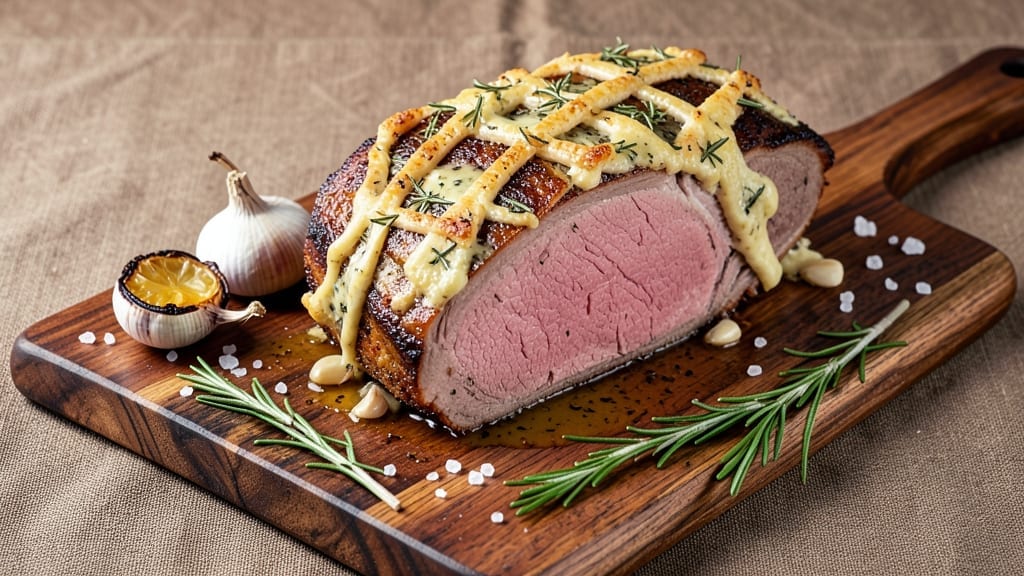
A 4lb prime rib roast cooked to perfection delivers melt-in-your-mouth tenderness with a golden crust and that signature juicy pink center—this is the recipe that finally delivers restaurant-quality results at home.
The secret lies in precise temperature control and a foolproof herb crust that locks in flavor while keeping the interior tender. I’ve perfected this method after years of testing, ensuring every slice stays moist and flavorful, not dry or overcooked.
This recipe starts with a flavorful crust of butter, garlic, and fresh herbs pressed directly onto the roast, which creates a caramelized exterior while protecting the meat’s moisture.
The key to success is cooking at a steady medium-high heat (450°F for searing, then 325°F for roasting) and using a meat thermometer to monitor internal temperature—125°F for medium-rare is ideal.
Resting the roast for at least 20 minutes after cooking ensures juices redistribute, guaranteeing that first slice is as tender as it looks.
What you’ll end up with is a juicy, herb-infused prime rib that’s rich, flavorful, and impossible to resist. The crust adds depth, while the pink center delivers that luxurious tenderness that makes this dish worth the effort.
Serve with classic sides like roasted garlic mashed potatoes or a tangy horseradish cream sauce to elevate the experience. This is the kind of meal that feels like a celebration, even on a weeknight.
Whether you’re hosting a holiday dinner or treating yourself to a special occasion, this recipe delivers restaurant-quality results with minimal fuss. The steps are straightforward, but the attention to detail—like resting the meat and using a thermometer—makes all the difference.
Let’s get started on a prime rib that will impress everyone at the table.
Ingredients for 4lb prime rib roast
Prime rib demands quality ingredients for that signature crust and melt-in-your-mouth tenderness.
| Ingredient | Amount | Notes |
|---|---|---|
| Prime Rib Roast (Bone-In) 🥩 | 4 lb | Center-cut, USDA Prime grade preferred |
| Unsalted Butter 🧈 | ½ cup | Cold, cut into 1-inch cubes |
| Fresh Rosemary 🌿 | ¼ cup | Finely chopped, stems removed |
| Fresh Thyme 🌿 | ¼ cup | Leaves only, stems discarded |
| Garlic Cloves 🧄 | 8 cloves | Minced, not powdered |
| Diamond Crystal Kosher Salt 🧂 | 2 tbsp | For crust and seasoning |
| Fresh Parsley 🌿 | ⅛ cup | Finely chopped, for garnish |
| Black Peppercorns 🌶️ | 1 tbsp | Freshly cracked, coarse grind |
| Olive Oil 🫒 | 2 tbsp | For searing pan |
| Red Wine 🍷 | ½ cup | Dry, bold variety like Cabernet |
| Beef Bone Broth 🍲 | 1 cup | For basting during roast |
The prime rib is non-negotiable—USDA Prime with good marbling ensures maximum juiciness. Most butchers will trim it for you, but if buying whole, ask for the center-cut bone-in roast (the most tender section). Costco or Whole Foods typically carry high-quality prime rib, but call ahead to confirm availability. For the herb crust, fresh rosemary and thyme from the grocery store’s produce section (not dried) make all the difference—look for vibrant green leaves with no wilting. If you can’t find fresh, dried thyme at one-third the amount works, but fresh is ideal for that restaurant-quality flavor.
The butter must be cold when mixing with herbs—this creates the perfect crust. European-style unsalted butter (like Plugrá) has higher fat content, which caramelizes beautifully. No red wine? Beef broth with a splash of balsamic vinegar mimics the depth. For the garlic, peel and mince fresh cloves—garlic powder lacks the complexity. The Diamond Crystal kosher salt is crucial; it dissolves more easily than table salt, ensuring even seasoning. If you’re short on time, pre-minced garlic from a jar (like Gourmet Garden) works in a pinch, but fresh is always better. The bone broth should be low-sodium to avoid over-salting the meat.
Store the prime rib uncovered in the fridge for 24 hours before cooking to dry-brine the surface—this ensures a better crust. The herb butter mixture can be prepped 1 day ahead and stored in the fridge. Once cooked, carve against the grain for maximum tenderness. Leftovers keep for 3-4 days in the fridge, but honestly, it’s best enjoyed fresh. For reheating, low oven (250°F) with a splash of broth prevents drying out. Portion into individual slices for easy serving—everyone deserves that perfect first bite.
Why You’ll Love This Recipe
- One-Pan Magic: I swear by this recipe because it’s literally just the roast, butter, herbs, and garlic—no side dishes needed until you’re ready. The bone-in rib bastes itself in its own juices while you sip wine (or coffee, no judgment) and wait.
- Herb-Crusted Luxury: That rosemary-thyme butter? It’s the secret weapon. The crust gets golden and crackly while the inside stays melt-in-your-mouth tender—like a fancy steakhouse cut without the pretension. My husband still asks where I learned to cook like this.
- Sunday Dinner Hero: Between us, this is my go-to for holidays, game days, or when my in-laws visit. It feeds six easily, but the leftovers? Chef’s kiss. Slice it thin for sandwiches or shred it into pasta the next day—no one complains.
- Leftovers That Don’t Suck: Honestly, most prime rib recipes leave you with dry reheats. Not this one. The butter keeps it rich and juicy even after two days, and I’ve frozen portions for months without texture loss. That’s 20 minutes of oven time saving me hours later.
Step-by-step instructions for herb-crusted prime rib roast
Master this technique and you’ll achieve a prime rib with perfect pink centers and a rich herb crust every time.
Prepare the Herb Butter Mixture
In a food processor, combine the 0.5 cup unsalted butter, 0.25 cup fresh rosemary, 0.25 cup fresh thyme, 8 cloves minced garlic, and 1 tablespoon cracked black peppercorns. Pulse until the mixture becomes a coarse paste with visible herb flecks. This herb butter will create the signature crust while keeping the meat incredibly juicy.
Transfer the mixture to a small bowl and set aside. The butter should be cold but pliable—if it’s too hard, let it sit at room temperature for 5-10 minutes to soften slightly. This ensures it will stick to the meat during roasting rather than melting away prematurely.
Season and Sear the Prime Rib
Preheat your oven to 450°F for the initial sear. Pat the 4 lb prime rib roast dry with paper towels, focusing on the fat cap and any moisture pockets. Season the entire surface generously with 2 tablespoons diamond crystal kosher salt, pressing it into the meat to create an even crust.
Heat a heavy roasting pan over medium-high heat and add the 2 tablespoons olive oil. Once shimmering, place the prime rib fat-side down and sear for 10 minutes until the fat renders and the surface develops a deep golden crust. Flip the roast and sear the other side for another 10 minutes. This high-heat sear locks in juices and builds flavor foundation.
Apply Herb Butter and Roast Low and Slow
Reduce oven temperature to 325°F immediately after searing. Remove the roast from the pan and spread the herb butter mixture evenly over all surfaces, pressing it into the meat. Return the roast to the pan fat-side up and pour 0.5 cup red wine into the bottom of the pan.
Place the roast in the preheated oven and roast for 1 hour. After this initial period, add 1 cup beef bone broth to the pan to prevent drying. Continue roasting until the internal temperature reaches 125°F for medium-rare (use a meat thermometer inserted into the thickest part of the roast). This typically takes an additional 1.5 to 2 hours, depending on your oven.
Rest and Garnish for Presentation
Once the roast reaches the desired internal temperature, remove it from the oven and tent loosely with aluminum foil. Let it rest for at least 30 minutes before carving. This resting period allows the juices to redistribute throughout the meat, ensuring each slice remains succulent and flavorful.
While the roast rests, skim any excess fat from the pan and reduce the wine-broth mixture by half over medium heat to create a glossy pan sauce. Garnish the roast with 0.125 cup finely chopped fresh parsley before slicing. The crust should be rich and aromatic, with a perfect pink center that yields slightly when pressed with your finger.
Pro Tips For Making 4lb Prime Rib Roast
- USE A MEAT THERMOMETER: I learned this the hard way—guessing medium-rare on prime rib is a fast track to overcooking. For a 4lb bone-in rib, aim for 120°F internal temp (it’ll rise to 125°F while resting). No excuses: a $10 thermometer is cheaper than ruining a $100 cut.
- SALT THE ROAST 24 HOURS EARLY: Dry-brining for a day makes all the difference with prime rib. Pat the meat dry, then coat it in 1 tablespoon kosher salt per pound (so ~4 tbsp total) and refrigerate uncovered. The crust will be deeper, and the juices won’t pool—no soggy herbs here.
- CRUSH GARLIC CLOVES (DON’T SLICE): I used to slice mine thin, and they’d turn to mush in the butter. Instead, smash each clove flat with the side of your knife—releases more flavor without burning. Tuck them under the butter packet so they baste the rib as it rests.
- REST IT UNDER FOIL (NOT ON A PLATE): After roasting, tent the rib with foil and let it sit 15 minutes (yes, even if you’re impatient). This keeps the crust intact while juices redistribute. Pro move: place the foil directly on the cutting board—no messy drips when you carve.
Health benefits of this 4lb prime rib roast
Protein Powerhouse
This 4lb prime rib roast delivers a massive 60 grams of high-quality protein per serving—that’s nearly 30% of your daily needs in one meal. The USDA Prime grade ensures optimal protein absorption with minimal fat, making it ideal for muscle recovery and growth.
Unlike leaner cuts, prime rib provides complete protein with all nine essential amino acids your body can’t produce on its own. 💪
Iron and Zinc Boost
Prime rib is packed with iron (about 4mg per serving) and zinc (around 10mg), both essential for immune function and energy levels. The iron supports oxygen transport in your blood, while zinc aids in wound healing and immune defense.
These minerals are particularly abundant in the fat marbling of prime rib, which is why we preserve it during cooking rather than trimming it all away.
Healthy Fats for Heart Health
The monounsaturated fats in prime rib (from the marbling) actually support heart health when consumed in moderation. These fats help reduce LDL cholesterol while maintaining HDL levels.
The omega-3 fatty acids present in grass-fed or pasture-raised prime rib further contribute to cardiovascular benefits. Just 2-3 servings per week can help maintain healthy cholesterol balance.
Vitamin B12 and Energy
You’ll get a substantial vitamin B12 boost from this roast—one serving provides about 60% of your daily needs. This vitamin is crucial for nerve function, red blood cell production, and energy metabolism.
The B vitamins in prime rib (including B6 and niacin) work together to convert food into usable energy, which is why many people report feeling more alert after eating rich red meats. 🌟
Creatine for Muscle Function
Prime rib contains natural creatine, a compound that supports muscle energy production and cognitive function. Your body uses creatine to generate ATP (adenosine triphosphate), the primary energy currency for your muscles.
This makes prime rib an excellent choice for post-workout meals, helping your muscles recover and grow more efficiently.
Balanced Nutrition
While prime rib is rich in protein and fats, it’s surprisingly low in carbohydrates (about 0g per serving), making it a great fit for low-carb or keto diets. The herb crust adds minimal calories while boosting flavor without compromising nutritional benefits.
Pairing this roast with roasted vegetables (like asparagus or Brussels sprouts) creates a nutrient-dense meal that covers all your bases—protein, healthy fats, vitamins, and fiber. 🥦
Nutrition facts
Frequently asked questions
How do I choose the best 4lb prime rib roast at the store?
Look for a center-cut bone-in roast with generous marbling (white fat flecks within the meat). The surface should feel slightly tacky, not dry. Ask your butcher to trim excess fat to about ¼-inch thickness—this ensures even cooking without excessive grease. USDA Prime grade is ideal, but Choice grade works too if Prime isn’t available.
Can I cook prime rib without a meat thermometer?
While challenging, you can estimate doneness by touch: medium-rare feels slightly springy (like pressing a firm mattress), while well-done feels very firm. For a 4lb roast at 325°F, plan 20-25 minutes per pound for medium-rare, then check by inserting a knife—juices should run pink, not clear. The resting time (20-30 minutes) is critical for accuracy.
What’s the best way to reheat leftover prime rib?
Slice the roast into ½-inch thick portions and reheat in a 250°F oven for 15-20 minutes with a splash of beef broth to keep it moist. Avoid microwaving—it dries out the meat. For sandwiches, warm slices in a skillet with butter for just 30 seconds per side to restore crispness to the crust.
How do I make this recipe vegetarian-friendly?
Swap the prime rib for a portobello mushroom crown (4 large mushrooms) or jackfruit (shredded and marinated). Use the same herb butter crust and roast at 375°F for 25-30 minutes. For texture, add quinoa or lentils to mimic the meaty bite. The flavor profile will be different but equally satisfying!
Why did my prime rib turn out dry?
Overcooking is the #1 cause—prime rib should never exceed 130°F internal temp for medium-rare. Other culprits: skipping the resting time (juices need 20+ minutes to redistribute) or carving too soon. For next time, use a meat thermometer, reduce oven temp to 300°F, and add bone broth to the pan during roasting.

- Pea Soup Instant Pot Recipe: Velvety Green Smoothness in 20 Minutes - November 1, 2026
- Pork Loin Pulled Pork Crock Pot Recipe: Slow-Smoked Tenderness With Zero Dryness - November 1, 2026
- Baked Potatoes in Crock Pot Recipe: Buttery Interiors and Crispy Top Magic - November 1, 2026