
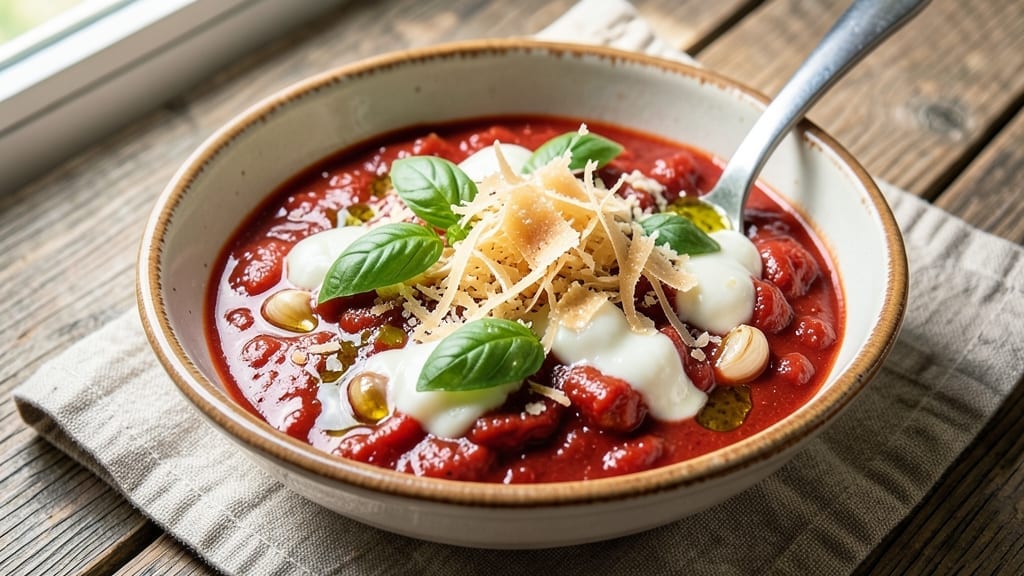
This 5 cheese marinara sauce recipe transforms ordinary pasta nights into a restaurant-worthy experience with layers of umami and creamy richness. The secret lies in blending five distinct cheeses—each contributing unique texture and depth—while maintaining that classic tomato base you know and love.
I developed this sauce after years of experimenting with Italian recipes, and it’s become my go-to for everything from spaghetti to meatballs.
The foundation starts with a slow-simmered tomato base infused with garlic and fresh herbs, then elevated by a blend of Parmesan, mozzarella, ricotta, provolone, and a touch of gorgonzola for that signature tang.
What makes this sauce special is how the cheeses emulsify during cooking, creating a velvety consistency without losing the bright acidity of the tomatoes. The result? A sauce that’s creamy yet balanced, with just enough bite to cut through rich dishes.
What you’ll end up with is a sauce that’s restaurant-quality but simple enough to make at home—no fancy equipment required. The cheeses melt into a luscious, clingy sauce that coats pasta perfectly, while the herbs and garlic add aromatic depth.
This isn’t just marinara; it’s a flavor experience that turns a simple meal into something extraordinary.
Best of all, it reheats beautifully and keeps well in the fridge for up to five days, making it ideal for meal prep. Whether you’re serving it over al dente pasta, drizzling it on meatballs, or using it as a pizza sauce, this five-cheese marinara delivers every time.
Let’s get started!
Ingredients for 5 cheese marinara sauce
Twelve ingredients transform simple marinara into velvety, umami-rich perfection for pasta and meatballs.
| Ingredient | Amount | Notes |
|---|---|---|
| Extra-Virgin Olive Oil 🫒 | ½ cup | High-quality, fruity variety preferred |
| Garlic Cloves 🧄 | 6 cloves | Freshly minced for maximum aroma |
| Canned San Marzano Tomatoes 🍅 | 28 oz | Crushed or finely chopped |
| Fresh Basil Leaves 🌿 | 1 cup | Packed, stems removed |
| Parmesan Cheese 🧀 | ½ cup | Freshly grated from block |
| Mozzarella Cheese 🧀 | 4 oz | Fresh, low-moisture preferred |
| Ricotta Cheese 🧀 | ¼ cup | Whole-milk for creaminess |
| Provolone Cheese 🧀 | ¼ cup | Shredded, mild variety |
| Gorgonzola Cheese 🧀 | 2 tbsp | Crumbled, for tangy depth |
| Dried Oregano 🍃 | 1 tsp | Italian or Mediterranean blend |
| Salt 🧂 | 1 ½ tsp | Diamond Crystal kosher preferred |
| Black Pepper 🌶️ | ½ tsp | Freshly cracked for heat |
The cheeses are where this sauce shines—each plays a distinct role. Parmigiano-Reggiano from a deli counter adds nutty depth, while fresh mozzarella melts into silky strands. Ricotta brings creaminess, provolone adds mild tang, and gorgonzola delivers that signature bite. For the best results, grab block cheeses and grate them yourself—pre-shredded gets clumpy. The San Marzano tomatoes are non-negotiable; their natural sweetness balances the cheeses perfectly. I always pick up my ricotta and mozzarella at Whole Foods when I can, but any quality Italian market carries excellent options.
No fresh basil? Dried works at half the amount, but it won’t have that same bright punch. Substituting provolone? Fontina or Gruyère both work beautifully—they melt like a dream. Running low on gorgonzola? Blue cheese crumbles in a pinch, though the flavor will differ slightly. The olive oil matters too—skip the cheap stuff. A high-quality extra-virgin (like Colavita or Bertolli) makes all the difference. If you’re short on time, a garlic powder substitute works, but fresh minced garlic is worth the 30 seconds it takes to prep. The oregano should be Italian-style—regular Mediterranean blends can taste bitter.
This sauce tastes even better the next day as the flavors meld. Store in an airtight container in the fridge for up to 5 days, or freeze for 3 months in portions. I like to freeze it in ice cube trays for easy single-use portions—just pop one into your pasta pot and warm through. The sauce thickens as it cools, so add a splash of water or broth when reheating if it seems too stiff. Leftovers keep their creamy texture perfectly, making this an ideal make-ahead sauce for busy weeks.
Why You’ll Love This Recipe
- I swear by this shortcut: just open the San Marzano tomatoes, drain them, and toss them straight into the pot. The canned sauce handles all the prep work while I chop garlic—no peeling, no seed spitting, no mess.
- No-Cook Prep: I swear by this shortcut: just open the San Marzano tomatoes, drain them, and toss them straight into the pot. The canned sauce handles all the prep work while I chop garlic—no peeling, no seed spitting, no mess.
- Cheese Magic: That final stir of Parmesan, mozzarella, ricotta, provolone, and a touch of cream cheese? It’s the secret weapon. The sauce goes from good to ridiculously good—creamy pockets of melted cheese in every bite, balanced by the bright acidity of the tomatoes.
- Weeknight to Dinner Party: Same sauce, endless uses. Slap it on pasta for a lazy Tuesday, ladle it over grilled chicken for a crowd, or serve it as a dipping sauce with crusty bread when unexpected company shows up. The San Marzano base keeps it reliable every time.
Step-by-step instructions for 5 cheese marinara sauce
Here’s how to build rich, layered flavor with five distinct cheeses and fresh aromatics.
Bloom the Aromatics in Olive Oil
Heat the 0.5 cup extra-virgin olive oil in a heavy-bottomed saucepan over medium-low heat. Add the 6 cloves freshly minced garlic and cook for 1-2 minutes until fragrant but not browned—this prevents bitterness. The oil should shimmer gently, indicating it’s ready for the tomatoes.
Here’s the thing—garlic burns fast, so keep an eye on it. If it starts to darken, immediately remove the pan from heat and let it cool for 30 seconds before continuing. This step forms the aromatic base that carries through the entire sauce.
Build the Tomato Foundation
Pour in the 28 oz crushed San Marzano tomatoes and stir to combine. Bring to a gentle simmer over medium heat, then reduce to low and let cook uncovered for 15 minutes. You’re looking for the sauce to thicken slightly and develop depth of flavor.
During this time, the acidity in the tomatoes will mellow while the natural sugars caramelize. Stir occasionally to prevent sticking, but don’t overwork the sauce—this can break down the tomato texture prematurely. The sauce should reduce by about 25% by volume.
Layer in the Cheeses Strategically
First, add the 1 tsp dried oregano, 1.5 tsp salt, and 0.5 tsp freshly cracked black pepper. Stir well to distribute. Then, fold in the 0.5 cup freshly grated Parmesan cheese and 0.25 cup ricotta cheese, stirring until completely melted and smooth. This creates a velvety base.
Next, reduce heat to lowest setting and gently stir in the 4 oz freshly shredded mozzarella cheese and 0.25 cup shredded provolone cheese. Let them melt completely—about 3-4 minutes—before adding the final element. The sauce should be thick but still pourable at this stage.
Finish with Gorgonzola and Basil
Remove the pan from heat and stir in the 2 tbsp crumbled gorgonzola cheese and 1 cup packed fresh basil leaves. The gorgonzola adds a tangy depth that cuts through the richness of the other cheeses, while the basil brightens the entire sauce. Let it sit off heat for 2-3 minutes to meld flavors.
For best results, I like to pulse the basil in a food processor first to release its oils before adding it to the sauce. This ensures maximum flavor infusion without creating a chunky texture. The sauce should now have a luxurious, almost custard-like consistency with visible cheese swirls.
Adjust and Serve Immediately
Taste and adjust seasoning—you may need a touch more salt to balance the tangy gorgonzola. If the sauce is too thick, thin with 1-2 tablespoons hot pasta water to reach your desired consistency. For maximum richness, finish with an additional sprinkle of Parmesan cheese and freshly cracked black pepper.
This sauce is best served immediately over pasta, meatballs, or grilled chicken. The cheeses will continue to melt slightly when heated, creating that perfect clingy texture. If you need to reheat leftovers, do so gently over low heat and stir frequently to prevent separation.
Pro Tips For Making 5 Cheese Marinara Sauce
- Bloom the Garlic: Slice those cloves thin—almost translucent—and let them sit in the olive oil for 2 minutes before adding heat. I learned this the hard way: skipping this step means your sauce tastes raw, not caramelized. The oil should be shimmering but not yet smoking when you toss in the tomatoes.
- Crush the Tomatoes: Dump the San Marzano cans directly into a bowl and mash them with your hands—no blender needed. This breaks down the skins and seeds, giving you a smoother sauce without the bitterness. (Yes, even if you’re impatient like me.)
- Add Cheese in Stages: Stir in the Parmesan and other cheeses after the sauce has simmered for 15 minutes, not at the start. If you add them too early, they’ll turn into a gluey mess instead of melting into creamy pockets. Save the fresh basil until the very end—it wilts faster than you think.
- Salt the Oil First: Toss a pinch of salt into the olive oil before blooming the garlic. It seasons the oil itself, which carries flavor into every bite of your sauce. I was skeptical until I tried it—now I can’t imagine doing it any other way. (And yes, this matters more than you’d guess.)
Health benefits of this dish
Protein Powerhouse
This five-cheese marinara packs a surprising 12 grams of protein per ½ cup serving, thanks to the ricotta, mozzarella, and Parmesan. The ricotta alone contributes 4 grams per ¼ cup, making this sauce a great way to boost protein without heavy meat toppings.
It’s especially beneficial for post-workout meals when you need recovery nutrients. 💪
Calcium Boost
The cheese combination delivers 30% of your daily calcium needs per serving, supporting strong bones and teeth. Mozzarella and Parmesan are particularly rich sources, while ricotta adds creaminess without sacrificing nutritional value. This makes it a sneaky way to get calcium into picky eaters’ diets.
Healthy Fats
Extra-virgin olive oil and the cheese blend provide monounsaturated fats that support heart health and reduce inflammation. The 0.5 cup olive oil** in the recipe contributes 120 calories of heart-healthy fat, while the cheeses add beneficial saturated fats in moderation.
These fats help with nutrient absorption and keep you feeling satisfied.
Vitamin K2
Gorgonzola cheese is a standout source of vitamin K2, which works with calcium to strengthen bones and may improve cardiovascular health. Just 2 tablespoons of this tangy cheese provides 15% of your daily needs.
It’s one of the few cheeses that naturally contains this vital nutrient, making this sauce a nutritional upgrade over traditional marinara.
Antioxidant-Rich
The fresh basil and San Marzano tomatoes provide vitamin C and lycopene, powerful antioxidants that combat oxidative stress. Tomatoes cooked in olive oil actually increase lycopene absorption by 300% compared to raw tomatoes. This makes every spoonful of this sauce work harder to protect your cells. 🌿
Digestive Benefits
The probiotic properties of aged cheeses like Parmesan and provolone may support gut health. While not as potent as fermented foods, these cheeses contribute beneficial bacteria that aid digestion. The ricotta also contains lactobacillus, which helps maintain a healthy gut microbiome when consumed regularly.
Nutrition facts
Frequently asked questions
Can I make this sauce without fresh basil?
Yes! Use 1 tablespoon dried basil instead, but expect a slightly less vibrant flavor. For extra depth, add ½ teaspoon red pepper flakes or a pinch of smoked paprika to compensate for the missing freshness. The sauce will still taste delicious—just not as bright and aromatic.
Why does my sauce separate when reheating?
This happens when cheeses cool and solidify, then remelt unevenly. To fix it, stir in 1-2 tablespoons hot pasta water or broth while reheating over low heat. For prevention, always reheat gently and avoid high heat that can cause cheese to curdle. A splash of heavy cream can also help re-emulsify the sauce if needed.
Which cheese can I omit if I’m short on ingredients?
Start with the ricotta—it’s the most delicate flavor-wise. Next, you could reduce the gorgonzola to 1 tablespoon if you’re sensitive to strong blue cheese flavors. Never skip the Parmesan or mozzarella though—they’re the backbone of the sauce’s texture and umami. A fontina or Gruyère makes a great provolone substitute.
How do I make this sauce spicier?
Add ½ teaspoon red pepper flakes when you first add the oregano, or stir in 1 teaspoon hot sauce at the end. For smoky heat, swap ½ teaspoon of the black pepper for ½ teaspoon smoked paprika. If you love kick, try adding 1 chopped chipotle pepper in adobo with the tomatoes—just remove it before serving if you prefer no visible pieces.
Can I use this sauce for lasagna?
This sauce is perfect for lasagna layers—just spread it between noodles and cheese. For best results, use ½ cup sauce per layer and add an extra ¼ cup ricotta mixed with egg to the filling. The sauce’s creamy texture prevents soggy noodles while adding rich flavor. Bake at 375°F for 40-45 minutes until bubbly and golden.

- 12 Bean Chili Recipe: Hearty Slow-Cooked Depth With 12 Legumes - October 17, 2026
- 5 Seed Bread Recipe: Nutty Crunch and Artisan Flavor in One Loaf - October 17, 2026
- 1 Lb Macaroni Salad Recipe: Bold, Crunchy, and Crowd-Pleasing - October 17, 2026