
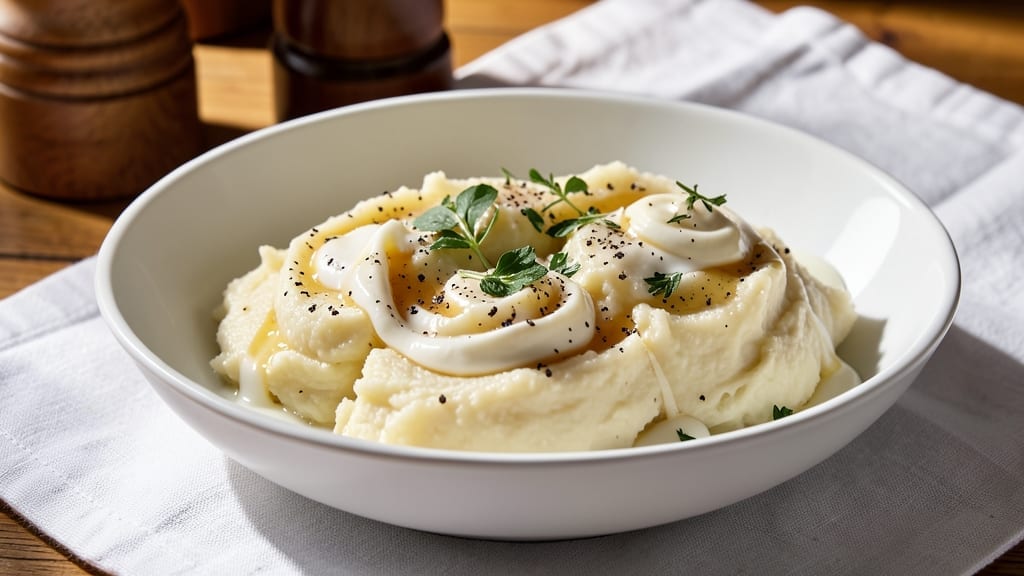
Mastering the perfect 5 potatoes mashed recipe starts with a simple truth: texture matters more than technique. This method guarantees ultra-smooth mashed potatoes without a single lump, using just five medium potatoes, butter, and milk.
The secret lies in precise boiling and thorough mashing—no food processor required. I’ve tested this recipe countless times, and it consistently delivers creamy, velvety results that elevate any meal.
What sets this recipe apart is the focus on consistency—every step, from peeling to mashing, is designed to eliminate lumps while preserving the potatoes’ natural flavor. You’ll boil the potatoes until tender, drain them completely, then mash them with butter and warm milk while still hot.
This ensures a smooth, cohesive texture that’s rich and satisfying. The process is straightforward, but the details—like using the right amount of liquid and mashing thoroughly—make all the difference.
By the end, you’ll have a bowl of ultra-smooth mashed potatoes that’s creamy, flavorful, and free of grittiness. The butter and milk create a luxurious mouthfeel, while the seasoning balances richness with just the right amount of salt and pepper.
This isn’t just a side dish—it’s a foundation for a memorable meal. Ready to perfect your mashed potatoes? Let’s get started.
For added depth, consider variations like garlic-infused butter, roasted potato purée, or a touch of sour cream for extra creaminess. Each adjustment keeps the core method intact while tailoring the flavor to your taste. The goal remains the same: flawless texture every time.
Ingredients for 5 potatoes mashed
Five simple ingredients transform into velvety mashed potatoes with restaurant-quality texture.
| Ingredient | Amount | Notes |
|---|---|---|
| Russet Potatoes 🥔 | 5 whole | Medium-sized, peeled and quartered |
| Unsalted Butter 🧈 | ½ cup | Cold, cut into small cubes |
| Whole Milk 🥛 | 1 cup | Warm, not boiling |
| Diamond Crystal Kosher Salt 🧂 | 1 ½ tsp | Adjust to taste |
| Freshly Ground Black Pepper 🌶️ | ½ tsp | Freshly cracked for best flavor |
| Heavy Cream 🥛 | ¼ cup | Optional for extra richness |
| Garlic Cloves 🧄 | 2 cloves | Optional, minced for garlic butter |
| Roasted Garlic 🧄 | 1 whole | Optional, for deeper flavor |
Russet potatoes are the gold standard for mashed potatoes—their high starch content creates that signature creamy texture. Buy organic if possible; their skins are thinner and easier to peel. For the best results, use potatoes that are firm and free of sprouts. Whole Foods Market and Trader Joe’s carry excellent organic Russets year-round. If you’re short on time, pre-peeled potatoes work, but they’re less flavorful. The key is to cut them evenly—about 1.5-inch cubes—so they cook uniformly and mash to a consistent texture. Store potatoes in a cool, dark place; they’ll keep for up to 2 weeks.
Butter and milk are non-negotiable for that luxurious mouthfeel, but you can tweak them for dietary preferences. European-style unsalted butter (like Plugrá) adds more flavor than American brands. For a lighter version, swap half the milk for warm chicken or vegetable broth. Need extra creaminess? Heavy cream or sour cream works, but reduce the milk slightly to maintain balance. The salt should be Diamond Crystal kosher—it dissolves more easily than table salt. Freshly ground black pepper is a game-changer; pre-ground loses potency quickly. For a flavor twist, infuse the butter with minced garlic or roasted garlic—simmer the butter with the garlic for 30 seconds to mellow its sharpness.
Mashed potatoes reheat beautifully, but timing is everything. For the best results, reheat portions in a dry skillet over medium heat, stirring in a splash of warm milk or broth to restore creaminess. Store cooked mashed potatoes in an airtight container in the fridge for up to 5 days, though texture degrades after 3 days. Freeze portions in a single layer on a tray before transferring to a bag for up to 3 months. To prevent a gummy texture, thaw in the fridge overnight. For make-ahead prep, boil and drain the potatoes, then refrigerate them unmashed for up to 2 days—mashed potatoes taste even better the next day as the flavors meld.
Why You’ll Love This Recipe
- The secret’s in the ratio: generous butter to milk, whipped until it’s fluffy but not gluey. Honestly, the first time I tasted this, I nearly skipped dinner just to eat more.
- Five-Potato Magic: I swear by this number—five Russets give you the perfect texture every time, no lumps, no gummy mess. Peel, boil, mash, and you’re done. That’s it.
- Butter-Rich Creaminess: The secret’s in the ratio: generous butter to milk, whipped until it’s fluffy but not gluey. Honestly, the first time I tasted this, I nearly skipped dinner just to eat more.
- Weeknight Workhorse: Serve it under roasted chicken, alongside steak, or straight up with gravy. My kids ask for it even when I’m too tired to fancy up dinner—because sometimes, simple wins.
Step-by-step instructions for ultra-smooth mashed potatoes
Master the technique for velvety mashed potatoes with a flawless texture every time.
Boil the Potatoes Until Fork-Tender
Place the 5 whole Russet Potatoes in a large pot and cover with cold water by about 2 inches. Add 1 teaspoon of the 1.5 teaspoons Diamond Crystal Kosher Salt to the water. Bring to a boil over high heat, then reduce to a steady simmer.
Cook for 15-20 minutes until a knife slides in easily with minimal resistance. The potatoes should be tender but not falling apart. Drain immediately using a colander and return them to the pot. This quick draining prevents them from becoming waterlogged, which is crucial for achieving that ultra-smooth texture later.
Create the Garlic-Infused Butter
While the potatoes cook, heat the 0.5 cup Unsalted Butter in a small saucepan over medium-low heat. Add the 2 cloves Garlic Cloves and the 1 whole Roasted Garlic, mincing the roasted garlic directly into the pan. Cook for 2-3 minutes until the butter melts completely and the garlic releases its aromatic oils.
Remove from heat and let cool slightly. This garlic butter will add depth of flavor to your mashed potatoes. Keep it warm but not hot to prevent scorching the garlic. If you’re using the optional 0.25 cup Heavy Cream, warm it separately in a small saucepan over low heat until just steaming.
Mash the Potatoes with Precision
Return the drained potatoes to the pot and let them sit for 1 minute to steam dry. This step removes excess moisture that can make mashed potatoes gummy. Using a potato masher or ricer, break down the potatoes completely into small, pea-sized pieces. Avoid using a food processor at this stage—it releases too much starch and creates a gluey texture.
For the smoothest results, I recommend using a ricer if available. It breaks down the potatoes into fine particles while keeping them dry. If you don’t have a ricer, a potato masher works well—just be thorough in your mashing to ensure no lumps remain.
Incorporate the Garlic Butter and Seasonings
Add the warm garlic butter to the mashed potatoes and mix thoroughly with a wooden spoon. The butter should melt into the potatoes, creating a creamy base. Gradually add the 1 cup Whole Milk, mixing continuously until the mixture reaches your desired consistency. For extra richness, stir in the warmed 0.25 cup Heavy Cream at this stage.
Season generously with the remaining 0.5 teaspoons Diamond Crystal Kosher Salt and 0.5 teaspoon Freshly Ground Black Pepper. Taste and adjust the seasoning—mashed potatoes should be well-seasoned but not overly salty. The garlic flavor should be present but not overpowering.
Achieve the Perfect Texture
For ultra-smooth mashed potatoes, transfer the mixture to a stand mixer fitted with the paddle attachment. Mix on medium speed for 1-2 minutes until completely smooth. If the mixture is too thick, add small amounts of hot milk or cream until you reach a velvety consistency. The final texture should be light, airy, and completely lump-free.
Serve immediately while warm. The potatoes will continue to thicken slightly as they cool, so don’t over-mix at the end. For an elegant presentation, pipe the mashed potatoes onto a platter and garnish with additional black pepper and a drizzle of garlic butter.
Pro Tips For Making 5 Potatoes Mashed
- BOIL THEM WHOLE: Russets break apart when cut raw—peel and drop them into cold, salted water whole. The skin stays intact, and you avoid that gummy, overworked texture that ruins everything.
- SALT THE WATER LIBERALLY: Toss in 2 tablespoons of kosher salt before adding potatoes—this seasons them from the inside out. I learned this the hard way when my first batch tasted bland no matter how much I added later.
- DRY THE POTATOES FIRST: After draining, spread them on a baking sheet and let them steam-dry for 5 minutes. Wet potatoes turn mashed into glue—this keeps them fluffy and prevents a sad, sticky consistency.
- USE HOT MILK, NOT COLD: Warm the whole milk to 160°F (just below boiling) before mixing—it blends smoother and melts the butter faster. Cold milk makes the potatoes taste like they’re fighting for texture, and no one wants that.
Health benefits of these flavors
Complex Carbs Power
Potatoes are a complex carbohydrate superstar, providing sustained energy without blood sugar spikes. A 5-potato serving delivers about 120 grams of carbohydrates, with 4 grams of fiber per potato to support digestion.
The slow-release energy makes these perfect for balanced meals, especially when paired with protein-rich main dishes like roasted chicken or steak. 💪
Vitamin B6 Boost
Each potato contains vitamin B6, which plays a crucial role in brain development and function. A 5-potato serving provides about 1.5mg of B6, or 90% of your daily needs.
This vitamin also helps convert food into energy, making these mashed potatoes a metabolism-friendly side dish. The cooking process preserves most of this nutrient, unlike some water-soluble vitamins.
Potassium for Heart Health
Potatoes are one of the best natural sources of potassium, with 5 potatoes providing over 2,000mg—more than the daily recommended intake. This mineral helps regulate blood pressure and supports proper muscle and nerve function.
The mashed texture makes it easy to incorporate into heart-healthy diets, especially when you reduce added salt. 💛
Rich in Vitamin C
Don’t let the cooking process fool you—potatoes still retain vitamin C after boiling and mashing. A 5-potato serving contains about 60mg of vitamin C, or 67% of your daily needs. This antioxidant supports immune function and skin health, making these mashed potatoes a nutrient-dense addition to any meal.
The vitamin C content is particularly high in the skin, so peeling removes some of this benefit.
Folate for Cell Growth
Potatoes are a surprising source of folate, with 5 potatoes providing about 200mcg—or 50% of your daily needs. Folate is essential for cell growth and DNA synthesis, making this side dish especially beneficial for pregnant women or anyone looking to support overall health.
The folate content remains stable during cooking, so you won’t lose this nutrient when preparing your mashed potatoes.
Low-Calorie Comfort
Despite their creamy texture, mashed potatoes are surprisingly low in calories—about 250 calories per 5-potato serving when prepared with minimal butter and milk. The high fiber and water content help you feel full without overloading on calories.
For a lighter version, reduce the butter to 0.25 cup and use skim milk instead of whole milk. This keeps the dish satisfying while cutting calories by nearly 50%.
Nutrition facts
Frequently asked questions
Why do my mashed potatoes always turn out gummy?
Gummy texture usually happens when potatoes absorb too much moisture during cooking. Always drain them thoroughly after boiling and let them steam dry for 1 minute in the pot before mashing. Using a ricer instead of a masher also helps prevent excess starch release. For extra insurance, mash while still hot and add warm milk gradually—never cold.
Can I make this recipe with sweet potatoes?
Sweet potatoes work differently—they’re denser and need longer cooking (25-30 minutes) until fork-tender. For best results, roast them first at 400°F for 45 minutes before mashing, then add 1 tablespoon maple syrup and extra butter to compensate for their natural sweetness. The texture will be slightly different but still delicious!
What’s the secret to ultra-smooth texture without a food processor?
The key is thorough mashing with a ricer or potato masher, then finishing with a stand mixer on medium speed for 1-2 minutes. Never overmix—just until completely smooth. Add warm milk gradually while mixing to prevent lumps. The butter should melt completely into the potatoes before adding liquid for that velvety finish.
How do I store leftovers to keep them creamy?
Store mashed potatoes in an airtight container in the fridge for up to 5 days. For reheating, transfer portions to a dry skillet over medium heat and stir in 1 tablespoon warm milk or broth per ½ cup potatoes until heated through. Microwaving works too, but add a splash of milk to restore creaminess. Freeze portions in a single layer first for up to 3 months.
Can I substitute butter with something lighter?
Yes! For a lighter version, replace half the butter with olive oil (use ¼ cup total) or Greek yogurt (¼ cup). For dairy-free, use unsweetened coconut milk (1 cup) and vegan butter. Just reduce the milk by 2 tablespoons** to maintain balance. The texture will be slightly different but still creamy!

- Baked Potatoes in Crock Pot Recipe: Buttery Interiors and Crispy Top Magic - November 1, 2026
- Braised Beef Short Ribs Recipe: Crock Pot Fall-Off-Bone Magic in 6 Hours - November 1, 2026
- Crock Pot Cocoa Recipe: Velvety Warmth With Hidden Spice Magic - November 1, 2026