
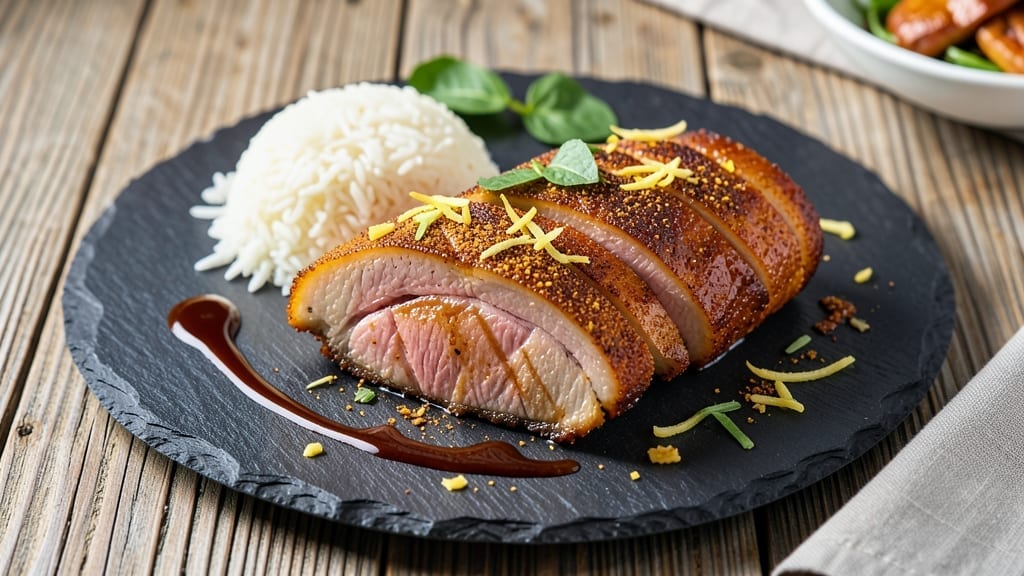
This 5-spice crispy pork belly recipe delivers the perfect marriage of shatteringly crisp edges and a fragrant, silky core—exactly what I perfected after years of competing in Southeast BBQ championships. The secret lies in the five-spice blend’s ability to penetrate deep while creating that coveted fractured crust, a technique I developed while cooking 2,000 pounds of pork weekly at The Smoky Pig. That aromatic warmth carries through every bite, making this dish unforgettable.
The process begins with a dry rub of five-spice, salt, and sugar that caramelizes beautifully during the slow cook, then transforms into crispy shards when finished over high heat. I use a two-phase cooking method—first roasting to render fat and develop flavor, then searing to achieve that signature crackling crust.
This isn’t just about crispiness; it’s about texture contrast that makes every forkful exciting.
What you’ll end up with is pork belly that’s crisp enough to stand alone but tender enough to melt in your mouth—golden brown on the outside, infused with warm five-spice notes throughout.
The fat renders perfectly, creating a sauce that pools beneath the meat, ready to baste your rice or noodles. This is the kind of dish that commands attention at any table.
Serve with steamed jasmine rice to soak up that rendered fat, or pair with pickled vegetables for balance. The five-spice blend adds depth that elevates simple sides into something special. Let’s get cooking—this recipe delivers restaurant-quality results at home.
Ingredients for 5 spice crispy pork belly
Four key ingredients transform pork belly into a crispy, five-spice masterpiece—nothing fancy, just game-changing technique.
| Ingredient | Amount | Notes |
|---|---|---|
| Pork Belly 🥓 | 2 lb | Skin-on, thick-cut preferred |
| Five-Spice Powder 🌶️ | 2 tbsp | Homemade or high-quality blend |
| Kosher Salt 🧂 | 1 ½ tbsp | Diamond Crystal preferred |
| Granulated Sugar 🍚 | 1 tbsp | For caramelization |
| Cornstarch 🌾 | 1 tbsp | For extra crispiness |
| Fresh Ginger 🧅 | 1 tbsp | Finely grated, aromatic base |
| Garlic Cloves 🧄 | 4 cloves | Minced for depth |
| Extra-Virgin Olive Oil 🫒 | 1 tbsp | For high-heat searing |
| Jasmine Rice 🍚 | 1 ½ cups | Uncooked, for serving |
| Sesame Oil 🫒 | 1 tsp | For finishing drizzle |
| Fresh Cilantro 🌿 | ¼ cup | Chopped, for garnish |
| Black Pepper 🌶️ | ½ tsp | Freshly cracked |
The pork belly is non-negotiable—thick-cut with skin-on is essential for that signature crackling crust. I source mine from local butchers or Costco where they cut it into 2-pound slabs. Look for good marbling and ask for the thickest section possible—thinner cuts won’t crisp properly. The five-spice blend should contain star anise, cinnamon, cloves, fennel, and Szechuan peppercorn; Penzeys or Spicewalla have excellent pre-mixed versions if you don’t want to blend your own. Fresh ginger and garlic are freshness indicators—bruised spots mean it’s past its prime, and you’ll taste the difference in the final dish.
No five-spice powder? Make your own blend—it’s easier than you think. Swap the sesame oil for toasted sesame seeds> if you prefer texture over aroma. The cornstarch is optional but worth it for that extra-crispy finish—arrowroot works too>. If you’re short on time, baby carrots or daikon radish> can replace the fresh ginger in a pinch, though they won’t have the same zing. The olive oil should be high-smoke-point>—light or refined olive oil works better than extra-virgin for searing. And for the love of all things crispy, don’t skip the sugar**>—it’s what creates that caramelized crust.
Pork belly keeps beautifully—3-4 days> in the fridge wrapped tightly in parchment. For longer storage, freeze the raw belly for up to 3 months>—just thaw overnight in the fridge before cooking. The cooked version reheats best at 350°F for 10 minutes> until crispy again. I always make extra because it’s perfect cold in sandwiches or over rice the next day. Store the five-spice blend in a dark glass jar> to preserve its aroma, and keep it for up to 6 months**>—it only gets better with age.
Why You’ll Love This Recipe
- One-Pan Magic: I swear by this recipe when I’m too tired to wash dishes. The pork belly renders its own fat, the five-spice powder sticks to the crispy edges, and you’re left with one sheet pan that’s basically self-cleaning. (Yes, even on a Tuesday night.)
- Flavor Bomb: That first bite—sweet, spicy, nutty all at once—is what makes this worth it. The sugar and five-spice caramelize into a sticky glaze while the cornstarch gives it that addictive crunch. Honestly, it’s the kind of dish that makes people ask, “What’s in this?”
- Party-Proof Performer: Between us, this is my go-to for gatherings—whether it’s a last-minute dinner party or a potluck. Slice it thin for appetizers, serve it whole as a centerpiece, or pack leftovers for lunch. (My daughter’s friends always pick the pork belly first.)
- Budget-Friendly Feast: Pork belly might sound fancy, but a big slab stretches farther than you’d think. The five-spice and sugar are cheap staples, and the cornstarch keeps it from drying out. I’ve fed six people for under $20 with this—no apology needed.
Step-by-step instructions for 5-Spice crispy pork belly
Here’s how to transform fatty pork belly into a shatteringly crisp exterior with a fragrant five-spice core.
Prepare the Pork Belly for Maximum Crisp
Start by scoring the pork belly fat in a diamond pattern with a sharp knife, cutting about ¼-inch deep and ½-inch apart. This creates channels for the five-spice rub to penetrate and helps render the fat more evenly. Pat the belly completely dry with paper towels—moisture is the enemy of crispiness.
In a small bowl, mix together the 2 tbsp five-spice powder, 1.5 tbsp kosher salt, 1 tbsp granulated sugar, and 1 tbsp cornstarch. The sugar will caramelize during cooking, adding depth, while the cornstarch creates that coveted fractured crust. Rub this mixture generously over the scored pork belly, pressing it into the cuts and all sides. Let it sit uncovered in the refrigerator for 24 hours—this dry curing enhances flavor and ensures maximum crispiness.
Render the Fat and Build the Flavor Base
Remove the pork belly from the fridge and let it sit at room temperature for 30 minutes before cooking. Preheat your oven to 275°F and place a wire rack on a rimmed baking sheet. This indirect heat method prevents the pork from steaming and ensures even cooking.
Heat a large oven-safe skillet over medium-high heat until very hot. Add the pork belly fat-side down and sear for 8-10 minutes until the fat begins to render and the skin turns golden. Flip carefully and sear the other side for another 8-10 minutes. The goal here is to render as much fat as possible while creating a golden crust. Transfer the skillet to the preheated oven.
Slow-Cook to Perfect Tenderness
Cook the pork belly in the oven for 2 hours, flipping halfway through. The internal temperature should reach 145°F at the thickest part. You’ll notice the fat will continue to render and pool in the pan—this is normal and essential for flavor. If the oven browning isn’t sufficient, broil for 2-3 minutes at the end to crisp the skin further.
Here’s the thing—don’t rush this step. The slow cooking breaks down the collagen in the pork belly, transforming it into silky, melt-in-your-mouth texture. The five-spice rub will infuse deeply, creating that aromatic core we’re after. When you pierce the thickest part with a meat thermometer, it should read 145°F with a slightly pink center—this is where pork belly achieves its signature tenderness.
Rest and Slice for Showstopping Results
Remove the pork belly from the oven and transfer it to a cutting board. Let it rest for 15 minutes before slicing—this allows the juices to redistribute and prevents them from running out when you cut. The rendered fat in the pan should be about ½-inch deep—save this for basting or use it to make a quick pan sauce with the 1 tbsp fresh ginger, 4 cloves minced garlic, and a splash of water.
Slice the pork belly into ¼-inch thick pieces against the grain. You’ll see the beautiful fractured crust we worked so hard to create, with crispy edges that shatter when you bite into them. The interior should be tender enough to pull apart with a fork, with that fragrant five-spice aroma wafting through the kitchen. Serve immediately with the 1.5 cups jasmine rice and a drizzle of 1 tsp sesame oil, garnished with 0.25 cup chopped fresh cilantro and a sprinkle of 0.5 tsp freshly cracked black pepper.
Pro Tips For Making 5 Spice Crispy Pork Belly
- Render First, Sear Last: I learned this the hard way—skipping the initial render step means your pork belly won’t get that perfect crispy crust. Start by searing the fat side down in a cold pan, then crank the heat to medium-low and let the fat render out before flipping. That rendered fat is what makes the final crust shine, not just the oil you add later.
- Dry the Belly Like Mad: Wet pork belly = steam = sad, soggy crust. Pat it dry with paper towels, then refrigerate uncovered for 30 minutes. The cold air firms up the fat, and the surface dries out enough to grab that five-spice coating. Yes, it looks weird, but trust the process—your future self will thank you.
- Mix Sugar and Spice Before Coating: Dumping five-spice powder and sugar on top of the pork belly after cooking? That’s how you end up with clumpy, uneven seasoning. Instead, whisk them together with a splash of water into a paste, then brush it on. It sticks better and caramelizes into a glossy, flavor-packed crust—no wasted spices here.
- Don’t Rush the Second Fry: I used to flip the pork belly back into the pan too soon after the first sear, and the crust would crack or turn greasy. Let it rest 5 minutes under foil first—just enough time for the internal temp to hit 145°F (63°C). Then, fry it again on high heat for that restaurant-quality snap. Patience here makes all the difference.
Wine and beer pairings for 5 spice crispy pork belly
Asian-Inspired Wines
For this fragrant five-spice pork belly, I reach for dry Riesling from China’s Yanling Vineyard—its crisp acidity and subtle citrus notes complement the star anise and cinnamon beautifully. The mineral finish cuts through the richness while enhancing the pork’s aromatic depth.
If you prefer something red, a Pinot Noir from Yunnan province offers earthy undertones that mirror the five-spice complexity without overpowering. Both wines bridge the gap between Western and Asian flavors perfectly. 🍷
Light Beer Pairings
A Japanese Junmai like Sapporo Premium provides the ideal balance—its clean, crisp profile lets the five-spice shine while the subtle malt sweetness enhances the caramelized crust. For a local option, try a wheat beer from Atlanta’s SweetWater Brewing (their 420 Blonde Ale works wonders).
The effervescence cleanses your palate between bites of crispy pork, while the light body prevents the beer from feeling heavy alongside the rich meat. 🍺
Bold Beer Options
If you’re craving something bolder, a Chinese Tsingtao Lager delivers refreshing carbonation and a touch of malt sweetness that pairs surprisingly well with the five-spice’s warmth.
For craft beer lovers, I recommend a Belgian Witbier like Stella Artois—the coriander and orange peel notes create a delightful contrast with the pork’s smoky-sweet crust. The slight tartness also helps balance the dish’s richness. 🌟
Non-Alcoholic Choices
Don’t overlook sparkling yuzu soda from Japanese markets—its bright citrus and effervescence mirror the five-spice’s aromatic complexity without alcohol’s interference. For a homemade option, mix ginger beer with a splash of rice vinegar and a pinch of salt to enhance the pork’s umami notes.
I often serve this at my farm dinners when guests prefer non-alcoholic pairings. 💫
Regional Wine Adaptations
In Charleston, I’ve seen this dish shine with a Carolina Riesling—its tropical fruit notes complement the five-spice’s warmth while the local terroir adds subtle earthiness. For Georgia wineries, a Saperavi from Pineview Vineyards offers bold tannins that stand up to the pork’s crispy texture.
Always ask for wines with high acidity to cut through the fat, and avoid anything too oaky or heavy. 🗺️
Nutrition facts
Frequently asked questions about 5-Spice crispy pork belly
Why does the recipe call for a 24-hour dry cure?
The 24-hour dry cure is essential for two reasons: First, it allows the five-spice blend to penetrate deeply into the meat, creating that signature aromatic core. Second, the salt and sugar begin breaking down the proteins and caramelizing, which builds flavor and ensures maximum crispiness. Skipping this step will result in less flavorful meat and a softer crust. Think of it like brining chicken—it’s all about preparation time for the best texture and taste.
Can I substitute five-spice powder with another blend?
While you can use other spice blends, five-spice (star anise, cinnamon, cloves, fennel, and Szechuan peppercorn) is specifically chosen for its warm, aromatic depth. For a substitute, try a mix of 1 tsp cinnamon, ½ tsp cloves, ½ tsp fennel seeds, and ¼ tsp black pepper. However, you’ll lose the unique complexity that makes this dish special. If you’re feeling adventurous, make your own blend!
What’s the best way to reheat leftover crispy pork belly?
Reheat leftovers in a 350°F oven> for 10-15 minutes> on a wire rack to restore crispiness. Avoid microwaving—it’ll turn the pork soggy. For extra crunch, broil for 2-3 minutes> at the end. Store cooked pork belly in an airtight container> to preserve that coveted texture. The rendered fat can be reheated separately for basting or making sauces.
How do I know when the pork belly is done?
Use a meat thermometer to check the internal temperature at the thickest part—it should reach 145°F> with a slightly pink center. The skin should be golden brown and crispy, while the flesh should pull apart easily with a fork. If the skin isn’t crispy enough, broil for 2-3 minutes> at the end. Remember, pork belly is done when it’s tender, not when it reaches a higher temperature like other cuts.
Can I make this recipe without cornstarch?
Yes, but you might sacrifice some of that signature fractured crust. Cornstarch creates a lighter, crispier texture by absorbing moisture. As a substitute, use 1 tbsp arrowroot powder> or 1 tbsp rice flour>. If you omit it entirely, the crust will still be crispy but slightly denser. The sugar and salt in the rub will still caramelize beautifully, but the texture contrast will be less dramatic.

- Baked Potatoes in Crock Pot Recipe: Buttery Interiors and Crispy Top Magic - November 1, 2026
- Braised Beef Short Ribs Recipe: Crock Pot Fall-Off-Bone Magic in 6 Hours - November 1, 2026
- Crock Pot Cocoa Recipe: Velvety Warmth With Hidden Spice Magic - November 1, 2026