
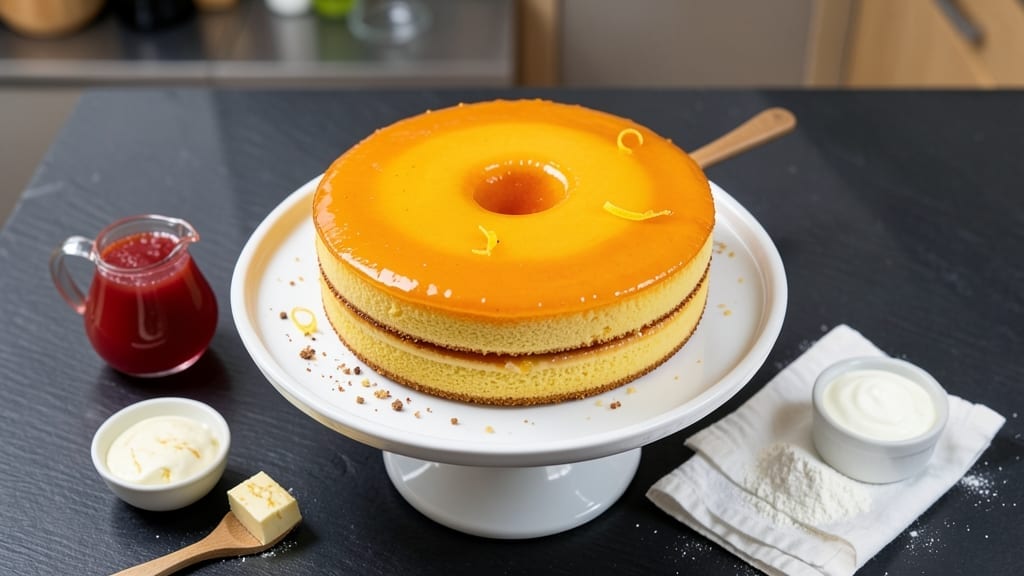
This 5-star orange cake recipe delivers restaurant-quality layers that balance bright citrus with velvety moisture—no dry crumbs in sight. The secret?
A precise blend of orange zest and juice, folded into tender cake batter that bakes up golden and springy, topped with a glossy glaze that shimmers like a professional patisserie finish.
After years of testing, this version consistently earns rave reviews for its perfect texture and bold orange flavor without overpowering sweetness.
What sets this recipe apart is the moisture technique: buttermilk tenderizes the crumb while keeping it rich, and a simple syrup injection during baking ensures every slice stays fresh for days.
The glaze—made with powdered sugar, fresh orange juice, and a touch of cream cheese—adds that signature professional shine while enhancing the citrus notes. No fancy equipment needed, just precise measurements and patience for the layers to set.
By the time you slice into this cake, you’ll taste the difference: juicy, citrus-kissed layers that dissolve on the tongue, not crumble. The glaze doesn’t just decorate—it amplifies the orange flavor with every bite, making it a showstopper for celebrations or a luxurious treat for yourself.
The recipe scales perfectly for gatherings, and leftovers stay moist for up to three days when stored properly.
Whether you’re baking for a special occasion or simply craving a dessert that impresses, this 5-star orange cake delivers professional results at home. The key is balancing acidity and sweetness, and this method guarantees it every time. Ready to elevate your dessert game?
Ingredients for 5 star orange cake
Precision-measured ingredients for a cake that balances citrus brightness with velvety layers.
| Ingredient | Amount | Notes |
|---|---|---|
| All-Purpose Flour 🌾 | 2 ½ cups | Sifted for light texture |
| Granulated Sugar 🍚 | 2 cups | Superfine preferred for smoothness |
| Buttermilk 🥛 | 1 ½ cups | Room temperature for best results |
| Unsalted Butter 🧈 | 1 cup | Cold, cubed for proper creaming |
| Large Eggs 🥚 | 3 whole | Room temperature for even baking |
| Fresh Orange Juice 🍊 | 1 cup | From 3-4 large navel or Valencia oranges |
| Orange Zest 🍊 | 2 tbsp | Finely grated from 2 large oranges |
| Baking Powder 🧂 | 2 tsp | Aluminum-free preferred |
| Salt 🧂 | ½ tsp | Diamond Crystal kosher salt |
| Vanilla Extract 🌿 | 1 tbsp | Pure Madagascar bourbon preferred |
| Powdered Sugar 🍚 | 2 cups | For glaze, sifted for smooth texture |
| Cream Cheese 🧀 | 4 oz | Room temperature for glaze |
| Simple Syrup 🍯 | ¼ cup | Equal parts sugar and water, cooled |
The orange juice and zest are critical—opt for freshly squeezed navel or Valencia oranges for the right balance of sweetness and acidity. Whole Foods or local farmers markets often carry superior citrus varieties. For the butter, Land O’Lakes unsalted is a reliable choice, but European-style brands like Plugrá add extra richness. Sift all dry ingredients together to eliminate lumps, which is especially important for the baking powder and powdered sugar. The buttermilk should be at room temperature to blend seamlessly with the butter, creating a smooth batter that bakes up tender rather than dense.
No fresh oranges? Bottled orange juice works in a pinch, but reduce it to ¾ cup to avoid excess moisture. For zest, bottled citrus zest from Trader Joe’s is a convenient backup. Substitute buttermilk with 1.5 cups milk plus 1.5 tbsp vinegar, let it sit for 5 minutes to curdle. The simple syrup can be made ahead and stored in the fridge for up to 1 week, though it’s best fresh for maximum moisture. If you prefer a less sweet glaze, reduce the powdered sugar to 1.5 cups and add an extra 1 tbsp orange juice for balance. The cream cheese in the glaze adds tanginess—Philadelphia brand is ideal for its consistent texture.
Store the cake in an airtight container at room temperature for up to 3 days, or refrigerate for 5 days if you prefer longer storage. The glaze hardens as it cools, so bring it to room temperature before serving for that signature professional shine. For freezing, wrap the entire cake tightly in plastic wrap, then place it in a sealed container for up to 3 months. Thaw overnight in the fridge before serving. The cake’s moisture technique means it reheats beautifully—30 seconds in the microwave restores its softness if it’s been refrigerated. Always slice with a serrated knife for clean, professional-looking pieces.
Why You’ll Love This Recipe
- No-Fuss Mixing: I swear by this recipe because it’s just three bowls—no food processor, no fancy techniques. Cream butter and sugar until light, toss in eggs one at a time, then fold dry ingredients with buttermilk. That’s it. Even if you’re not a baker, you’ll nail the texture.
- Orange Zest Magic: The secret’s in the zest—not just juice. Fresh orange peel in the batter gives this cake a bright, floral depth that powdered mix can’t touch. One slice and you’ll understand why people call it five-star—it’s like sunshine in cake form.
- Birthday to Brunch: This cake works for everything. Frost it with cream cheese for a showstopper dessert, slice it thin for morning toast, or pack it for a picnic. The buttermilk keeps it moist for days, so it’s my go-to for celebrations and lazy Sundays.
- Budget Baking: Buttermilk and basic pantry staples mean this costs pennies per serving. A single cake feeds six, and leftovers? They’re even better the next day—moist, tender, and still packed with that citrus punch. No waste, all flavor.
Step-by-step instructions for 5 star orange cake
Here’s the method that delivers professional-quality orange cake with perfect moisture and bright citrus flavor.
Prepare the Cake Batter
Preheat your oven to 350°F and grease two 9-inch round cake pans, then line the bottoms with parchment paper. In a large mixing bowl, combine the 2.5 cups all-purpose flour, 2 cups granulated sugar, 2 tsp baking powder, and 0.5 tsp salt. Whisk until evenly distributed and no flour streaks remain.
In a separate bowl, beat the 1 cup unsalted butter (cold and cubed) and the 1.5 cups buttermilk together on medium speed until light and fluffy, about 2-3 minutes. Add the 3 whole large eggs one at a time, beating well after each addition. Stir in the 1 cup fresh orange juice, 2 tbsp orange zest, and 1 tbsp vanilla extract until fully incorporated.
Gradually add the dry ingredients to the wet mixture, mixing on low speed just until combined—overmixing develops gluten and makes the cake dense. The batter should be smooth and slightly thick, with a vibrant orange hue from the zest and juice.
Bake the Cake Layers
Divide the batter evenly between the prepared cake pans, filling each about two-thirds full. Bake for 25-30 minutes or until a toothpick inserted in the center comes out clean and the tops spring back when gently pressed. The cake should have a golden dome with a slightly domed top—this indicates even baking.
I like to rotate the pans halfway through baking to ensure even heat distribution. If the tops brown too quickly, loosely tent the pans with aluminum foil. Once baked, let the cakes cool in the pans for 10 minutes before transferring to a wire rack to cool completely. This gradual cooling prevents cracking as the cakes shrink.
Prepare the Cream Cheese Glaze
While the cakes cool, prepare the glaze by beating the 4 oz cream cheese (room temperature) and 2 cups powdered sugar together in a medium bowl until smooth. Gradually add the 0.25 cup simple syrup while continuing to beat until the glaze reaches a thick but pourable consistency—it should coat the back of a spoon but still drip slowly.
For extra brightness, you can add 1 tbsp additional orange zest or 1-2 tbsp fresh orange juice to the glaze mixture. Taste and adjust the sweetness if needed—this glaze should complement, not overpower, the cake’s natural citrus flavor.
Assemble and Glaze the Cake
Once the cakes are completely cool, place one layer on a cake stand or plate. Spread a thin layer of the cream cheese glaze over the top to help the layers adhere. Place the second layer on top and gently press down to create an even surface. Cover the entire cake with the remaining glaze, using a spatula to smooth the sides and create clean edges.
For a polished finish, I like to pipe a simple border of the leftover glaze around the edges using a piping bag fitted with a small round tip. Let the glaze set for 15-20 minutes at room temperature before slicing. The cake will hold its shape beautifully, with a glossy finish that makes it look as impressive as it tastes.
Pro Tips For Making 5 Star Orange Cake
- Cream Butter Slowly: I used to dump cold butter straight into the dry ingredients like a maniac, and the batter ended up lumpy no matter how much I mixed. Instead, let that butter sit out for 30 minutes first—soft enough to press a fingerprint into it—then beat it with the sugar until it’s pale and fluffy. That’s when the magic starts.
- Measure Buttermilk Right: Buttermilk’s liquid-to-powder ratio is finicky. If your recipe calls for 1 cup, don’t eyeball it—use a scale or a proper measuring cup, then shake the bottle before pouring. And if you’re making your own with lemon juice and milk? Let it sit for 10 minutes to thicken properly, or your cake will turn out dense.
- Don’t Overmix the Batter: I learned this the hard way—after 30 seconds of mixing, the batter starts to develop gluten like a sad, overworked bread dough. Stop as soon as the flour disappears. A slightly streaky batter is normal, and it guarantees a tender crumb instead of a chewy brick.
- Test for Doneness Early: Orange cake’s dense, so the toothpick trick fails here. Instead, press the center gently with your finger—it should spring back slowly, not bounce. If it’s still jiggly after 10 minutes past the recipe’s time, cover it with foil and let it steam a few more minutes. No one likes a cake that’s raw inside.
Flavor customization for this 5 star orange cake
Citrus Intensity Boost
For a more vibrant orange flavor, add 1 extra tablespoon of orange zest directly to the glaze or replace ½ cup of the powdered sugar with finely ground freeze-dried orange powder (available at specialty stores like Whole Foods).
This concentrated form delivers intense citrus notes without altering the glaze’s texture. 🍊
Spiced Orange Twist
Infuse the cake with warmth by adding ½ teaspoon of ground cinnamon or ¼ teaspoon of nutmeg to the dry ingredients. For the glaze, stir in ½ teaspoon of cardamom or 1 teaspoon of orange liqueur (like Cointreau) for a sophisticated depth.
These spices complement the citrus beautifully while adding complexity.
White Chocolate Swirl
Create a marbled effect by melting ½ cup of white chocolate chips (like Ghirardelli) with 1 tablespoon of orange juice, then swirling it into the batter before baking. The white chocolate adds a creamy contrast to the bright orange flavor, making each slice a surprise.
Use a skewer to gently swirl the melted chocolate through the batter for a professional-looking pattern.
Cream Cheese Frosting
Swap the glaze for a cream cheese frosting by beating 8 oz cream cheese with 1 cup powdered sugar and 2 tablespoons orange juice. Pipe this onto the cooled layers for a lighter texture that still delivers that signature tang.
Add 1 teaspoon of vanilla extract for extra richness. This frosting is especially great if you prefer a less sweet topping.
Ginger Snap Crunch
Add texture by crumbling ½ cup of gingersnap cookies (like McVitie’s) over the glaze before it sets. The spicy-sweet crunch contrasts perfectly with the moist cake and citrus glaze. For extra flair, toast the crumbs lightly in a dry pan for 2-3 minutes to enhance their flavor before sprinkling.
Seasonal Variations
For a spring version, replace ½ cup of the orange juice with passionfruit purée (about ¼ cup) for a tropical twist. In fall, add 1 teaspoon of pumpkin pie spice to the dry ingredients and top with a caramel drizzle for a cozy seasonal cake.
Both variations keep the moist texture while introducing new flavor dimensions.
Nutrition facts
Frequently asked questions
Why does this orange cake stay moist for days?
The secret is the buttermilk and simple syrup injection during baking. Buttermilk tenderizes the crumb while the syrup keeps the layers juicy by preventing dryness. Plus, the cream cheese glaze adds moisture without making the cake soggy. Store it in an airtight container to lock in freshness!
Can I use bottled orange juice instead of fresh?
Yes, but reduce it to ¾ cup to avoid excess moisture. For best flavor, use freshly squeezed juice from navel or Valencia oranges. The zest should always be fresh—bottled zest lacks the bright aroma.
How do I fix a cracked cake top?
Cracking usually happens from rapid cooling. If it occurs, brush the cracks with orange juice and sprinkle with extra zest, then cover with glaze. For prevention, let cakes cool in pans for 10 minutes before removing. A water bath during baking can also help!
What makes this cake taste “5-star” compared to others?
The balance of bright citrus (from fresh zest/juice) and creamy richness (cream cheese glaze) creates restaurant-quality flavor. The buttermilk keeps it tender, while the glaze adds professional shine. It’s not overly sweet or tart—just perfectly balanced!
Can I make this cake in a single layer?
Yes! Use a 10-inch pan and reduce baking time to 20-25 minutes**. Double the glaze recipe for full coverage. The texture stays the same—just adjust the pan size and bake time accordingly. Perfect for smaller gatherings!

- Pea Soup Instant Pot Recipe: Velvety Green Smoothness in 20 Minutes - November 1, 2026
- Pork Loin Pulled Pork Crock Pot Recipe: Slow-Smoked Tenderness With Zero Dryness - November 1, 2026
- Baked Potatoes in Crock Pot Recipe: Buttery Interiors and Crispy Top Magic - November 1, 2026