
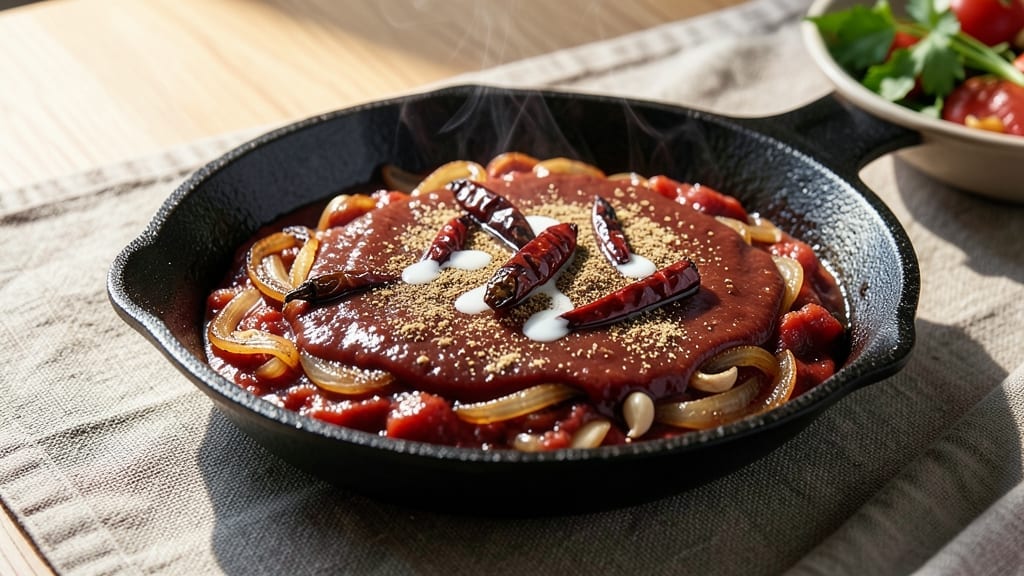
505 Enchilada Sauce Recipe delivers the same bold, smoky chipotle flavor you love—without the canned shortcuts. This homemade version builds depth through slow-simmered tomatoes, adobo sauce, and a touch of cumin that transforms ordinary enchiladas into restaurant-quality meals. The secret lies in balancing acidity and heat, creating a sauce that’s rich enough to stand alone but versatile enough for tacos, burritos, or dipping.
Unlike store-bought versions, this sauce starts with fresh ingredients: ripe tomatoes, dried chiles, and a splash of vinegar to brighten the flavors. Simmering the mixture until thick and fragrant develops layers of complexity—smoky from the chipotle, earthy from the cumin, and slightly sweet from the tomatoes.
The result is a velvety, deeply aromatic sauce that coats every bite perfectly, with just the right balance of heat and tang.
What makes this recipe truly special is its adaptability. Need it milder? Reduce the chiles. Prefer a vegetarian version? Skip the lard and use vegetable oil. The sauce keeps well in the fridge for up to a week or freezes beautifully for future use.
Whether you’re making enchiladas for a crowd or simply craving that familiar, comforting flavor, this homemade version delivers restaurant-quality results every time.
Ready to elevate your Mexican dishes? This sauce transforms ordinary meals into something extraordinary—with just a few simple ingredients and a little patience. Let’s get started on creating a sauce that tastes like it’s been simmering all day.
Ingredients for 505 enchilada sauce
Nine ingredients transform into restaurant-quality enchilada sauce with smoky chipotle depth.
| Ingredient | Amount | Notes |
|---|---|---|
| Ripe Tomatoes 🍅 | 2 lbs | Roma or vine-ripened for sweetness |
| Dried Chipotle Peppers in Adobo 🌶️ | 3 whole | Adobo sauce included, minced |
| Onions 🧅 | 1 whole | Yellow or white, chopped |
| Garlic Cloves 🧄 | 6 cloves | Peeled, roughly chopped |
| Ground Cumin 🌿 | 2 tbsp | Freshly toasted for depth |
| White Vinegar 💧 | ¼ cup | For acidity balance |
| Vegetable Oil 🫒 | 2 tbsp | For sautéing, neutral flavor |
| Salt 🧂 | 1 tsp | Diamond Crystal preferred |
| Black Pepper 🌶️ | ½ tsp | Freshly ground for warmth |
| Cinnamon Stick 🌳 | 1 whole | Optional, for subtle warmth |
The chipotle peppers are the heart of this sauce—Goya or La Costeñera brands deliver consistent quality. Look for peppers that are plump and moist, not dried out. The adobo sauce they come in adds another layer of flavor, but if you’re using just the peppers, add 1 tbsp of the adobo liquid to the sauce. For the tomatoes, Roma tomatoes are ideal due to their meaty texture, but vine-ripened varieties work too. If you can’t find fresh, San Marzano canned tomatoes are the next best option—they’re sweeter and less acidic than standard brands. The onions should be sweet, not bitter, and the garlic should be fresh with a vibrant color.
No chipotle peppers? Ancho chiles or guajillo chiles work beautifully—soak them first to soften. Short on cumin? Mexican oregano at half the amount adds a similar earthiness. The vinegar is crucial for balancing the richness—apple cider vinegar works too, but white vinegar is more neutral. If you prefer a vegetarian version, simply omit the lard and use vegetable oil instead. The cinnamon is optional but adds a subtle warmth that complements the smokiness. For extra depth, toast the cumin seeds in a dry pan before grinding them—it intensifies the flavor significantly.
This sauce develops even better the longer it simmers, so don’t rush it. Store in an airtight container in the fridge for up to 1 week, or freeze for 6 months. The flavor actually improves over time, so make extra if you can. For reheating, warm gently on the stove—microwaving can make it watery. The sauce thickens as it cools, so if it seems too thick when cold, simply add a splash of water or broth. It’s perfect for dipping, topping, or even as a base for other Mexican dishes like tacos or quesadillas.
Why You’ll Love This Recipe
- Five-Ingredient Magic: I swear by this—just tomatoes, chipotle, onions, garlic, and cumin. That’s it. No fancy prep, no hidden pantry raids, and the sauce still packs a punch like it’s been simmering all day.
- Smoky Heat Perfection: Between us, the chipotle in adobo gives this sauce that just-right smoky depth you can’t get from powdered mixes. One taste and you’ll be reaching for the jar instead of store-bought.
- Weeknight to Party Hero: Same sauce, endless uses. Slather it on enchiladas for Taco Tuesday, drizzle it over grilled chicken for a crowd, or even toss it with rice for a lazy dinner. It’s my go-to for anything that needs flavor.
- Leftovers That Last: This sauce actually improves the next day—yes, really. I make a big batch, freeze half, and pull it out for lazy nights or last-minute guests. No waste, all flavor, and zero regret.
Step-by-step instructions for homemade enchilada sauce
Here’s how to build a smoky, authentic sauce from scratch that rivals any store-bought version.
Toast the Spices and Aromatics
Heat a dry skillet over medium heat and add the 2 tablespoons vegetable oil. Once the oil shimmers, add the 6 cloves garlic cloves and the 1 whole onions, chopped into ½-inch pieces. Sauté for 5-7 minutes until the onions soften and turn translucent, and the garlic begins to turn golden at the edges.
Remove the pan from heat and stir in the 2 tablespoons ground cumin and the 1 whole cinnamon stick (if using). Let the spices steep in the warm oil for 2 minutes—this infuses them with the garlic and onion flavors. The mixture should smell deeply aromatic with warm, earthy notes. Transfer this spiced oil to a blender or food processor, setting it aside for the next step.
Char the Tomatoes and Chipotles
Return the same skillet to medium-high heat. Add the 2 lbs ripe tomatoes, halved lengthwise (leave the skins on for color and texture). Sear the tomatoes cut-side down for 3-4 minutes until they develop deep char marks. Flip them and char the other side for another 3-4 minutes. The tomatoes should be blistered and slightly blackened in spots.
While the tomatoes char, carefully remove the 3 whole dried chipotle peppers in adobo from their sauce. Mince them finely with a sharp knife—you want the peppers to dissolve into the sauce rather than create texture. Add the minced chipotles to the skillet with the charred tomatoes and stir to combine. Let everything cook together for 1 minute to meld the flavors.
Blend Until Silky Smooth
Transfer the charred tomatoes, chipotles, and the spiced oil from earlier to a blender or food processor. Add the ½ cup white vinegar and pulse until the mixture is smooth. If the sauce is too thick, add ½ cup water at a time until it reaches a pourable consistency—it should coat the back of a spoon but still flow easily.
Taste the sauce and adjust the seasoning with the 1 teaspoon salt and ½ teaspoon black pepper. The sauce should balance smoky heat from the chipotles with bright acidity from the vinegar and sweetness from the tomatoes. If the flavor feels too sharp, add a pinch more salt; if it lacks depth, blend in a splash of the adobo sauce from the chipotle peppers.
Simmer for Depth of Flavor
Pour the blended sauce into a clean saucepan and bring it to a gentle simmer over medium-low heat. Let it cook uncovered for 15-20 minutes, stirring occasionally, until it thickens slightly and the flavors meld together. The sauce should reduce by about 20%, becoming richer and more concentrated.
Strain the sauce through a fine-mesh sieve into a clean bowl or jar to remove any remaining pulp or seeds, if desired. The finished sauce should be deep red with a glossy sheen, carrying the smoky chipotle heat with a subtle sweetness from the tomatoes. Use immediately for enchiladas, or store in an airtight container in the refrigerator for up to 1 week or freeze for 3 months.
Pro Tips For Making 505 Enchilada Sauce
- Blister the Chipotles: Toss the dried chipotles in adobo into a dry skillet over medium-high heat—just until they darken and smell smoky. This cuts through the canned sauce’s tinny aftertaste and deepens the heat. (Yes, even if you’re impatient like me, wait for the aroma to change.)
- Roast the Tomatoes: Char the tomatoes whole under the broiler for 5–7 minutes, turning once, until their skins blacken in spots. The smoky depth they add is non-negotiable—skip this, and your sauce will taste flat.
- Sweat, Don’t Burn: Cook the onions and garlic in oil over medium-low heat until the onions are translucent and the garlic just starts to turn golden. Too hot, and you’ll get bitter, cooked-on flavors that ruin the sauce’s balance.
- Toast the Cumin: Bloom the ground cumin in the oil for 30 seconds before adding anything else—just until you smell its earthy aroma. This unlocks its flavor instead of letting it taste like dust. (I learned this the hard way.)
Troubleshooting this dish
Too Thin or Watery
If your sauce ends up too thin after simmering, don’t panic—this is an easy fix. The key is reducing it properly. After blending, pour the sauce into a saucepan and simmer uncovered over medium-low heat for an additional 10-15 minutes, stirring occasionally.
This will evaporate excess moisture and thicken the sauce naturally. For extra help, mash ½ cup cooked tomatoes into the sauce to add body without thinning it further. 🔥
Too Thick or Pasty
A thick, pasty sauce happens when the tomatoes aren’t fully broken down or when the sauce reduces too much. To fix it, simply whisk in 1-2 tablespoons of warm water or broth at a time until it reaches a smooth, pourable consistency.
If the sauce is still too thick after adding liquid, return it to the stove and simmer gently for 5-10 minutes to let the flavors meld while the sauce naturally thickens again. Avoid over-blending—this can trap excess pulp and make the sauce gluey.
Lacks Depth of Flavor
If your sauce tastes flat or one-dimensional, it likely needs more complexity. Start by adding 1-2 tablespoons of the adobo sauce from the chipotle peppers—this adds smokiness and acidity. For extra depth, stir in ½ teaspoon of toasted cumin seeds or a pinch of Mexican oregano.
If the sauce feels too sweet, balance it with ½ teaspoon more white vinegar. Simmering longer (up to 30 minutes) can also help concentrate the flavors. Taste as you go—this sauce should sing with smoky, earthy, and slightly sweet notes. ✨
Too Spicy or Harsh
Chipotle peppers can be intense, especially if you used more than 3 peppers or if they were particularly hot. To mellow the heat, stir in 1-2 tablespoons of tomato paste or ½ cup cooked tomatoes to dilute the spice while adding sweetness.
A splash of apple cider vinegar (instead of white vinegar) can also help balance the heat with brightness. If the sauce still feels too harsh, simmer it longer—this allows the flavors to mellow and blend more smoothly.
For a milder version next time, reduce the chipotles to 2 peppers or use ancho chiles instead. 🌶️
Burnt or Bitter Taste
If your sauce tastes burnt or bitter, it likely means the tomatoes were over-charred or the heat was too high during cooking. To salvage it, blend in ½ cup fresh, uncharred tomatoes or a splash of tomato juice to dilute the bitter notes.
For future batches, char the tomatoes over medium-high heat for no more than 3-4 minutes per side—just until they blister and blacken slightly. Avoid walking away from the stove, as burnt flavors develop quickly.
If the sauce still tastes off, strain it through a fine-mesh sieve to remove any burnt bits before simmering. 💡
Sauce Separates or Splits
Sauce separation happens when fats (like oil) or solids (like pulp) don’t fully emulsify. To fix it, whisk in 1 tablespoon of cold water or 1 teaspoon of cornstarch mixed with water to help bind the ingredients. For a smoother texture, blend the sauce again until silky.
To prevent separation in the future, ensure all ingredients are fully blended and simmer the sauce gently—avoid boiling, which can cause oils to rise to the surface. If the sauce splits after storing, simply reheat it gently and whisk vigorously to re-emulsify. 💫
Nutrition facts
Frequently asked questions
What makes this homemade sauce different from store-bought?
This recipe creates a richer, smokier sauce by charring fresh tomatoes and using authentic chipotle peppers in adobo. Store-bought versions often rely on artificial flavors and thickeners, while this one builds depth through slow simmering and natural ingredients. The result is a sauce with layers of flavor that can’t be matched by canned options.
Can I make this sauce without chipotle peppers?
Yes! For a milder version, substitute 2 ancho chiles or 1 guajillo chile (soaked first). Remove seeds for less heat. If you prefer no chiles at all, increase the cumin to 3 tablespoons and add 1 teaspoon smoked paprika for depth. The sauce will still be flavorful but lose its signature smoky kick.
How do I adjust the thickness for different uses?
For dipping or topping enchiladas, aim for a medium consistency—it should coat the back of a spoon but still flow easily. If too thick, whisk in 1-2 tablespoons of warm water or broth. For filling burritos or tamales, thicken it further by simmering uncovered for 5-10 extra minutes. Always taste as you go!
Will this sauce work for vegetarian dishes?
This recipe is already vegetarian-friendly as written. Simply omit any lard (this version uses vegetable oil) and ensure your chipotles are labeled “vegetarian” (some brands process peppers with animal products). The sauce works perfectly for veggie enchiladas, quesadillas, or even as a marinade for tofu.
How far ahead can I make this sauce?
The flavor actually improves over time! Store in an airtight container in the fridge for up to 1 week, or freeze for 3 months**. For best results, reheat gently on the stove—microwaving can make it watery. The sauce thickens as it cools, so add a splash of water if needed before using.

- Baked Potatoes in Crock Pot Recipe: Buttery Interiors and Crispy Top Magic - November 1, 2026
- Braised Beef Short Ribs Recipe: Crock Pot Fall-Off-Bone Magic in 6 Hours - November 1, 2026
- Crock Pot Cocoa Recipe: Velvety Warmth With Hidden Spice Magic - November 1, 2026