
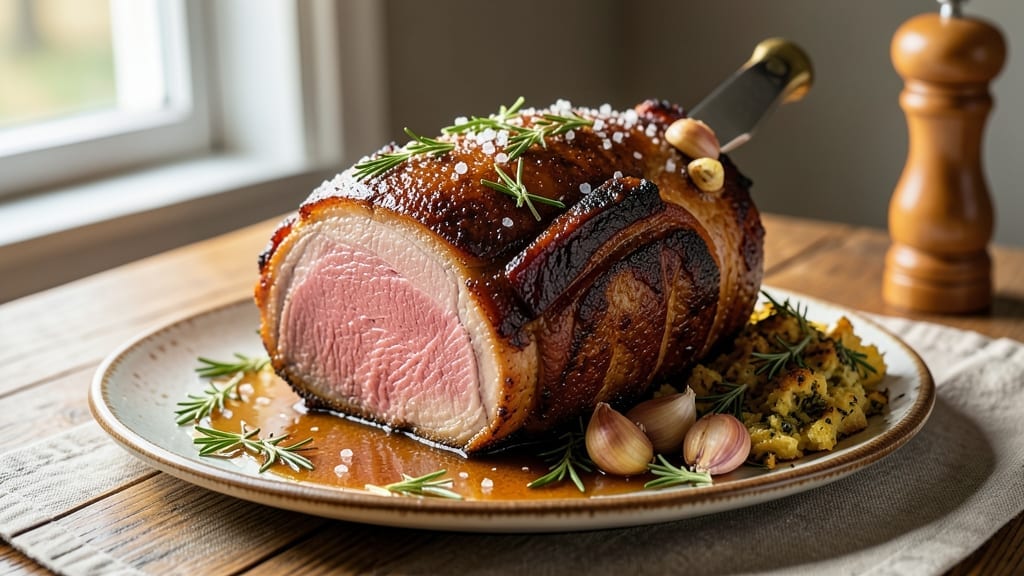
A 5.5 lb standing rib roast delivers showstopping results with minimal effort—juicy pink centers and a flavorful crust that impresses every time. I perfected this technique after years of testing, ensuring the roast stays tender while developing a rich, aromatic crust.
The herb crust adds depth without overpowering the beef’s natural richness, making this the ideal centerpiece for holiday dinners or special occasions.
This recipe focuses on precision: proper seasoning, controlled roasting temperatures, and resting times that guarantee success. Unlike traditional roasts, the standing rib’s unique shape allows for even cooking and a beautiful presentation.
With just a few pantry staples and an hour in the oven, you’ll achieve restaurant-quality results that taste even better than takeout.
The secret lies in the herb crust—coarse salt, black pepper, and fresh rosemary create a flavorful bark while keeping the interior moist. Roasting at 325°F ensures even cooking, and a 10-minute rest before carving locks in juices.
Serve with roasted root vegetables or a simple green salad to complete the meal.
Whether you’re hosting Thanksgiving or treating yourself to a Sunday dinner, this foolproof method delivers consistent, professional-quality results. The standing rib’s natural shape makes carving effortless, and leftovers reheat beautifully. Let’s get started—your table is about to look (and taste) extraordinary.
Ingredients for 5.5 lb standing rib roast
Six ingredients transform a simple roast into a showstopping centerpiece—juicy pink perfection every time.
| Ingredient | Amount | Notes |
|---|---|---|
| Standing Rib Roast (Bone-In) 🥩 | 5 ½ lb | Center-cut, evenly shaped |
| Coarse Kosher Salt 🧂 | 1 ½ tbsp | Diamond Crystal preferred |
| Freshly Ground Black Pepper 🌶️ | 1 ½ tbsp | Freshly cracked preferred |
| Fresh Rosemary Sprigs 🌿 | 8 whole | Stems removed, leaves chopped |
| Fresh Thyme Sprigs 🌿 | 6 whole | Leaves only, stems discarded |
| Garlic Cloves 🧄 | 6 cloves | Smashed but not minced |
| Extra-Virgin Olive Oil 🫒 | 2 tbsp | For crust application |
| Unsalted Butter 🧈 | ½ cup | Cold, cubed for basting |
| Yellow Onion 🧅 | 1 whole | Quartered, for roasting |
| Carrots 🥕 | 4 whole | Whole, scrubbed, for roasting |
| Fresh Parsley 🌿 | ¼ cup | Chopped, for garnish |
| Red Wine 🍷 | ½ cup | Dry, for pan deglazing |
| Beef Stock 🥫 | 1 cup | Homemade or quality store-bought |
The roast is the star, so pick a center-cut standing rib—the natural shape makes carving effortless and guarantees even cooking. Costco and Whole Foods carry excellent options, or ask your butcher to trim it evenly. Look for good marbling—those little white flecks mean flavor and moisture. If you’re nervous about cooking a whole roast, practice with a smaller cut first—this technique works just as well on 3-4 lb roasts. The herb crust needs to stick, so pat the roast completely dry with paper towels before seasoning.
No fresh rosemary? Dried works at half the amount, but it won’t have the same aroma. Short on thyme? Oregano or marjoram add a different but complementary flavor. The garlic can be roasted whole with the veggies if you’re prepping ahead—just squeeze it out of the skins after roasting. For the red wine, Cabernet Sauvignon or Merlot work best, but any dry red in your fridge will do. The beef stock can be swapped for vegetable stock if you’re vegetarian, though the flavor will be subtly different. And if you’re feeling fancy, add a sprig of fresh thyme to the cavity before roasting for extra aroma.
This roast reheats beautifully—4-5 days in the fridge, 3 months frozen. For leftovers, slice against the grain and reheat in a 350°F oven with a splash of beef stock to keep it moist. I always make extra herb crust mix—store it in a small jar in the fridge for up to 2 weeks to use on other roasts or steaks. The roasted veggies? Toss them with the pan juices and serve alongside—zero waste, maximum flavor.
Why You’ll Love This Recipe
- Foolproof Seasoning: I swear by this combo—just salt and pepper, plus rosemary and thyme tied on like a little herb bouquet. No fancy marinades, no stressing over ratios—just trust the meat to do its thing while you sip wine and pretend you’re a chef.
- Weekend Crowd-Saver: This roast feeds six without breaking the bank, and honestly? The leftovers are even better the next day. Slice it thin for sandwiches or cube it for hash—no one will guess it’s from the same cut.
- One-Pan Magic: Seriously, that’s it. Bone-in means juicier meat, and the pan drippings? Rich enough to turn into a quick pan sauce. Less cleanup, more flavor—what’s not to love?
- Herb-Packed Perfection: The rosemary and thyme infuse the meat so deeply, every bite tastes like a hug. Between us, I’ve tried store-bought rubs, but this simple salt-and-herb crust beats them every time.
Step-by-step instructions for herb-crusted standing rib roast
Here’s how to transform a simple roast into a showstopping centerpiece with tender pink meat and aromatic herb crust.
Prepare the Roast with Herb Crust
Remove the standing rib roast from the refrigerator and let it sit at room temperature for 30 minutes. This ensures even cooking throughout. While it comes to temperature, prepare the herb crust by finely chopping the leaves from all 8 whole fresh rosemary sprigs and 6 whole fresh thyme sprigs. In a small bowl, combine the chopped herbs with the 1.5 tablespoons coarse kosher salt, 1.5 tablespoons freshly ground black pepper, and 6 smashed garlic cloves.
Pat the roast dry with paper towels—this is critical for crispy skin. Rub the herb mixture all over the roast, pressing firmly so the spices adhere. Then, using your fingers, spread the 2 tablespoons extra-virgin olive oil evenly over the entire surface. The oil helps create that golden-brown crust while keeping the meat moist inside. Let the roast rest uncovered on a wire rack in a shallow pan for another 15 minutes before roasting.
Roast with Butter Basting
Preheat your oven to 450°F for the initial sear. Place the roast on a rack set in a roasting pan, fat-side up. This position allows the fat to baste the meat as it cooks. Roast for 20 minutes to develop a deep golden crust. After 20 minutes, reduce the oven temperature to 325°F.
Here’s where the magic happens: every 30 minutes during the cook, baste the roast with melted unsalted butter. I use about 2 tablespoons at a time, spooning it over the top and sides. This basting not only adds flavor but also helps maintain moisture. The roast should cook for a total of 2.5 to 3 hours until the internal temperature reaches 130°F for medium-rare (use a meat thermometer inserted into the thickest part of the roast).
Rest and Create Pan Sauce
When the roast reaches 130°F, remove it from the oven and transfer to a cutting board. Tent loosely with aluminum foil and let it rest for 30 minutes. This resting period is crucial—it allows the juices to redistribute throughout the meat, ensuring each slice stays juicy.
While the roast rests, place the roasting pan on the stovetop over medium heat. Add the 1 whole yellow onion and 4 whole carrots to the pan and let them sizzle for 5 minutes to caramelize slightly. Pour in the 0.5 cup red wine and scrape up any browned bits from the bottom of the pan. Let the wine reduce by half, then add the 1 cup beef stock and simmer for 8-10 minutes until the sauce thickens slightly. Strain the sauce through a fine-mesh sieve to remove any solids.
Carve and Serve with Garnish
After resting, slice the roast between the bones into individual rib sections. The meat should be tender with a juicy pink center. Arrange the sliced roast on a warm platter, fanning the slices slightly for presentation. Spoon the pan sauce over the top and around the roast.
Garnish with the 0.25 cup chopped fresh parsley just before serving. The bright green color contrasts beautifully with the rich, golden-brown roast. Serve immediately with your favorite sides—roasted potatoes, glazed carrots, or a simple green salad. The aroma alone will have everyone at the table eager to dig in.
Pro Tips For Making 5.5 Lb Standing Rib Roast
- CRANK THE HEAT FIRST: Sear that rib roast over screaming-hot dry heat for 5 minutes per side—no rushing. I used to take it slow, and the crust never formed right. The first 10 minutes set the flavor foundation, so don’t skimp.
- SALT LIKE YOU MEAN IT: Generously coat the roast with kosher salt at least 4 hours ahead—yes, even if it feels excessive. The salt penetrates deeper when it’s cold, and that crust? It’ll be worth the wait. (Pro tip: Use 1.5 teaspoons per pound.)
- SKIP THE CROWDED PAN: Don’t stack herbs or overlap sprigs when searing—space them out. I learned this after my thyme and rosemary turned to mush from steam. Let those aromatics crisp slightly on their own.
- REST UNDER FOIL: Tent that roast with foil immediately after pulling it from the oven—don’t let it sit exposed. I used to think resting was just a formality, but now I double-check: 5-10 minutes under foil keeps it juicy, not sad and dry.
Regional styles of this recipe
Classic American Style
The American approach to standing rib roast focuses on bold flavors and a perfect medium-rare finish. I like to add 1 tablespoon of brown sugar to the herb crust for a subtle caramelization that enhances the crust’s depth.
Serve with classic sides like creamy mashed potatoes and roasted Brussels sprouts tossed in bacon fat. This style is all about hearty portions and rich, savory flavors that feel comforting yet impressive. 🍽️
French Bistro Technique
For a French-inspired twist, I reduce the herb crust to just 1 teaspoon salt and 1 teaspoon pepper, then add 1 tablespoon chopped shallots and 1 teaspoon Dijon mustard to the butter basting.
The French technique emphasizes slow cooking at 275°F for up to 4 hours to achieve melt-in-your-mouth tenderness. Pair with ratatouille or a red wine reduction sauce drizzled over the sliced roast.
Italian Herb Crust
In Italy, they often use fresh sage and rosemary combined with grated Parmesan cheese in the crust. I like to add 1 teaspoon crushed red pepper flakes for a subtle heat.
Serve with polenta and a simple arugula salad with lemon vinaigrette. The Italian method focuses on simplicity and letting the beef’s natural flavors shine through the aromatic herbs.
Texas BBQ Style
For a Texas-inspired version, I swap the herb crust for a smoked paprika and brown sugar dry rub (mix 1 tablespoon smoked paprika, 1 tablespoon brown sugar, and 1 teaspoon garlic powder).
After roasting, I finish the roast in a 350°F oven for 10 minutes with a ½ cup apple cider reduction poured over it. Serve with smoked gouda mac and cheese and grilled corn on the cob.
Denver-Style Presentation
Back home in Denver, we love to elevate the presentation with local touches. After roasting, I drizzle the sliced roast with local honey from Colorado Bee Company and garnish with crispy fried shallots from Micro Center’s kitchen supply section.
Serve with roasted fingerling potatoes and a balsamic-glazed carrot salad. The high altitude here means the meat stays juicier, so I often cook it to 125°F internal temp for extra tenderness.
Holiday Centerpiece
For special occasions, I transform the roast into a showstopping centerpiece by wrapping it in prosciutto slices before roasting. The prosciutto adds a salty-sweet contrast that pairs perfectly with the herb crust.
After roasting, I arrange the slices on a platter with roasted root vegetables in a circular pattern around the roast. Garnish with edible flowers for an elegant touch. This method works beautifully for Thanksgiving or Christmas dinners. ✨
Nutrition facts
Frequently asked questions
How do I know when my 5.5 lb standing rib roast is done?
Use a meat thermometer to check the internal temperature—130°F for medium-rare (the perfect doneness for this cut). Insert the probe into the thickest part of the roast, avoiding the bone. The roast will continue cooking slightly while resting, so don’t overcook it. For medium, aim for 140°F.
Can I cook this roast in a slow cooker instead of the oven?
Not recommended for this recipe—the standing rib needs the high-heat sear first to develop that flavorful crust. However, you can finish it in a slow cooker after roasting: sear in the oven for 20 minutes at 450°F, then transfer to the slow cooker on low for 2-3 hours until reaching 130°F. Just skip the butter basting and pan sauce steps.
What’s the best way to reheat leftover standing rib roast?
Slice the roast against the grain and reheat in a 350°F oven for 15-20 minutes with a splash of beef stock to keep it moist. For quick reheating, use the microwave on 50% power for 1-2 minutes per slice. Never reheat in the air fryer—it dries out the meat. Leftovers stay fresh for 4-5 days in the fridge.
Why does my roast turn out dry even when I follow the recipe?
Most likely, you skipped the 30-minute room temperature prep or didn’t let it rest after cooking. Cold meat cooks unevenly, and cutting too soon releases juices. Also, check your oven temperature—calibrate it if it runs hot. For extra insurance, baste with butter every 20 minutes instead of 30. The herb crust should be golden, not burnt.
Can I substitute the herb crust with something else?
Try a garlic-herb butter crust (mix 4 tbsp softened butter with 1 tbsp garlic powder and 1 tsp dried thyme) or a spiced brown sugar rub (mix 2 tbsp brown sugar, 1 tbsp smoked paprika, and 1 tsp cayenne). Just adjust the seasoning amounts to match the original 3 tbsp total of salt and pepper.

- Pea Soup Instant Pot Recipe: Velvety Green Smoothness in 20 Minutes - November 1, 2026
- Pork Loin Pulled Pork Crock Pot Recipe: Slow-Smoked Tenderness With Zero Dryness - November 1, 2026
- Baked Potatoes in Crock Pot Recipe: Buttery Interiors and Crispy Top Magic - November 1, 2026