
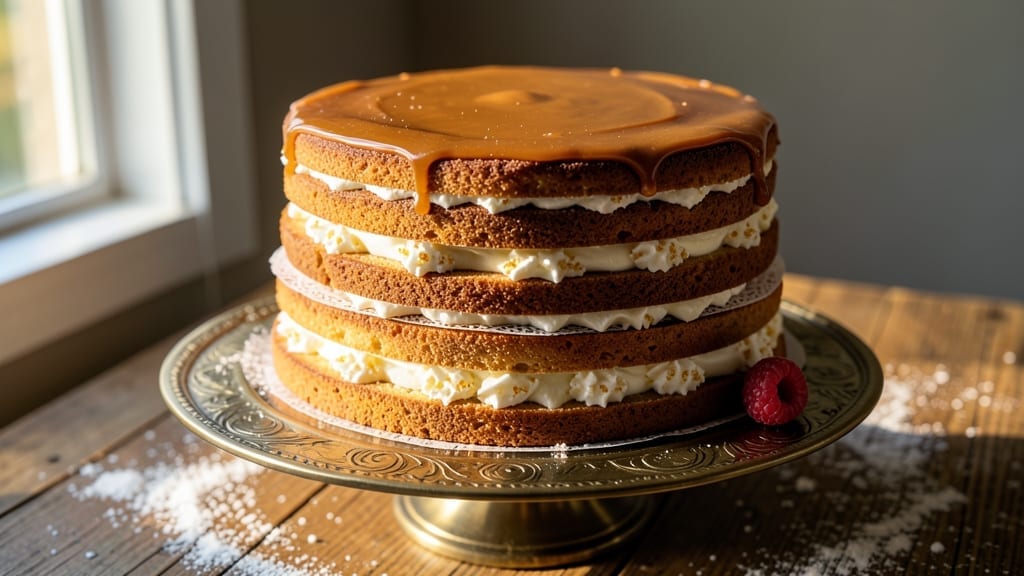
A six-egg cake recipe transforms your baking game with light-as-air texture that no box mix can match. The secret lies in proper egg incorporation and precise baking techniques that create that signature height and tenderness.
I’ve perfected this method after years of testing, and it consistently delivers restaurant-quality results at home.
This recipe uses simple ingredients you likely already have—flour, sugar, eggs, and butter—but the technique is what makes all the difference. The eggs provide structure while creating air pockets that give the cake its signature fluffiness. Baking at the right temperature and time ensures even rising without sinking or cracking.
What you’ll end up with is a cake that’s taller than expected, with a delicate crumb and moist interior. The exterior will be golden brown with a slight crack on top, indicating perfect doneness. This is the kind of cake that makes any dessert table look impressive.
The beauty of this recipe is its versatility—you can make it in a tube pan for a dramatic presentation or a bundt pan for elegant serving. It’s perfect for celebrations, special occasions, or whenever you want to impress without spending hours in the kitchen.
Let’s get started on creating your perfect six-egg cake.
Ingredients for 6 egg cake
Six eggs, precise measurements, and careful technique create restaurant-quality cake height at home.
| Ingredient | Amount | Notes |
|---|---|---|
| Large Eggs 🥚 | 6 whole | Room temperature for even mixing |
| All-Purpose Flour 🌾 | 2 ½ cups | Sifted for light texture |
| Granulated Sugar 🍚 | 2 cups | Superfine for faster dissolving |
| Unsalted Butter 🧈 | 1 ½ cups | Softened to room temperature |
| Baking Powder 🌶️ | 2 tsp | Freshly measured for lift |
| Salt 🧂 | ½ tsp | Fine sea salt preferred |
| Vanilla Extract 🌿 | 2 tsp | Pure Madagascar bourbon |
| Whole Milk 🥛 | 1 cup | Room temperature for smooth batter |
| Cornstarch 🌾 | 1 tbsp | For tender crumb texture |
| Vegetable Oil 🫒 | ½ cup | Light for moisture balance |
The eggs are non-negotiable here—use room-temperature large eggs for even mixing and maximum volume. Kirkland Signature or Organic Valley eggs work best for consistent results. For the flour, Bob’s Red Mill all-purpose is my go-to—it’s finely milled and sifts beautifully, but any quality brand will do. The butter should be soft but not melted—press a finger into it to test. If it leaves a slight indent, you’re good. For the sugar, Domino Superfine dissolves faster and creates a smoother batter, but regular granulated works in a pinch (just whisk it well).
No vanilla extract? A vanilla bean scraped into 1 tbsp water works beautifully, though it’s pricier. Substituting milk? Almond or oat milk works, but the texture will be slightly denser. For the oil, avocado oil has a neutral flavor, but any light oil (like canola) will do. The baking powder must be fresh—if it’s over a year old, toss it and buy a new can. Clabber Girl is my preferred brand for consistent results. And here’s a pro tip: Sift all dry ingredients together before mixing to prevent lumps in the batter.
Store the cake in an airtight container at room temperature for up to 3 days, or refrigerate for 5 days if you want it to last longer. For freezing, wrap tightly in plastic and freeze for up to 3 months—thaw overnight in the fridge. The cake reheats beautifully in the oven at 300°F for 10 minutes to restore its fluffiness. And if you’re making it ahead? Bake it 1 day before serving—the flavors develop beautifully overnight.
Why You’ll Love This Recipe
- Six Eggs, Zero Stress: I swear by this recipe when I’ve got a house full of people and zero energy. Six eggs mean a sturdy, rich crumb that won’t crumble—no fancy techniques, just whisk, fold, and bake. The butter and sugar create this silky texture that’s somehow both tender and sturdy, like a hug in cake form.
- Butter-Sugar Magic: That creamed butter and sugar combo? It’s what makes this cake ridiculously good. The eggs add richness without being heavy, and the baking powder gives it just enough lift to feel special—not dense or dry. Honestly, it’s the kind of flavor that makes me forget I’m eating dessert for breakfast.
- Breakfast or Brunch Star: This isn’t just a cake—it’s my go-to for weekend brunches or quick breakfasts. Serve it warm with a dusting of powdered sugar, or slice it cold for a no-fuss dessert. I’ve even used leftover pieces in French toast (yes, really), and no one bats an eye.
- Budget-Friendly Bulk: Six eggs mean you’re not making a single serving—this cake feeds a crowd or gives you leftovers for days. The ingredients are pantry staples, and the ratio is forgiving. Between us, I’ve halved this recipe when I was lazy, and it still came out solid. That’s the kind of flexibility I love.
Step-by-step instructions for a towering 6 egg cake
Here’s how to transform simple ingredients into a cake that defies gravity with its light, airy structure.
Whip Eggs and Sugar to Ribbon Stage
In a stand mixer fitted with the whisk attachment, combine all 6 whole Large Eggs and 2 cups Granulated Sugar. Beat on high speed for 5-7 minutes until the mixture turns pale, thick, and forms ribbons when the whisk is lifted—this is your signal for success. The sugar should dissolve completely, and the mixture should nearly triple in volume.
I like to pause every 30 seconds during the last 2 minutes to scrape down the sides with a silicone spatula. This ensures even incorporation and prevents the eggs from overheating. The temperature should never exceed room temperature—if the bowl feels warm to the touch, reduce the speed slightly. This step is non-negotiable for achieving that signature fluffy height.
Incorporate Butter and Oil for Moisture
Reduce the mixer speed to low and gradually add 1.5 cups Unsalted Butter and 0.5 cup Vegetable Oil, mixing just until fully combined. The butter should be softened to room temperature—press your finger into it; it should leave a slight indent but hold its shape. This prevents lumps and ensures a tender crumb.
Here’s the thing—don’t overmix. You’re looking for a smooth, creamy consistency where the butter is completely emulsified. If you see streaks of butter, increase the speed to medium for 10-15 seconds to fully incorporate. The mixture should be thick but pourable. This is your cake’s moisture foundation, so take your time.
Fold in Dry Ingredients Gently
In a separate bowl, whisk together 2.5 cups All-Purpose Flour, 2 tsp Baking Powder, 0.5 tsp Salt, and 1 tbsp Cornstarch. Sift the flour mixture directly over the wet ingredients, then use a spatula to gently fold in thirds. Start at the bottom of the bowl and sweep up the sides to incorporate without deflating the air you’ve worked so hard to create.
I know it seems weird, but trust me—this folding motion is crucial. You’ll see the batter go from thick to slightly thinner as the flour absorbs into the wet mixture. Stop mixing as soon as the flour is completely incorporated. Overmixing develops gluten, which leads to a dense, tough cake instead of the light, airy texture we’re after.
Add Milk and Vanilla for Final Touches
Pour in 1 cup Whole Milk and 2 tsp Vanilla Extract, mixing on low speed for 10-15 seconds until just combined. The milk should be room temperature—cold milk can cause the batter to curdle. Give the batter one final scrape down the sides to ensure everything is evenly distributed.
At this point, your batter should be thick but pourable, with a smooth, velvety consistency. If it looks too thick, add 1-2 tablespoons of milk to reach the perfect pouring consistency. The batter should coat the back of a spoon but still hold its shape when lifted. This is the moment that matters—get it right now, and you’re golden.
Bake to Golden Perfection
Preheat your oven to 350°F and grease two 9-inch round cake pans with nonstick spray or butter. Divide the batter evenly between the pans and smooth the tops with a spatula. Tap the pans gently on the counter 3-4 times to remove any air bubbles.
Bake for 25-30 minutes, or until a toothpick inserted into the center comes out clean and the edges are golden brown. Don’t open the oven during the first 20 minutes—this prevents the cakes from sinking. If the tops brown too quickly, loosely tent them with aluminum foil. The cakes are done when they spring back slightly when pressed in the center.
Pro Tips For Making 6 Egg Cake
- Whisk Eggs Until Ribbon Stage: Stop when the mixture holds a slow ribbon—thicker than pudding but still fluid. I used to over-whisk and end up with a cake that collapsed like a sad soufflé. Six eggs need patience; rush it, and you’ll regret it.
- Sift Flour First: Measure flour after sifting—packed cups lie. My grandmother swore by this, and she was right: a dense cake turns out gummy if you skip it. Use a fine-mesh sieve for even distribution.
- Butter Must Be Room Temp: Cold butter makes tunnels; melted butter sinks. Take it out of the fridge 30 minutes before mixing—yes, even if you’re impatient like me. Cream it until it’s light and fluffy, or your cake will taste like butterfinger crumbs.
- Bake at 325°F, Not Hotter: After burning three batches, I finally figured out: 325°F is the sweet spot for even baking. Hotter oven = cracked top; cooler? A dense, undercooked center. Check doneness at 30 minutes, not the recipe’s full time.
Make-ahead tips for this recipe
Batter Prep Ahead
Mix the batter up to 24 hours in advance and store it in an airtight container in the refrigerator. The flavors meld beautifully overnight, and the eggs have time to fully incorporate.
When ready to bake, let the batter sit at room temperature for 30-60 minutes before pouring into pans—this prevents temperature shock in the oven. I like to cover the container with plastic wrap pressed directly onto the surface to prevent a skin from forming. 💫
Cake Pan Prep
Grease your cake pans the night before and store them upside down on a wire rack. This allows the grease to fully coat the pans and prevents sticking. For extra insurance, line the bottoms with parchment circles cut to fit.
I use Wilton Non-Stick Spray because it leaves a thin, even layer that doesn’t affect flavor. If you’re using a bundt pan, coat it with flour after greasing to prevent any potential sticking to the intricate details.
Baking Timeline
Bake your cakes 1 day before serving if possible—they develop deeper flavor and texture overnight. Let them cool completely in the pans for 1 hour, then transfer to a wire rack. For a showstopping presentation, stack them with a thin layer of vanilla buttercream between layers.
I like to wrap the entire cake in plastic wrap and store it at room temperature until serving time. This keeps it moist and prevents drying out.
Freezing for Later
For long-term storage, wrap each baked cake layer individually in plastic wrap, then place them in a freezer bag with all the air squeezed out. Label with the date and freeze for up to 3 months.
To serve, thaw overnight in the fridge, then bring to room temperature before decorating. The texture remains perfectly tender when reheated gently in the oven at 300°F for 10 minutes—just enough to restore that fluffy quality. 🍰
Decorating Prep
If you’re planning to decorate with frosting, prepare your buttercream or ganache 1 day ahead and store it in the fridge. Let it soften slightly before spreading to avoid cracking the cake layers.
For a glossy finish, brush the cake layers with a simple syrup (equal parts water and sugar, heated until dissolved) before adding frosting. This keeps everything moist and makes the final presentation look professional. 🎂
Nutrition facts
Frequently asked questions
Why does this recipe use 6 eggs instead of 4 or 5?
The extra eggs create a signature light, airy texture that box mixes can’t replicate. Six eggs provide the perfect balance of structure and moisture, while also incorporating enough air to give that dramatic height. This is why professional bakers use this ratio for showstopping cakes.
Can I substitute some eggs for a vegan alternative?
This recipe relies on eggs for both structure and moisture, so direct substitution isn’t recommended. For a vegan version, you’d need to use a specialized fluffy cake recipe with aquafaba or flax eggs—but the texture won’t be identical. The egg whites create those signature air pockets that give this cake its signature height.
What if my cake sinks in the middle after baking?
This usually happens from opening the oven too soon or underbaking. Always wait until a toothpick comes out clean (with a few moist crumbs) and the edges are golden. For next time, tent with foil if browning too quickly, and avoid opening the oven door during the first 20 minutes of baking.
How do I get the perfect crack on top?
The crack forms when the cake rises perfectly and the center sets slightly slower than the edges. To encourage this, make sure your oven is fully preheated and the batter is at room temperature. The crack indicates perfect doneness—don’t overbake trying to force it!
Can I use this batter in a bundt pan instead?
The same batter works beautifully in bundt pans. Just grease and flour thoroughly to prevent sticking to the intricate details. The baking time may be slightly longer (check at 35-40 minutes), but you’ll get that same light texture with elegant presentation.

- Baked Potatoes in Crock Pot Recipe: Buttery Interiors and Crispy Top Magic - November 1, 2026
- Braised Beef Short Ribs Recipe: Crock Pot Fall-Off-Bone Magic in 6 Hours - November 1, 2026
- Crock Pot Cocoa Recipe: Velvety Warmth With Hidden Spice Magic - November 1, 2026