
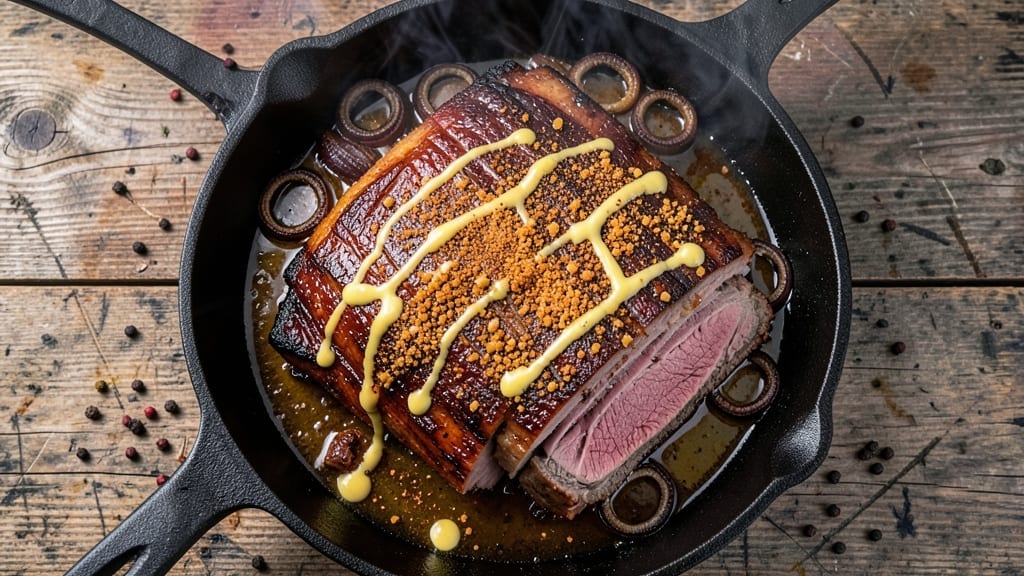
A 7 lb beef brisket cooked to perfection delivers that legendary Texas BBQ experience—smoky bark, pull-apart tenderness, and deep, meaty flavor that transforms any gathering. Mastering this cut requires patience and precision, but the results are worth every hour.
The key lies in low-and-slow cooking, where collagen breaks down into rich, juicy gelatin, creating a texture that’s impossible to resist.
This recipe balances tradition with modern techniques, whether you’re aiming for classic Texas-style bark or a more modern approach with a wet rub or marinade. We’ll focus on achieving that 195–203°F internal temperature, where the brisket becomes fork-tender and infused with smoky aroma.
The resting period is just as critical—it redistributes juices, ensuring every bite is moist and flavorful.
By the time you’re done, you’ll have a brisket so tender it nearly falls apart at the touch, with a dark, crackling crust that’s irresistible. Serve it sliced thick or pulled for sandwiches, and pair it with classic sides like creamy coleslaw or buttery cornbread.
This isn’t just a recipe—it’s a centerpiece for your next BBQ celebration.
The beauty of this method is its versatility. Whether you’re smoking it low and slow or roasting it in the oven, the principles remain the same: time, temperature, and attention to detail. Let’s get started on creating a brisket that’ll have everyone asking for seconds.
Ingredients for 7 lb beef brisket
Seven pounds of brisket, a handful of spices, and time—this is your Texas BBQ masterpiece.
| Ingredient | Amount | Notes |
|---|---|---|
| Beef Brisket (Packer Cut) 🥩 | 7 lb | Whole packer cut, fat cap intact |
| Yellow Mustard 🍯 | ½ cup | For base of dry rub |
| Brown Sugar 🍚 | ½ cup | Light or dark, packed |
| Smoked Paprika 🌶️ | ¼ cup | High-quality for smoky depth |
| Kosher Salt 🧂 | ½ cup | Diamond Crystal preferred |
| Black Pepper 🌶️ | 2 tbsp | Freshly cracked |
| Garlic Powder 🧄 | 2 tbsp | Freshly ground preferred |
| Onion Powder 🧅 | 2 tbsp | For balanced sweetness |
| Chili Powder 🌶️ | 1 tbsp | Medium heat variety |
| Wood Chips (Hickory or Oak) 🌳 | 4 cups | Soaked 1 hour minimum |
| Apple Juice 🍎 | 1 cup | For spritzing during cook |
| Beef Broth 🥫 | 1 cup | Low-sodium for spritzing |
| Yellow Onion 🧅 | 1 whole | For aromatics during cook |
| Fresh Garlic Cloves 🧄 | 6 cloves | Smashed for extra flavor |
The brisket is the star, and Costco or local butchers are your best bets for a 7 lb packer cut. Look for thick fat caps—those are your smoke guards. Texas-style briskets often come from the same packer cuts, so don’t stress about exact cuts. If you can’t find a whole brisket, two flat cuts (about 3.5 lbs each) work too. The rub ingredients are all pantry staples, but Penzeys or bulk bins have the highest quality spices. Smoked paprika makes or breaks the flavor—Kosher salt is non-negotiable for even distribution. Pro tip: Toast your spices in a dry pan for 30 seconds to wake up their flavors before mixing.
No yellow mustard? Dijon or apple cider vinegar works in a pinch. Brown sugar substitutes? Coconut sugar or maple syrup add depth. The wood chips are critical—hickory for classic Texas smoke, oak for a milder profile. If you can’t find soaked chips, wood pellets work too. For spritzing, apple juice keeps the bark crispy while beef broth adds richness. The onion and garlic are for the final aromatics—don’t skip them. If you’re short on time, smoked salt can replace some of the rub spices, but fresh is always better. And for the love of BBQ, never skip the resting period—it’s what turns good brisket into legendary brisket.
The brisket keeps 3-4 days in the fridge, wrapped tightly in butcher paper. Freeze it for up to 6 months if you’re not cooking it right away. Slicing against the grain is key for tenderness—practice on a small piece first. Leftovers? Pulled sandwiches or tacos are where brisket truly shines. Store the rub in an airtight container for up to 3 months—it’s perfect for future smokes or roasts. And if you’ve got extra wood chips, toast them in a dry skillet for a smoky flavor boost in other dishes.
Why You’ll Love This Recipe
- Five-Ingredient Magic: I swear by this combo—just brisket, mustard, brown sugar, smoked paprika, and salt. No fancy spice blends or last-minute shopping trips. Honestly, the mustard adds this tangy depth that cuts through the richness, and the brown sugar? It caramelizes into a sticky, smoky crust that’s impossible to resist.
- Smokehouse-Ready Simplicity: Between us, slow-cooking a 7-pound brisket sounds intimidating—but this method is foolproof. You season it once, let it sit, then either smoke it low-and-slow or toss it in the oven. I’ve done it both ways, and the results are the same: fall-apart tender meat with zero fuss.
- Budget Feast for Crowds: A 7-pound brisket feeds a houseful without breaking the bank. The packer cut is affordable, and the simple seasonings stretch further than pre-mixed rubs. Plus, the leftovers mean I’m not ordering takeout when I’m too tired to cook. Win.
Step-by-step instructions for smoky brisket perfection
Here’s how to transform that 7 lb brisket into melt-in-your-mouth tenderness with a perfect bark.
Prepare the Signature Dry Rub
In a large bowl, combine the 0.5 cup yellow mustard, 0.5 cup brown sugar, 0.25 cup smoked paprika, 0.5 cup kosher salt, 2 tbsp black pepper, 2 tbsp garlic powder, 2 tbsp onion powder, and 1 tbsp chili powder. Use your hands to thoroughly mix all ingredients until you achieve a consistent, slightly sticky paste. The mustard acts as a binder, ensuring the rub adheres perfectly to the meat.
This blend creates the perfect balance of sweet, smoky, and spicy flavors that will penetrate the brisket during the long cook. I like to press the mixture firmly into the meat—don’t be shy with it. The rub should completely coat every inch of the brisket, including the fat cap. Let the seasoned brisket rest uncovered in the refrigerator for at least 1 hour before smoking to allow the flavors to meld and the rub to develop a crust.
Set Up Your Smoker for Low and Slow Cooking
Soak the 4 cups of wood chips (hickory or oak) in water for at least 1 hour before using. Preheat your smoker to 225°F using these soaked wood chips. You’ll know it’s ready when you see steady, thin blue smoke (not thick white vapor) coming from the smoker. Place a water pan inside to help maintain moisture during the long cook.
Position the brisket fat-side up on the smoker grate. The fat will render slowly and baste the meat as it cooks, creating that beautiful bark we’re after. Close the lid and resist the urge to open it during the first 2 hours—each time you peek, you lose heat and extend cook time. The goal is to maintain that steady 225°F temperature throughout the cook.
Smoke Until Probe-Tender with Perfect Bark
Smoke the brisket undisturbed for 6-8 hours, or until the internal temperature reaches 165-170°F. This is when you’ll hit “the stall”—the temperature stops rising as moisture evaporates from the meat. Don’t panic; this is completely normal and expected. At this point, the brisket should have developed a beautiful dark mahogany bark on the exterior.
Here’s where the magic happens: when you reach the stall, wrap the brisket tightly in pink butcher paper (not aluminum foil). This “Texas crutch” technique allows you to push through the stall while maintaining that perfect bark. Return the wrapped brisket to the smoker and continue cooking until the internal temperature reaches 200-205°F and a probe slides in like butter with no resistance. This usually takes an additional 4-6 hours, depending on your smoker’s consistency.
Prepare Aromatics for Spritzing
While the brisket smokes, prepare your spritzing solution by combining the 1 cup apple juice and 1 cup beef broth in a spray bottle. Also, finely chop the 1 whole yellow onion and smash the 6 cloves fresh garlic. These aromatics will add incredible depth of flavor to your brisket during the final stages of cooking.
About 1 hour before the brisket reaches its final temperature, begin spritzing it every 30 minutes with the apple juice-beef broth mixture. This keeps the meat moist and helps develop that beautiful bark. In the last hour of cooking, add the chopped onion and smashed garlic to the smoker’s water pan. The aromatics will infuse into the smoke, creating layers of complex flavor that elevate your brisket to restaurant-quality.
Rest and Slice for Maximum Juiciness
Once the brisket reaches 200-205°F and is probe-tender, remove it from the smoker and transfer it to a cutting board. Tent loosely with foil and let it rest for at least 1 hour (I prefer 2 hours) before slicing. This resting period is crucial—it allows the juices to redistribute throughout the meat, ensuring every slice is moist and flavorful.
After resting, locate the grain direction in the meat (you’ll see lines running through the brisket). Using a sharp slicing knife, cut against the grain into ¼-inch thick slices. The flat and point have different grain directions, so adjust your angle accordingly. Serve immediately while still warm, and prepare to be amazed by the perfect balance of smoky bark and pull-apart tenderness.
Pro Tips For Making 7 Lb Beef Brisket
- Trim the Fat First: That thick fat cap on a packer cut isn’t just for looks—it renders down into flavor gold. Use a sharp knife to trim it down to about ¼-inch thick before seasoning. I learned this the hard way when my first brisket turned into a greasy mess instead of a smoky masterpiece.
- Salt the Night Before: Skip the rushed seasoning and salt your brisket 12–24 hours ahead. The kosher salt will penetrate deeper, and the surface will dry out just enough for that perfect crust. (Yes, even if you’re impatient like me—this isn’t negotiable for tenderness.)
- Wrap at 165°F: Don’t wait until the brisket is falling apart to wrap it in foil. Hit the wrap when the internal temp reaches 165°F—this locks in moisture without turning your smoky flavor bomb into a sad, dry pile. My grandmother swore by this, and she was right.
- Mix Mustard with Sugar: Don’t just slather that yellow mustard on like glue—whisk it with the brown sugar first. The sugar dissolves into the mustard, creating a sticky, caramelized glaze that clings to the meat instead of pooling below. (Sounds weird, but it works—trust me.)
Troubleshooting perfect results
Stall Phase Struggles
If your brisket hits 165°F and suddenly stops rising, you’re experiencing “the stall”—a normal but frustrating phase where evaporative cooling halts progress. The fix? Wrap it immediately in pink butcher paper (not foil) when it hits 165-170°F.
This traps steam while allowing moisture to escape, pushing through the stall in 2-3 hours. I’ve seen beginners panic and unwrap too early—resist the urge to check until you’ve reached 200°F. 🌡️
Uneven Bark Development
When one side of your brisket develops bark while the other stays pale, it’s usually due to uneven heat distribution. Rotate the brisket 90 degrees every 2 hours to ensure even exposure. For stubborn spots, spritz with apple juice and increase wood chip output slightly.
If using a charcoal smoker, rearrange coals for more balanced heat. I’ve had this happen with my Traeger pellet grill—always check the back side!
Dry or Tough Brisket
A dry brisket usually means it cooked too long at too high a temperature. Pull it at 203°F—never let it exceed 210°F. If using foil instead of butcher paper, switch to aluminum foil for the final hour to lock in moisture.
For extra insurance, add 1 cup beef broth to the water pan during the last 3 hours. I once let mine go past 215°F—disaster. Now I set reminders for my Meater thermometer.
Temperature Fluctuations
If your smoker jumps between 200°F and 250°F, you’re dealing with inconsistent heat. For pellet smokers, check for clogged tubes or weak pellets. For charcoal smokers, add more coals gradually.
I recommend a bidirectional sear method: cook at 225°F for 6 hours, then crank to 275°F for the final 2 hours to crisp the bark. Never exceed 275°F—it’ll dry out your meat.
Fat Cap Issues
If your fat cap isn’t rendering properly, it’s either too thick or the temperature’s too low. For thick fat caps (over ½ inch), trim to ¼ inch before cooking. If the fat remains solid after 8 hours, increase temperature to 250°F for 1 hour to render it.
I’ve seen Costco briskets with 1-inch fat caps—always trim before seasoning. The rendered fat should look liquid and golden by the end. 🥩
Probe Resistance
If your meat probe meets resistance at 195°F, you’re likely hitting the connective tissue between muscle groups. This isn’t dryness—it’s normal! Keep cooking until the probe slides in easily with no resistance.
For stubborn spots, poke with a skewer in multiple places. I’ve had briskets that needed 12 hours total to reach true tenderness. Patience is key—don’t rush this phase! ⏳
Nutrition facts
Frequently asked questions
Can I cook a 7 lb brisket in an oven instead of a smoker?
For oven cooking, preheat to 275°F and place the brisket fat-side up on a rack in a roasting pan. Add 1 cup beef broth to the pan and cover loosely with foil. Roast for 6-8 hours until it reaches 165°F, then wrap tightly in butcher paper and cook another 3-4 hours until 203°F. The key is maintaining low heat and using a meat thermometer for precision.
How do I know when the brisket is done?
The brisket is ready when it reaches 200-205°F internally and a meat probe slides in like butter with no resistance. The flat and point may have slightly different temperatures—this is normal. For extra confirmation, check for a dark mahogany bark and look for the “jiggle test”: if it wobbles gently when moved, it’s ready. Never rely on time alone!
What’s the difference between Texas and St. Louis-style brisket?
Texas-style keeps the fat cap intact for extra flavor and moisture, while St. Louis-style trims it first. Texas briskets are often cooked with a dry rub and wrapped in butcher paper, while St. Louis versions may use a wet rub or marinade. Both methods produce tender meat, but Texas-style has more pronounced bark. The 7 lb packer cut works perfectly for either approach.
Can I use a different wood type besides hickory or oak?
Yes! For milder flavor, try apple or cherry wood, while pecan adds a sweeter note. Avoid pine—it’s too strong. For a smoky profile, stick with hickory or oak. Pro tip: Soak wood chips for 1 hour before using to prevent flare-ups. The right wood enhances your rub’s flavors without overpowering them.
How should I store leftovers?
Wrap cooled brisket tightly in butcher paper or foil and refrigerate for up to 4 days. For longer storage, freeze in airtight containers for 3 months. Reheat slowly in a 300°F oven with a little beef broth to maintain moisture. Leftovers make amazing brisket sandwiches or tacos—just slice against the grain!

- Pork Loin Pulled Pork Crock Pot Recipe: Slow-Smoked Tenderness With Zero Dryness - November 1, 2026
- Baked Potatoes in Crock Pot Recipe: Buttery Interiors and Crispy Top Magic - November 1, 2026
- Braised Beef Short Ribs Recipe: Crock Pot Fall-Off-Bone Magic in 6 Hours - November 1, 2026