
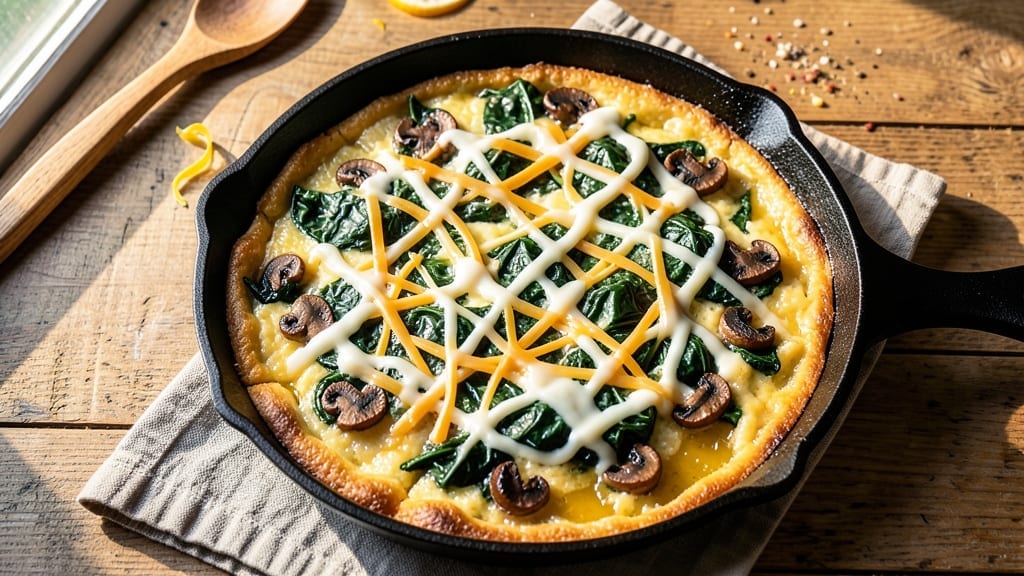
An 8-egg frittata delivers the perfect balance of fluffy, cheesy layers in a single pan—no flipping required. This recipe transforms simple ingredients into a restaurant-worthy breakfast that’s ready in under 40 minutes.
The secret lies in gradual cooking over medium heat, allowing the eggs to set gently while maintaining that signature custardy center.
What sets this frittata apart is its versatility—customize it with your favorite fillings like spinach, mushrooms, or diced ham while keeping the core technique foolproof. The key steps involve whisking eggs thoroughly, cooking in stages, and finishing under the broiler for a golden crust.
This method ensures even cooking without a single rubbery bite.
By the time you serve it, you’ll have a golden, layered masterpiece with crisp edges and tender centers, all packed with cheesy goodness. The aroma alone will wake up your household, and the first bite delivers that perfect mix of creamy egg and savory fillings.
Perfect for brunch, meal prep, or a satisfying dinner.
Whether you’re feeding a crowd or meal prepping for the week, this frittata scales beautifully. The instructions walk you through every step—from prep to plating—so you can achieve restaurant-quality results at home. Let’s get started!
Ingredients for 8 egg frittata
Eight eggs, bold flavors, and one perfect pan—this is your golden-ticket frittata.
| Ingredient | Amount | Notes |
|---|---|---|
| Large Eggs 🥚 | 8 whole | Room temperature for even cooking |
| Shredded Sharp Cheddar Cheese 🧀 | 1 ½ cups | Freshly shredded, no pre-shredded |
| Heavy Whipping Cream 🥛 | ¼ cup | Full-fat for rich texture |
| Unsalted Butter 🧈 | 2 tbsp | European-style preferred |
| Fresh Spinach 🍃 | 2 cups | Chopped, stems removed |
| Cremini Mushrooms 🍄 | ½ lb | Sliced into quarter-moons |
| Small Yellow Onion 🧅 | 1 whole | Diced, about 0.5 cup |
| Garlic Cloves 🧄 | 3 cloves | Minced, about 1 tsp |
| Kosher Salt 🧂 | 1 tsp | Diamond Crystal preferred |
| Freshly Ground Black Pepper 🌶️ | ½ tsp | Cracked peppercorns preferred |
| Extra-Virgin Olive Oil 🫒 | 1 tbsp | High-quality, fruity |
| Freshly Grated Nutmeg 🌿 | ¼ tsp | Microplane for fine texture |
The eggs are non-negotiable—room temperature makes all the difference for even cooking. Pasture-raised eggs from Trader Joe’s or Whole Foods add richness, but any large eggs work. Shred that cheese yourself—pre-shredded sticks to the pan like glue. For the spinach, baby spinach is ideal (no chopping), but regular leaves work if you’re patient. The mushrooms? Cremini have the best meaty texture—sauté them until they release their water, then drain well. That water is the enemy of fluffiness.
No sharp cheddar? Pepper jack or Gruyère bring their own magic—just adjust the amount to taste. Swapping spinach for kale or Swiss chard? Sauté with a pinch of salt first to soften. Out of heavy cream? Half-and-half or whole milk works in a pinch, but the texture won’t be quite as luscious. For the nutmeg, freshly grated is essential—pre-ground tastes like sawdust. The butter matters too: European-style has higher fat content, so it browns beautifully. No European butter? Plug in your regular butter for 30 seconds to soften it before adding to the pan.
This frittata shines when made ahead—reheats beautifully with a quick broil to crisp the top. Store leftovers 3-4 days in the fridge, or freeze for up to 3 months. For meal prep, slice into wedges and reheat portions individually. Pro tip: Underbake slightly before broiling—it finishes perfectly when reheated. The cheese keeps best in its original packaging, but transfer it to an airtight container once opened. Fresh herbs? Tuck them into the frittata right before serving—they wilt fast when cooked.
Why You’ll Love This Recipe
- One-Pan Magic: I swear by this—just one skillet, no extra dishes. The butter melts into a golden crust while the cream makes it silky, and by the time the spinach wilts, the cheese is already bubbling like a dream.
- Creamy Cheese Bliss: That sharp cheddar doesn’t just melt—it stretches into gooey pockets, and the whipping cream turns it into something rich but not heavy. Honestly, the first bite makes me forget it’s “just” eggs.
- Meal Prep MVP: Slice it up, store it, and reheat it all week—no sad leftovers here. The texture holds up perfectly, and I’ve packed it for lunches (my coworkers still ask for seconds).
- Budget Breakfast Boom: Eight eggs at once? Yes, please. It stretches my grocery dollars without sacrificing flavor, and the spinach keeps it fresh-tasting even when I’m making it for a crowd. (Yes, even on a Tuesday night.)
Step-by-step instructions for fluffy, cheesy frittata
Here’s how to create a restaurant-worthy frittata with layers of flavor and texture.
Sauté the Vegetable Base
Heat the 1 tablespoon extra-virgin olive oil in a 10-inch oven-safe skillet over medium heat. Add the 0.5 lb cremini mushrooms and cook for 5-6 minutes until they release their moisture and begin to brown. Push them to one side of the pan.
Add the 1 whole small yellow onion and 3 cloves garlic cloves to the empty space in the pan. Sauté for 3-4 minutes until the onion becomes translucent and the garlic emits a fragrant aroma. This layer creates the flavor foundation for your frittata.
Stir in the 2 cups fresh spinach, cooking until just wilted—about 2 minutes. Remove the skillet from heat and sprinkle the sautéed vegetables with 0.25 teaspoon freshly grated nutmeg and 0.5 teaspoon freshly ground black pepper. Set aside for now.
Prepare the Egg Mixture
In a large bowl, whisk together the 8 whole large eggs until the yolks and whites are fully combined. Add the 0.25 cup heavy whipping cream and whisk again until smooth. This step ensures your frittata will be light and airy rather than dense.
Gradually fold in the 1.5 cups shredded sharp cheddar cheese using a rubber spatula, being careful not to overmix. The cheese should be evenly distributed throughout the egg mixture. Season with the 1 teaspoon kosher salt and an additional 0.25 teaspoon freshly ground black pepper if desired.
Here’s the thing—don’t skip the room temperature eggs. Cold eggs can create pockets of steam in your frittata, leading to uneven cooking. If your eggs are straight from the fridge, let them sit at room temperature for 30 minutes before whisking.
Create the Frittata Layers
Return the skillet to medium heat and add the 2 tablespoons unsalted butter, allowing it to melt and coat the bottom evenly. Pour the egg mixture over the sautéed vegetables, tilting the pan to distribute it evenly. The heat should begin to set the edges immediately.
Sprinkle about half of the remaining 1.5 cups shredded sharp cheddar cheese evenly over the egg mixture. Use a rubber spatula to gently press down on the eggs, creating small dimples that will help the frittata cook evenly and develop those beautiful layers.
Cook for 5-6 minutes until the edges begin to set but the center still appears slightly runny. This is where the magic happens—the bottom should be golden and firm while the top remains custardy.
Bake to Golden Perfection
Transfer the skillet to a 375°F preheated oven. Bake for 15-18 minutes until the top is golden brown and the center is just set. You’ll know it’s ready when the frittata releases easily from the edges of the pan and has a slight bounce when gently shaken.
During the last 2 minutes of baking, sprinkle the remaining 0.75 cups shredded sharp cheddar cheese over the top. This final layer adds that signature cheesy crust that makes this frittata irresistible.
Real talk: Don’t overbake. A perfectly cooked frittata should have a slightly soft center—it will continue setting as it cools. If you prefer it fully set, bake for an additional 2-3 minutes but watch closely to avoid dryness.
Rest and Serve
Remove the frittata from the oven and let it rest in the skillet for 5 minutes. This resting period allows the internal heat to distribute evenly, ensuring every slice is perfectly cooked through.
To serve, run a thin, flexible spatula around the edges of the frittata. Place a large plate over the skillet and carefully invert, allowing the frittata to slide onto the plate. The layers should hold together beautifully, revealing that gorgeous golden crust on the bottom.
Slice into 8 equal wedges and serve immediately. Each bite should deliver a perfect balance of fluffy egg, creamy cheese, and earthy vegetables. For an extra touch, garnish with fresh herbs like parsley or chives if you’re feeling fancy.
Pro Tips For Making 8 Egg Frittata
- CRANK THE HEAT FIRST: Get that pan screaming hot before adding butter—no, really hot. I used to melt the butter on medium and wondered why my frittata turned out gummy instead of golden. Two tablespoons of butter should sizzle like popcorn before you crack the first egg. (Yes, even if you’re impatient like me.)
- SALT THE EGGS BEFORE WHISKING: Toss in 1.5 teaspoons of salt with the eggs and cream before you even think about mixing. I learned this the hard way—adding salt later leaves uneven flavor, and with eight eggs, that’s a noticeable difference. Trust me, your frittata will taste like it was made by someone who actually seasoned it.
- WAIT FOR SPINACH TO WILT: Cook the spinach until it’s just past limp—no soggy piles in your frittata. I used to toss it in, give it a minute, then dump it on top. Big mistake. Wilting it fully (3-4 minutes) removes excess moisture, so your frittata stays creamy, not watery. (Pro move: Squeeze out all the liquid after wilting.)
- STOP STIRRING AT THE 3-MINUTE MARK: Once the eggs start setting (around 3 minutes in), resist the urge to keep folding. I used to babysit it like a nervous parent, but that’s when you risk breaking the delicate curds. Let it cook undisturbed for another 5 minutes—you’ll get that perfect custard texture without overworking the eggs. (Your future self will thank you.)
Storing and reheating your 8 egg frittata
Fridge Storage Tips
Let your frittata cool completely before storing—about 1 hour at room temperature. Transfer to an airtight container with a tight-sealing lid to prevent drying. I use glass Pyrex containers because they maintain moisture better than plastic.
Store in the fridge for up to 4 days, but I recommend eating within 3 days for peak texture. 🥫
Freezer-Friendly Prep
For longer storage, slice your frittata into wedges before freezing. Place portions in single-serving freezer bags (like Stasher bags) with all air removed. Label with dates—they’ll keep for 3 months without losing quality. Thaw overnight in the fridge before reheating. Never refreeze once thawed.
Reheating Methods
My go-to method is stovetop: place wedges in a nonstick skillet over medium-low heat with 1 tablespoon butter. Cover for 5-7 minutes until heated through. For crispy edges, finish under the broiler for 1-2 minutes.
Microwave reheating works too—cover with a damp paper towel and heat for 45-60 seconds at 50% power.
Broiler Finish
After reheating, pop under the broiler for 1-2 minutes to restore that golden crust. Watch closely—broilers can go from perfect to burnt in seconds. I like to sprinkle ¼ cup shredded cheese on top during the final minute for extra richness.
This step makes reheated frittata taste almost as good as fresh! 🔥
Portion Control
Divide your frittata into 8 equal wedges before storing for easy grab-and-go meals. Wrap individual portions in parchment paper before freezing to prevent sticking. When reheating, just grab one portion—no need to thaw the whole batch. This makes it perfect for busy mornings or office lunches.
Cheese Considerations
If your frittata contains Gruyère or Monterey Jack, they’ll melt more dramatically when reheated. For best results, add extra cheese during reheating rather than relying on stored portions.
Pre-shredded cheese? Avoid it—it reheats poorly and can make your frittata gummy. Always use freshly shredded cheese for optimal texture after storage. 🧀
Nutrition facts
Frequently asked questions about 8-Egg frittatas
Can I make this frittata in a nonstick pan?
Yes, but use a 10-inch nonstick skillet and reduce butter to 1 tablespoon to prevent sticking. The key is to avoid overcrowding—keep heat at medium-low until the edges set. Nonstick pans work best for easy release when inverting, but they can’t brown as well as stainless steel.
How do I adjust this for fewer eggs?
For a 4-egg frittata, halve all ingredients (including cheese and cream) and use a 7-inch skillet. Cook time reduces to 10-12 minutes in the oven. Keep the same layering technique—just scale everything down proportionally. The texture remains identical when properly proportioned.
Why did my frittata turn out rubbery?
Overcooking is the #1 cause! Remove from oven when the center still has a slight wobble (160°F internal temp). Rubbery texture also happens with cold eggs (use room temp) or overmixing the batter. For extra fluffiness, whisk eggs vigorously for 30 seconds before adding cheese.
What’s the best cheese substitute?
For a dairy-free option, use 1 cup nutritional yeast + ½ cup cashew cream. For lower fat, reduce cheese to 1 cup and add ¼ cup Greek yogurt to the egg mix. Avoid pre-shredded cheese—it contains anti-caking agents that make frittatas gummy. Freshly grated always wins!
Can I make this ahead for meal prep?
Assemble completely, then refrigerate unbaked for up to 24 hours before baking. For meal prep, bake as directed, then slice into wedges. Store in airtight containers for 4 days. Reheat portions individually—microwave for 45 seconds or stovetop with butter for crispy edges.

- Baked Potatoes in Crock Pot Recipe: Buttery Interiors and Crispy Top Magic - November 1, 2026
- Braised Beef Short Ribs Recipe: Crock Pot Fall-Off-Bone Magic in 6 Hours - November 1, 2026
- Crock Pot Cocoa Recipe: Velvety Warmth With Hidden Spice Magic - November 1, 2026