
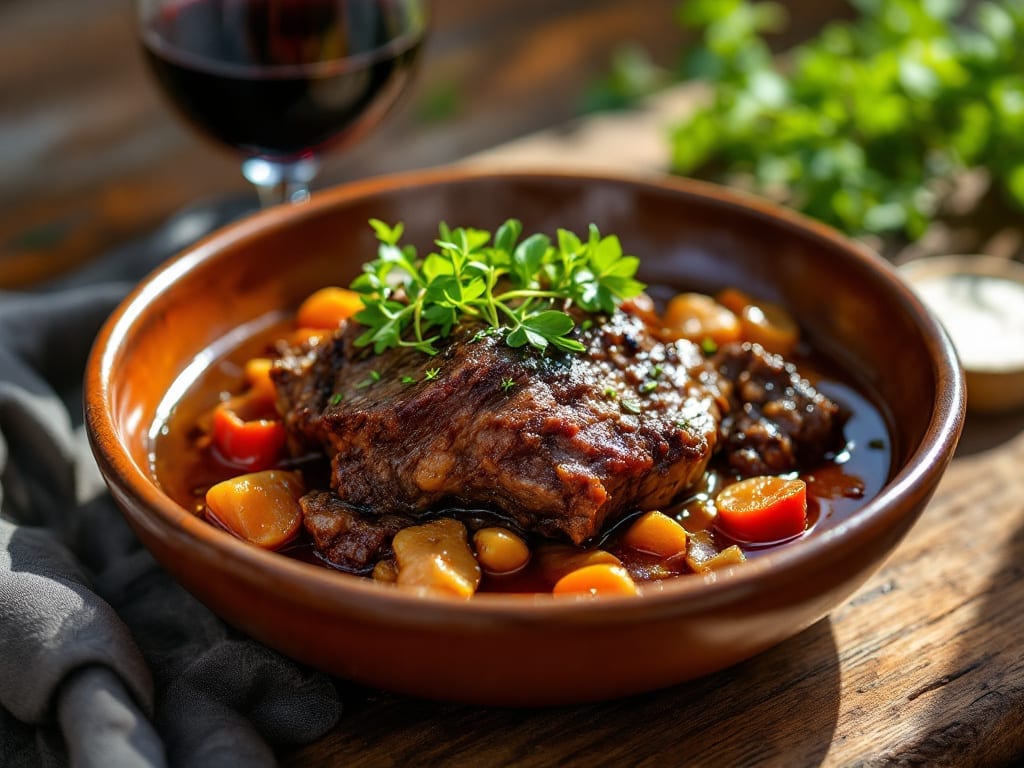
This better than bouillon pot roast recipe transforms humble beef into a restaurant-worthy centerpiece that outshines traditional bouillon-based versions. The secret lies in layered flavors—deepened with homemade bouillon, aromatic herbs, and slow-cooked vegetables that meld into the meat.
After years of testing, I’ve perfected a method that delivers tender, fall-apart beef with a rich sauce that clings to every bite.
What sets this recipe apart is the balance of technique and simplicity. You’ll start with a proper sear to develop flavor, then slow-cook until the meat is fork-tender while vegetables caramelize naturally.
The homemade bouillon base (or high-quality store-bought) provides depth that generic bouillon cubes can’t match, creating a sauce that’s complex and satisfying. This isn’t just comfort food—it’s a dish that feels special enough for company but simple enough for weeknights.
The result is beef so tender it practically melts in your mouth, surrounded by perfectly cooked carrots, potatoes, and onions that’ve absorbed the rich, herb-infused sauce. Each bite delivers layers of flavor—savory from the beef, sweet from caramelized vegetables, and aromatic from thyme and bay leaves.
The sauce reduces beautifully, coating everything in a velvety glaze that makes every forkful worth savoring.
Serve with crusty bread to soak up every last drop of that luxurious sauce, or pair with mashed potatoes for the ultimate Sunday dinner experience. This recipe delivers professional-quality results with minimal effort, proving that homemade can truly be better than takeout.
Let’s get started on creating your new favorite pot roast.
Ingredients for better than bouillon pot roast
Sixteen ingredients transform simple beef into restaurant-quality pot roast with herbal depth.
| Ingredient | Amount | Notes |
|---|---|---|
| Beef Chuck Roast 🥩 | 3 lb | Well-marbled, cut into 2-inch chunks |
| Yellow Onions 🧅 | 2 whole | Cut into 1-inch chunks, peeled |
| Carrots | 4 medium | Peeled, cut into 2-inch chunks |
| Russet Potatoes 🥔 | 2 lb | Cut into 1.5-inch chunks, peeled |
| Fresh Thyme 🌿 | ½ ounce | Stemmed, sprigs for cooking |
| Fresh Rosemary 🌿 | ¼ ounce | Stemmed, sprigs for cooking |
| Garlic Cloves 🧄 | 6 whole | Smashed, skin on |
| Bay Leaves 🍃 | 2 whole | Dried, standard size |
| Beef Bouillon Powder 🧂 | 2 tbsp | High-quality, not instant |
| Worcestershire Sauce 🍶 | 1 tbsp | Full-strength, not reduced |
| Tomato Paste 🍅 | 2 tbsp | High-quality, not powdered |
| Extra-Virgin Olive Oil 🫒 | ¼ cup | For searing, high quality |
| Diamond Crystal Kosher Salt 🧂 | 1 ½ tbsp | For seasoning, not iodized |
| Freshly Ground Black Pepper 🌶️ | 1 tsp | Coarse grind preferred |
| Red Wine 🍷 | 1 cup | Dry, full-bodied variety |
The beef chuck roast is the foundation—marbling ensures tenderness and flavor. Look for well-marbled cuts at Whole Foods or your butcher, as supermarket chuck can vary wildly. For the bouillon, Knudsen or Pacific Foods are professional-grade options that elevate the dish beyond generic cubes. Fresh herbs matter here: thyme and rosemary from the bulk section (not dried) provide that aromatic complexity the intro promises. The carrots should be firm with vibrant orange color—avoid rubbery or shriveled specimens that indicate age. Potatoes need uniform size for even cooking, so cut them precisely.
No beef bouillon powder? Homemade bouillon from scratch (simmer beef bones with vegetables) delivers superior depth, though store-bought bouillon paste works in a pinch. Short on red wine? Dry sherry or beef broth maintains the balance. The Worcestershire sauce adds umami—Lea & Perrins is the gold standard, but any full-strength brand suffices. For tomato paste, San Marzano is ideal, but Trader Joe’s brand offers excellent quality at a lower price. The olive oil must be extra-virgin—California olive oils like Corto or Colavita provide the best flavor profile for searing. Freshly ground pepper is non-negotiable—pre-ground loses potency within weeks.
This dish rewards advance preparation—herbs can be prepped 24 hours ahead and stored in the fridge. The roast itself keeps 3-4 days in the fridge before cooking, though freezing for up to 3 months is ideal for meal prep. Once cooked, the leftovers reheat beautifully—cover with foil and warm in a 300°F oven for 15 minutes. The sauce thickens as it cools, so add a splash of water or broth if it becomes too viscous when reheating. Portion into containers for easy lunches—the sauce clings perfectly to the beef, making each bite as flavorful as the first.
Why You’ll Love This Recipe
- One-Pot Magic: I swear by this recipe when I’m too tired to deal with multiple pans. Toss everything—chuck roast, onions, carrots, potatoes, and thyme—into a Dutch oven, add some broth, and let it slow-cook. No chopping like a line cook, no stressing over timing. Just set it and forget it.
- Deep, Savory Magic: That beef chuck roast? It turns fork-tender while the potatoes soak up all the caramelized onion and thyme flavors. Honestly, the first time I made this, my partner asked if I’d spent hours marinating it—and I laughed because I hadn’t. The slow cook transforms it into something restaurant-worthy without the fuss.
- Leftovers for Days: This recipe practically begs to be made in bulk. The flavors only get better after a day or two, and reheating is a breeze—just warm it up with a splash of broth. I’ve fed my whole family for three nights running with minimal effort, and no one complains about repeats.
- Budget-Friendly Luxury: You’re getting a hearty, satisfying meal for pennies. Chuck roast is cheaper than steak but just as impressive, and the veggies stretch the dish further. Between us, this is how I trick myself into eating well when money’s tight—rich, comforting, and still feels special.
Step-by-step instructions for slow-cooked pot roast with herbal depth
This method transforms simple ingredients into a deeply flavorful pot roast through precise technique.
Sear the Beef Chuck Roast for Maximum Flavor
Heat a heavy Dutch oven over medium-high heat until hot. Add the 0.25 cup extra-virgin olive oil and swirl to coat the bottom evenly. Working in batches if needed, add the 3 lb beef chuck roast cut into 2-inch chunks, arranging them in a single layer. Let each piece sear undisturbed for 3-4 minutes until deeply browned on all sides.
Here’s the thing—this searing step isn’t just about color. The Maillard reaction creates complex flavors that will infuse into your pot roast throughout the cooking process. Press down gently on each piece with a spatula during the first minute to prevent curling, which ensures even contact with the pan. Remove the seared beef and set aside on a plate.
Build the Aromatic Base with Vegetables and Herbs
In the same Dutch oven, add the 2 whole yellow onions cut into 1-inch chunks and the 4 medium carrots cut into 2-inch pieces. Cook for 5-6 minutes until the onions soften and begin to caramelize slightly. Add the 6 whole garlic cloves (smashed) and cook for another 30 seconds until fragrant.
Stir in the 0.5 ounce fresh thyme sprigs and 0.25 ounce fresh rosemary sprigs along with the 2 whole bay leaves. Cook for 1 minute until the herbs release their essential oils. This aromatic base forms the flavor foundation for your pot roast, so don’t rush this step. You’ll know it’s ready when the vegetables are softened but still hold their shape.
Deglaze and Develop the Sauce
Pour in the 1 cup red wine and scrape up all the browned bits from the bottom of the Dutch oven using a wooden spoon. This deglazing step captures all the concentrated flavor that would otherwise be lost. Let the wine simmer for 3-4 minutes until reduced by half, allowing the alcohol to cook off and deepen the flavor profile.
Add the 2 tbsp tomato paste, 2 tbsp beef bouillon powder, 1 tbsp Worcestershire sauce, 1.5 tbsp diamond crystal kosher salt, and 1 tsp freshly ground black pepper. Stir well to combine all ingredients into a smooth paste. This mixture will create a rich, complex sauce that tenderizes the beef and coats every bite.
Combine and Slow-Cook to Perfection
Return the seared beef to the Dutch oven and add the 2 lb russet potatoes cut into 1.5-inch chunks. Pour in enough water to come about halfway up the sides of the vegetables—approximately 3 cups. The liquid should cover about two-thirds of the beef and vegetables.
Bring the mixture to a gentle simmer, then reduce heat to low. Cover the Dutch oven and let it cook for 2.5 to 3 hours, maintaining a low simmer throughout. Here’s where patience pays off—the slow cooking breaks down the connective tissue in the beef, transforming it into tender, fork-tender morsels. Check occasionally to ensure the liquid doesn’t reduce too much; add water if needed to keep the vegetables from drying out.
Rest and Serve for Optimal Texture
Once the beef is fork-tender and easily separates from the bone, remove the pot roast from the heat. Let it rest for 15-20 minutes before serving. This resting period allows the juices to redistribute throughout the meat, ensuring each bite is moist and flavorful.
Skim any excess fat from the surface of the sauce before serving. Ladle the pot roast and vegetables onto plates, spooning the rich herbal sauce over the top. The result should be a deeply flavorful dish where each element—the tender beef, caramelized vegetables, and aromatic herbs—comes together in perfect harmony.
Pro Tips For Making Better Than Bouillon Pot Roast
- Sear the Chuck Hard: I learned this the hard way—skipping the sear means flavorless gravy. Get that roast screaming hot in a dry pot with 2 tablespoons of oil, and let it develop a deep crust for 5-6 minutes per side before adding liquid. The Maillard reaction is what turns “meat and veggies” into pot roast.
- Slice Potatoes Evenly: Uneven slices = some mushy, some raw. Cut the russets into ½-inch chunks (yes, measure it) and soak them in cold water for 10 minutes first. This evens out cooking and keeps them from falling apart when tender. Trust me, your gravy will thank you.
- Don’t Rush the Low Heat: After the initial sear, drop the heat to 300°F (150°C) and resist the urge to peek or stir. I used to check every 20 minutes, and the meat would never tenderize properly. Cover the pot and let it cook undisturbed for 2.5–3 hours—your slow cooker’s “low” setting is your friend here.
- Brown the Onions First: Raw onions in gravy? No thanks. Sauté the sliced yellow onions in the same pot where you seared the meat until they’re deep golden, not just soft. This adds layers of flavor that jarred onion powder can’t replicate. Do this step, and your dish will taste like it simmered all day.
Common mistakes when making this recipe
Skipping the Sear
One of the biggest mistakes is skipping the sear entirely. That golden-brown crust isn’t just for looks—it’s packed with flavor from the Maillard reaction. Without it, your pot roast will taste flat and bland.
I’ve learned this the hard way: once, I rushed through and ended up with beef that lacked depth. Always take your time with that 3-4 minute sear per side—it’s worth the extra minutes. 🔥
Using Low-Quality Bouillon
Generic bouillon cubes or powder lack the depth of homemade or high-quality store-bought options. I used to rely on those little cubes, but the flavor was always lacking. Now I reach for Knudsen or Pacific Foods bouillon powder—the difference is night and day.
If you’re using bouillon, invest in a quality brand. For even better results, make your own bouillon from scratch using beef bones and vegetables. The extra effort pays off in rich, complex flavor.
Overcrowding the Pot
Stuffing too much into your Dutch oven leads to uneven cooking and steamed rather than braised results. I once tried cooking all the vegetables and beef at once, and they ended up soggy.
The key is to cook in stages: sear the beef first, then build your aromatic base, and finally add everything together. This ensures proper browning and even cooking throughout. Leave about 1 inch of space between ingredients when combining them.
Not Deglazing Properly
Deglazing is where you capture all those flavorful browned bits from the searing process. Skipping this step or doing it half-heartedly means losing a ton of flavor. I learned this when I rushed through the deglaze with red wine, and the sauce tasted weak.
Always use a wooden spoon to scrape up every bit from the bottom of the pot. Let the wine reduce by half before moving forward—this concentrates the flavors beautifully. 🍷
Adding Potatoes Too Early
Potatoes release starch quickly, which can make your sauce cloudy and dilute the flavors. I made the mistake of adding them at the beginning, and the result was a watery, less flavorful dish. Instead, add the potatoes after the beef has been seared and the aromatic base has developed.
This ensures they absorb the rich, herby sauce rather than turning it into a starch bath. They’ll cook perfectly by the end of the slow-cooking process.
Underestimating Rest Time
Skipping the rest time or rushing to serve immediately means losing all those precious juices that redistribute throughout the meat. I’ve seen people cut into pot roast right after removing it from the heat, and it’s always dry and disappointing.
Always let the beef rest for 15-20 minutes before serving. This simple step ensures each bite is as moist and flavorful as possible. Patience here makes all the difference. ⏰
Nutrition facts
Frequently asked questions
Why does this pot roast taste richer than traditional bouillon-based versions?
This recipe uses high-quality beef bouillon powder (like Knudsen) plus fresh herbs and red wine for depth. The slow-cooking process also allows flavors to meld beautifully, creating a sauce that’s far more complex than what you’d get with basic bouillon cubes. The searing step adds another layer of caramelized flavor that traditional recipes often miss.
Can I make this pot roast in a slow cooker instead of a Dutch oven?
Sear the beef first in a skillet, then transfer everything to your slow cooker. Use the same ingredients and cook on low for 6-8 hours or high for 4-5 hours. The slow cooker works beautifully for this dish, though you may need to add a splash of water or broth if the sauce reduces too much. The texture and flavor will be just as tender and rich.
What’s the best way to reheat leftovers without drying out the beef?
Cover the pot roast and vegetables with foil, then warm in a 300°F oven for 15 minutes. For stovetop reheating, use low heat with a splash of beef broth or water to keep everything moist. Never microwave pot roast—it always turns out rubbery. The gentle oven method preserves all that tender texture and rich sauce.
Can I substitute red wine with something else?
Yes! Use dry sherry, beef broth, or even apple cider vinegar (for acidity) if you don’t have red wine. The key is maintaining the same amount of liquid—just reduce it by half before proceeding. Each alternative will give slightly different flavor notes, but the dish will still turn out delicious.
How do I know when the beef is fully tender?
The beef should easily separate with a fork when pressed gently—no resistance should remain. If you’re unsure, cut into a small piece and check for tenderness. It should be fork-tender but not falling apart completely. The total cooking time varies by cut, but 2.5-3 hours is ideal for a 3 lb chuck roast. Patience here ensures perfect texture.

- Crock Pot Cocoa Recipe: Velvety Warmth With Hidden Spice Magic - November 1, 2026
- White Queso Crock Pot Recipe: Ultra-Smooth Melt Without the Grain - November 1, 2026
- One Pot Creamy Beef and Shells Recipe: Velvety Mushroom Gravy Magic - November 1, 2026