
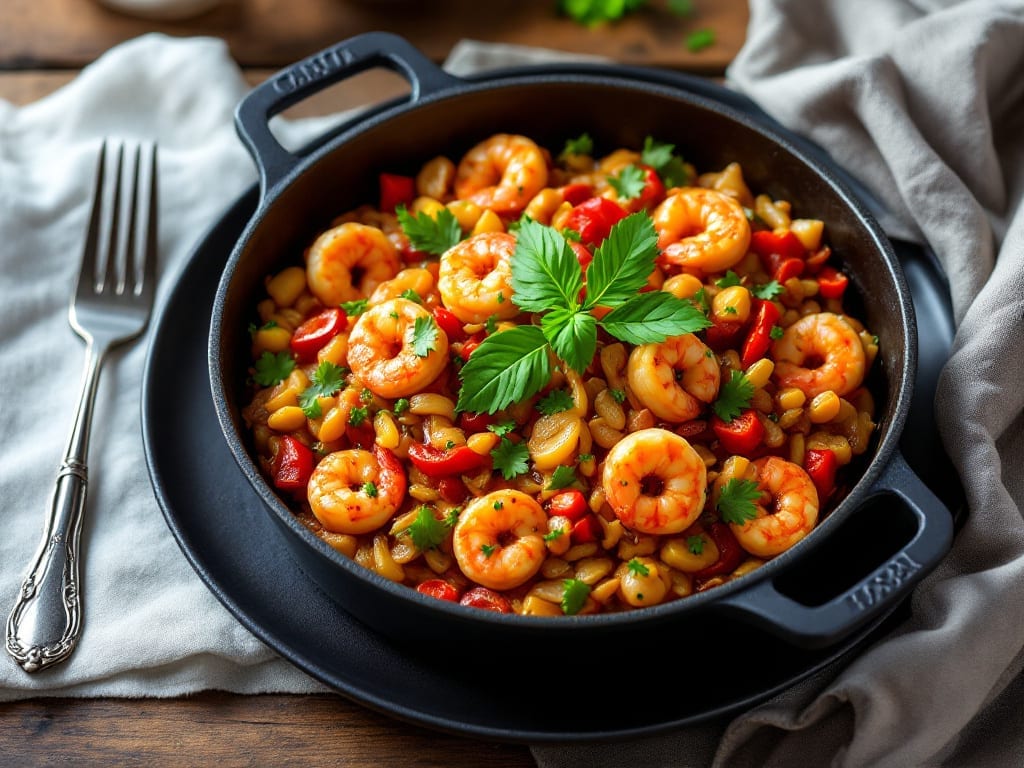
Cooking jambalaya in a cast iron pot transforms this classic dish into a smoky, spiced masterpiece that clings to every grain of rice. The secret lies in the pot itself—its ability to sear meat deeply, caramelize aromatics, and distribute heat evenly for that signature one-pan depth.
I perfected this recipe after years of testing, ensuring the rice stays tender while the proteins develop rich, layered flavors through slow simmering.
What sets this jambalaya apart is the technique: searing chicken and andouille sausage until deeply browned, then deglazing with beer and Cajun spices to create a flavorful base. The cast iron retains heat perfectly, allowing the rice to cook through while absorbing all those smoky, spiced juices.
No need for multiple pans—just one pot, one stove, and about 45 minutes of hands-off time.
The result is a dish where every bite delivers crispy edges on the meat, tender rice, and a sauce that’s both rich and aromatic. The cast iron’s natural nonstick properties mean less sticking, and proper care (like preheating and using enough oil) ensures it lasts for years of jambalaya-making.
This is comfort food at its finest—bold, hearty, and impossible to resist.
Serve it with crusty bread to soak up the sauce or alongside a simple green salad for balance. The leftovers reheat beautifully, making this the ultimate meal-prep-friendly dish. Here’s how to make it shine in your cast iron pot.
Ingredients for cast iron pot jambalaya
Fifteen ingredients that transform into a rich, smoky jambalaya when cooked in cast iron.
| Ingredient | Amount | Notes |
|---|---|---|
| Long-Grain White Rice 🍚 | 1 ½ cups | Uncooked, medium grain preferred |
| Andouille Sausage 🌭 | 1 lb | Cajun-style, sliced into half-moons |
| Boneless Chicken Thighs 🍗 | 1 ½ lb | Skin-on, cut into bite-sized pieces |
| Yellow Onion 🧅 | 1 whole | Medium, diced into 1/4-inch pieces |
| Green Bell Pepper 🌶️ | 1 whole | Medium, diced into 1/4-inch pieces |
| Celery Stalks 🥬 | 3 whole | Trimmed, diced into 1/4-inch pieces |
| Garlic Cloves 🧄 | 4 cloves | Fresh, minced |
| Cajun Seasoning 🌶️ | 2 tbsp | Homemade or quality store-bought |
| Smoked Paprika 🌶️ | 1 tbsp | For extra depth of flavor |
| Light Beer 🍺 | 1 ½ cups | Lager or pale ale, chilled |
| Chicken Broth 💧 | 1 ½ cups | Low-sodium preferred |
| Tomato Sauce 🍅 | 1 cup | Canned, no salt added |
| Vegetable Oil 🫒 | 2 tbsp | For searing, high smoke point |
| Salt 🧂 | 1 ½ tsp | Kosher or sea salt |
| Black Pepper 🌶️ | ½ tsp | Freshly ground |
The andouille sausage is the heart of this dish—look for high-quality Cajun-style at specialty markets or well-stocked grocery stores like Whole Foods. The chicken thighs should have visible fat for moisture, and the rice should be long-grain to stay separate. For the Cajun seasoning, Tony Chachere’s is a reliable choice, but any blend with paprika, thyme, and oregano works. Pre-sliced andouille saves time, but slicing your own ensures even cooking. The cast iron pot should be preheated for 5 minutes to ensure proper searing of the meat.
No andouille? Italian sausage or smoked kielbasa works in a pinch, but the flavor will differ. Swap light beer for chicken broth plus a splash of Worcestershire sauce if you’re avoiding alcohol. Fresh bell peppers and celery can be replaced with frozen diced vegetables (thawed), though texture will vary. For extra heat, add 1/2 tsp cayenne pepper to the Cajun seasoning. The tomato sauce can be homemade—just blend canned tomatoes with garlic and olive oil—but jarred works fine if you’re short on time. Always measure the Cajun seasoning carefully; too much can overpower the dish.
This jambalaya reheats beautifully—simmer on low heat with a splash of broth or beer to restore moisture. Store leftovers in an airtight container for up to 5 days in the refrigerator or freeze for 3 months. The cast iron pot can be cleaned immediately after cooking while still warm, using hot water and a stiff brush. Avoid soaking to preserve the seasoning. For meal prep, portion into individual containers with a side of crusty bread to keep everything fresh and ready to reheat.
Why You’ll Love This Recipe
- One-Pot Magic: I swear by this—dump everything in that cast iron, let it simmer, and walk away. No measuring cups flying, no separate pans to wash. The rice soaks up the smoky andouille and crispy chicken juices right in the pot. (Yes, even on a Tuesday night.)
- Smoky Depth Bomb: That andouille sausage is the star—spicy, fatty, perfectly charred on the edges. When it melts into the rice with the chicken’s juices and the bell pepper’s sweetness, you get this rich, layered taste that’s way more satisfying than takeout. Honestly, I’ve made jambalaya before, but this? This stays.
- Lunchbox Hero: Between us, this is my go-to for meal prep. The flavors get even better the next day, and it reheats like a dream. Pack it in containers, toss in some hot sauce, and you’ve got a week’s worth of lunches that’ll make you the office favorite. (My coworker asked for the recipe twice.)
- Budget-Friendly Feast: Chicken thighs and sausage stretch over rice like a dream—this feeds four for under $15, easy. And the leftovers? Even better. I’ll be real: I often make a double batch just so I can freeze half for lazy days. That cast iron keeps it warm for hours, so no sad, dry rice here.
Step-by-step instructions for cast iron pot jambalaya
Here’s the method for a rich, flavorful jambalaya that builds layer upon layer of smoky, spiced goodness in one cast iron pot.
Sear the Protein and Sauté the Holy Trinity
Heat the cast iron pot over medium-high heat until hot. Add the 2 tablespoons vegetable oil and swirl to coat. Working in batches to avoid crowding, add the 1 pound andouille sausage slices and cook for 3-4 minutes until browned and slightly crispy. Remove the sausage and set aside.
In the same pot, add the 1.5 pounds boneless chicken thighs in bite-sized pieces. Sear for 4-5 minutes until golden on all sides, then remove and set aside with the sausage. Reduce heat to medium and add the diced yellow onion, green bell pepper, and 3 celery stalks. Cook for 5-6 minutes until softened but not browned. Add the 4 minced garlic cloves and cook for 30 seconds until fragrant.
Develop the Base with Spices and Liquids
Stir in the 2 tablespoons Cajun seasoning and 1 tablespoon smoked paprika, coating the vegetables evenly. Cook for 1 minute until the spices are toasted and aromatic. Pour in the 1.5 cups light beer and scrape up any browned bits from the bottom of the pot. Let it simmer for 3-4 minutes until reduced by half.
Add the 1 cup tomato sauce and 1.5 cups chicken broth. Stir well and bring to a gentle boil. This creates the flavorful base that will infuse the rice and proteins as they cook. The beer and broth combination balances the richness of the sausage and chicken while keeping the dish moist.
Layer and Simmer the Jambalaya
Return the chicken thighs and andouille sausage to the pot. Stir to combine with the sauce. Add the 1.5 cups long-grain white rice, spreading it evenly over the top. The rice should be submerged just below the liquid level—this ensures proper absorption without drying out.
Bring the mixture to a gentle boil, then reduce heat to low. Cover the pot with a tight-fitting lid and simmer for 20 minutes. After 20 minutes, stir gently to redistribute any rice that may have risen to the top. Continue cooking for another 10-15 minutes until the rice is tender and has absorbed most of the liquid.
Rest and Adjust Seasoning
Once the rice is fully cooked and the liquid has been absorbed, remove the pot from heat. Let the jambalaya rest, covered, for 5 minutes. This resting period allows the flavors to meld and the rice to finish steaming.
Taste and adjust seasoning with the 1.5 teaspoons salt and 0.5 teaspoon black pepper if needed. The jambalaya should be well-seasoned with a balance of heat, smokiness, and savory notes. If the texture is too dry, add a splash of warm chicken broth to loosen it slightly. Serve immediately from the cast iron pot for the best experience.
Pro Tips For Making Cast Iron Pot Jambalaya
- CRANK THE HEAT FIRST: Cast iron holds heat like a grudge, so start your chicken and sausage on medium-high—you want those thighs to sear fast and release fat before the onions get soggy. I learned this the hard way after a batch where the chicken poached instead of browned, and suddenly my jambalaya tasted more like stewed chicken than Cajun magic.
- SLICE SAUSAGE THIN, NOT CHUNKY: Andouille’s flavor hides in its layers, so cut it into ¼-inch thick rounds instead of leaving it in fat sausages. Thin slices render faster, crisp up in the cast iron, and won’t turn the rice greasy—plus, they’ll actually caramelize instead of just melting away.
- DON’T STIR THE RICE AFTER ADDING LIQUID: That first 5 minutes after pouring in the broth? Walk away. Stirring too soon breaks the crust forming on the bottom, and you’ll end up with mushy rice. Let it bubble undisturbed—yes, even if it looks like it’s fighting you—and then gently fluff with a fork later.
- SWEAT ONIONS LOW AND LONG: Medium heat is your friend here. Onions should soften to translucent in 8–10 minutes, not brown or stick. If they’re caramelized by the time the chicken’s done, you’ve already lost the sweetness that balances the smokiness. (And no, skipping this step won’t save time—trust me, I’ve tried.)
Pro cooking tips for perfect results
Searing Secrets
High heat is your friend when searing the andouille and chicken—aim for medium-high heat until you see deep golden-brown crusts forming. I use a cast iron skillet from Lodge because its heavy weight distributes heat evenly.
Crowding the pan steams instead of sears, so cook in two batches if needed. The goal is Maillard reaction magic—those browned bits pack intense flavor. 🔥
Deglazing Like a Pro
After removing the meat, scrape up every last bit of browned goodness from the bottom of your cast iron pot. This is where 1.5 cups of light beer comes in—pour it in and let it bubble away for 3-4 minutes until reduced by half.
The alcohol burns off, leaving behind rich, caramelized flavors. I like using Abita Amber Lager for its malty sweetness that complements the Cajun spices.
Rice Perfection
Long-grain rice needs gentle treatment—don’t stir it once it’s in the pot! After adding the rice, give it one final stir to distribute everything evenly, then let it cook undisturbed. The cast iron’s heat retention helps maintain a consistent low simmer without hot spots.
If your rice is still firm after 30 minutes, add ¼ cup hot water and cover for another 5 minutes.
Spice Balance
The Cajun seasoning is where jambalaya gets its soul, but too much can overwhelm. I recommend Tony Chachere’s for its classic blend of paprika, thyme, and cayenne. For extra depth, add 1 tsp smoked paprika directly to the pot while searing the veggies.
Taste your finished dish—if it needs more heat, a pinch of cayenne does the trick, but if it’s too spicy, a spoonful of tomato sauce balances it out.
Lid Lockdown
A tight-fitting lid is non-negotiable for even cooking. I use a heavy-duty stainless steel lid that fits snugly over my cast iron. If steam escapes too quickly, your rice will dry out.
After 20 minutes, give it a gentle shake to redistribute any rice that might have stuck to the bottom. The last 10 minutes should be at the lowest possible simmer to avoid overcooking.
Cast Iron Care
Never soak your cast iron—it strips away the seasoning. After cooking, wipe out any residue with a paper towel while still warm, then rinse with hot water. For stuck-on bits, sprinkle coarse kosher salt and scrub with a chainmail scrubber.
Re-season by rubbing a thin layer of flaxseed oil (not vegetable oil) and baking at 350°F for 1 hour if needed. This keeps your pot ready for the next jambalaya session. 💪
Nutrition facts
Frequently asked questions
Why does the recipe call for searing the meat in batches?
Searing in batches prevents steaming instead of browning. Cast iron needs high heat and space to create that flavorful crust through the Maillard reaction. Crowding the pot with all the meat at once will make it cook unevenly and lose its signature smoky depth.
Can I substitute chicken broth for beer in this recipe?
Yes, but you’ll lose some depth of flavor. Use 1.5 cups chicken broth plus 1 tablespoon Worcestershire sauce to mimic the beer’s malty richness. The beer’s alcohol burns off during cooking, leaving behind caramelized notes that broth alone can’t replicate.
How do I know when the rice is fully cooked in cast iron?
The rice should be tender with no hard grains, and the liquid should be mostly absorbed. If it’s still firm after 30 minutes, add ¼ cup hot water and cook another 5 minutes covered. Cast iron’s even heat distribution helps cook rice perfectly without sticking if you’ve preheated the pot properly.
What’s the best way to reheat jambalaya made in cast iron?
Reheat gently in the same cast iron pot over low heat with 2 tablespoons water or broth to restore moisture. Stir occasionally and cover for 5-10 minutes. Never microwave—it creates uneven heating and rubbery rice. The cast iron’s retained heat helps revive the dish perfectly.

- Baked Potatoes in Crock Pot Recipe: Buttery Interiors and Crispy Top Magic - November 1, 2026
- Braised Beef Short Ribs Recipe: Crock Pot Fall-Off-Bone Magic in 6 Hours - November 1, 2026
- Crock Pot Cocoa Recipe: Velvety Warmth With Hidden Spice Magic - November 1, 2026