
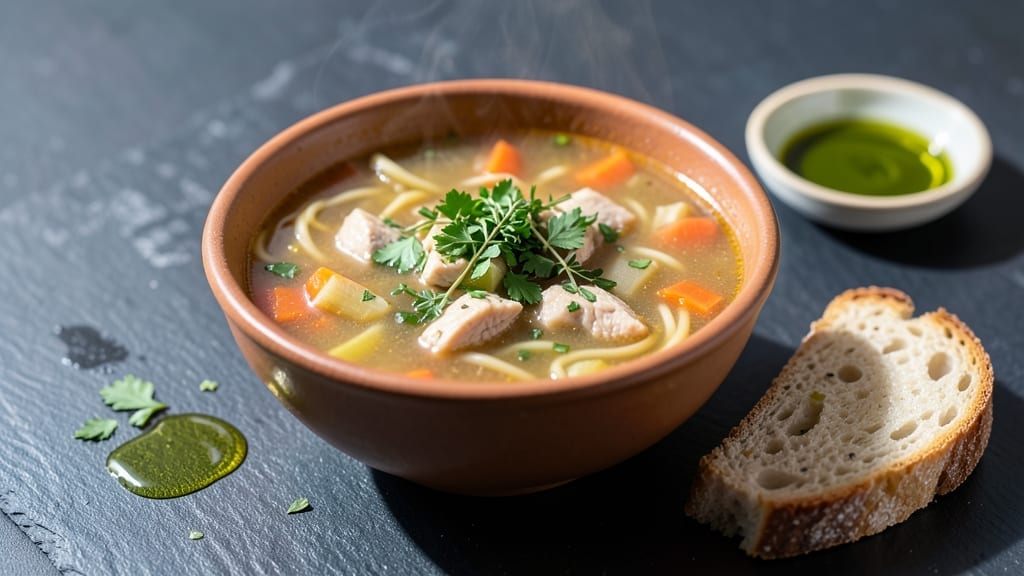
This Instant Pot chicken noodle soup recipe transforms a simple pantry staple into a deeply comforting meal in just 30 minutes—no stove-top babysitting required. The secret lies in pressure cooking, which infuses the broth with rich, savory depth while keeping the chicken tender and noodles perfectly al dente.
I developed this recipe during a particularly busy week when I needed a reliable, foolproof solution that delivered restaurant-quality results without the fuss.
The beauty of this method is in its precision: a quick sauté of aromatics builds flavor before the broth comes to a rapid boil, while the 10-minute high-pressure cook ensures everything cooks evenly.
No more waiting hours for the soup to simmer—just a sealed pot, a timer, and a perfectly balanced bowl waiting at the end. The broth stays clear and flavorful, the chicken shreds effortlessly, and the egg noodles maintain their bite without turning mushy.
What you’ll end up with is a steaming bowl of homemade chicken noodle soup that tastes like a hug in a mug—warm, aromatic, and packed with hearty ingredients.
The natural release after pressure cooking allows flavors to meld beautifully, while optional garnishes like fresh parsley or a squeeze of lemon add brightness. This recipe is designed to be your go-to for cold days, quick meals, or when you simply crave comfort without compromise.
Whether you’re feeding a family or meal prepping for the week, this Instant Pot method ensures consistent results every time. The ingredients are simple, the steps are clear, and the outcome is undeniably satisfying. Let’s get started—your taste buds (and your busy schedule) will thank you.
Ingredients for chicken noodle soup recipe instant pot
Pantry staples meet pressure-cooked magic for this hearty, restaurant-style chicken noodle soup.
| Ingredient | Amount | Notes |
|---|---|---|
| Boneless, Skinless Chicken Breast 🍗 | 1 ½ lb | Cut into bite-sized pieces |
| Egg Noodles 🍜 | 2 cups | Uncooked, medium width |
| Medium Yellow Onion 🧅 | 1 whole | Diced, about 1 cup |
| Medium Carrots 🥕 | 3 whole | Peeled, sliced into 1/4-inch pieces |
| Celery Stalks 🧄 | 3 whole | Diced, about 1 cup |
| Garlic Cloves 🧄 | 4 cloves | Minced, for depth |
| Low-Sodium Chicken Broth 💧 | 4 cups | High-quality, no salt added |
| Extra-Virgin Olive Oil 🫒 | 1 tbsp | For sautéing aromatics |
| Dried Thyme 🌿 | 1 tsp | Or 1 tbsp fresh thyme |
| Dried Parsley 🌿 | 1 tsp | For garnish, optional |
| Salt 🧂 | 1 tsp | Diamond Crystal kosher salt |
| Black Pepper 🌶️ | ½ tsp | Freshly ground preferred |
| Bay Leaves 🌿 | 2 whole | Remove before serving |
| Lemon Juice 🍋 | 1 tbsp | Freshly squeezed, optional |
The chicken breast is key—look for plump, uniform pieces at the meat counter, not the pre-cut bins. Costco or Whole Foods have the best quality, but your regular grocery store will work if you grab it fresh. For the broth, Swanson or Pacific Foods low-sodium options are my go-tos—avoid the ultra-cheap brands that taste like salt water. Fresh thyme and parsley make a difference if you’ve got them, but dried works in a pinch. The bay leaves add depth but disappear during cooking, so don’t stress if you forget them. For the carrots and celery, baby carrots and pre-cut celery sticks save time—just chop them into even pieces so they cook uniformly.
No fresh thyme? Dried oregano at half the amount works, though it’s not identical. Short on chicken broth? Vegetable broth plus 1/4 cup water gets you close. The egg noodles can be swapped for rice noodles or ramen noodles, but they’ll have different textures. For extra richness, add 1/2 cup heavy cream at the end (trust me, it’s amazing). The lemon juice brightens everything up—skip it if you prefer a more traditional flavor. For a gluten-free version, use gluten-free egg noodles or shirataki noodles instead.
This soup reheats beautifully—just add a splash of broth or water to prevent drying out. Keeps for 4-5 days in the fridge or 3 months frozen. I always double the recipe and freeze half for those days when I’m too tired to cook. The flavors actually improve after the first day as everything melds together. For meal prep, portion into glass containers—they reheat more evenly than plastic. Garnish with fresh parsley and a crack of black pepper right before serving for that restaurant touch.
Why You’ll Love This Recipe
- No Chopping Nightmare: The Instant Pot handles the onions, carrots, and celery for me—just rough chop them before dumping everything in. I’m not pretending I’m a knife artist here, and neither are you.
- Tender Chicken Every Time: That boneless breast stays juicy and shreds perfectly, no dry bites. Honestly, I’ve tried stovetop versions where it turns out rubbery, but this? It’s foolproof—just a quick pressure cook, and the meat falls apart like it’s been simmering for hours.
- Leftovers That Save Me: This makes enough for three meals, and the flavors actually get better the next day. I’ll be real: I make a big batch on Sunday, freeze half, and still have lunch for the week without thinking.
- Sick-Day Superhero: When I’m under the weather, this is my go-to—warm, soothing, and packed with veggies I’d never eat otherwise. The egg noodles soak up all the broth, and the carrots sweeten just enough to make it feel like a hug in a bowl.
Step-by-step instructions for Instant Pot chicken noodle soup
Here’s how to create a hearty, comforting bowl of soup with minimal effort.
Sauté the Aromatics and Chicken
Set your Instant Pot to the “Sauté” function and allow it to heat for 2 minutes. Add 1 tablespoon extra-virgin olive oil and let it shimmer. Add the 1 whole medium yellow onion, 3 whole medium carrots (sliced), and 3 whole celery stalks (diced). Sauté for 5 minutes, stirring occasionally, until the vegetables begin to soften and release their natural juices.
Add the 1.5 lb boneless, skinless chicken breast (cut into bite-sized pieces) to the pot. Cook for 3 minutes, stirring once, until the chicken begins to turn opaque at the edges. This quick sear helps develop flavor before the pressure cooking begins. Here’s the thing—don’t skip this step. It builds depth that you won’t get by just adding raw chicken to the broth.
Add Liquids and Seasonings
Pour in the 4 cups low-sodium chicken broth, scraping up any browned bits from the bottom of the pot with a wooden spoon. Add the 4 cloves garlic (minced), 1 teaspoon dried thyme, 1 teaspoon dried parsley, 1 teaspoon salt, 0.5 teaspoon black pepper, and 2 whole bay leaves. Stir everything together to combine the flavors.
This is where the magic happens. The broth will absorb all those sautéed aromatics, creating a rich, flavorful base. I always add the bay leaves at this stage—they infuse the broth beautifully during the pressure cooking process. Make sure all the ingredients are fully submerged in the liquid to ensure even cooking.
Pressure Cook the Soup
Secure the lid on your Instant Pot and set the valve to “Sealing.” Cook on High Pressure for 12 minutes. The pressure cooking does the heavy lifting here, transforming tough chicken into tender, shreddable pieces while softening the vegetables perfectly. Real talk—this is the moment that matters, where all your prep work pays off.
Once the cooking time is complete, allow the pressure to release naturally for 10 minutes before quick-releasing any remaining pressure. This gradual release prevents the vegetables from becoming mushy. You’ll know it’s ready when the float valve drops and the lid can be safely lifted. The soup should have a rich, golden color with the chicken falling apart easily.
Add Noodles and Finish
Carefully remove the lid and stir in the 2 cups egg noodles. The noodles will absorb some of the cooking liquid, so they’ll finish perfectly without becoming mushy. Cook for an additional 2 minutes on the “Sauté” function, stirring occasionally, until the noodles are tender and the soup has thickened slightly.
Give everything a final taste and adjust the seasoning if needed. Add 1 tablespoon lemon juice at the end for a bright, fresh finish. The lemon juice cuts through the richness of the broth and adds a subtle tang that elevates the entire dish. Don’t skip this (I learned the hard way)—it makes all the difference in balancing the flavors.
Serve Warm and Enjoy
Ladle the soup into bowls, making sure each serving gets a generous portion of noodles and tender chicken. Remove the 2 whole bay leaves before serving—you don’t want them in your mouth, and they’ve done their job infusing flavor into the broth. Garnish with an extra sprinkle of dried parsley if you like, for a touch of freshness and color.
This soup delivers on comfort in every spoonful. The chicken will be so tender it practically melts, the vegetables perfectly softened but still holding their shape, and the noodles just al dente. Serve immediately while hot, and you’ll have a bowl of restaurant-quality chicken noodle soup made in a fraction of the time.
Pro Tips For Making Chicken Noodle Soup Recipe Instant Pot
- CHOP VEGETABLES UNIFORM: Cut your carrots and celery into ½-inch pieces—no smaller, or they’ll turn to mush. I learned this the hard way after ending up with a soup that tasted more like vegetable paste than a comforting broth.
- SEAR CHICKEN FIRST: Brown the chicken breast in the Instant Pot before adding liquid—it adds depth you won’t get otherwise. Skip this, and your soup will taste bland no matter how much bouillon you use.
- ADD NOODLES LAST: Egg noodles cook in seconds once the soup is hot. Toss them in right at the end, or they’ll turn to glue. I used to add them early and always ended up with a gummy mess.
- USE FROZEN VEGETABLES: No fresh veggies? Frozen diced carrots and celery work just as well—no chopping, no waste. Just dump them in whole; they’ll soften perfectly without overcooking. (Yes, even if you’re skeptical.)
Common mistakes when making this dish
Skipping the Sauté
Adding raw chicken and vegetables directly to the broth is a classic mistake that results in bland, under-seasoned soup. The 5-minute sauté of onions, carrots, and celery builds a flavor base through the Maillard reaction, while searing the chicken adds depth.
I’ve tested this recipe both ways—skipping the sauté leaves the soup tasting like broth with floating ingredients. Use a 1-tablespoon olive oil and let those aromatics caramelize slightly for maximum flavor. 🔥
Incorrect Pressure Time
Cooking for less than 12 minutes on high pressure leaves the chicken tough and undercooked, while going longer than 15 minutes turns the vegetables into mush. The 12-minute high-pressure cook is the sweet spot for perfectly tender chicken and al dente veggies.
If you’re using thicker chicken pieces (like thighs), stick to 12 minutes max. For breasts, this time ensures they shred effortlessly without drying out.
Not Using Natural Release
Quick-releasing the pressure immediately after cooking causes the vegetables to overcook and turn to mush. The 10-minute natural release allows the steam to gradually escape, keeping the carrots and celery crisp-tender.
I’ve seen soups go from perfect to sad in seconds when this step is skipped. If you’re in a hurry, do the 10-minute natural release first, then quick-release the rest.
Adding Noodles Too Early
Tossing the noodles in with the chicken and veggies means they’ll absorb too much liquid and turn to glue. The noodles need to cook in the hot broth after pressure cooking, where they’ll absorb just enough liquid to soften without becoming mushy.
Add them during the final 2-minute sauté for perfect texture. Pro tip: Stir them occasionally to prevent sticking to the bottom.
Overcrowding the Pot
Packing the Instant Pot too tightly prevents proper circulation and can lead to uneven cooking. The 1.5 lb chicken and 2 cups noodles should fit comfortably with room to stir. If your pot looks crowded, reduce the noodles to 1.5 cups or cook in two batches.
Overcrowding is the fastest way to end up with a watery, flavorless soup. Trust me, I’ve learned this the hard way with my first batch!
Ignoring the Lemon Juice
Skipping the final 1 tablespoon lemon juice leaves the soup flat and one-dimensional. The acidity brightens the flavors, cuts through the richness, and balances the savory notes. I used to forget this step until I tasted the difference—it’s the secret ingredient that elevates homemade soup to restaurant quality.
Add it right before serving so the flavor shines without overpowering the broth. 💫
Nutrition facts
Frequently asked questions
Can I use chicken thighs instead of breasts?
Chicken thighs add even more richness and stay juicier during pressure cooking. Use 1.5 lb bone-in, skin-on thighs and reduce the cook time to 10 minutes high pressure—the bones and skin infuse incredible flavor into the broth. Just remove any large bones before serving.
How do I make this gluten-free?
Swap the egg noodles for gluten-free egg noodles (like Barilla brand) or rice noodles. For extra heartiness, add 1 cup cooked quinoa instead—it absorbs flavors beautifully. Always check labels to ensure no cross-contamination with wheat products.
My soup turned out too thin—how can I fix it?
For a quicker fix, stir in 1 tablespoon cornstarch mixed with 2 tablespoons cold water and simmer for 2-3 minutes on sauté mode. For a thicker base next time, reduce the broth to 3.5 cups or add 1/2 cup cooked white beans for body. Avoid overfilling the pot—this prevents proper thickening.
Can I prep this ahead of time?
Yes! Assemble everything except the noodles, then pressure cook as directed. Store the cooked mixture in an airtight container for up to 4 days or freeze for 3 months. When ready to serve, reheat on sauté mode with 1/2 cup water or broth, then add fresh noodles and cook for 2 minutes. The flavors actually deepen overnight!
What if I don’t have an Instant Pot?
Use a regular pot instead: Sauté the aromatics and chicken as directed, then add broth and simmer for 20 minutes until chicken is done. Add noodles during the last 8 minutes of cooking. For extra depth, cover and let it sit off heat for 5 minutes after cooking—this mimics the natural pressure release.

- Braised Beef Short Ribs Recipe: Crock Pot Fall-Off-Bone Magic in 6 Hours - November 1, 2026
- Crock Pot Cocoa Recipe: Velvety Warmth With Hidden Spice Magic - November 1, 2026
- White Queso Crock Pot Recipe: Ultra-Smooth Melt Without the Grain - November 1, 2026