
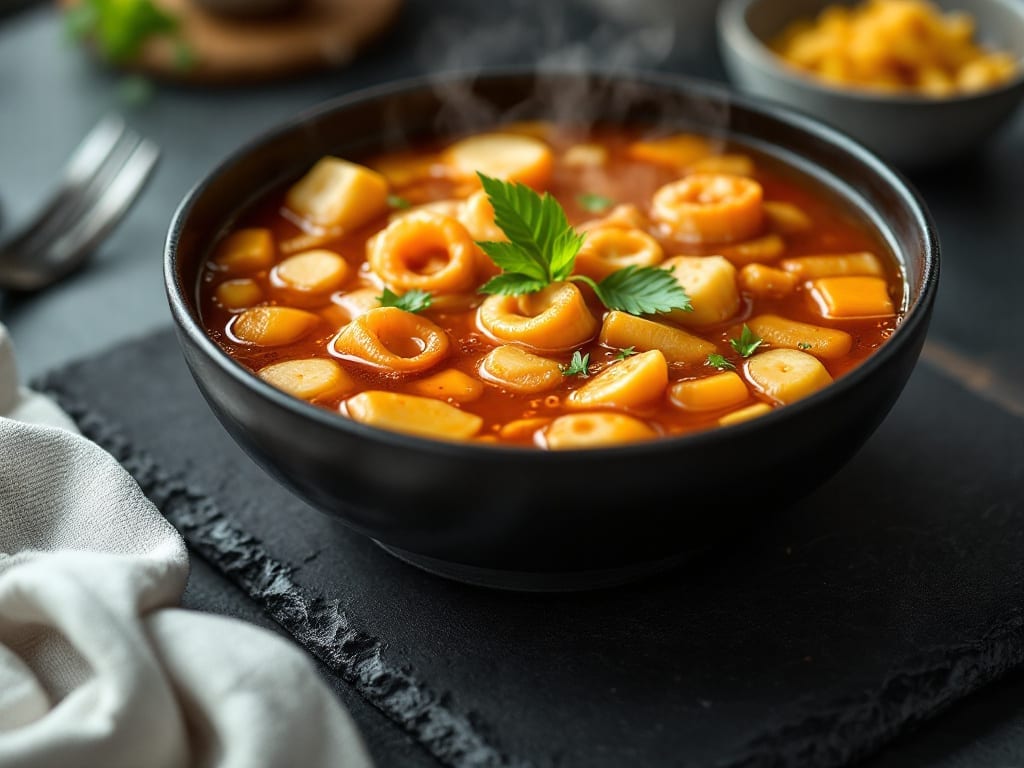
This Chinese hot pot broth recipe transforms a simple pot of water into a rich, aromatic foundation that elevates every dip and bite. The secret lies in slow-simmered bones, toasted spices, and aromatic vegetables that build layers of umami over hours—no shortcuts, just deep flavor.
I’ve perfected this method after years of testing, ensuring the broth remains clear yet intensely savory, perfect for both classic meat-based and vegetarian adaptations.
The process begins with high-heat toasting of spices—star anise, cinnamon, and Sichuan peppercorns—to unlock their oils before simmering. Aromatics like ginger, garlic, and scallions form the base, while pork bones (or mushrooms for vegetarian versions) infuse the broth with gelatinous richness.
The result? A clear, golden liquid that’s fragrant enough to fill a room and bold enough to stand up to bold dipping sauces.
What sets this broth apart is its versatility: use it as-is for traditional hot pot or adjust the spice blend for herbal, spicy, or lighter variations.
The simmering time—at least 4 hours for meat-based, 2 hours for vegetarian—is non-negotiable for depth, but the effort pays off in every sip. Once mastered, you’ll never buy store-bought again.
Pair this broth with your favorite proteins, fresh vegetables, and dipping sauces for an authentic experience. The key to success? Patience and precise technique—details I’ll walk through step by step to ensure your broth rivals restaurant-quality results.
Ingredients for chinese hot pot broth
Nine aromatic ingredients transform water into fragrant, umami-rich hot pot broth.
| Ingredient | Amount | Notes |
|---|---|---|
| Pork Bones (or Mushrooms for Vegetarian) 🍖 | 4 lb | Pork neck or marrowbones preferred |
| Star Anise Pods 🌿 | 4 whole | Whole, not ground, for aroma |
| Cinnamon Sticks 🌿 | 2 whole | Ceylon preferred for delicate flavor |
| Sichuan Peppercorns 🌶️ | 1 tbsp | Toasted for numbing-spicy kick |
| Fresh Ginger Root 🧄 | ½ lb | Unpeeled, sliced thickly |
| Garlic Cloves 🧄 | 8 cloves | Smash lightly for oils |
| Scallions 🧅 | 1 bunch | White and green parts separated |
| Dried Shiitake Mushrooms 🍄 | 8 whole | For vegetarian umami depth |
| Dried Red Dates 🍯 | 4 whole | Pitted, for subtle sweetness |
| Rock Sugar 🍬 | ¼ cup | Or brown sugar substitute |
The bones are non-negotiable for meat-based versions—pork neck or marrowbones deliver the best gelatinous richness. For vegetarian, shiitake mushrooms and dried dates create depth without meat. Whole spices like star anise and cinnamon should be sourced from bulk bins or specialty stores like Penzeys for maximum aroma. Sichuan peppercorns? Toast them in a dry pan until fragrant—30 seconds max—to unlock their signature numbing heat. Ginger and garlic are the backbone; use fresh, never powdered, for authentic flavor.
No Sichuan peppercorns? Substitute black peppercorns at half the amount for warmth without the tingle. Vegetarian? Add kombu seaweed for extra umami. The rock sugar can be swapped for brown sugar, but it caramelizes differently—reduce by 10% if using. Scallions are divided: white parts simmer in the broth, greens get added at the end for freshness. For a lighter broth, simmer uncovered and skim foam regularly. The dates? Soak them first if they’re hard—10 minutes in warm water softens them perfectly.
This broth peaks after 4 hours for meat, 2 hours for vegetarian—no rushing! Store in the fridge for up to 5 days or freeze in ice cube trays for 3 months. The longer it sits, the better it tastes. I always make a double batch: one for immediate use, one to freeze for lazy weeknights. Pro tip: Strain before freezing to avoid cloudiness when thawed.
Why You’ll Love This Recipe
- No-Fuss Simmer: I swear by this broth because it’s basically set-it-and-forget-it. Toss in the pork bones (or mushrooms), a few whole spices, and ginger—then let them work their magic in one pot. No chopping, no fuss, just deep flavor unfolding while you do whatever else needs doing.
- Umami Bomb: That first sip? Pure satisfaction. The star anise and Sichuan peppercorns give it a warm, slightly spicy depth, while the ginger and pork bones (or mushrooms) add this rich, savory punch. It’s the kind of broth that makes you close your eyes and sigh—no exaggeration.
- Weeknight to Party: Honestly, this is my go-to for lazy nights and when I’m hosting. Serve it as-is with dumplings for a quick meal, or turn it into a full hot pot with veggies and thinly sliced meat. The same broth works for both—no extra effort, just different toppings.
- Leftovers That Pay: Between us, this broth only gets better the next day. I make a big batch on Sundays, and by Wednesday, it’s even richer. Plus, it’s dirt cheap—pork bones or mushrooms stretch into gallons, and the spices last forever. My wallet and my freezer both thank me.
Step-by-step instructions for Chinese hot pot broth
Here’s how to build a rich, aromatic broth that captures all the layers of Chinese hot pot tradition.
Prepare the Base Ingredients for Layered Flavor
Begin by thoroughly rinsing the 4 lb pork bones (or mushrooms for vegetarian) under cold water to remove any surface impurities. For pork bones, I prefer neck or marrowbones—they release more gelatin during simmering, creating that signature silky texture. Pat them completely dry with paper towels, then place them in a large stockpot. Add the 4 whole star anise pods, 2 whole cinnamon sticks, and 1 tbsp Sichuan peppercorns directly to the pot. These whole spices will infuse deep aromatic notes without overpowering the broth.
Next, peel and slice the 0.5 lb fresh ginger root into thick rounds—no need to remove the skin, as it adds subtle earthiness. Add these to the pot along with the 8 lightly smashed garlic cloves and 8 whole dried shiitake mushrooms. The shiitakes will break down during simmering, releasing their umami essence. Separate the 1 bunch scallions into white and green parts—we’ll use the whites now and reserve the greens for garnish later. Add the white parts to the pot as well.
Simmer the Foundation for Deep Umami Development
Cover the ingredients with 8 cups cold water and bring to a boil over medium-high heat. Once boiling vigorously, reduce to a gentle simmer and let it cook uncovered for 45 minutes. This initial phase removes impurities and begins extracting the base flavors. Skim off any foam that rises to the surface with a ladle—this ensures clarity in your final broth.
After 45 minutes, add the 4 whole dried red dates and 0.25 cup rock sugar to the pot. These ingredients balance the broth’s richness with subtle sweetness and natural depth. Stir gently to distribute the sugar, then continue simmering uncovered for another 1 hour. The pork bones should be releasing their collagen now, turning the liquid slightly cloudy and gelatinous—this is exactly what we want for that luxurious mouthfeel.
Refine the Broth for Maximum Clarity and Flavor
Strain the broth through a fine-mesh sieve lined with cheesecloth into a clean stockpot, pressing gently on the solids to extract every last drop of flavor. Discard the solids in the sieve. Return the strained broth to the stove and skim off any remaining impurities that floated to the surface. This step is crucial—it ensures your final broth is crystal clear while retaining all the complex flavors we’ve built.
Return the broth to a gentle simmer and cook uncovered for an additional 30 minutes to concentrate the flavors further. Taste the broth now—it should be rich, aromatic, and slightly sweet with underlying spice notes from the Sichuan peppercorns. If it needs more depth, you can add an additional 1 cup hot water now and simmer for another 15 minutes, but the current concentration should be perfect for hot pot.
Finish with Fresh Herbs and Proper Storage
Remove the pot from heat and let the broth cool slightly. Stir in the reserved scallion greens, chopped finely, and any other fresh herbs you prefer—cilantro or Thai basil work beautifully here. These herbs add a bright, fresh contrast to the deep umami flavors. The broth should now have a vibrant color with visible layers of aromatics suspended throughout.
For immediate use, keep the broth warm in a slow cooker or insulated pot. For storage, let it cool completely, then transfer to airtight containers. It will keep in the refrigerator for up to 5 days or can be frozen for 3 months. When reheating, do so gently over low heat to preserve all the delicate flavors we’ve developed. This broth forms the heart of any hot pot gathering—rich enough to stand alone but versatile enough to complement any protein or vegetable.
Pro Tips For Making Chinese Hot Pot Broth
- Char Bones First: Toss pork bones in a screaming-hot wok or Dutch oven for 3-4 minutes before adding liquid—this caramelizes the bone marrow and sears off impurities. I used to skip this, and the broth always tasted faintly metallic afterward.
- Smash Ginger Hard: Pound fresh ginger root with the flat side of a chef’s knife until it turns dark and releases its juices—this unlocks way more flavor than thin slices. My grandmother swore by this, and she was right: the broth gets that deep, spicy kick without overpowering.
- Don’t Crowd the Pot: If using pork bones, start with a single layer on the bottom of the pot—packing them too tightly traps steam and slows collagen release. I learned this the hard way after a 6-hour simmer that still left the broth watery.
- Toast Spices Together: Dry-toast star anise, cinnamon, and Sichuan peppercorns in the pot for 30 seconds before adding water—this blooms their aromas and prevents them from floating as bitter bits. Sounds weird, but it works: the broth tastes richer and more cohesive.
Troubleshooting this dish
Cloudy Broth Fix
If your broth turns cloudy during simmering, it’s likely from impurities or overcooked aromatics. Skim foam aggressively during the first 45 minutes using a fine-mesh strainer or ladle—I use a Vitamix strainer bag for precision.
For extra clarity, add 1 tbsp cornstarch mixed with 2 tbsp cold water at the end, simmer for 5 minutes, then strain again. This trick works wonders for restaurant-quality results. 🌡️
Weak Flavor Solutions
Weak broth often stems from insufficient simmering time or low-quality bones. If using pork bones, extend simmering to 6 hours for maximum collagen extraction. For vegetarian versions, add 2 tbsp soy sauce or 1 tbsp miso paste in the last 30 minutes to boost umami.
I also recommend using dried kombu seaweed for an extra depth of flavor without overpowering the broth.
Spice Imbalance
Too much Sichuan peppercorn? The numbing heat can overpower. Reduce to ½ tbsp or substitute with black peppercorns for warmth without tingling. For a sweeter broth, increase rock sugar to ⅓ cup and add 1 tsp vanilla bean seeds (scraped from a pod) during the last 30 minutes of simmering.
Taste as you go—adjust gradually to avoid drastic flavor shifts. 🌶️
Vegetarian Broth Separation
Vegetarian broths often separate due to lack of gelatin. Add 1 tbsp agar-agar powder or 2 sheets of kombu seaweed during the final 15 minutes of simmering to thicken naturally.
For a clearer broth, strain through a cheesecloth-lined sieve twice—once after the initial simmer and again before serving. This ensures a silky texture without meat-based gelatin.
Storage-Related Issues
Broth developing off-flavors after storage? Freeze in ice cube trays instead of bulk containers to preserve freshness for up to 3 months. For fridge storage, use glass mason jars with tight lids to prevent contamination.
If reheating, never boil—warm over low heat to 160°F to avoid breaking down the delicate aromatics. A splash of rice vinegar (1 tsp) before reheating can also brighten flavors.
Slow Cooker Adaptations
Using a slow cooker? Add ingredients as directed but reduce simmer time to 6-8 hours on low for meat-based broths or 4 hours for vegetarian. Avoid overfilling—keep the pot half-full to prevent spillage during the long cook.
For extra depth, add 1 tbsp fish sauce (or soy sauce for vegetarian) in the last 30 minutes. Slow cookers work best for hands-off broth-making but require more attention to liquid levels. ⏳
Nutrition facts
Frequently asked questions
Can I make this Chinese hot pot broth without pork?
For a vegetarian version, replace pork bones with 8 oz dried shiitake mushrooms and 4 oz kombu seaweed to build umami. Add 2 tbsp soy sauce or 1 tbsp miso paste in the last 30 minutes of simmering. The broth will be lighter but still deeply flavorful—just strain it twice for maximum clarity.
How do I adjust the spice level for sensitive eaters?
Reduce the Sichuan peppercorns to ½ tbsp or omit them entirely. For warmth without tingling, substitute with 1 tbsp toasted black peppercorns. If you want mild heat, add ½ tsp ground white pepper at the end. Always taste as you go—you can add more, but you can’t remove it!
What’s the best way to store leftover broth?
For fridge storage, use glass mason jars with tight lids—it keeps for 5 days. For long-term storage, freeze in ice cube trays (up to 3 months) or silicone molds for easy portioning. To reheat, warm gently over low heat to 160°F—never boil—to preserve all those delicate aromatics.
Why does my broth smell amazing but taste weak?
This usually means insufficient simmering time or low-quality bones. For meat-based broths, extend cooking to 6 hours to extract maximum collagen. For vegetarian versions, add 1 tbsp fish sauce (or soy sauce) in the last 30 minutes. Skim foam aggressively during the first 45 minutes to remove impurities that dull flavor.
Can I use this broth for other dishes besides hot pot?
Yes! This versatile broth works perfectly for pho, ramen, or as a base for stir-fries. Use it to poach proteins like chicken or tofu, or reduce it by half for a rich sauce. The key is its balance of sweetness, umami, and aromatic spices—it’s a flavor powerhouse in any dish.

- Baked Potatoes in Crock Pot Recipe: Buttery Interiors and Crispy Top Magic - November 1, 2026
- Braised Beef Short Ribs Recipe: Crock Pot Fall-Off-Bone Magic in 6 Hours - November 1, 2026
- Crock Pot Cocoa Recipe: Velvety Warmth With Hidden Spice Magic - November 1, 2026