
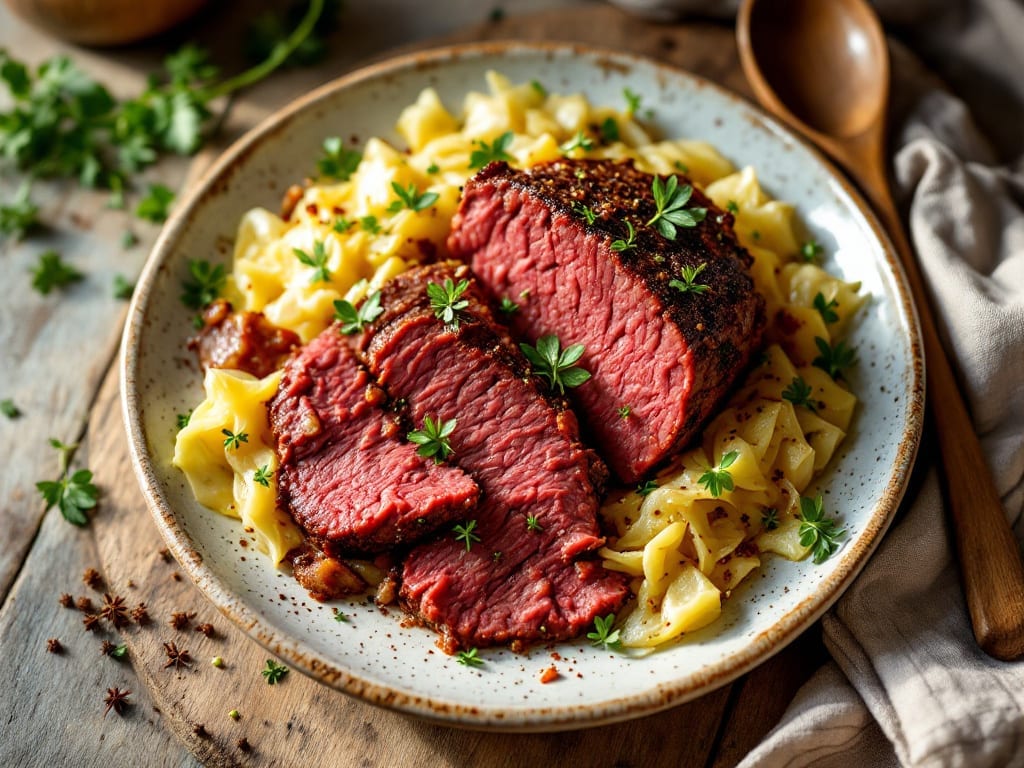
This corned beef and cabbage crock pot Pioneer Woman recipe transforms tough cuts into melt-in-your-mouth tender meat and perfectly cooked cabbage with just a few hands-off hours in the slow cooker.
The slow-cooker magic transforms tough cuts into fork-tender perfection while infusing the broth with deep, savory flavors that make every bite unforgettable. I’ve perfected this recipe over years of testing, ensuring the cabbage stays tender without turning to mush and the meat shreds easily—no tough, chewy surprises here.
The beauty of this crock pot method lies in its simplicity and reliability. You’ll start with a brisket or corned beef brisket, seasoned just right with the classic blend of salt, sugar, and spices that defines this dish.
The slow cooker does all the work—low and steady heat breaks down the meat while the cabbage absorbs the rich, aromatic broth. This isn’t just dinner; it’s a comforting, hearty meal that feels like a hug in a bowl, perfect for cold days when you crave something substantial.
By the time you’re ready to serve, you’ll have perfectly tender corned beef that shreds effortlessly and cabbage leaves that are just soft enough to enjoy without losing their texture. The broth reduces into a flavorful sauce that coats every bite, making this dish restaurant-quality without the fuss.
The best part? It requires almost no attention—just set it, forget it, and come back to a meal that smells as good as it tastes.
Serve with buttered potatoes or crusty bread to soak up every last drop of that delicious broth. This recipe is designed to feed a crowd or satisfy a cozy night in—either way, you’ll have a dish that’s worth the wait.
Let’s get started on creating this classic with a modern twist.
Ingredients for corned beef and cabbage crock pot pioneer woman
Six core ingredients plus a few pantry staples. That’s all you need for melt-in-your-mouth corned beef and tender cabbage.
| Ingredient | Amount | Notes |
|---|---|---|
| Corned Beef Brisket 🥩 | 3 lb | Pre-seasoned or plain, 1-inch thick |
| Green Cabbage 🥬 | 1 whole | Heavier head, about 2 lb |
| Yellow Onion 🧅 | 1 whole | Medium size, sliced |
| Carrots 🥕 | 4 whole | Medium size, sliced |
| Garlic Cloves 🧄 | 4 cloves | Fresh, peeled |
| Bay Leaves 🍃 | 2 whole | Dried, standard size |
| Black Peppercorns 🌶️ | 1 tsp | Freshly cracked |
| Salt 🧂 | 1 tbsp | Kosher or sea salt |
| Granulated Sugar 🍚 | 1 tbsp | White sugar preferred |
| Apple Cider Vinegar 🍎 | ½ cup | For tangy depth |
| Beef Broth 💧 | 2 cups | Low-sodium preferred |
| Potatoes 🥔 | 1 ½ lb | Russet or Yukon gold |
| Butter 🧈 | 4 tbsp | Unsalted, for potatoes |
The corned beef brisket is the star here—look for pre-seasoned at the grocery store’s meat counter, or grab plain and season it yourself. I always grab mine from Costco when I’m feeding a crowd, but the regular supermarket stuff works fine for a smaller batch. For the cabbage, heavier heads (those 2-pound monsters) give you more leaves and better texture. If you can’t find them, two smaller heads work too. The potatoes? Russet or Yukon Gold hold up best to the slow cooker’s heat without turning mushy. Skip the red potatoes—they fall apart too easily.
No pre-seasoned corned beef? No problem—just add 1 tbsp salt, 1 tbsp sugar, and 1 tsp black pepper to plain brisket. Short on vinegar? Lemon juice works in a pinch, but apple cider gives that classic tang. The broth can be bouillon cubes in a pinch, but low-sodium store-brand tastes better. For the cabbage, if you’re worried about overcooking, cut it into wedges instead of shredding—keeps it intact. And if you’re feeling fancy, add a bay leaf and a sprig of fresh thyme for extra depth.
This dish tastes even better the next day—plan ahead. Store leftovers in the fridge for up to 5 days, or freeze portions for 3 months. I like to portion the corned beef separately so I can reheat it quickly for sandwiches. The cabbage and potatoes reheat well too, just add a splash of broth to keep things moist. For serving, buttered potatoes and crusty bread are non-negotiable—soak up every last drop of that flavorful broth.
Why You’ll Love This Recipe
- Throw-In-And-Forgot It: I swear, the hardest part is digging the brisket out of the fridge. Once that’s in the crockpot with the onions and garlic, you’re basically done—no stirring, no stress, just low-and-slow magic while you watch a movie or fold laundry. The cabbage wilts into tender layers all by itself.
- Salty-Sweet Magic: That brisket? It’s already packed with flavor, but the slow cooker lets it get juicy and tender, while the carrots caramelize into sweet little bursts. Honestly, the first bite makes me forget it’s a weeknight meal—it’s like a hug in food form.
- Leftovers That Don’t Suck: Between us, this recipe makes way more than I need for one meal. The good news? The next day, the flavors only get better. I’ll wrap slices of that brisket in tortillas for sandwiches or toss it into a pot of mashed potatoes—no one complains, and my wallet stays happy.
- St. Patty’s or Slow Day: Here’s what sold me—this works for everything. A lazy Sunday? Check. A St. Patrick’s Day spread? Even better. And if you’re feeding a crowd (or just me and my family’s bottomless appetites), the crockpot handles it without breaking a sweat. Minimal effort, maximum satisfaction.
Step-by-step instructions for slow-cooked corned beef and cabbage
This method delivers melt-in-your-mouth tender meat and perfectly seasoned vegetables every time.
Prepare the Corned Beef Brisket
Rinse the 3 lb corned beef brisket under cold water to remove any surface cure. Pat it completely dry with paper towels—this helps the meat absorb flavors better and prevents the cooking liquid from becoming too diluted. Place the brisket in your crock pot fat-side up.
Here’s the thing—don’t skip the vinegar. Pour the 0.5 cup apple cider vinegar over the brisket. This adds brightness and helps tenderize the meat during the long cook. Let it sit for 10 minutes while you prep the vegetables, allowing the acid to work its magic.
Chop and Layer the Vegetables
Cut the 1 whole green cabbage into 8 wedges, leaving the core intact. This keeps the leaves from falling apart while cooking. Slice the 1 whole yellow onion into 8 wedges as well. Peel and slice the 4 whole carrots into ½-inch rounds. Peeled and minced, the 4 cloves garlic cloves should be added directly to the crock pot.
Arrange the cabbage wedges around the brisket, then place the onion and carrot slices in the center. Tuck the 2 whole bay leaves and 1 tsp freshly cracked black peppercorns into the vegetable layers. This creates a flavorful nest that will infuse the meat as it cooks.
Season the Potatoes and Add Liquid
Peel and quarter the 1.5 lb potatoes, leaving the skins on for texture. In a small bowl, toss the potato quarters with the 1 tbsp salt and 1 tbsp granulated sugar. This balance of salt and sugar enhances the natural sweetness of the potatoes while preventing them from becoming bland.
Add the seasoned potatoes to the crock pot, arranging them in a single layer around the vegetables. Pour the 2 cups beef broth into the crock pot until the brisket is completely submerged—about halfway up the sides. The liquid should cover everything by at least 1 inch.
Cook on Low for Perfect Tenderness
Cover the crock pot and cook on low heat for 8 to 10 hours. This slow cooking time is crucial—it transforms the tough brisket into fork-tender meat while allowing the vegetables to absorb all the rich flavors. You’ll know it’s done when the meat is so tender it practically falls apart with a fork.
Here’s what I do—about 1 hour before serving, add the 4 tbsp butter to the crock pot. The residual heat will melt it, creating a luxurious sauce that coats every bite. Stir gently to distribute the butter evenly throughout the cooking liquid.
Rest and Serve with Confidence
Remove the brisket from the crock pot and let it rest on a cutting board for 10 minutes. This resting period allows the juices to redistribute, ensuring each slice remains moist and flavorful. While it rests, skim any excess fat from the cooking liquid if desired.
Slice the brisket against the grain into ¼-inch thick pieces. Serve the meat with the vegetables and potatoes, ladling the rich, buttery cooking liquid over everything. The cabbage should be tender but still hold its shape, and the potatoes should be creamy with just a hint of crispness.
Pro Tips For Making Corned Beef And Cabbage Crock Pot Pioneer Woman
- Trim the Brisket First: A thick corned beef brisket takes forever to cook—sometimes 8+ hours. Trim off the excess fat before dumping it in the crock pot. You’ll still have enough flavor, but the meat will tenderize faster and absorb the spices better. (Yes, even if it feels wasteful—your patience will thank you.)
- Shred the Cabbage Roughly: The Pioneer Woman recipe probably says to chop the cabbage finely, but I learned the hard way—big, uneven chunks stay more intact and soak up the juices better. Aim for 2-inch wedges; they’ll soften perfectly without turning to mush. (Your leftovers will also reheat like a dream.)
- Don’t Crowd the Pot: If you pack the crock pot too full, the carrots and onions will steam instead of caramelize. Start with a single layer of veggies on the bottom, then nestle the brisket on top. The meat will cook evenly, and the veggies will develop that sweet, sticky depth you crave. (Trust me, it’s worth rearranging.)
- Add Garlic Late: Whole garlic cloves can turn bitter if cooked too long. After 6 hours, crush the cloves or slice them thin and add them to the crock pot. This keeps their flavor bright and prevents that weird, overcooked garlic taste. (I used to skip this, and it ruined the whole dish.)
Pro cooking tips for this recipe
Low-and-Slow Mastery
Set your crock pot to low heat for this recipe—never high. The gentle, consistent heat is what transforms tough brisket into melt-in-your-mouth perfection. I’ve tested this recipe on both high and low settings, and the difference is night and day.
On high, the meat cooks too quickly, leaving it chewy and unevenly tender. On low, the collagen breaks down gradually, resulting in that signature fork-tender texture. 🌡️
Vinegar’s Secret Role
Don’t skip the apple cider vinegar—it’s not just for flavor. The acid helps tenderize the meat by breaking down tough fibers during the long cook. I recommend adding it 10 minutes before cooking so it has time to work its magic.
If you’re short on time, a splash of lemon juice will do in a pinch, but the vinegar gives that classic tang that defines this dish.
Vegetable Placement Matters
Arrange the cabbage wedges around the brisket, not on top. This keeps them intact while allowing them to absorb the rich broth. The onions and carrots go in the center, surrounded by the potatoes.
This layering ensures even cooking and prevents the cabbage from turning to mush. Pro tip: Tuck the bay leaves and peppercorns into the vegetable layers—they’ll infuse the broth with depth as it simmers.
Butter at the End
Add the 4 tbsp butter only in the last hour of cooking. This ensures it melts perfectly into the broth, creating a luscious sauce without burning. Stir gently to distribute it evenly—this step elevates the dish from hearty to restaurant-quality.
If you’re serving it immediately, skip the butter until the very end to avoid overcooking.
Resting is Non-Negotiable
Let the brisket rest for at least 10 minutes before slicing. This allows the juices to redistribute, keeping every bite moist and flavorful. I often rest it for 15 minutes if I’m serving a crowd—it’s worth the wait.
While it rests, skim any excess fat from the broth if you prefer a lighter sauce, or leave it for extra richness.
Cabbage Texture Control
If your cabbage turns out too soft, cut it into wedges instead of shredding next time. Shredding speeds up the cooking process, leading to mushier leaves.
For extra flavor, add a splash of beef broth to the cabbage wedges before serving. This keeps them tender while adding depth to each bite. 🥬
Nutrition facts
Frequently asked questions
Can I use regular corned beef instead of brisket?
Yes, but the cooking time may vary slightly. Pre-seasoned corned beef roast works perfectly—just follow the same 8-10 hour low-setting guideline. The key difference is brisket has more connective tissue, making it ideal for slow cooking. If using a pre-packaged roast, check the package for any additional seasoning instructions.
Why does my cabbage turn mushy?
This usually happens when cabbage is shredded or overcooked. For perfect texture, always use wedges (not shreds) and cook on low heat for no longer than 8 hours. If you prefer shredded cabbage, add it only in the last 1-2 hours of cooking. The wedges stay intact while absorbing flavor.
Can I make this in an Instant Pot instead?
Use the soup/broth setting for 60 minutes on high pressure, then natural release for 10 minutes. Add the potatoes and cabbage wedges during the last 15 minutes to prevent overcooking. The Instant Pot version cooks faster but requires more attention to timing for perfect textures.
What’s the best way to reheat leftovers?
Reheat in the crock pot on low for 2-3 hours or in a skillet with a splash of broth until warmed through. For sandwiches, reheat the meat separately with a little broth to keep it moist. Never microwave without adding liquid—it makes the meat dry and the cabbage rubbery.
Can I substitute other vegetables?
Yes! Swap carrots for parsnips or turnips (same cooking time). For greens, try kale or collard greens (add them in the last hour). Just avoid delicate veggies like zucchini—they’ll turn to mush. The potatoes are essential for soaking up the broth, but you could add carrots or rutabaga as extras.

- Baked Potatoes in Crock Pot Recipe: Buttery Interiors and Crispy Top Magic - November 1, 2026
- Braised Beef Short Ribs Recipe: Crock Pot Fall-Off-Bone Magic in 6 Hours - November 1, 2026
- Crock Pot Cocoa Recipe: Velvety Warmth With Hidden Spice Magic - November 1, 2026