
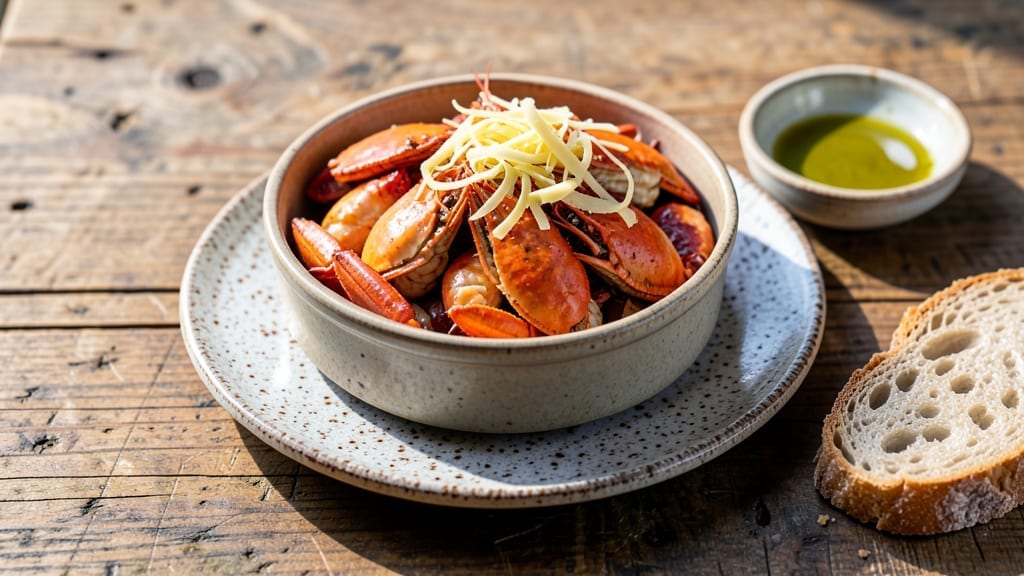
This crab steamer pot recipe turns a simple seafood dinner into a restaurant-worthy experience with fragrant lemon-ginger steam. The key is balancing bold aromatics—fresh ginger, scallions, and star anise—with just enough lemon to brighten the broth without overpowering the crab’s natural sweetness.
I’ve perfected this method for both live and pre-cooked crabs, ensuring tender meat every time while keeping prep under 20 minutes.
What sets this recipe apart is the multi-layered flavor infusion that happens while the crab steams. The ginger and scallions release their essential oils into the broth, while the star anise adds a subtle licorice note that complements the seafood beautifully.
The lemon not only enhances the aroma but also keeps the crab from absorbing too much of the broth’s saltiness, preserving its delicate sweetness. This technique works equally well for snow crab legs, king crab clusters, or even smaller crabs like Dungeness.
By the time you serve this dish, you’ll have perfectly tender crab with a delicate pink hue, infused with the bright, citrusy aroma of the steaming liquid. The broth reduces to a fragrant sauce that can be drizzled over each serving, adding another layer of flavor.
Served with steamed jasmine rice and quick-pickled vegetables, this becomes a complete, elegant meal that feels special without requiring hours in the kitchen. The best part? The entire process happens in one pot, minimizing cleanup and maximizing flavor.
Whether you’re hosting a seafood dinner or simply craving a luxurious meal at home, this crab steamer pot recipe delivers professional-quality results with minimal effort. The secret lies in the precise balance of aromatics and the proper steaming technique—both of which I’ll walk you through step by step.
Let’s get started on creating a dish that will have everyone asking for seconds.
Ingredients for crab steamer pot
Balanced aromatics and seafood magic in one pot—just 14 ingredients for restaurant-style crab.
| Ingredient | Amount | Notes |
|---|---|---|
| Live or Cooked Crab 🦀 | 1 ½ lb | Snow crab legs preferred, shells on |
| Fresh Ginger Root 🌿 | 2 tbsp | Finely grated, organic preferred |
| Scallions 🧅 | ¼ cup | White and green parts, sliced thin |
| Star Anise 🌟 | 2 whole | Whole pods for infusion |
| Lemon Juice 🍋 | ½ cup | Freshly squeezed, no pulp |
| Jasmine Rice 🍚 | 1 cup | Uncooked, for serving |
| Water 💧 | 4 cups | Filtered preferred |
| Sea Salt 🧂 | 1 tsp | Kosher or fine grain |
| White Wine 🍷 | ½ cup | Dry, like Sauvignon Blanc |
| Vegetable Oil 🫒 | 1 tbsp | For pot coating |
| Fresh Cilantro 🌿 | ¼ cup | Chopped, for garnish |
| Red Chili Flakes 🌶️ | ½ tsp | Optional for heat |
| Black Peppercorns 🌶️ | ¼ tsp | Crushed lightly |
| Soy Sauce 🥢 | 1 tbsp | For finishing drizzle |
The crab is the star, so prioritize quality. Whole snow crab legs from a trusted seafood market (like Whole Foods or Trader Joe’s) have the best flavor and texture. Look for vibrant, slightly glossy shells—this indicates freshness. If using pre-cooked crab, opt for frozen clusters from Costco or Seafood Market brands, as they’re less likely to be pre-brined. The ginger should be freshly grated (organic preferred) for maximum aroma—pre-grated loses potency quickly. Star anise is key for that subtle licorice note; grab it from the international aisle if your store carries it.
No star anise? 1 tsp ground cinnamon approximates the depth, though it won’t be identical. Substitute white wine with extra-dry sparkling wine or dry vermouth for more complexity. Fresh ginger too pungent? 1 tbsp ginger juice from a bottle works in a pinch, though it lacks the same bright flavor. For scallions, use green onions or leeks if needed, but the white parts are essential for that clean, sharp note. The cilantro is purely for garnish—skip it if you dislike the flavor, but it adds a fresh finish that ties everything together.
Steamed crab keeps best in the fridge for 2 days, though it’s ideal to serve immediately. Store the broth separately in an airtight container—it reduces beautifully into a fragrant sauce. The rice reheats well, but add a splash of water when warming to prevent drying. For leftovers, portion the crab into containers with a small amount of broth to keep it moist. The broth freezes for 3 months and makes an excellent base for future soups or sauces—just thaw and simmer to reduce.
Why You’ll Love This Recipe
- Here’s what sold me: the way lemon juice and fresh ginger cut through the richness of the crab, leaving you with something ridiculously fresh. Star anise adds this subtle, warm depth—like a whisper of Chinese takeout—but the scallions? They turn it into a bright, herbaceous punch. One bite and you’ll forget it’s “just” crab.
- I’ll be real: star anise and ginger are cheap, and they make this dish feel luxurious without breaking the bank. Use live crab for a splurge, or cooked crab for a budget night—either way, you’re left with minimal scraps and maximum flavor. The pot itself? Doubles as a rice steamer or veggie cooker. Talk about efficient.
Step-by-step instructions for crab steamer pot
Here’s the method for creating a fragrant, lemon-ginger infused crab dish that delivers restaurant-quality results.
Prepare the Steaming Base
Heat a large steamer pot or wok over medium-high heat until hot. Add 1 tablespoon vegetable oil and swirl to coat the bottom evenly. This creates a light barrier that prevents the infusion from sticking and burns during steaming.
Add the 2 whole star anise and 2 tablespoons fresh ginger root to the pot. Toast for 30 seconds until you can smell the aromatic oils releasing—this builds the flavor foundation. Immediately pour in the 0.5 cup white wine and 0.5 cup lemon juice, letting it simmer for 1 minute to reduce slightly. The wine’s acidity balances the ginger’s heat while the star anise adds subtle licorice notes.
Assemble the Steaming Basket
Place the 1.5 lb live or cooked crab (shells on for snow crab) in a heatproof steaming basket or colander that fits snugly over the pot. Arrange the crab legs in a single layer if possible—this ensures even exposure to the steam. If using pre-cooked crab, pat it dry with paper towels first to prevent excess moisture from diluting the infusion.
Add 0.25 cup scallions (white and green parts) and 0.25 teaspoon crushed black peppercorns to the basket. The scallions contribute a fresh, oniony brightness that cuts through the richness of the crab, while the peppercorns add subtle warmth. Position the basket over the pot, ensuring it doesn’t touch the liquid below.
Steam to Perfect Doneness
Cover the pot tightly with a lid and steam over medium-high heat for 8-10 minutes if using live crab, or 6-8 minutes for pre-cooked crab. You’ll know it’s done when the crab shells turn bright orange and the meat releases easily from the shell with gentle pressure. For live crab, the shells should open slightly at the joints—this indicates proper cooking.
During the last 2 minutes of steaming, add 1 teaspoon sea salt and 0.5 teaspoon red chili flakes directly to the pot’s liquid. The salt enhances the crab’s natural sweetness, while the chili flakes introduce a gentle heat that lingers on the palate. Let the crab rest in the basket for 2 minutes after removing from heat—this allows the juices to redistribute and prevents overcooking.
Finish and Serve
Transfer the steamed crab to a serving platter and drizzle with 1 tablespoon soy sauce warmed in a small saucepan for 30 seconds. The soy sauce adds umami depth and ties all the flavors together. Garnish with 0.25 cup chopped fresh cilantro and the remaining 0.25 cup scallions for a pop of color and freshness.
Serve immediately with 1 cup cooked jasmine rice on the side. The rice absorbs the remaining infusion from the pot, creating a fragrant bed that complements the crab’s sweetness. Each bite should deliver a balance of ginger’s zing, lemon’s brightness, and the crab’s natural sweetness—with a subtle warmth from the chili flakes.
Pro Tips For Making Crab Steamer Pot
- STEAM CRAB FAST: If using live crab, shock them in ice water for 10 minutes first—it stuns them so they release less ammonia and cook more evenly. I learned this the hard way after a batch tasted funky from struggling crabs.
- SLICE GINGER THIN: Skip the grating—thinly slice the ginger (about 1/8-inch) so it infuses the broth without turning it into mush. Sounds weird, but it works: the flavor stays bright, not bitter.
- DON’T BOIL DRY: Keep the water level high enough to cover the crab legs but not so deep it dilutes the broth. I used to rush this and end up with watery, flavorless steam—now I add a splash of extra water halfway through.
- ADD LEMON LAST: Squeeze the lemon juice in the final 2 minutes of steaming, not at the start. The acid cuts through the richness and brightens the crab, but too early and it’ll turn the broth cloudy. (Your future self will thank you.)
Serving suggestions for leftovers
Rice Pairings
Steamed jasmine rice is the classic partner for this crab dish—its delicate floral aroma and slightly sticky texture soak up the fragrant infusion beautifully. Cook 1 cup uncooked jasmine rice in 1.5 cups water with a pinch of salt, then fluff with a fork before serving.
For extra luxury, mix in 1 tablespoon toasted sesame oil and a sprinkle of furikake seasoning after cooking. 🍚
Looking for variety? Try black rice for a striking presentation—its nutty flavor and deep color contrast perfectly with the crab’s pink hue. Or opt for short-grain sushi rice cooked with a touch of mirin for a sweeter, more cohesive bite.
Both options elevate the dish while maintaining the same elegant simplicity.
Vegetable Sides
Quick-pickled vegetables add a refreshing crunch and bright acidity that cuts through the richness. Toss 1 cup shredded cabbage and ½ cup julienned carrots with 2 tbsp rice vinegar, 1 tsp sugar, and ½ tsp salt for 15 minutes before serving.
The tangy crunch balances the crab’s sweetness beautifully. 🥬
For a heartier side, serve blistered shishito peppers sautéed in 1 tbsp sesame oil with a pinch of flaky salt. Their mild heat and crisp texture provide a perfect contrast.
Alternatively, steamed bok choy with a drizzle of chili oil adds a bold, savory element that complements the dish’s aromatic profile.
Broth Sauce
The reduced steaming liquid transforms into a fragrant sauce that drizzled over rice or crab adds another layer of depth. After steaming, transfer the liquid to a small saucepan and simmer uncovered over medium heat for 5-7 minutes until reduced by half.
Strain out the star anise and ginger, then finish with 1 tsp soy sauce and a squeeze of lemon. 💫
Use this sauce to glaze the crab before serving or pour it over rice for an instant flavor boost. For extra richness, whisk in 1 tsp melted butter—the contrast of fat and umami elevates every bite.
Store leftovers in an airtight container for up to 3 days—it reheats beautifully as a quick soup base.
Garnish Ideas
Fresh cilantro and scallions are must-haves for color and freshness, but don’t stop there. Add toasted sesame seeds for nutty crunch or thinly sliced serrano peppers for a subtle kick. For a tropical twist, sprinkle with toasted coconut flakes and a pinch of lime zest. 🌿
For a restaurant-worthy finish, drizzle with chili crisp or sriracha mayo—just 1 tbsp mayo mixed with ½ tsp sriracha adds a creamy, spicy contrast. A few drops of truffle oil (about ½ tsp) bring an earthy sophistication that pairs surprisingly well with seafood.
Beverage Pairings
A crisp Sauvignon Blanc from New Zealand or a dry Riesling from Germany cuts through the dish’s richness with bright acidity. The citrus notes in these wines mirror the lemon in the recipe, creating a harmonious balance. 🍷
For beer lovers, a Japanese junmai sake or a wheat beer like Blue Moon offers a clean, refreshing contrast. Avoid heavy ales or stouts—they’ll overpower the delicate flavors. A chilled sparkling water with a splash of tonic water and lemon wedge also works beautifully for a non-alcoholic option.
Nutrition facts
Frequently asked questions
Can I use pre-cooked crab instead of live crab in this recipe?
The recipe works beautifully with both! Pre-cooked crab needs 6-8 minutes of steaming to re-infuse with the fragrant aromatics, while live crab requires 8-10 minutes for proper cooking. Just pat pre-cooked crab dry first to prevent excess moisture from diluting the infusion.
What’s the best way to store leftovers?
Store the steamed crab in an airtight container with a small amount of the reduced broth to keep it moist. It keeps well in the fridge for 2 days and freezes for 3 months. The broth can be frozen separately and reheated as a quick soup base. Always reheat gently to preserve texture.
How do I adjust the recipe for a larger group?
Double all ingredients proportionally, including the crab (3 lbs), water (8 cups), and aromatics. Use a larger steamer pot or steam in batches if needed. The key is maintaining the same ratio of crab to liquid—about 1.5 cups liquid per pound of crab ensures proper steaming.
Can I substitute star anise if I don’t have it?
Yes! Use 1 tsp ground cinnamon for warmth or ½ tsp fennel seeds for an anise-like flavor. Skip it entirely if needed—the dish will still taste great, just with slightly different depth. The ginger and lemon provide enough brightness without it.
Why did my crab turn rubbery instead of tender?
Oversteaming is the most likely cause. Crab cooks quickly—live crab should never exceed 10 minutes total. Also, ensure your pot has enough water (about 1.5 cups per pound of crab) and that the lid is sealed tightly. Resting the crab for 2 minutes after steaming helps redistribute juices.

- Braised Beef Short Ribs Recipe: Crock Pot Fall-Off-Bone Magic in 6 Hours - November 1, 2026
- Crock Pot Cocoa Recipe: Velvety Warmth With Hidden Spice Magic - November 1, 2026
- White Queso Crock Pot Recipe: Ultra-Smooth Melt Without the Grain - November 1, 2026