
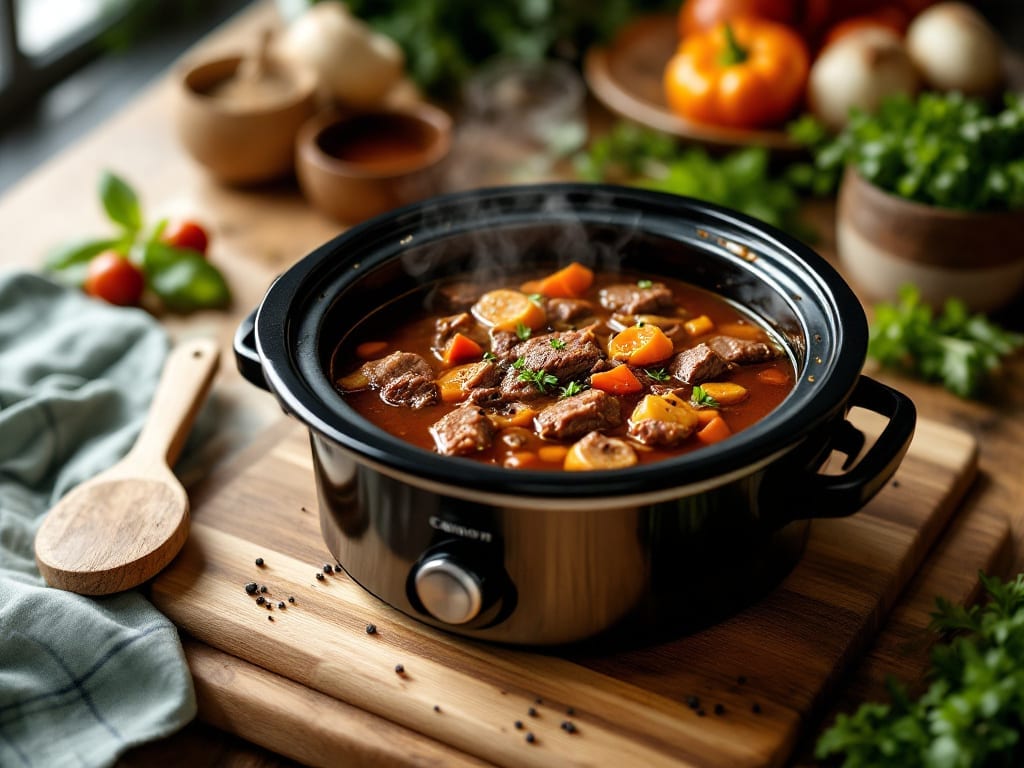
Creating crock pot beef broth transforms simple ingredients into a deeply flavorful foundation for soups, stews, and sauces—all with minimal effort. The slow cooker extracts rich umami from bones and aromatics over 6 hours, delivering a result that rivals store-bought but tastes infinitely better.
I developed this method after realizing most recipes either undercook or overcomplicate the process, so I focused on simplicity without sacrificing depth.
The beauty of this approach lies in its hands-off nature: toss in bones, herbs, and vegetables, then let the crock pot work its magic. Unlike stovetop methods that require constant attention, this recipe builds flavor steadily without burning or sticking.
The result is a golden, aromatic broth with layers of savory complexity that elevate any dish it touches—think of it as liquid seasoning for your pantry.
What makes this broth exceptional is the balance of ingredients: beef bones provide collagen for richness, while vegetables and herbs infuse subtle sweetness and earthiness. The slow cooker’s gentle heat extracts every nuance, creating a versatile base that works in everything from ramen to braises.
Plus, it freezes beautifully for future use, making it a kitchen essential.
Ready to make broth that tastes like it simmered all day? Here’s exactly how to achieve restaurant-quality depth in your own kitchen—no advanced skills required.
Ingredients for crock pot beef broth
Six aromatic ingredients and eight cups of water transform into restaurant-quality beef broth.
| Ingredient | Amount | Notes |
|---|---|---|
| Beef Bones 🦴 | 2 lb | Knee or knuckle bones preferred |
| Yellow Onions 🧅 | 1 whole | Quartered, skin on for color |
| Carrots 🥕 | 4 whole | Scrubbed, cut into 2-inch chunks |
| Celery Stalks 🌿 | 4 whole | Cut into 2-inch pieces, leafy ends trimmed |
| Garlic Cloves 🧄 | 6 cloves | Smashed, skins left on |
| Fresh Parsley Stems 🌿 | 1 bunch | Tied with twine for easy removal |
| Fresh Thyme Sprigs 🌿 | 4 whole | Stems left intact for infusion |
| Fresh Bay Leaves 🍃 | 2 whole | Standard dried equivalent |
| Black Peppercorns 🌶️ | 1 tbsp | Crushed lightly in mortar |
| Kosher Salt 🧂 | 1 tsp | Diamond Crystal preferred |
| Apple Cider Vinegar 🍎 | 2 tbsp | Brightens flavor profile |
| Cold Water 💧 | 8 cups | Room temperature preferred |
The bones form the broth’s foundation—knee or knuckle bones yield maximum collagen and marrow for richness. Local butchers often sell these at a fraction of grocery store prices, and they keep in the freezer for up to 6 months. Avoid marrow bones unless you specifically want a fattier broth. For best results, roast the bones at 400°F for 20 minutes before adding to the crock pot to deepen the Maillard reaction. The vegetables should be organic when possible to avoid bitterness from pesticide residue, though conventional works in a pinch. Trader Joe’s consistently carries high-quality organic carrots and celery at reasonable prices.
No fresh herbs? Dried thyme at one-third the amount works, though fresh infuses more complexity. Substitute 1 tbsp dried parsley if needed, but fresh stems create a more elegant presentation. Out of bay leaves? 1 tsp dried bay leaf powder suffices, though texture differs. The apple cider vinegar can be swapped for white vinegar or lemon juice, but it adds a subtle tang that enhances umami. For a lighter broth, reduce water to 6 cups, but 8 cups ensures full coverage of bones and vegetables. If using pre-cut vegetables, rinse thoroughly to remove any preservatives.
This broth develops deeper flavor with time—6 hours on low yields optimal results, though 8 hours on low or 4 hours on high works for quicker preparation. Strain through a fine-mesh sieve lined with cheesecloth for maximum clarity. Store in airtight containers in the refrigerator for up to 5 days or freeze in 1-cup portions for 6 months. The fat solidifies beautifully when chilled, making it easy to separate if desired. For a richer finish, whisk in 1 tbsp cold butter before serving, or reserve some broth to deglaze the crock pot for extra flavor.
Why You’ll Love This Recipe
- Dump-and-Go Magic: I swear, the hardest part is peeling those carrots—then it’s just set it and forget it. No stirring, no skimming, no hovering over a stove. The crock pot does all the work while I sip my coffee or watch a show. (Yes, even on a Tuesday night.)
- Deep Umami Bomb: That first sip? Chef’s kiss. The beef bones melt into rich, gelatinous goodness, while the onions and celery sweeten into a caramelized base. Garlic cloves? They turn into fragrant gold—no burning, just pure, layered flavor. It’s the kind of broth that makes you pause mid-slurp and think, “Wait, I made this?”
- Pantry-to-Pot Flexibility: This isn’t just soup starter—it’s the backbone of meals. Freeze batches for future ramen, braises, or even gravy. Need a quick weeknight dinner? Toss in rice and veggies. Hosting? Double the batch and serve it in bread bowls. It’s my go-to for lazy days and fancy dinners.
- Budget Goldmine: Beef bones are cheap, and one pot yields days of flavor. I’ve stretched this into stews, risottos, and even dumpling broths—always better than store-bought. Honestly, the only cost is time, and the crock pot saves me hours compared to simmering on the stove. (My wallet and my back thank me.)
Step-by-step instructions for crock pot beef broth
Here’s the method for extracting maximum flavor from your bones and vegetables.
Prepare and Layer Ingredients in the Crock Pot
Begin by placing the 2 lb beef bones in the bottom of your crock pot. These will form the foundation of your broth, releasing collagen and gelatin as they simmer. Arrange them in a single layer so they have maximum exposure to the liquid.
Next, add the 1 whole yellow onions (previously quartered with skin on) and the 4 whole carrots (cut into 2-inch chunks). The onion skin contributes color and depth, while the carrots add natural sweetness. Distribute them evenly around the bones, ensuring they don’t overlap completely.
Add the 4 whole celery stalks (cut into 2-inch pieces) and the 6 cloves garlic (smashed with skins on). These aromatic vegetables form the classic “mirepoix” base that builds flavor complexity. The celery provides earthy notes, while the garlic delivers that essential umami punch.
Add Herbs, Spices, and Acid for Flavor Development
Tie the 1 bunch fresh parsley stems with kitchen twine to create a bouquet garni for easy removal later. Add this along with the 4 whole fresh thyme sprigs and 2 whole fresh bay leaves to the crock pot. These herbs infuse subtle but essential flavors without overpowering the broth.
Sprinkle the 1 tbsp black peppercorns (lightly crushed) and 1 tsp kosher salt evenly over the vegetables. The peppercorns add warmth and complexity, while the salt enhances all the flavors. Pour in the 2 tbsp apple cider vinegar, which helps extract deeper flavors from the bones and vegetables by breaking down proteins.
Finally, pour in the 8 cups cold water (room temperature preferred). The water should cover all ingredients by about 1 inch. This liquid volume ensures proper extraction while allowing for evaporation during cooking.
Cook on Low Heat for Maximum Flavor Extraction
Place the lid on the crock pot and cook on low heat for 6 hours. This long, slow cooking time is crucial for extracting maximum gelatin and collagen from the bones, which creates that rich, velvety texture characteristic of great beef broth. Avoid the temptation to increase the heat—gentle cooking prevents cloudiness and ensures clean flavor.
After 3 hours, check the liquid level and add 1 more cup of hot water if needed to maintain adequate coverage. This prevents the ingredients from drying out and ensures continuous flavor extraction. The broth should develop a deep amber color and rich aroma as it cooks.
Strain and Finish the Broth
After the cooking time is complete, carefully remove the bouquet garni and discard it. Strain the broth through a fine-mesh sieve or cheesecloth-lined colander into a clean pot or bowl. This removes all solids while preserving the beautiful color and rich flavor you’ve built.
Taste the broth and adjust seasoning if needed. You may need to add a pinch more kosher salt or a splash of apple cider vinegar to balance the flavors. The broth should be rich, savory, and well-seasoned with no bitter aftertaste.
For best results, use the broth immediately or refrigerate it in airtight containers. It will keep in the refrigerator for up to 5 days or can be frozen for 3 months. This broth forms the perfect base for soups, sauces, and braising liquids.
Pro Tips For Making Crock Pot Beef Broth
- Char the Bones First: I learned this the hard way—skipping the sear means flavor gets stuck in the pot instead of dissolving into the broth. Brown the beef bones in a hot skillet for 3-4 minutes per side until deeply caramelized. The Maillard reaction here isn’t just for looks; it’s where the rich, meaty depth comes from.
- Chop the Aromatics Coarse: Tiny diced onions and celery turn to mush and cloud the broth. Instead, leave the onion quarters whole (peeled), cut carrots into 2-inch chunks, and slice celery into 3-inch lengths. They’ll soften but stay recognizable, so you’re not straining out a pulp.
- Skip the Overfilling: Crock pots lose heat when packed too tight, and broth won’t simmer properly. Fill the pot no more than halfway with bones and veggies—leave room for liquid to slosh around. I used to cram it all in, and the results were weak and watery.
- Add Vinegar Early: Sounds weird, but it works: Stir in ¼ cup apple cider vinegar with the cold water. It helps pull collagen from the bones faster, giving you a richer broth in half the time. (Yes, even if you’re impatient like me.)
Serving suggestions for this recipe
Soup Base Essentials
This beef broth is the ultimate foundation for hearty soups like beef barley or French onion. For beef barley, simmer 1 cup pearl barley directly in the broth for 45-60 minutes until tender. Add chopped mushrooms and a splash of dry sherry for depth.
For French onion, caramelize 3 large onions in butter until deep golden, then deglaze with ½ cup red wine before adding broth and beef slices. 🥘
Sauce Elevations
Transform this broth into a pan sauce for steak or roasted chicken. Deglaze your pan with ½ cup broth, reduce by half, then whisk in 1 tbsp cold butter and a pinch of fresh thyme.
For gravy, blend 2 tbsp cornstarch with ¼ cup cold water, stir into simmering broth until thickened, then finish with Worcestershire sauce.
Braising Magic
Use it to braise tough cuts like chuck roast or short ribs. Sear the meat first, then add broth to cover by 1 inch. Simmer covered for 3-4 hours until fork-tender.
For short ribs, add honey and soy sauce during the last 30 minutes for a glaze. The broth’s richness keeps meat incredibly juicy. 🍖
Rice & Grains
Cook jasmine rice or wild rice blend directly in the broth for infused flavor. For every 1 cup dry rice, use 2 cups broth (instead of water). Add a bay leaf while cooking, then remove before serving.
For risotto, use the broth to gradually deglaze the pan while stirring in arborio rice and parmesan cheese.
Garnish & Finish
Brighten any dish with fresh parsley or chives, or add a swirl of crème fraîche for richness. For umami depth, stir in 1 tsp fish sauce or a splash of Miso paste.
A drizzle of truffle oil (just ½ tsp) adds luxurious earthiness. Always taste first—these finishes should enhance, not overpower. ✨
Global Adaptations
Turn it into pho broth by adding star anise, cinnamon stick, and ginger. For Italian-style minestrone, blend in cannellini beans, zucchini, and kale.
A Mexican-style pozole version calls for hominy, chiles, and lime juice. Each adaptation starts with the same rich base but transforms into something entirely new. 🌎
Nutrition facts
Frequently asked questions
Why does this recipe use cold water instead of hot?
Cold water prevents immediate flavor release from the bones and vegetables, allowing for gradual extraction over time. This creates a cleaner, more concentrated broth with deeper umami. Hot water would cause rapid flavor loss and potential cloudiness. The slow cooker gently heats everything to the perfect temperature for maximum gelatin release.
Can I use beef marrow bones instead of knuckle bones?
Yes, but expect a richer, fattier broth with more pronounced beef flavor. Marrow bones add luxurious depth but may require straining through cheesecloth to remove excess fat. For a lighter broth, stick with knuckle or knee bones. The collagen content will still be excellent in either case.
What if my crock pot broth turns cloudy?
Cloudiness usually means the broth cooked too quickly or wasn’t strained properly. For a clear broth, strain through cheesecloth-lined fine-mesh sieve after cooking. If using high heat, switch to low for the final 2 hours to prevent this. The flavor won’t suffer—just the appearance.
How can I make this broth vegetarian?
Replace beef bones with mushroom stems, carrot tops, and celery ends (soaked in water for 30 minutes first). Add 1 tbsp soy sauce or miso paste for umami depth. Simmer for 8 hours on low to extract maximum flavor. The result won’t match beef broth’s richness but works well for vegetarian dishes.
What’s the best way to store leftover broth?
Cool the broth completely before transferring to airtight containers. It keeps in the fridge for 5 days or freezes beautifully for 6 months. For freezing, portion into 1-cup ice cube trays—perfect for adding to recipes later. The fat solidifies when chilled, making it easy to skim off if desired.

- Baked Potatoes in Crock Pot Recipe: Buttery Interiors and Crispy Top Magic - November 1, 2026
- Braised Beef Short Ribs Recipe: Crock Pot Fall-Off-Bone Magic in 6 Hours - November 1, 2026
- Crock Pot Cocoa Recipe: Velvety Warmth With Hidden Spice Magic - November 1, 2026