
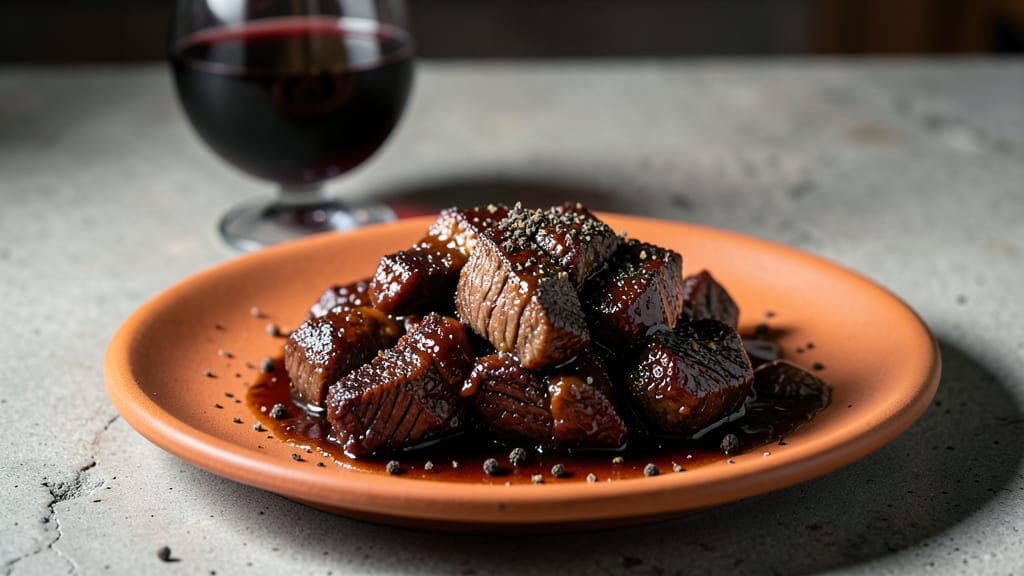
Transforming tough beef into melt-in-your-mouth tenderness has never been easier than with this crock pot boeuf bourguignon recipe, where rich red wine and aromatic herbs work their magic over 6 hours of slow cooking.
The beauty of this adaptation lies in preserving the dish’s classic French elegance while letting your slow cooker do the heavy lifting—no stove-side babysitting required. My version keeps the deep, caramelized flavors and velvety sauce that make this dish a restaurant favorite, just with less effort.
What sets this recipe apart is the two-step searing technique—first browning the beef in batches for maximum flavor development, then deglazing the pan to capture every last bit of fond before transferring everything to the crock pot.
This method delivers restaurant-quality results without requiring you to stand over a stove for hours. The slow cooker’s gentle heat allows the wine to reduce naturally, intensifying its depth while tenderizing the beef until it practically falls apart.
By the time you’re ready to serve, you’ll have a deeply aromatic, wine-braised beef swimming in a sauce so rich it coats every forkful. The combination of tender beef, caramelized onions, mushrooms, and herbs creates a dish that’s equally impressive for dinner parties or comforting weeknight meals.
The best part? The aroma alone will have everyone gathering around the table, eager for their first taste.
Serve this classic with crusty bread to soak up every last drop of that luxurious sauce, or pair it with mashed potatoes for a hearty winter meal.
The slow cooker version maintains all the traditional elements while making the process simpler—proof that even French classics can be adapted for modern convenience. Let’s get started on creating your perfect boeuf bourguignon.
Ingredients for crock pot boeuf bourguignon
Six aromatic herbs, two bold wines, and one tough cut of beef transform into restaurant-worthy tenderness.
| Ingredient | Amount | Notes |
|---|---|---|
| Beef Chuck Roast 🥩 | 2 ½ lb | Cut into 1.5-inch cubes |
| Yellow Onions 🧅 | 2 whole | Thickly sliced, about 2 cups |
| Cremini Mushrooms 🍄 | 16 oz | Whole, halved if large |
| Garlic Cloves 🧄 | 6 cloves | Peeled, smashed slightly |
| Dry Red Wine 🍷 | 1 ½ cups | Bold variety like Cabernet |
| Beef Broth 💧 | 1 ½ cups | Low-sodium preferred |
| Tomato Paste 🍅 | 2 tbsp | Smooth, not chunky |
| Fresh Thyme 🌿 | 1 tbsp | Leaves only, chopped |
| Fresh Rosemary 🌿 | 1 tbsp | Needles only, chopped |
| Bay Leaves 🍃 | 2 whole | Dried, standard size |
| All-Purpose Flour 🌾 | 2 tbsp | For browning beef |
| Olive Oil 🫒 | 2 tbsp | Extra-virgin for richness |
| Salt 🧂 | 1 ½ tsp | Diamond Crystal preferred |
| Ground Black Pepper 🌶️ | 1 tsp | Freshly cracked |
| Unsalted Butter 🧈 | 2 tbsp | Cold, cubed for finishing |
The beef is non-negotiable here—chuck roast delivers the perfect balance of marbling and connective tissue for slow-cooked tenderness. Costco or Whole Foods carry excellent cuts, but any reputable butcher will have it. Look for vibrant red color and visible fat marbling—this ensures juiciness. If you’re buying a whole roast, ask for it to be cut into 1.5-inch cubes at the store to save time. The mushrooms? Cremini or baby bella work best—their meaty texture holds up beautifully. Avoid pre-sliced mushrooms; they oxidize fast and lose flavor. For the wine, Cabernet Sauvignon or Merlot are ideal—their bold tannins stand up to the beef. If you’re using a cheaper bottle, decant it for 30 minutes to soften the edges.
No red wine? Substitute beef broth with 1 tbsp balsamic vinegar—it mimics the depth. Fresh thyme and rosemary are ideal, but dried works at one-third the amount. If you’re out of tomato paste, 1 tbsp ketchup plus 1 tsp sugar gets you close. The flour is crucial for browning the beef—it creates a crust that locks in juices. If you’re avoiding gluten, cornstarch works too. For the butter, European-style unsalted like Plugrá or Miyoko’s adds richness. The olive oil should be extra-virgin with peppery notes—none of that bland supermarket stuff. And trust me on the cold butter cubes at the end—they melt into the sauce and add a luxurious finish.
This dish tastes even better the next day, so make a double batch if you’re feeding a crowd. The sauce thickens as it sits, so add a splash of wine or broth if it gets too heavy. Store in an airtight container for 4-5 days in the fridge, or freeze for 3 months. To reheat, warm on low in the crock pot with a splash of water—never microwave. The aroma alone will have your whole house gathering. For serving, crusty baguette slices are mandatory. They soak up the sauce like sponges, and the contrast with the tender beef is pure magic.
Why You’ll Love This Recipe
- Hands-Off Magic: I swear by this recipe when I’ve got better things to do than stand at the stove. Toss in the beef, onions, and mushrooms, pour in that red wine, and let the crock pot do its thing—no flipping, no stirring, just perfect fall-apart tenderness by dinner.
- Wine-Infused Richness: That dry red wine? It’s not just for show. It melts into the beef, turning tough chuck roast into something so tender and deeply flavorful, you’ll forget it’s a slow cooker dish. The mushrooms soak up the sauce like sponges, and the garlic? Oh, it’s there—warm, earthy, and impossible to resist.
- Weeknight to Holiday: Between us, this is my secret weapon for busy nights and impressing guests. Same recipe, same effort—whether it’s a Tuesday or Thanksgiving. Serve it over mashed potatoes for a cozy meal or with crusty bread to soak up every last drop of that wine-braised sauce.
- Leftovers That Don’t Suck: Honestly, I make this just because the leftovers are better than day-old takeout. The flavors deepen overnight, and reheating? Just a splash of water, a few minutes on low—no dry, sad beef here. Plus, it’s cheap enough to feed a crowd without breaking the bank.
Step-by-step instructions for slow-cooked wine-braised beef
Here’s the method that delivers restaurant-quality depth with minimal effort.
Sear the Beef Chuck Roast for Maximum Flavor
Heat a large skillet over medium-high heat until it’s hot enough to sizzle when you add the 2.5 lb beef chuck roast cut into 1.5-inch cubes. Add 2 tablespoons olive oil and let it shimmer for 30 seconds before adding the beef in batches—don’t overcrowd the pan.
Sear the beef for 3-4 minutes per side until deeply browned with a crust forming. This step creates the flavor foundation through the Maillard reaction. Transfer the seared beef to your slow cooker as you work. If the beef releases easily from the pan, it’s ready. If it sticks, wait another 30 seconds before attempting to flip.
While the beef sears, combine 2 tablespoons all-purpose flour with 1.5 teaspoons salt and 1 teaspoon ground black pepper in a small bowl. This mixture will help thicken the sauce later, so don’t skip it. Once the beef is seared, lightly coat each piece with the flour mixture, shaking off any excess. The flour will help create a richer sauce as it cooks.
Build the Aromatic Base in the Slow Cooker
In the same skillet you used for searing, add 2 whole yellow onions thickly sliced and cook for 5 minutes until softened and beginning to caramelize. Add the 16 oz cremini mushrooms, halved if large, and cook for another 4 minutes until they release their moisture and begin to brown. This step develops the deep, earthy flavors that define boeuf bourguignon.
Transfer the onions and mushrooms to the slow cooker with the seared beef. Add 6 peeled garlic cloves, smashed slightly, along with 1 tablespoon fresh thyme leaves, 1 tablespoon fresh rosemary needles, and 2 whole bay leaves. Pour in 1.5 cups dry red wine and scrape up any browned bits from the bottom of the skillet—these bits are packed with flavor and should be incorporated into the sauce.
Here’s the thing—don’t rush this step. Let the wine simmer in the slow cooker for 5 minutes on high heat to allow the alcohol to cook off slightly. This reduces the sharpness of the wine and lets its deeper flavors emerge. The mixture should smell rich and complex, a sign that the flavors are melding beautifully.
Simmer the Braise for Deep Flavor Development
Add 1.5 cups beef broth and 2 tablespoons tomato paste to the slow cooker. Stir gently to combine, making sure the beef is fully submerged in the liquid. This ensures even cooking and prevents the beef from drying out. Place the lid on the slow cooker and cook on low heat for 6 hours.
This long, slow cook time is what transforms tough beef into tender, fork-friendly slices. The collagen in the beef breaks down, creating a rich, velvety sauce. I know it’s tempting to check on it frequently, but resist the urge—every time you lift the lid, you lose heat and moisture, extending the cooking time. Trust the process and let it work its magic.
About 1 hour before the cooking time is up, add 2 tablespoons cold, cubed unsalted butter to the slow cooker. The butter will melt into the sauce, adding richness and helping to emulsify the sauce for a silky texture. Stir gently to distribute the butter evenly. The sauce should now be thick and glossy, clinging beautifully to the beef.
Finish and Serve with Perfect Texture
Once the cooking time is complete, carefully remove the beef from the slow cooker and transfer it to a plate. Skim any excess fat from the surface of the sauce, leaving about 1 tablespoon for flavor—this fat is what gives the dish its luxurious mouthfeel. Return the beef to the slow cooker and let it sit for 5 minutes to absorb any remaining sauce.
Taste the sauce and adjust the seasoning if needed. You might need a pinch more salt or a crack of black pepper to bring out the flavors. The sauce should be rich, slightly tangy from the wine, and deeply aromatic from the herbs and mushrooms. Serve the beef and sauce immediately over mashed potatoes, crusty bread, or egg noodles to soak up every last bit of that incredible sauce.
Each bite should deliver tender, melt-in-your-mouth beef with a sauce that coats your palate in layers of wine, herbs, and umami. This is the kind of dish that tastes even better the next day, so consider making extra for leftovers—it reheats beautifully and continues to develop in flavor.
Pro Tips For Making Crock Pot Boeuf Bourguignon
- Sear the Beef First: I learned this the hard way—skipping the sear means flavorless beef. Pat the chuck roast dry, then brown it in a hot skillet with oil before transferring to the crock pot. The crust locks in juices and adds depth that slow cooking alone can’t match.
- Slice Onions Thinly: Thick onion slices stay tough and watery. Cut them into ¼-inch half-moons so they soften evenly and blend into the sauce. No one wants to bite into a chewy onion after hours of cooking—trust me.
- Deglaze with Wine Early: Don’t pour the wine in at the end—add it with the mushrooms and garlic right after searing. The alcohol evaporates faster at the start, leaving richer flavor behind. (Yes, even if you’re impatient like me.)
- Shred, Don’t Slice, the Beef: After cooking, pull the beef apart with two forks instead of slicing it. The fibers stay intact, soaking up the sauce better and making every bite more tender. It’s a little messy, but the texture is worth it.
Essential equipment for great crock pot boeuf bourguignon
Slow Cooker Selection
Your crock pot choice matters more than you might think. For this recipe, I recommend a 6-quart slow cooker with a stoneware insert—like the Hamilton Beach 65100—because it distributes heat evenly and holds enough liquid for proper braising.
Avoid small 3-4 quart models; they won’t accommodate the beef and sauce properly. If you have a programmable model (like the Instant Pot Duo Crisp), set it to “low” for consistent 200°F heat throughout the 6-hour cook. 🌡️
Essential Skillet
A 12-inch cast iron skillet is non-negotiable for searing the beef—it retains heat better than stainless steel and develops that coveted crust through the Maillard reaction. I use a Lodge Pre-Seasoned Cast Iron Skillet because it’s pre-seasoned and ready to go.
If you don’t have cast iron, a heavy stainless steel skillet (like All-Clad) works, but you’ll need to preheat it longer to reach the same temperature. Avoid non-stick; it won’t get hot enough for proper browning. 🔥
Deglazing Tools
You’ll need a wooden spoon and a wire whisk for deglazing. The wooden spoon helps scrape up those flavor-packed browned bits (fond) from the skillet after searing, while the whisk ensures the wine and broth emulsify smoothly later.
I keep a Oxo Good Grips Wooden Spoon and Norpro Stainless Steel Whisk in my kitchen for this exact purpose. A metal spoon can scratch your skillet’s seasoning over time, so stick with wood. 🍷
Measuring Essentials
Precision matters with liquids like wine and broth. Use a liquid measuring cup (like Pyrex) for the 1.5 cups red wine and 1.5 cups beef broth—these measurements are critical for proper sauce consistency.
For dry ingredients, a scale (like the OXO Good Grips Stainless Steel Scale) ensures accuracy with the 2 tbsp flour and 2 tbsp tomato paste. If you don’t have a scale, use a spoon-and-level technique for dry ingredients to avoid packing. 📏
Butter Finishing
The final 2 tbsp cold butter cubes transform the sauce from good to restaurant-quality. Use European-style unsalted butter (like Plugrá or Miyoko’s) for its higher fat content and neutral flavor. Cube it yourself with a small chef’s knife—pre-cubed butter melts unevenly.
Keep the butter cold until the last hour to ensure it melts smoothly into the sauce, adding that silky finish. 🧈
Optional Upgrades
For next-level results, consider a meat thermometer (like ThermoWorks Thermapen) to check the beef’s internal temperature—it should reach 203°F for perfect tenderness. A fine-mesh strainer (like OXO Good Grips) helps remove herbs and bay leaves before serving if you prefer a smoother sauce.
And if you love crusty bread, a baguette slicer (like OXO Good Grips) gives you those perfect, even slices for serving. 🥖
Nutrition facts
Frequently asked questions
Can I use a different cut of beef instead of chuck roast?
While chuck roast is ideal for its marbling and tenderness, you can substitute with beef short ribs (add 1 extra hour of cooking) or chuck steak (cut into 1-inch cubes). Avoid lean cuts like sirloin—they won’t become tender enough.
What if I don’t have red wine? What’s the best substitute?
Use 1.5 cups beef broth plus 1 tbsp balsamic vinegar and 1 tsp Worcestershire sauce to mimic wine’s depth. For extra richness, add 1 tsp soy sauce. Avoid white wine—it lacks the bold tannins that balance the beef’s richness.
How do I know when the beef is tender enough?
The beef should be fork-tender and easily shred with a spoon. For precision, use a meat thermometer—it should reach 203°F in the thickest piece. If it’s still tough after 6 hours on low, cook 1 more hour on high. Never rush this step!
Can I make this dish ahead of time?
This dish tastes even better the next day! Let it cool completely, then refrigerate in an airtight container for up to 4 days. Reheat on low in the crock pot with 2 tbsp broth to loosen the sauce. The flavors deepen overnight, making it perfect for meal prep.
Why did my sauce turn out watery?
Watery sauce usually means the beef wasn’t fully submerged or the wine didn’t reduce enough. Next time, ensure the beef is fully covered by liquid and cook on high for 1 hour before switching to low. If needed, simmer uncovered for 10 minutes to thicken.

- Braised Beef Short Ribs Recipe: Crock Pot Fall-Off-Bone Magic in 6 Hours - November 1, 2026
- Crock Pot Cocoa Recipe: Velvety Warmth With Hidden Spice Magic - November 1, 2026
- White Queso Crock Pot Recipe: Ultra-Smooth Melt Without the Grain - November 1, 2026