
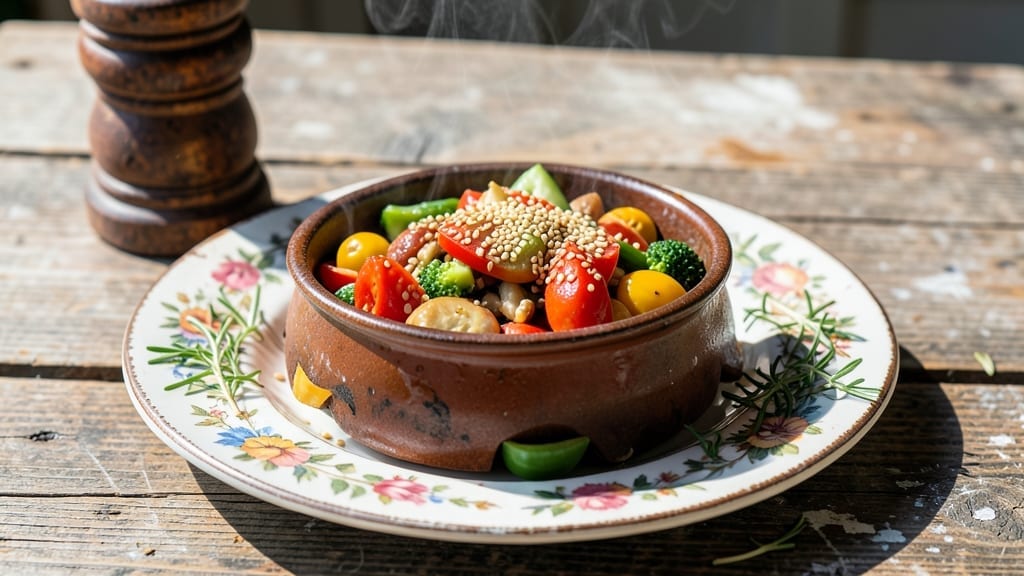
This dry hot pot recipe transforms a traditional Chinese dining experience into a simple, flavor-packed bowl you can make at home. The key lies in balancing spicy broth and silky noodles—no actual broth needed, just a dry stir-fry that delivers bold heat and tender textures.
I developed this version after realizing how much I missed the restaurant-style experience but wanted something faster and more adaptable.
The base starts with charred buns or crispy rice noodles, which soak up the savory-spicy sauce while keeping their satisfying bite.
You’ll stir-fry pre-cooked proteins like chicken or tofu alongside fresh vegetables, then finish with a quick toss of chili oil, soy sauce, and sesame seeds—the secret to that restaurant-quality depth.
This method works perfectly for weeknight dinners or meal prep, as everything can be prepped ahead and assembled in minutes.
What you end up with is a bowl that’s rich in umami, bright with spice, and comforting in every bite—the best of both worlds between traditional hot pot and quick stir-fry.
The noodles stay tender while absorbing the flavorful sauce, and the toppings add texture contrast. It’s the kind of dish that feels indulgent but doesn’t require hours in the kitchen. Let’s get cooking!
This recipe works equally well as a main course or light lunch, and you can customize it with your favorite proteins or vegetables. Whether you’re craving something spicy, savory, or both, this dry hot pot delivers bold flavors without the mess of traditional broth-based versions. Ready to try it?
Ingredients for dry hot pot
Pantry staples meet wok-friendly freshness—this dry hot pot delivers restaurant heat without the broth.
| Ingredient | Amount | Notes |
|---|---|---|
| Rice Noodles 🍜 | 8 oz | Thin or medium width preferred |
| Extra-Firm Tofu 🍲 | 1 lb | Pressed and cubed |
| Boneless Chicken Thighs 🍗 | 1 ½ lb | Cut into bite-sized pieces |
| Baby Bok Choy 🥬 | 4 whole | Quartered for even cooking |
| Shiitake Mushrooms 🍄 | 8 whole | Stemmed and sliced |
| Red Bell Pepper 🌶️ | 1 whole | Sliced into strips |
| Fresh Ginger 🧄 | 2 tbsp | Finely minced |
| Sesame Oil 🫒 | 1 tbsp | Toasted for aroma |
| Chili Oil 🌶️ | ½ cup | Store-bought or homemade |
| Light Soy Sauce 🥄 | ¼ cup | For umami depth |
| Dark Soy Sauce 🥄 | 1 tbsp | For color contrast |
| Sesame Seeds 🌰 | 1 tbsp | Toasted lightly |
| Green Onions 🧅 | 4 whole | Thinly sliced |
| Vegetable Oil 🫒 | ¼ cup | High smoke point |
| Garlic Cloves 🧄 | 4 cloves | Minced finely |
The tofu and chicken are your protein anchors. Extra-firm tofu from the refrigerated section at Whole Foods or Trader Joe’s holds up best—press it for 20 minutes before cubing. Chicken thighs stay juicier than breasts during stir-fry. For mushrooms, shiitake adds earthy depth, but cremini or oyster work too. Bok choy and bell pepper should be vibrant and crisp—avoid wilted greens. The rice noodles? Grab the vermicelli or pad thai variety—they soak up sauce better than thick rice sticks.
No chili oil? Mix 1 tbsp gochujang with 2 tbsp olive oil for a quick swap. Short on sesame oil? Avocado oil works in a pinch, but the toasted aroma is key. Subbing proteins? Shrimp or pork shoulder both work—just adjust cooking time. The ginger and garlic can be swapped for 1 tbsp ginger paste if fresh isn’t handy. For extra umami, add 1 tsp fish sauce to the soy mixture. And yes, you can use pre-chopped stir-fry veggies to save time—just check for freshness.
Prep ahead for maximum flavor. Store cooked proteins and veggies separately in the fridge for 3 days, or freeze for 1 month. Noodles? Keep them dry in a sealed bag for up to 2 weeks—they’ll crisp up perfectly when stir-fried. The sauce components (soy, chili oil) last 6 months unopened. Assemble bowls fresh for best texture, but the sauce keeps for 1 week in the fridge. Double the sauce if you’re meal prepping—it’s even better the next day.
Why You’ll Love This Recipe
- No Boil Needed: I swear by this trick—just soak the rice noodles for 10 minutes and they’re ready to go. No waiting for a giant pot of water, no soggy messes. That’s 15 minutes I’d rather spend eating than staring at a timer.
- Umami Bomb Combo: The chicken thighs stay juicy while the shiitake mushrooms soak up the broth’s depth, and that crispy tofu? It’s the perfect textural contrast. Honestly, every bite feels like a little flavor explosion without needing fancy sauces.
- Weeknight or Weekend Flex: Throw it together for a lazy Tuesday dinner or double the ingredients for a potluck. The bok choy wilts fast, so it’s great for last-minute guests—just toss it in at the end. (Yes, even on a Tuesday night.)
- Budget Meal, Big Payoff: Chicken thighs and tofu stretch further than you’d think, and mushrooms add richness without breaking the bank. I’ve made this for $12 and fed four people—leftovers reheat like a dream too. Practical, satisfying, and my wallet thanks me.
Step-by-step instructions for spicy broth and silky noodles
Here’s how to build this vibrant, one-bowl hot pot where every ingredient transforms into perfect harmony.
Prepare the Protein and Vegetable Base
Start by pressing the 1 lb extra-firm tofu to remove excess moisture, then cut it into 1-inch cubes. For the 1.5 lb boneless chicken thighs, trim any excess fat and cut into bite-sized pieces. The key here is even cooking – aim for uniform 1-inch cubes for both proteins. Set aside while you prep the vegetables.
Trim the stems from the 8 whole shiitake mushrooms and slice them into ¼-inch strips. Cut the 1 whole red bell pepper into ½-inch strips, then finely mince the 4 cloves garlic cloves and 2 tbsp fresh ginger. Quarter the 4 whole baby bok choy, keeping the leaves attached to stems for easier handling. Thinly slice the 4 whole green onions, separating the whites and greens for garnish. This precise preparation ensures everything cooks at the same rate in your hot pot.
Create the Spicy Oil Base
Heat the 0.25 cup vegetable oil in a large wok or deep skillet over medium-high heat until shimmering. Add the minced garlic and ginger, stirring constantly for 30 seconds until fragrant – you’ll smell that bright, aromatic punch. Immediately add the chicken pieces and sear for 3-4 minutes until lightly browned but not fully cooked through. Remove chicken with a slotted spoon and set aside.
In the same pan, add the tofu cubes and cook for 2 minutes until lightly golden. Remove and set aside with the chicken. Now comes the flavor foundation – add the 0.5 cup chili oil and 1 tbsp sesame oil, stirring to coat the pan. Let it bubble gently for 1 minute, then pour in the 0.25 cup light soy sauce and 1 tbsp dark soy sauce. The dark soy sauce will give that beautiful mahogany color while the light soy adds depth. Return all proteins to the pan and toss to coat evenly.
Build the Dynamic Broth
Add 2 cups of water to the pan and bring to a rolling boil. Immediately add the sliced shiitake mushrooms, red bell pepper strips, and quartered baby bok choy. Stir once to distribute everything, then let it boil vigorously for 3-4 minutes. The vegetables should soften but maintain their texture – you want them to be tender-crisp, not mushy. Here’s the thing – don’t overcrowd the pan. If needed, work in batches to maintain the boil.
While the vegetables cook, prepare the 8 oz rice noodles according to package instructions using hot water. The noodles should be silky but still slightly firm to the bite – they’ll finish cooking in the hot pot. Once the vegetables have reached perfect tenderness, add the drained noodles directly to the pan with the broth and proteins. Stir gently to combine, letting the noodles absorb the flavorful liquid for 1-2 minutes.
Finish with Aromatics and Serve
Remove the pan from heat and immediately stir in the 1 tbsp toasted sesame seeds and sliced green onions. The contrast of temperatures creates that perfect finishing touch – the sesame seeds will be warm and fragrant while the green onions add freshness. Taste and adjust seasoning if needed, adding a splash more light soy sauce if the broth needs more umami depth.
Divide the hot pot among 4 bowls, ensuring each serving gets an even distribution of proteins, vegetables, and noodles. The beauty of this dish is in the contrast – the silky noodles against the tender chicken and tofu, the crisp vegetables cutting through the rich broth, and the perfect balance of spicy, savory, and aromatic flavors in every bite. Serve immediately while everything is steaming hot and the noodles maintain their perfect texture.
Pro Tips For Making Dry Hot Pot
- PREP TOFU LIKE A TEXTURE HACK: Cut the extra-firm tofu into 1-inch cubes, then press it between paper towels for 10 minutes—this removes excess moisture and guarantees a crispy exterior when it hits the wok. I used to skip this, and my tofu would either turn soggy or stay bland.
- SEAR CHICKEN IN BATCHES: Don’t overcrowd the pan with chicken thighs—work in two batches if needed. High heat and space let the skin crisp properly, which locks in flavor and prevents steaming the meat. I learned this after a batch where the chicken came out greasy instead of golden.
- BLANCH BOK CHOY FIRST: Shock the baby bok choy in boiling water for 30 seconds, then ice bath it before adding to the pot. This keeps the leaves vibrant and slightly crisp, not limp. It’s a small step that makes the dish look (and taste) restaurant-quality.
- STIR-FRY SHIITAKES LAST: Add shiitake mushrooms in the final 30 seconds of cooking—they absorb oil fast and turn rubbery if overcooked. Slice them thick (¼-inch) so they hold up, and toss them in just until tender. I was skeptical until I tried it; they stay meaty and flavorful.
Dietary considerations for dry hot pot
Gluten-Free Adaptations
This dry hot pot recipe is naturally gluten-free if you use certified gluten-free soy sauces like Kikkoman Tamari or San-J Tamari. Both light and dark soy sauces in this recipe can be swapped 1:1 with their gluten-free tamari counterparts.
The rice noodles are typically gluten-free, but always check the package—brands like Rice Noodles by Lotus Foods are safe choices. For extra caution, I recommend toasting the noodles in the pan for 1-2 minutes before adding broth to prevent any potential cross-contamination from shared kitchen tools. 🌱
Vegetarian and Vegan Options
Skip the chicken and double the tofu for a fully vegetarian version—I like using extra-firm organic tofu from Nasoya or Wildwood for best texture. For vegan adaptations, ensure your chili oil is vegan (some contain fish sauce) and use vegan soy sauce like Annie Chun’s.
Add 1 tbsp nutritional yeast to the sauce for a cheesy umami boost. Mushrooms and bok choy provide plenty of protein, but you could also add edamame or baby corn for extra substance. 🍄
Spice Level Control
This recipe delivers heat from the chili oil, but you can easily adjust the spice level. For milder heat, reduce chili oil to ¼ cup and add 1 tsp honey or maple syrup to balance.
If you love spice, increase to ⅔ cup chili oil and add 1 tsp gochugaru (Korean red pepper flakes) for extra kick. I keep a bottle of Lao Gan Ma chili bean sauce on hand for an instant heat boost—just 1 tsp adds smoky depth and intensity. 🌶️
Low-Carb and Keto-Friendly
Replace the rice noodles with shirataki noodles (from Miracle Noodle) for a keto-friendly version. These noodles have near-zero carbs and absorb flavors beautifully. For extra protein, add shrimp or pork belly slices instead of chicken.
Reduce the soy sauce to 2 tbsp total (both light and dark combined) to lower sodium, and use coconut aminos for a gluten-free, lower-sodium alternative. The mushrooms and bok choy provide fiber while keeping carbs minimal. 🥦
Allergen-Friendly Swaps
For nut allergies, avoid sesame oil and replace it with avocado oil or grapeseed oil. Sesame seeds can also be omitted if needed. For egg allergies, this recipe is already safe—no eggs are used. If you’re allergic to shellfish, avoid shrimp substitutions and stick with chicken, tofu, or pork.
Always double-check labels on soy sauces and chili oils for hidden allergens like wheat or fish. I keep a Kikkoman Allergen-Free Soy Sauce on hand for extra peace of mind. 🚫
Meal Prep Considerations
This dish preps well for dietary restrictions if stored properly. Keep proteins and vegetables separate in airtight containers for up to 3 days in the fridge. Reheat components individually to 165°F before assembling bowls. For gluten-free meal prep, use separate utensils and cutting boards to avoid cross-contamination.
The sauce components (soy sauces, chili oil) can be pre-mixed in a jar and stored for 1 week. When reheating, add a splash of water to prevent drying out—especially important for gluten-free or low-carb versions where moisture retention matters. ⏰
Nutrition facts
Frequently asked questions
What makes this dry hot pot different from traditional broth-based hot pot?
This version eliminates the need for actual broth by creating bold flavors through stir-frying and spicy oil bases. Instead of dipping ingredients in hot liquid, you assemble everything in one pan where the noodles soak up the sauce directly. The key is balancing chili oil, soy sauces, and aromatic oils to mimic broth’s depth without the mess. It’s perfect for busy weeknights or when you want restaurant-style heat without the cleanup.
Can I make this recipe without rice noodles?
Swap rice noodles for udon, ramen, or even charred buns (like gao zi bao) for a different texture. For low-carb options, use shirataki noodles or zucchini noodles. The dish works best with something that absorbs sauce well—just adjust cooking times. If using thicker noodles, reduce stir-fry time by 1-2 minutes to prevent overcooking.
How do I adjust the spice level for kids or sensitive eaters?
Start by reducing chili oil to ¼ cup instead of ½ cup, then balance with 1 tsp honey or maple syrup. For milder heat, replace chili oil with extra sesame oil and add a pinch of sugar to offset spice. Serve the spicy sauce on the side so everyone can customize their bowl. The tofu and mushrooms naturally mellow the heat while still delivering umami.
Can I prep this recipe ahead of time?
Yes! Prep proteins and veggies 3 days ahead and store separately in airtight containers. Keep the sauce components (soy sauces, chili oil) in a jar for 1 week. Reheat everything individually to 165°F before assembling bowls. For best texture, stir-fry noodles fresh—pre-cooked noodles can turn mushy when reheated. The sauce actually improves overnight, so pre-mixing it is a great time-saver.
What if my tofu turns out too soft or rubbery?
Extra-firm tofu is key—press it for 20 minutes before cubing to remove excess water. For firmer texture, pan-fry tofu separately until golden before adding to the hot pot. If it’s still too soft, increase cooking time by 30 seconds and reduce water by ½ cup to concentrate flavors. Rubbing tofu with ½ tsp cornstarch before cooking also helps achieve a better texture.

- Baked Potatoes in Crock Pot Recipe: Buttery Interiors and Crispy Top Magic - November 1, 2026
- Braised Beef Short Ribs Recipe: Crock Pot Fall-Off-Bone Magic in 6 Hours - November 1, 2026
- Crock Pot Cocoa Recipe: Velvety Warmth With Hidden Spice Magic - November 1, 2026