
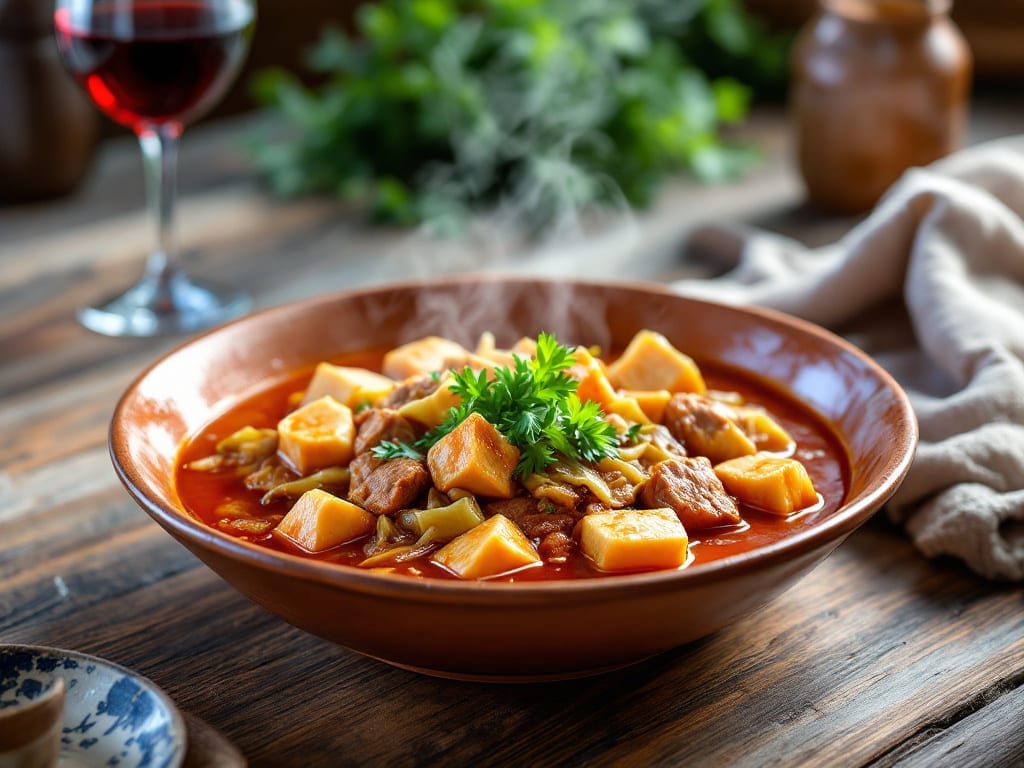
This Kimchi Jjigae Instant Pot recipe transforms bold, fermented flavors into a deeply satisfying stew that delivers tender pork, silky tofu, and a rich, spicy broth in under an hour.
The secret lies in balancing traditional Korean techniques with the Instant Pot’s precision—where pressure cooking melds the funky tang of kimchi with smoky gochujang for a depth you won’t find in quick versions.
I developed this after years of adapting Korean classics for modern kitchens, ensuring every bite delivers that perfect harmony of heat, umami, and texture.
The beauty of this method is how it preserves the stew’s integrity while cutting active cooking time to 30 minutes—no long simmering required.
You’ll start with a base of gochujang and kimchi, which form the stew’s soul, then build layers with pork belly that melts into tender slices and silken tofu that soaks up the spicy-sweet broth.
The Instant Pot’s pressure function creates a velvety texture that traditional stovetop versions often miss, while the sauté step caramelizes aromatics for that restaurant-quality depth.
What you’ll end up with is a steaming bowl of tender pork, glossy tofu, and kimchi chunks swimming in a glossy, slightly thickened sauce that’s neither too watery nor gluey. The aroma alone—smoky, garlicky, with a hint of fermented funk—will have everyone gathering around your table.
Each spoonful delivers a perfect balance: the tender pork gives way to the silky tofu, while the kimchi adds bright, tangy contrast that cuts through the richness. This is the kind of dish that improves with leftovers, as flavors deepen overnight.
Serve it over steamed rice with a side of banchan (quick-pickled vegetables or spinach) to soak up every last drop of that flavorful broth.
For those who prefer less heat, reduce the gochujang slightly or add a touch of sugar—though I find the traditional spice level perfectly balanced when paired with cool, creamy rice. The Instant Pot makes this version approachable for weeknights while delivering restaurant-quality results.
Let’s get cooking—your taste buds will thank you.
Ingredients for kimchi jjigae instant pot
Bold flavors start with these 15 ingredients—each playing a role in the perfect kimchi jjigae.
| Ingredient | Amount | Notes |
|---|---|---|
| Pork Belly 🥓 | 1 lb | Cut into 1-inch cubes |
| Silken Tofu 🧈 | 14 oz | Block or package, firm |
| Kimchi 🥬 | 2 cups | Well-fermented, chopped |
| Gochujang 🌶️ | ¼ cup | Korean red pepper paste |
| Instant Pot Rice 🍚 | 1 ½ cups | Cooked, unseasoned |
| Onion 🧅 | 1 whole | Yellow or white, sliced |
| Garlic Cloves 🧄 | 6 cloves | Minced, fresh preferred |
| Ginger 🌿 | 1 tbsp | Fresh, grated |
| Soy Sauce 🍶 | ¼ cup | Korean preferred |
| Sugar 🍚 | 1 tbsp | White or brown |
| Sesame Oil 🫒 | 1 tbsp | Toasted, for finishing |
| Green Onions 🧅 | 2 whole | Sliced, for garnish |
| Salt 🧂 | 1 tsp | Kosher or sea salt |
| Black Pepper 🌶️ | ¼ tsp | Freshly ground |
| Water 💧 | 1 cup | For Instant Pot |
The pork belly is non-negotiable—it delivers that melt-in-your-mouth texture. Look for thick-cut pieces at Whole Foods or your local Asian market, where they often sell it pre-cut. If you can’t find it, pork shoulder works too, but it won’t be as luxurious. The kimchi should be well-fermented (that funky smell is good!)—Manjang or Haein brands from Korean stores are ideal, but any good-quality kimchi will do. For gochujang, Dae Yang or Haein are the gold standards, but even the store-brand stuff adds depth. The silken tofu needs to be firm; Koyo or Nasoya packages are my go-tos—they hold up perfectly during pressure cooking.
No gochujang? Substitute 1 tbsp sriracha plus 1 tbsp tomato paste for heat, though it won’t have the same umami. Short on kimchi? Add 1 extra cup of sauerkraut plus 1 tsp apple cider vinegar for tang. The soy sauce can be swapped for coconut aminos if you’re avoiding soy, but the flavor will shift slightly. For the tofu, if you only have regular firm tofu, press it for 20 minutes first—it won’t be as silky, but it’ll still work. The sesame oil is just for finishing, so if you’re out, toasted sesame seeds sprinkled on top give a similar nutty note.
This stew tastes even better the next day—flavors meld overnight. Store leftovers in an airtight container in the fridge for 4-5 days, or freeze portions for 3 months. I always make a double batch because it disappears fast. The broth thickens as it cools, so add a splash of water if it feels too thick when reheating. Garnish with green onions and a drizzle of sesame oil right before serving—that’s where the magic happens.
Why You’ll Love This Recipe
- Here’s what sold me: this stew tastes better the next day. The flavors meld into this rich, tangy soup that’s perfect for lunchboxes or a quick reheat. My roommate now calls it “the freezer lifesaver” because we can portion it out and microwave it straight from the container.
- No-Chop Nightmare: I swear, this is the only stew where I can dump pre-chopped kimchi straight from the jar and still get that deep, funky flavor. The pork belly practically melts itself—just slice it thick, toss it in, and let the Instant Pot do the work while you scroll through your phone.
- Gochujang Magic: That first spoonful of gochujang paste is where it gets real. It’s not just spicy—it’s sweet, smoky, and sticky, clinging to the pork belly like a flavor hug. The silken tofu soaks it up like a sponge, turning every bite into a little explosion of umami and heat.
- Leftovers That Beg: Here’s what sold me: this stew tastes better the next day. The flavors meld into this rich, tangy soup that’s perfect for lunchboxes or a quick reheat. My roommate now calls it “the freezer lifesaver” because we can portion it out and microwave it straight from the container.
Step-by-step instructions for kimchi jjigae Instant Pot recipe
Here’s how to transform simple ingredients into a deeply flavorful, tender pork stew with perfect texture every time.
Prepare the Pork Belly for Maximum Tenderization
Cut the 1 lb pork belly into 1-inch cubes for even cooking. I like to score the surface lightly with a sharp knife—this helps the marinade penetrate deeper and creates more surface area for flavor absorption. Place the pork in a bowl and add 0.25 cup soy sauce, 0.25 cup gochujang, and 1 tbsp sugar. Mix thoroughly so every piece is coated, then let it marinate at room temperature for 15 minutes. This short marinade infuses the meat while keeping it tender rather than tough.
Here’s the thing—don’t skip the marinade. The combination of soy sauce and gochujang breaks down proteins just enough to ensure fork-tender results. If you’re short on time, even 10 minutes of marinating will help, but 15 minutes gives you that perfect balance of flavor and texture we’re aiming for.
Sauté the Aromatics to Build Deep Flavor
Set your Instant Pot to the “Sauté” function and add 1 tbsp sesame oil. Once hot, add the sliced 1 whole onion and cook for 3 minutes until softened and translucent. Add the 6 cloves minced garlic and 1 tbsp grated ginger, cooking for another 30 seconds until fragrant. This step is where the foundation of your stew’s flavor develops—don’t rush it.
Here’s what I do: I stir constantly during the first minute to prevent burning, then let the garlic and ginger cook undisturbed for the last 30 seconds. You’ll know they’re ready when the kitchen fills with that pungent, aromatic steam. If your garlic starts to brown too quickly, reduce the heat slightly—you want color, not char.
Combine All Ingredients and Pressure Cook
Add the marinated pork belly to the pot, followed by the 2 cups kimchi (chopped if needed), 1.5 cups cooked instant pot rice, 1 cup water, 1 tsp salt, and 0.25 tsp black pepper. Stir everything together until the pork is well-coated with the kimchi mixture. The rice helps thicken the stew naturally as it cooks, creating that perfect jjigae consistency.
Seal the Instant Pot and cook on High Pressure for 20 minutes. This cooking time ensures the pork becomes fork-tender while maintaining its moisture. Real talk: Your Instant Pot might vary slightly in pressure time, so start checking at the 18-minute mark for doneness. The pork should be easy to pierce with a fork and pull apart with minimal resistance.
Finish with Silken Tofu and Garnish
Once the cooking cycle completes, let the pressure release naturally for 10 minutes, then quick-release any remaining pressure. Gently stir in the 14 oz silken tofu (cut into cubes if using a block) and cook for another 2 minutes on the Sauté function. The tofu absorbs the rich stew flavors beautifully while adding a silky texture contrast.
Ladle the kimchi jjigae into bowls and garnish with sliced 2 whole green onions. Drizzle with an extra ½ teaspoon sesame oil if you want to emphasize the nutty aroma. Serve immediately while the pork is still piping hot and the tofu maintains its delicate texture. This is the moment that matters: the contrast of tender pork, spicy kimchi, and creamy tofu all coming together in one perfect bite.
Pro Tips For Making Kimchi Jjigae Instant Pot
- Sear the Pork First: The Instant Pot’s magic happens when you start with a quick sear—no need for a separate pan, but use the sauté function on high heat. Brown the pork belly in batches so it doesn’t steam; crispy edges make the stew richer, and you’ll taste the difference when it melts into the kimchi broth.
- Drain and Rinse Kimchi: Fresh kimchi is great, but the brine can make your stew watery. Drain it well, then rinse under cold water to remove excess salt and fermented liquid—especially if your kimchi is particularly juicy. This keeps the stew thick and balanced, not soggy.
- Add Tofu Last: Silken tofu gets mushy fast in hot liquid. Wait until the very end, just before serving, to drop it in—even 5 minutes too early will turn it into a sad, broken mass. If you’re serving family-style, keep it warm separately and add it when plating.
- Balance the Heat: Gochujang is potent, but kimchi’s saltiness can throw off the flavor. Taste the stew before adding rice and adjust with a splash of water or a pinch of sugar if it’s too sharp. I learned this the hard way—my first batch was a spicy-salty disaster until I fixed the ratio.
Common mistakes when making great kimchi jjigae instant pot
Overcooking the Pork
One of the biggest mistakes is overcooking the pork belly, which turns it chewy instead of tender. The 20-minute high-pressure cook time is ideal for 1-inch cubes, but any longer risks drying out the meat.
I’ve learned this the hard way—once I cooked it for 25 minutes and ended up with pork that resembled shoe leather. Always start checking for doneness at the 18-minute mark using a fork. 🔥
Skipping the Marinade
Some people rush through the marinating step, but this is where the magic happens. The soy sauce and gochujang combination tenderizes the pork while infusing it with flavor. I recommend marinating for at least 15 minutes—even 10 minutes makes a difference.
If you’re short on time, just make sure every piece is well-coated in the marinade before cooking.
Ignoring Natural Pressure Release
Quick-releasing the pressure immediately after cooking can cause the pork to toughen up. Always let it release naturally for 10 minutes first, then quick-release any remaining pressure. This gradual release helps the meat retain its moisture and tenderness.
I’ve seen many Instant Pot recipes skip this step, but trust me—your stew will thank you for it.
Using Low-Quality Kimchi
Not all kimchi is created equal. Using poorly fermented or overly watery kimchi will dilute the stew’s flavor. Look for well-fermented kimchi with a strong, funky aroma—Manjang or Haein brands are my top picks.
If your kimchi is too watery, drain it slightly before adding it to the pot. This ensures a richer, more concentrated flavor in your jjigae.
Adding Tofu Too Early
Silken tofu can get mushy if added during the pressure cooking phase. Always stir it in during the final 2 minutes on the Sauté function after the pressure release. This keeps the tofu silky and intact, adding that perfect creamy contrast to the rich stew.
I’ve ruined a few batches by adding it too early—don’t make the same mistake!
Overlooking the Rice Thickener
The 1.5 cups cooked rice in this recipe isn’t just a filler—it helps thicken the stew naturally as it cooks. Skipping it or using uncooked rice can result in a watery jjigae.
If you’re making this recipe without rice, add 1 tablespoon cornstarch mixed with 2 tablespoons water at the end to achieve the same consistency. 💡
Nutrition facts
Frequently asked questions
Can I make this kimchi jjigae without pork?
Swap the pork belly for 1 lb firm tofu or chicken thighs (cut into chunks). For tofu, press it for 20 minutes first to remove excess moisture. Chicken works beautifully—just increase pressure cook time to 15 minutes for tender results. The stew’s rich flavors will still shine with these alternatives!
How do I adjust the spice level?
Reduce heat by cutting the gochujang to 2 tablespoons and adding 1 teaspoon sugar to balance. For extra spice, add 1 teaspoon gochugaru (Korean red pepper flakes) during the sauté step. Always taste as you go—the stew’s spiciness builds as it cooks!
Can I make kimchi jjigae in a regular pot?
Yes! Simmer all ingredients in a heavy pot on low heat for 45-60 minutes after bringing to a boil. Stir occasionally and add 1/4 cup water if it gets too thick. The flavors will develop just as deeply, though the texture may be slightly less velvety than Instant Pot results.
Why did my kimchi jjigae turn out watery?
Watery stews often happen when using too much liquid or skipping the rice thickener. Next time, reduce water to 1/2 cup or stir in 1 tablespoon cornstarch mixed with 2 tablespoons water at the end. Also check your kimchi—drain excess liquid before adding if needed. The rice helps bind everything beautifully!
What are the best sides to serve with this?
Steamed white rice is essential, but also try quick-pickled cucumbers, steamed spinach (sigeumchi namul), or mandu (Korean dumplings). For a complete meal, add kimchi pancakes or grilled fish. The cool, fresh sides balance the rich, spicy stew perfectly!

- Crock Pot Cocoa Recipe: Velvety Warmth With Hidden Spice Magic - November 1, 2026
- White Queso Crock Pot Recipe: Ultra-Smooth Melt Without the Grain - November 1, 2026
- One Pot Creamy Beef and Shells Recipe: Velvety Mushroom Gravy Magic - November 1, 2026