
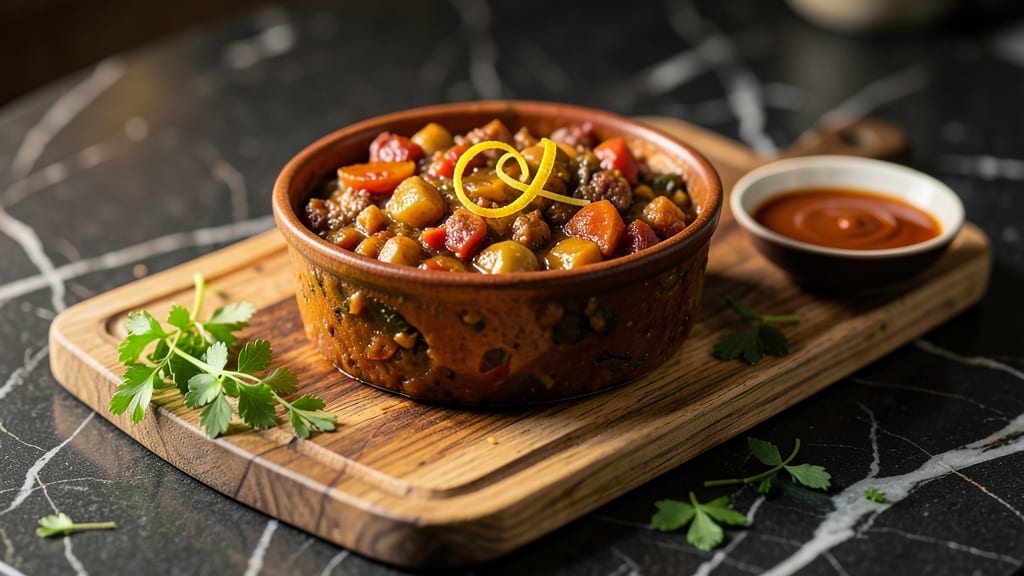
This Lancashire Hot Pot recipe delivers the ultimate slow-cooked comfort dish, where tender lamb and hearty vegetables meld into rich, savory perfection.
The traditional method—layering ingredients in a deep pot and letting them cook for hours—transforms simple ingredients into a meal that feels like a warm embrace on a chilly evening.
The secret lies in the slow-cooking process, which breaks down the lamb into melt-in-your-mouth tenderness while allowing the potatoes and onions to absorb all the juices.
Unlike quick meals, this dish rewards patience with layers of flavor that develop over time, creating a dish that’s both hearty and deeply satisfying.
By the time you serve it, you’ll have a steaming pot of golden-brown lamb, perfectly cooked potatoes, and a rich gravy that ties everything together. The aroma alone will fill your kitchen with warmth, making it the kind of meal that turns ordinary weeknights into something special.
Perfect for family dinners or cozy gatherings, this recipe brings the classic Lancashire tradition to your table with minimal effort but maximum reward. Let’s get started on creating this timeless comfort dish.
Ingredients for lancashire hot pot
Layered ingredients that transform simple cuts into melt-in-your-mouth comfort.
| Ingredient | Amount | Notes |
|---|---|---|
| Lamb Neck or Shoulder 🐑 | 2 ½ lb | Bone-in for best flavor |
| Russet Potatoes 🥔 | 3 lb | Large, waxy variety preferred |
| Yellow Onions 🧅 | 3 whole | Medium size, sliced thick |
| Carrots 🥕 | 4 whole | Medium, peeled and halved |
| Swede (Rutabaga) 🥕 | 1 whole | Medium size, peeled and sliced |
| Butter 🧈 | ½ cup | Unsalted, cold for browning |
| All-Purpose Flour 🌾 | ¼ cup | For gravy thickening |
| Beef Stock 💧 | 2 cups | High-quality, homemade preferred |
| Whole Milk 🥛 | 1 cup | Full-fat for richness |
| Diamond Crystal Kosher Salt 🧂 | 1 ½ tsp | For seasoning and layering |
| Ground Black Pepper 🌶️ | 1 tsp | Freshly cracked preferred |
| Fresh Thyme 🌿 | ¼ cup | Leaves only, chopped fine |
| Fresh Parsley 🌿 | ¼ cup | Chopped, for garnish |
The lamb is the foundation—bone-in neck or shoulder delivers unmatched depth of flavor. Local butchers often carry these cuts at better prices than supermarkets, and the bones contribute rich collagen to the gravy. For the potatoes, Russets hold their shape best during slow cooking, while Yukon Golds add creaminess if you prefer. Carrots and swede should be firm and vibrant—avoid any with soft spots, as they’ll turn mushy. The butter matters too: European-style unsalted (like Plugrá) has higher fat content, which helps create a luxurious gravy. If you can’t find it, Land O’Lakes works in a pinch, but render it slowly over low heat to avoid burning.
No beef stock? Chicken stock with a splash of Worcestershire sauce works well, though the flavor will be subtly different. Substituting dried thyme for fresh requires one-third the amount, but fresh is ideal—it brightens the dish without overpowering. For the swede, turnips can stand in, though they’ll have a slightly sharper bite. The flour is critical for gravy: Diamond Crystal kosher salt dissolves better than table salt, so if you’re using another brand, reduce the amount slightly. If you’re short on time, pre-sliced frozen vegetables (like Green Giant) can replace fresh, though they’ll release more moisture during cooking.
This dish improves with time—the longer it cooks, the richer the gravy. Store leftovers in the pot with a tight lid for up to 4 days, though the flavor peaks after 24 hours as the juices meld. For reheating, low and slow is key: cover with foil and warm at 300°F for 1-2 hours, stirring occasionally. The gravy can be thickened further by simmering uncovered for 5-10 minutes to evaporate excess liquid. Garnish with fresh parsley just before serving—it adds a bright contrast to the deep, savory flavors. Portion into individual pots for cozy family-style serving.
Why You’ll Love This Recipe
- One-Pot Magic: I swear by this recipe because it’s literally one pot—no chopping boards, no extra pans. Toss in the lamb, potatoes, swede, and veg, cover with water, and let it simmer. That’s it. Even my lazy Sundays feel productive after this.
- Rich, Deep Flavor: The lamb neck melts into tender, fall-off-the-bone goodness, while the swede and carrots soak up that savory broth like a sponge. Honestly, the first bite makes me forget I’m eating something “simple”—it’s ridiculously satisfying.
- Leftovers That Don’t Suck: Between us, most casseroles turn into sad, watery leftovers. Not this. The flavors only get better the next day, especially if you let it cool and reheat gently. I make a double batch just to have hearty lunches all week.
- Budget-Friendly Feast: Lamb neck is cheaper than cuts like shoulder, and the veggies stretch this into a full meal for four (or more, if you’re feeding hungry teens). It’s my go-to when I need to stretch a meal without sacrificing taste—no one ever complains when this comes out.
Step-by-step instructions for slow-cooked lamb hot pot
This method delivers rich, tender layers of lamb and vegetables baked to perfection in a single dish.
Prepare the Lamb and Root Vegetables
Preheat your oven to 375°F. Begin by trimming any excess fat from the 2.5 lb lamb neck or shoulder while leaving a thin layer for flavor. Cut the lamb into 2-inch chunks, ensuring each piece is roughly the same size for even cooking.
Peel and halve the 4 whole carrots lengthwise, then slice the 3 whole yellow onions into ½-inch thick rounds. Peel and slice the 1 whole swede (rutabaga) into ¼-inch thick rounds. Set aside the 3 lb russet potatoes whole for now—they’ll add structure to the top layer.
In a large Dutch oven or deep baking dish, arrange half of the lamb pieces in a single layer on the bottom. Nestle the sliced carrots, onions, and swede around the lamb, creating an even bed. Sprinkle with ½ teaspoon of the 1.5 tsp diamond crystal kosher salt and ½ teaspoon of the 1 tsp ground black pepper. Repeat with the remaining lamb and vegetables, finishing with the potatoes placed upright in the center, standing like soldiers.
Create the Gravy Base and Layer
In a separate bowl, melt the 0.5 cup butter over low heat in a saucepan. Once melted, whisk in the 0.25 cup all-purpose flour to form a roux. Cook for 2-3 minutes until the mixture turns a pale golden color—this ensures proper thickening without bitterness.
Gradually whisk in the 2 cups beef stock and 1 cup whole milk, stirring constantly to prevent lumps. Bring to a gentle simmer and cook for 5 minutes until the gravy thickens slightly. Remove from heat and stir in the 0.25 cup fresh thyme and remaining 1 tsp diamond crystal kosher salt and ½ tsp ground black pepper. Pour this rich gravy evenly over the layered lamb and vegetables in the Dutch oven.
The gravy should reach about halfway up the sides of the dish. This layering technique ensures every bite is infused with flavor while keeping the vegetables tender and the lamb succulent.
Bake to Golden Perfection
Cover the Dutch oven tightly with a lid or foil and transfer to the preheated oven. Bake for 2 hours at 375°F, then remove the lid and increase the heat to 400°F. Continue baking uncovered for an additional 30-45 minutes until the potatoes are tender when pierced with a knife and the top is golden brown.
Here’s the thing—don’t be tempted to peek or stir during the first 2 hours. The steam created by the tightly covered pot is what breaks down the connective tissue in the lamb, making it fall-apart tender. The final uncovered baking step allows the top to crisp slightly, adding texture contrast.
You’ll know it’s done when the potatoes yield easily to a fork and the lamb pulls apart with minimal resistance. The gravy should be thickened but still sauce-like, coating the bottom of the dish. If it’s too thick, whisk in 1-2 tablespoons of hot water to loosen it slightly.
Rest and Serve with Fresh Herbs
Remove the hot pot from the oven and let it rest for 15 minutes before serving. This resting period allows the juices to redistribute throughout the dish, ensuring each forkful is moist and flavorful. During this time, chop the 0.25 cup fresh parsley finely for garnish.
Serve the hot pot directly from the dish, using a large spoon to scoop up layers of lamb, vegetables, and gravy. The potatoes on top will be crispy outside and fluffy within, while the lamb remains tender and infused with the rich gravy. Garnish each serving with the chopped parsley for a pop of freshness and color.
This dish is best enjoyed immediately, straight from the oven, when the flavors are at their peak. The combination of tender lamb, caramelized vegetables, and velvety gravy creates a comforting, hearty meal that’s perfect for chilly evenings.
Pro Tips For Making Lancashire Hot Pot
- Brown the Lamb First: I learned this the hard way—skipping the sear means your lamb will stew instead of develop flavor. Get your pot smoking hot, pat the meat dry, and let it brown for 5-7 minutes on each side before adding anything else. That crust locks in moisture and keeps the meat tender while adding depth.
- Peel and Score the Swede: Swede (rutabaga) turns to mush if you don’t prep it right. Peel it first, then cut into even chunks and score the sides with a knife—just deep enough to let flavor penetrate without falling apart. (Yes, even if you’re impatient like me, resist the urge to skip this.)
- Layer Potatoes Last: After burning three batches, I finally figured out the order matters. Cook the lamb, onions, carrots, and swede for 20 minutes first, then add the potatoes on top. They’ll steam in the hot liquid and finish perfectly without turning to glue. (Your future self will thank you.)
- Finish with Butter and Salt: This isn’t the prettiest method, but it’s the tastiest: once everything’s tender, stir in a knob of cold butter and a pinch of salt. The butter melts into the hot pot, making the veggies silky and the lamb irresistibly rich. (I know, I know—but trust the process.)
Regional styles of lancashire hot pot
Traditional Lancashire Roots
The Lancashire Hot Pot originated in the Lancashire coal-mining regions of northern England, where miners needed hearty, slow-cooked meals to sustain them through long shifts. The dish was traditionally cooked in cast-iron hot pots placed directly on coal fires, allowing the heat to penetrate evenly.
This method created a dish where the lamb becomes fall-apart tender while the potatoes and vegetables absorb all the rich juices. The name “hot pot” comes from the steaming, bubbling pot that filled kitchens with warmth and aroma. 🌍
Yorkshire Variations
Just across the border in Yorkshire, a similar dish called Yorkshire Lamb Hot Pot exists, but with key differences. Yorkshire versions often include parsnips instead of swede and use more milk in the gravy, creating a creamier sauce.
The lamb is sometimes marinated overnight in buttermilk, adding a tangy brightness. Yorkshire cooks also prefer smaller, rounder potatoes placed on top to create a crispy crust. The overall flavor profile is slightly lighter but equally comforting.
Scottish Adaptations
In Scotland, particularly in the Highlands and Borders, the dish is known as Scottish Lamb Hot Pot and incorporates local ingredients like neeps (turnips) and tatties (potatoes). The Scottish version often uses lamb shank instead of neck, which adds even more gelatinous richness to the gravy.
A unique twist is the addition of whisky to the gravy base—just 1 tablespoon simmered into the stock adds depth without overpowering. The dish is traditionally served with oatcakes on the side, a nod to Scotland’s love of hearty grains.
Modern Twists
Today, chefs and home cooks are putting their own spin on the classic. Some replace lamb with venison for a gamey twist, while others add mushrooms or peppers for extra umami.
A popular modern adaptation is the “Hot Pot Pie”—a baked version with a puff pastry lid, creating a crispy topping. For vegetarians, mushroom and lentil hot pots use smoked paprika and soy sauce to mimic the depth of lamb.
The key remains the same: slow cooking to develop rich, layered flavors. 💡
Regional Gravy Secrets
Gravy is where regional styles truly shine. In Lancashire, the gravy is thick and robust, made with beef stock and a touch of vinegar for brightness. Yorkshire versions lean creamier, often incorporating butter and a splash of cream.
Scottish gravies are bolder, sometimes with a pinch of nutmeg or a dash of whisky. For an authentic Lancashire touch, I recommend using a mix of beef and lamb stock—this adds a meaty depth that’s hard to replicate with beef alone.
The secret? Simmer the gravy uncovered for the last 5 minutes to reduce it to a velvety consistency.
Serving Traditions
In Lancashire, hot pot is traditionally served family-style straight from the pot, with everyone using a large spoon to scoop up layers of lamb, potatoes, and gravy. The potatoes are often halved before serving to reveal their fluffy interiors.
In Scotland, it’s common to serve with buttery mashed tatties on the side, while Yorkshire families might add pickled onions for a tangy contrast. For an extra touch, sprinkle fresh parsley and a grating of nutmeg over the top—this adds freshness and warmth that balances the rich flavors. 🌟
Nutrition facts
Frequently asked questions
Can I make Lancashire Hot Pot with chicken instead of lamb?
The traditional recipe uses lamb for its rich, gamey flavor, but you can substitute with chicken thighs (bone-in, skin-on for best results). Use 4-5 chicken thighs instead of lamb, and reduce the cooking time by 20-30 minutes since chicken cooks faster. The gravy will be lighter, so add an extra 2 tablespoons of butter for richness.
Why does my Lancashire Hot Pot turn out watery?
Watery hot pot usually means the vegetables released too much moisture or the gravy wasn’t reduced enough. To fix this, always use waxy potatoes (like Russets) and slice onions/carrots thickly. For the gravy, simmer it uncovered for 5-10 extra minutes after baking to evaporate excess liquid. If needed, whisk in 1 tablespoon of cornstarch mixed with water to thicken it.
How long can I store leftovers?
Leftovers keep well in the pot (covered tightly) for up to 4 days in the refrigerator. The flavors actually improve after 24 hours as the juices meld! For reheating, warm at 300°F for 1-2 hours covered with foil, stirring occasionally. Avoid microwaving—it makes the potatoes rubbery. For longer storage, freeze portions for up to 3 months.
Can I make this in a slow cooker?
Layer the ingredients in your slow cooker (potatoes on top), then pour the gravy over. Cook on Low for 8 hours or High for 4-5 hours. The key difference: slow cookers can’t brown the top, so the potatoes won’t get crispy. For crispiness, transfer to a baking dish and broil for 5 minutes at the end. The lamb will still be tender, but the texture will differ slightly.
What’s the best way to serve this dish?
Traditionally served family-style straight from the pot, using large spoons to scoop up layers. For presentation, halve the potatoes to reveal their fluffy centers. Serve with crusty bread or oatcakes to soak up the gravy. A sprinkle of fresh parsley and grated nutmeg adds brightness. For extra richness, offer Dijon mustard on the side—it cuts through the lamb’s richness beautifully.

- Baked Potatoes in Crock Pot Recipe: Buttery Interiors and Crispy Top Magic - November 1, 2026
- Braised Beef Short Ribs Recipe: Crock Pot Fall-Off-Bone Magic in 6 Hours - November 1, 2026
- Crock Pot Cocoa Recipe: Velvety Warmth With Hidden Spice Magic - November 1, 2026