
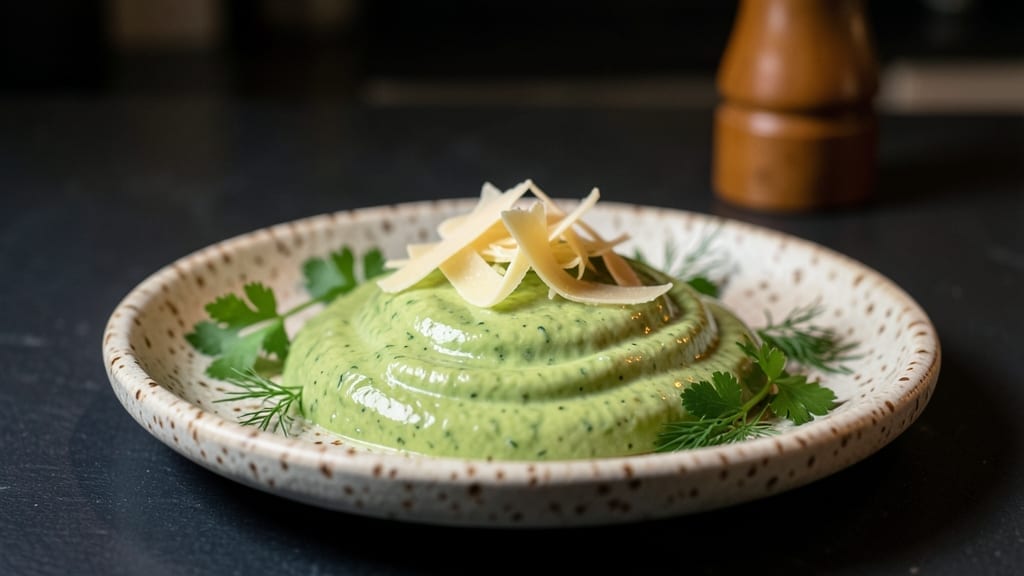
The Melting Pot Green Goddess Sauce transforms any dish into a herbaceous masterpiece with its velvety texture and vibrant flavor profile. This isn’t your basic green goddess—it’s a refined blend of fresh herbs, toasted walnuts, and bright citrus that elevates everything from grilled fish to crispy vegetables.
I developed this version after years of tweaking store-bought sauces, and the difference is undeniable: rich, balanced, and never overpowering.
What sets this sauce apart is the technique: toasting the walnuts and blending them with fresh herbs creates a nutty depth that complements the creamy base. The key ingredients—parsley, basil, lemon juice, and a touch of garlic—work together to deliver a sauce that’s both elegant and approachable.
Whether you’re drizzling it over seared scallops or mixing it into a grain bowl, this sauce brings restaurant-quality flavor to your home kitchen.
The result is a luscious, herb-infused sauce that’s creamy yet light, tangy yet smooth, and packed with texture from the toasted walnuts. It’s versatile enough for any meal but refined enough to feel special.
Plus, with just 10 minutes of prep and 5 simple ingredients, you’ll have a sauce that’s worth making again and again.
Store it in an airtight container for up to 5 days in the fridge, or freeze for longer shelf life. For a vegan adaptation, swap the mayo for cashew cream—it keeps the same luxurious texture without compromising flavor. This isn’t just a sauce; it’s a game-changer for your cooking repertoire.
Ingredients for melting pot green goddess sauce
Nine ingredients. One blend. Restaurant-quality herbaceous perfection in minutes.
| Ingredient | Amount | Notes |
|---|---|---|
| Fresh Flat-Leaf Parsley 🌿 | 1 ½ cups | Stems removed, tightly packed |
| Fresh Basil Leaves 🌿 | ½ cup | Bright green, no stems |
| Extra-Virgin Olive Oil 🫒 | ¾ cup | High-quality, fruity aroma |
| Toasted Walnuts 🥜 | ½ cup | Lightly browned, cooled |
| Fresh Lemon Juice 🍋 | ¼ cup | Strained for smooth texture |
| Garlic Cloves 🧄 | 3 cloves | Peeled, lightly toasted |
| Mayonnaise 🥛 | ¼ cup | High-quality, full-fat |
| Diamond Crystal Kosher Salt 🧂 | ½ tsp | Fine grain preferred |
| Freshly Ground Black Pepper 🌶️ | ¼ tsp | Cracked peppercorns |
| Ice Water 💧 | ¼ cup | Chilled, for thinning |
The herbs are non-negotiable—parsley and basil need to be vibrant, not wilted. Whole Foods or local farmers markets are your best bets for freshness. I always grab organic parsley from the bulk bins at Trader Joe’s—it stays bright longer. Toasting the walnuts in a dry pan until fragrant (about 5 minutes) unlocks their nutty depth. Skip this step, and you’ll miss the sauce’s signature texture. For the olive oil, California olive oils like Corto or Bertolli add fruity notes that elevate the sauce. The garlic should be freshly peeled and lightly toasted in the same pan as the walnuts—just until fragrant, not browned.
Out of walnuts? Toasted pecans or cashews work in a pinch, though the flavor shifts slightly. No mayo? Greek yogurt or cashew cream keeps it creamy without sacrificing texture. The sauce needs acidity—if you’re short on lemon, lime juice or white wine vinegar (start with 1 tbsp) bridges the gap. Fresh herbs wilt fast? Dried parsley or basil at half the amount gets you close, but the texture won’t be as lush. For a vegan twist, cashew cream replaces mayo seamlessly. The ice water is key—it thins the sauce to a perfect drizzle consistency without watering it down.
This sauce thrives in the fridge for 5 days if stored in an airtight container with a thin layer of olive oil on top to preserve freshness. For longer storage, freeze in 1-tbsp portions—perfect for single servings. Reheat gently in a saucepan over low heat, stirring in 1 tsp water per tablespoon to restore creaminess. I always make a double batch—one for immediate use, one to freeze for future meals. The flavor actually improves after 24 hours as the herbs mellow and meld with the oil.
Why You’ll Love This Recipe
- No-Brainer Blender Magic: I’ll be real—this sauce comes together in five minutes with a food processor. Just pulse the parsley, basil, walnuts, and lemon juice until it’s chunky but smooth, then drizzle in the olive oil. No straining, no fuss, and no fancy techniques—just good stuff.
- Herb-Packed Punch: That bright lemon juice cuts through the richness of the olive oil while the toasted walnuts add a nutty crunch. The parsley and basil? They’re like a green hug for your taste buds—fresh, vibrant, and impossible to resist. Honestly, it’s the kind of sauce that makes you want to eat everything in sight.
- Dresses Up Anything: Slather it on grilled chicken, toss it with pasta, or drizzle it over roasted veggies—this sauce works everywhere. I’ve even used it as a marinade for shrimp (yes, really). It’s my go-to for potlucks, picnics, or just because I’m craving something bright and herby.
- Leftovers That Don’t Quit: This sauce keeps like a champ in the fridge for up to a week, and it only gets better as the flavors meld. Plus, it’s budget-friendly—walnuts and herbs are cheaper than you’d think, and a little goes a long way. Between us, I’ve made a big batch and stretched it over three meals without breaking a sweat.
Step-by-step instructions for melting pot green goddess sauce
This herb-infused sauce comes together with simple technique and bold flavors.
Toast the Walnuts and Garlic
In a dry skillet over medium heat, toast the 0.5 cup toasted walnuts for 3-4 minutes until fragrant and lightly golden. Watch closely—they burn quickly. Immediately transfer to a plate to cool completely, then roughly chop them with a knife. This step adds nutty depth that balances the fresh herbs.
In the same skillet, add the 3 cloves garlic cloves and toast for 30 seconds until just golden and aromatic. Remove from heat immediately—they’ll continue cooking from residual heat. Let cool for 2 minutes before processing, as hot garlic can make the sauce separate later. The toasted walnuts and garlic form the flavor foundation of this sauce.
Process the Herb and Nut Base
In a food processor, combine the cooled toasted walnuts, 1.5 cups fresh flat-leaf parsley, and 0.5 cup fresh basil leaves. Pulse until the herbs are finely chopped but not paste-like—you want visible texture. Add the toasted garlic cloves and pulse just until combined. This creates a vibrant green base with proper body.
With the processor running, slowly drizzle in the 0.75 cup extra-virgin olive oil through the feed tube. Process until fully emulsified, scraping down the sides as needed. The mixture should look like a thick, vibrant green pesto. If it’s too thick after processing, add 1 tablespoon of ice water at a time until it reaches a smooth, spreadable consistency—this ensures the sauce clings beautifully to everything.
Incorporate the Creamy Components
Transfer the herb mixture to a mixing bowl. Add the 0.25 cup mayonnaise, 0.25 cup fresh lemon juice, 0.5 teaspoon diamond crystal kosher salt, and 0.25 teaspoon freshly ground black pepper. Using a silicone spatula, fold gently but thoroughly to combine. The mayonnaise adds luxurious creaminess while the lemon juice brightens the flavors and prevents the sauce from becoming too heavy.
Taste and adjust seasoning—this is where you can fine-tune. Add more lemon juice if it needs brightness, or a pinch more salt if the herbs need balancing. The sauce should be tangy, herby, and just slightly creamy. If it’s too thick after mixing, whisk in ice water 1 teaspoon at a time until it reaches a perfect drizzling consistency. This step ensures the sauce is versatile enough for dipping, drizzling, or tossing.
Rest and Serve
Cover the sauce and let it rest at room temperature for 15-20 minutes before serving. This resting period allows all the flavors to meld together seamlessly. The mayonnaise will fully incorporate, the lemon will mellow slightly, and the herbs will release their full aroma. This is especially important if you’re planning to store the sauce—resting prevents separation.
Serve immediately over grilled vegetables, as a dip for crusty bread, or drizzled over chilled seafood. For best results, use within 2 days when stored in an airtight container in the refrigerator. If it thickens slightly after refrigeration, simply whisk in 1-2 teaspoons of ice water to restore the perfect consistency. The sauce’s vibrant green color and herbaceous aroma will make any dish feel like a fresh garden celebration.
Pro Tips For Making Melting Pot Green Goddess Sauce
- TOAST WALNUTS LOW: I learned this the hard way—blasting walnuts in a hot pan turns them bitter fast. Instead, toast them in a dry skillet over medium-low heat, stirring constantly, until they’re golden and smell nutty (about 5-7 minutes). Pull them just before they darken—you want flavor, not smoke.
- PULSE HERBS IN BATCHES: Dumping all the parsley and basil into the food processor at once? You’ll end up with a watery mess. Pulse the herbs in two stages: first, chop them roughly, then add lemon juice and olive oil to emulsify. This keeps the texture bright and chunky—not a sad, slimy paste.
- SALT THE OIL FIRST: The sauce needs salt, but adding it at the end makes it taste flat. Instead, mix a pinch of flaky salt (or even a tiny bit of the finished sauce) into the olive oil before blending. This distributes flavor evenly and cuts through the acidity of the lemon juice.
- STRAIN IF YOU HATE CHEWING: Walnuts and herbs add texture, but if you’re serving this on delicate dishes (like grilled fish), strain the sauce through a fine-mesh sieve. No one will miss the bits, and your guests will focus on the creamy, tangy goodness instead of what’s stuck in their teeth.
Best sauces and condiments for this dish
Herb-Infused Pesto Twist
Swap out the walnuts for ½ cup toasted pine nuts or pecans to add a sweeter, buttery note that pairs beautifully with seafood. I’ve found that pine nuts from Italy (like Marca d’Oro) elevate the sauce’s elegance, while pecans bring a Southern charm.
Toast them until golden—about 2-3 minutes—and let them cool completely before blending. This variation works especially well with grilled shrimp or chilled lobster tails. 🌟
Vegan Cashew Cream
For a dairy-free version, replace the mayo with ½ cup cashew cream—blend 1 cup soaked raw cashews with ¼ cup water until ultra-smooth. This keeps the sauce’s luxurious texture while making it vegan. I also add 1 tbsp nutritional yeast for a cheesy depth.
The sauce will be slightly lighter but still clings perfectly to roasted vegetables or grain bowls. Store vegan versions in glass jars to avoid absorbing fridge odors.
Spicy Kick Addition
Add ½ tsp smoked paprika or 1 tsp hot sauce (like Cholula) for a smoky, spicy twist that’s perfect with grilled meats. I love this variation on smoked salmon or grilled chicken skewers.
For heat lovers, add 1-2 slices of fresh jalapeño (seeds removed) to the food processor with the herbs. The jalapeño adds a bright, fresh heat that balances the richness. 🌶️
Citrus Variations
Experiment with different citrus juices to change the sauce’s profile. Lime juice adds a tropical brightness (great with fish tacos), while orange juice brings a sweeter, Mediterranean touch (ideal for roasted vegetables).
For a tangy twist, mix ¼ cup lemon juice with 1 tbsp white wine vinegar). Always taste before serving—citrus can make or break the balance.
Nut-Free Option
Skip the nuts entirely and blend in 2 tbsp sunflower seeds (toasted for extra flavor) or 1 tbsp tahini for a nut-free version. This works surprisingly well and adds a subtle earthiness.
I’ve also had success with ½ cup cooked quinoa), which gives the sauce a grainy texture that’s still creamy. This adaptation is ideal for those with nut allergies but still crave that herbaceous richness.
Storage Hacks
Store the sauce in an airtight glass container with a thin layer of olive oil on top to preserve freshness. For longer storage, freeze in ice cube trays—just pop out a cube when needed for single servings.
Thawed sauce may thicken slightly; whisk in 1 tsp water to restore consistency. I always label my containers with the date to track freshness—this sauce tastes best within 5 days** in the fridge.
Nutrition facts
Frequently asked questions
Can I make this sauce without a food processor?
Use a sharp knife to finely chop the parsley, basil, and toasted walnuts until you achieve a paste-like consistency. Then, whisk everything together with the olive oil in a bowl until fully emulsified. It’ll take a bit more elbow grease, but the texture will still be delicious. For extra smoothness, pulse the chopped herbs in a mini food chopper first if available.
Why does my sauce look separated after refrigerating?
This usually happens if the sauce wasn’t rested properly or if the mayo and lemon juice weren’t fully incorporated. Whisk in 1 teaspoon of ice water at a time until smooth. For prevention, always let the sauce rest for 15-20 minutes before refrigerating, and avoid adding too much ice water during blending. The key is gentle folding after combining all ingredients.
What’s the best way to use leftover sauce?
This versatile sauce works perfectly as a dip for veggie sticks, a marinade for grilled fish, or a creamy dressing for salads. For extra flavor, mix it with 1 tablespoon of white wine vinegar before using. It also makes an excellent sandwich spread on ciabatta or a tangy topping for baked potatoes. Just give it a quick whisk to restore consistency if it thickens after storage.
Can I make this sauce ahead of time?
Yes! In fact, the flavors improve after 24 hours as the herbs mellow. Store it in an airtight container in the fridge for up to 5 days, or freeze in 1-tablespoon portions for single servings. For freezing, use ice cube trays—just pop out a cube when needed. Thawed sauce may thicken slightly, so whisk in 1 teaspoon of water to restore perfect drizzling consistency.
What if I don’t have fresh herbs?
Use dried herbs at half the amount (so 0.25 teaspoon dried parsley and 0.125 teaspoon dried basil), but the texture won’t be as vibrant. For best results, try to find frozen herbs—just thaw and drain them thoroughly before using. If you’re completely out of herbs, spinach or cilantro can work in a pinch, though the flavor will differ slightly.

- Baked Potatoes in Crock Pot Recipe: Buttery Interiors and Crispy Top Magic - November 1, 2026
- Braised Beef Short Ribs Recipe: Crock Pot Fall-Off-Bone Magic in 6 Hours - November 1, 2026
- Crock Pot Cocoa Recipe: Velvety Warmth With Hidden Spice Magic - November 1, 2026