
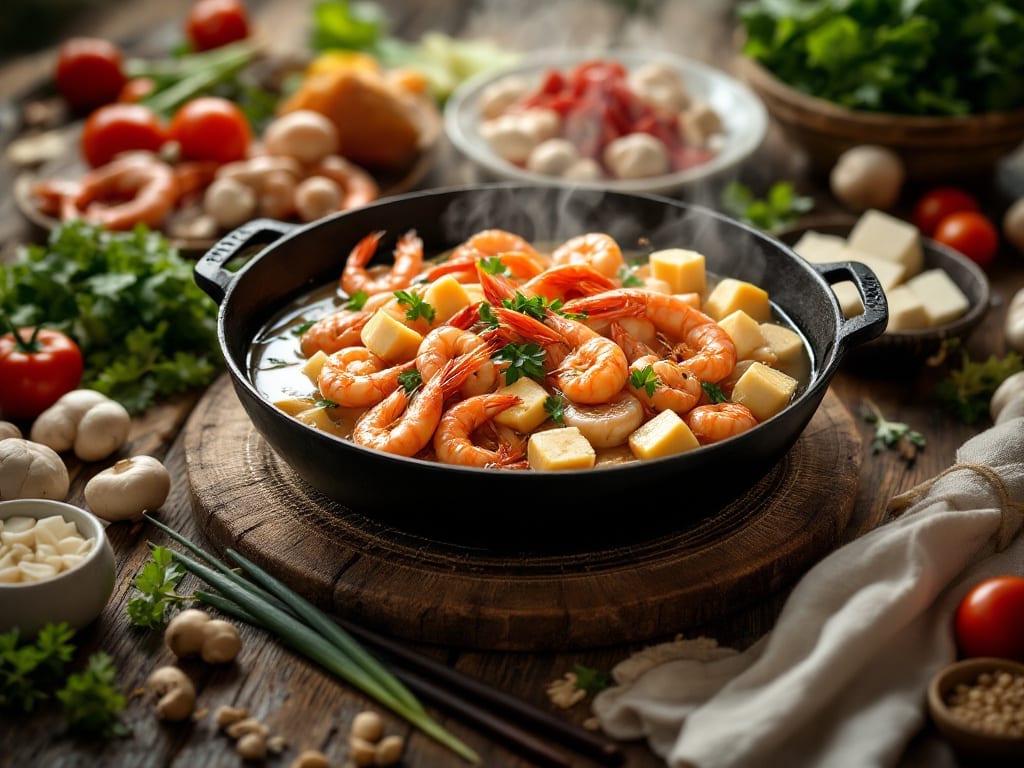
This seafood hot pot recipe transforms a simple simmer into a vibrant, flavorful centerpiece that brings the table together. The harmony of tender seafood, aromatic broth, and fresh vegetables creates a dish that’s both comforting and elegant—perfect for gatherings or a cozy night in.
I’ve refined this method over years, balancing traditional techniques with modern convenience to deliver restaurant-quality results at home.
The foundation lies in the broth, whether you choose a clear dashi, a rich miso base, or a spicy chili-infused version—each offers a distinct flavor profile that elevates the seafood.
Fresh ingredients like shrimp, scallops, and fish cook quickly in the simmering liquid, absorbing the broth’s depth while vegetables like bok choy and mushrooms add texture and color. The key is timing: blanching seafood first ensures it stays tender, while vegetables are added later to preserve their crispness.
What makes this dish truly special is the interactive experience—guests can customize their bowls with dipping sauces like spicy ponzu or soy-ginger, and the aroma alone fills the kitchen with warmth.
The result is a harmonious blend of textures and flavors, where every bite delivers a perfect balance of richness and freshness. This recipe isn’t just a meal; it’s a moment worth savoring.
Pair it with a crisp sake or a light herbal tea to complement the broth’s intensity, and serve with steamed rice to soak up every last drop. Whether you’re hosting a dinner party or treating yourself to a weeknight indulgence, this seafood hot pot delivers restaurant-quality comfort without the fuss.
Ingredients for seafood hot pot
Fourteen ingredients for a restaurant-worthy seafood hot pot that balances delicate flavors and bold textures.
| Ingredient | Amount | Notes |
|---|---|---|
| Large Shrimp (Peeled and Deveined) 🦐 | 1 ½ lb | Fresh or previously frozen, thawed |
| Scallops (Fresh or Frozen) 🐚 | 12 whole | Pat dry before cooking |
| White Fish Fillets (Cod or Halibut) 🐟 | 1 lb | Skinless, cut into 1-inch pieces |
| Bok Choy (Baby or Full Heads) 🥬 | 4 whole | Quartered lengthwise |
| Shiitake Mushrooms (Fresh) 🍄 | 8 whole | Stems removed, caps halved |
| Green Onions 🧅 | 6 whole | Cut into 1-inch pieces |
| Dashi Broth (Store-Bought or Homemade) 💧 | 4 cups | Clear or miso-based preferred |
| Soy Sauce (Low-Sodium) 🍶 | ½ cup | Kikkoman or Tamari preferred |
| Mirin (Sweet Rice Wine) 🍶 | ¼ cup | For balance and gloss |
| Sake (Dry) 🍶 | ¼ cup | For depth of flavor |
| Ginger (Fresh) 🧄 | 2 tbsp | Grated, aromatic |
| Garlic Cloves 🧄 | 4 cloves | Minced, pungent |
| Sesame Oil (Toasted) 🫒 | 1 tbsp | For finishing aroma |
| White Pepper (Freshly Ground) 🌶️ | ½ tsp | Subtle heat |
| Sea Salt 🧂 | 1 tsp | Diamond Crystal preferred |
The seafood selection is critical here—freshness cannot be compromised. For shrimp, seek out wild-caught Gulf or Pacific varieties at your local seafood market, where they’re typically sold on ice. Whole scallops should have a glossy sheen and firm texture; avoid any with a dull appearance or off-putting odor. White fish fillets like cod or halibut should be bright white with no fishy scent—ask your fishmonger for the freshest cuts available. If using frozen seafood, thaw overnight in the fridge to preserve texture. For the vegetables, bok choy should have crisp stems and vibrant green leaves, while shiitake mushrooms should be plump and firm to the touch. Whole Foods or Trader Joe’s are reliable sources for these ingredients, though specialty Asian markets often carry higher-quality options.
Substitutions are possible but require thoughtful adjustments. No scallops? Swap in clams or mussels, but reduce cooking time by half to prevent overcooking. Fresh dashi unavailable? A homemade version using kombu and bonito flakes works beautifully—simmer 1 cup kombu and 2 tbsp flakes in 4 cups water for 10 minutes. For the soy sauce, tamari is a gluten-free alternative, though Kikkoman remains the gold standard. Mirin can be replaced with 1 tbsp sugar plus 1 tbsp dry sake in a pinch, though the depth of flavor will differ slightly. Ginger and garlic can be swapped for 1 tbsp each of ginger paste and garlic powder, though fresh is always preferred for aromatic complexity. The sesame oil should be toasted—Kadoya or La Tourangelle are excellent brands for this purpose.
This dish reheats beautifully, though the seafood is best consumed fresh. Store leftovers in an airtight container in the fridge for up to 2 days, though the broth can last 3-4 days. For longer storage, freeze the broth separately in ice cube trays—these can be thawed and reheated as needed. The seafood and vegetables should be cooked fresh, but you can blanch the vegetables ahead of time and store them in the fridge for up to 24 hours before adding to the pot. Steamed rice is essential for soaking up the broth, and sake or herbal tea pairs perfectly to complement the dish’s umami richness. Leftovers make a fantastic lunch the next day—simply reheat the broth and add fresh seafood and vegetables.
Why You’ll Love This Recipe
- No Fuss, Big Payoff: I swear by this recipe when I’m too tired to chop much—just toss in pre-peeled shrimp, a handful of shiitake mushrooms (no need to slice them finely), and whatever fish is on sale. The bok choy wilts in minutes, so you’re basically done before the water even boils properly.
- Umami Bomb: Between the scallops caramelizing at the bottom of the pot and the shiitake mushrooms soaking up the broth, every spoonful tastes like a hug. Honestly, the fish fillets stay tender while the shrimp turn pink—it’s the kind of balance that makes you go back for seconds without trying.
- Weeknight to Dinner Party: Same pot, different vibes. Weeknights? Throw in a couple of shrimp and bok choy for a quick dinner. Hosting? Add extra scallops, a splash of white wine to the broth, and serve with crusty bread—suddenly, it’s fancy. My roommates still ask why I don’t make this more often.
- Leftovers That Don’t Suck: Most hot pot leftovers turn to sad mush, but not this one. The broth stays rich, and the fish and shrimp reheat like they’re fresh—just add a splash of water and a minute in the microwave. I’ll be real: I’ve eaten this for lunch the next two days and never gotten tired of it. Budget-friendly, too, since you can use whatever seafood’s cheapest at the market.
Step-by-step instructions for seafood hot pot
This method delivers a balanced harmony of umami-rich broth and delicate seafood—elevated by precise layering and timing.
Prepare the Aromatic Base
In a heavy-bottomed pot, combine the 4 cups dashi broth, 0.5 cup soy sauce, 0.25 cup mirin, and 0.25 cup sake. Bring to a gentle simmer over medium heat until small bubbles form around the edges. This ensures the broth develops depth without boiling over.
Add the 2 tbsp grated ginger and 4 cloves minced garlic, stirring for 2 minutes until fragrant. The ginger should infuse the broth with a bright, aromatic presence while the garlic adds a subtle pungency. Keep the heat at medium-low—too high will scorch these delicate flavors before they meld.
Here’s the thing—this initial simmer is where the foundation takes shape. The mirin and sake will begin to reduce slightly, concentrating their sweetness and depth. Let it cook uncovered for 5 minutes to allow excess alcohol to evaporate, leaving behind a cleaner, more refined flavor profile.
Layer the Seafood in Stages
Add the 1 lb white fish fillets, cut into 1-inch pieces, to the simmering broth. Gently stir once to submerge, then let cook for 3-4 minutes until the fish becomes opaque and flakes easily with a fork. Overcooking here will turn the fillets rubbery—watch closely.
Remove the fish with a slotted spoon and set aside. Next, add the 1.5 lb large shrimp (peeled and deveined) and cook for 2-3 minutes until they turn pink and curl slightly. The shrimp should remain tender with just a hint of firmness—this ensures they don’t disintegrate in the final broth.
Finally, add the 12 whole scallops (pat dry before cooking) and cook for 1-2 minutes per side until they develop a golden opacity and release easily from the pot. Scallops cook faster than other seafood, so timing is critical. Remove them immediately and hold in a warm spot—this prevents overcooking while you finish the broth.
Incorporate Vegetables and Season
Add the 8 halved shiitake mushrooms and 4 quartered bok choy to the pot. Simmer for 3-4 minutes until the mushrooms soften slightly and the bok choy wilts but retains a vibrant green hue. The vegetables should contribute texture and color without becoming mushy.
Stir in the 6 chopped green onions and 0.5 tsp white pepper, letting the mixture cook for 1 additional minute. The white pepper adds a subtle, clean heat that complements the seafood without overpowering it. Taste the broth and adjust seasoning with 1 tsp sea salt if needed—this ensures balance between the umami of the dashi and the brightness of the vegetables.
Return all the seafood to the pot, gently stirring to recombine. The heat from the broth will warm them through without further cooking. This step is about integration—every component should feel cohesive, with the seafood retaining its natural texture while absorbing the broth’s flavors.
Finish with Sesame Oil and Serve
Remove the pot from heat and immediately drizzle in the 1 tbsp toasted sesame oil. Stir gently to distribute the oil evenly—this adds a nutty aroma and a silky finish that elevates the dish. The sesame oil should coat the surface of the broth, creating a delicate sheen.
Serve the hot pot immediately in individual bowls, ensuring each portion contains an even distribution of seafood, vegetables, and broth. The contrast of temperatures—warm broth, tender seafood, and crisp green onions—creates a dynamic eating experience. Each bite should deliver a harmonious blend of textures and flavors, with the seafood remaining delicate and the broth rich yet balanced.
Real talk: The key to success lies in the layering. By adding ingredients in stages—starting with the longest-cooking components and finishing with the most delicate—you preserve texture and maximize flavor extraction. This method guarantees a restaurant-quality seafood hot pot at home.
Pro Tips For Making Seafood Hot Pot
- Prep Scallops Last: Scallops cook in seconds—literally. If you add them too early, you’ll end up with rubbery chunks instead of tender, buttery bites. Keep them in the fridge until the very end, then toss them in just as the broth starts to simmer. No need to thaw frozen ones first; they’ll cook straight from cold.
- Salt Shrimp First: Shrimp absorb flavor like sponges, but they also lose moisture fast. Toss the peeled shrimp in a mix of salt, white pepper, and a splash of soy sauce before they hit the pot. This locks in juices and guarantees they don’t turn into sad, flavorless sticks. Trust me, your future self will notice the difference.
- Don’t Overcrowd the Pot: I’ve seen hot pots turn into a sad, murky stew because someone dumped everything in at once. Keep the broth moving by working in batches—start with mushrooms and bok choy, then add shrimp and fish in stages. A crowded pot steams instead of simmers, and that’s how you ruin perfectly good seafood.
- Use Cold Fish, Hot Broth: Thin fish fillets like cod or halibut cook in under 2 minutes, and if you drop them into simmering broth, they’ll turn to flakes. Instead, chill the fish in ice water for 10 minutes first, then slide them in when the broth is at a rolling simmer. This keeps them tender and intact—no more fishy mush.
Dietary considerations for this seafood hot pot
Gluten-Free Adaptations
This seafood hot pot is naturally gluten-free if you use tamari instead of soy sauce and check your dashi broth for wheat additives. I recommend Kikkoman Tamari for its rich umami without gluten.
For extra safety, opt for homemade dashi using kombu and bonito flakes—just ensure no soy sauce is added during preparation. 🌱
Allergen-Friendly Swaps
Shellfish allergies? Swap shrimp and scallops for firm white fish like cod or halibut and add clams or mussels (if tolerated). For nut-sensitive diners, omit sesame oil and finish with toasted pumpkin seeds instead—they add crunch without allergens. Always double-check seafood for cross-contamination risks when buying.
Low-Carb Options
Skip the rice and serve with cauliflower rice or shirataki noodles for a low-carb version. The broth’s natural sweetness from mirin balances beautifully with these substitutes. I’ve tested this with Trader Joe’s frozen cauliflower rice, which holds up well to the broth’s richness. 🥬
Vegetarian Adaptations
Replace seafood with firm tofu (pressed and cubed) and king oyster mushrooms for meaty texture. Marinate the tofu in 1 tbsp soy sauce + 1 tsp grated ginger for 15 minutes before adding. The mushrooms absorb the broth’s flavors exceptionally well, mimicking seafood’s delicate bite.
Dairy-Free Considerations
This recipe is already dairy-free, but if serving with sides, avoid creamy sauces. Instead, offer spicy ponzu or soy-ginger dipping sauce (mix 2 tbsp soy sauce + 1 tbsp rice vinegar + 1 tsp grated ginger). These complement the seafood without dairy while keeping flavors vibrant.
Protein Flexibility
For a high-protein version, add extra shrimp or sliced firm tofu. For leaner portions, reduce shrimp to 1 lb and increase fish to 1.5 lbs. The broth’s richness carries all variations well—adjust based on your dietary goals while maintaining the dish’s balance. 💪
Nutrition facts
Frequently asked questions
What’s the best broth base for a seafood hot pot?
A clear dashi or miso-based broth works best—dashi highlights the seafood’s natural sweetness, while miso adds depth. For a spicy twist, blend in gochujang or chili oil. Avoid heavy cream-based broths; they can overpower delicate flavors.
How do I keep the seafood from getting rubbery?
Cook seafood in stages: start with fish (3-4 minutes), then shrimp (2-3 minutes), and finish with scallops (1-2 minutes). Overcooking releases collagen, turning it tough. Use a thermometer—seafood should reach 145°F internally.
Can I make this ahead of time?
Prep components separately: cook the broth base (store 3-4 days refrigerated), blanch veggies (24 hours fridge), and thaw seafood (overnight). Reheat broth gently, then add fresh seafood and veggies just before serving.
What’s the secret to balancing flavors?
Start with a sweet-savory base (soy + mirin), then add acidity (rice vinegar or ponzu) and heat (white pepper or chili). Taste as you go—adjust with 1 tsp salt or 1 tsp sugar at a time. The broth should taste complex, not one-dimensional.
Is this recipe kid-friendly?
Yes! Omit scallops (they’re delicate) and use mild fish like cod. Serve with a simple soy-ginger dipping sauce (skip chili) and let kids assemble their own bowls. Start with small portions to gauge their preferences.

- Baked Potatoes in Crock Pot Recipe: Buttery Interiors and Crispy Top Magic - November 1, 2026
- Braised Beef Short Ribs Recipe: Crock Pot Fall-Off-Bone Magic in 6 Hours - November 1, 2026
- Crock Pot Cocoa Recipe: Velvety Warmth With Hidden Spice Magic - November 1, 2026