
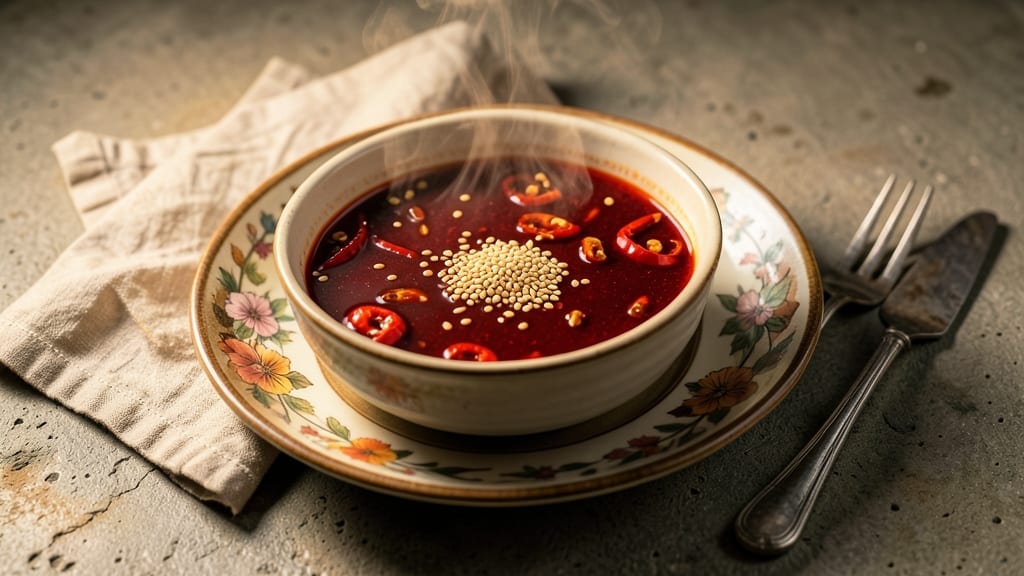
Creating an authentic Sichuan hot pot broth means balancing fiery chili oil with deep, aromatic spices that define this iconic Chinese dish. This recipe delivers the bold, complex base you need for either oil-based youtang or water-based shuitung hot pot, where every spoonful carries layers of heat and umami.
The secret lies in toasting whole spices—like star anise and Sichuan peppercorns—to unlock their full potential before simmering them into a rich, spice-infused broth.
Traditional Sichuan flavors come alive through a carefully curated blend of dried chilies, fermented black beans, and ginger, which build both heat and depth over 1.5 hours of gentle simmering. Unlike simpler broths, this one requires precision: too much water dilutes the intensity, while too little risks burning the spices.
The result is a fragrant, slightly oily base that clings to meats and vegetables, transforming them into tender, flavor-packed bites.
What sets this broth apart is its versatility—adjust the chili oil ratio for milder or extra-spicy preferences, and add a splash of Shaoxing wine for brightness.
The aroma alone will draw everyone to the table, while the broth’s ability to enhance everything from thinly sliced beef to crisp mushrooms makes it the heart of any hot pot gathering. Let’s build this foundational sauce step by step.
For those new to Sichuan cuisine, this recipe bridges authenticity and approachability by simplifying complex techniques without sacrificing depth. The key? Patience in toasting spices and controlling heat—two steps that elevate a good broth into something extraordinary. Once mastered, you’ll never settle for store-bought versions again.
Ingredients for sichuan hot pot broth
Ten aromatic ingredients transform into Sichuan’s signature fiery, umami-rich hot pot base.
| Ingredient | Amount | Notes |
|---|---|---|
| Dried Sichuan Peppercorns 🌶️ | 1 tbsp | Whole, lightly toasted first |
| Star Anise Pods 🌿 | 2 whole | Lightly cracked before toasting |
| Dried Red Chilies 🔥 | 6 whole | Arbol or Thai bird's eye |
| Fermented Black Beans 🥫 | ½ cup | Rinsed well before using |
| Fresh Ginger 🧄 | ½ cup | Julienned into matchsticks |
| Shaoxing Wine 🍷 | ¼ cup | Dry, aromatic variety |
| Chili Oil 🫒 | ½ cup | Homemade or store-bought |
| Light Soy Sauce 🥫 | ¼ cup | Kikkoman preferred |
| Dark Soy Sauce 🥫 | 1 tbsp | For depth of color |
| Rock Sugar 🍬 | 2 tbsp | Or granulated white sugar |
The Sichuan peppercorns and star anise are non-negotiable for authentic flavor—Penzeys Spices carries high-quality whole spices, or check the bulk section at H Mart for fresh stock. Fermented black beans add that signature funk; Asian grocery stores typically stock them in the refrigerated section. For the chilies, Thai bird’s eye delivers the most heat, but Arbol works if you prefer milder intensity. Toast the whole spices in a dry pan until fragrant—this step unlocks their essential oils and forms the aromatic foundation. Fresh ginger should have a vibrant color and firm texture; organic ginger from the produce section often delivers the best flavor.
No Sichuan peppercorns? Substitute with 1 tsp ground black pepper plus 1/2 tsp fennel seeds for a similar aromatic profile. Running out of fermented black beans? Miso paste at half the amount adds umami depth. Chili oil can be homemade (blend dried chilies with neutral oil) or store-bought—just ensure it’s authentic chili oil, not generic hot oil. The soy sauces should be light and dark varieties for balance; Lee Kum Kee brands are reliable. Shaoxing wine adds brightness—substitute with dry sherry if unavailable, but avoid sweet varieties. For the rock sugar, granulated white sugar works in a pinch, though it lacks the subtle caramel notes.
This broth develops deeper flavor over time—simmer uncovered for 1.5 hours to concentrate the aromatics. Store in an airtight container in the refrigerator for up to 1 week, though the flavor peaks within 3 days. For longer storage, freeze in ice cube trays—thaw and reheat gently. The chili oil separates when cold; stir well before use. Double the batch if hosting—everyone will want seconds. The broth’s heat intensifies as it cools, so adjust chili levels accordingly when reheating.
Why You’ll Love This Recipe
- Pantry Magic: I swear by this broth—just toss in dried chilies, star anise, and those funky fermented black beans, and boom. No fresh market runs, no last-minute ingredient panic. The spices do all the heavy lifting while I sip wine and pretend I’m not cooking.
- Numb & Tingling Bliss: That Sichuan peppercorn magic? It’s a flavor rollercoaster—first the heat, then the tingle that lingers like a secret. Honestly, I’ve seen grown adults pause mid-bite, grinning like kids at a carnival. The ginger and star anise round it out so it’s never just spicy—it’s layered, complex, and weirdly comforting.
- Weeknight Superstar: This broth works for everything. Slurp it straight with dumplings on a Tuesday, toss it with stir-fry for Friday takeout vibes, or freeze half for lazy Sundays. Between us, I’ve even used it to “deglaze” a burnt wok and turned it into a meal. Versatile? More like indestructible.
- Spice Bank Savings: A single batch of this broth costs me pennies—dried spices last forever, and fermented black beans stretch across three meals. I’ll be real: I make it twice a month just to have a backup when my usual chili paste fails. Plus, the leftovers? Even better the next day as a quick ramen upgrade. Efficiency at its finest.
Step-by-step instructions for Sichuan hot pot broth
This aromatic broth builds layer by layer—start with the spices, then balance with umami and sweetness.
Toast the Spices for Maximum Depth
Heat a dry skillet over medium heat. Add the 1 tablespoon dried Sichuan peppercorns and 2 whole star anise pods (lightly cracked with a mortar or rolling pin). Toast for 2-3 minutes until fragrant and the peppercorns begin to pop—this releases their citrusy, numbing oils. Add the 6 whole dried red chilies and toast for another 30 seconds until they darken slightly and fill your kitchen with smoky aroma.
The toasting step is critical—it deepens the spice profile and removes any bitterness. Watch closely; the spices burn quickly. Transfer the toasted spices to a bowl and set aside immediately. This prevents over-browning, which can turn the broth bitter rather than aromatic.
Build the Umami Base with Fermented Black Beans and Ginger
In a large stockpot, combine the 0.5 cup rinsed fermented black beans and 0.5 cup julienned fresh ginger. Add 4 cups water (enough to cover the ingredients by 2 inches) and bring to a boil over high heat. Reduce to a simmer and cook for 15 minutes, allowing the beans to soften and release their fermented funk. This step extracts their deep, savory essence—the foundation of the broth’s complexity.
Strain the mixture through a fine-mesh sieve, pressing gently with a wooden spoon to extract every last drop of flavor. Return the strained liquid to the pot—this clear, golden base will carry all the other components. Discard the solids. The broth should now smell earthy and slightly funky, a sign the fermented beans have done their job.
Infuse with Aromatics and Balance Flavors
Return the toasted spices to the pot and add the 0.25 cup Shaoxing wine, 0.5 cup chili oil, 0.25 cup light soy sauce, 1 tablespoon dark soy sauce, and 2 tablespoons rock sugar. Stir well to combine—this is where the magic happens. The wine brightens the broth, the chili oil adds heat and color, the soy sauces provide umami and depth, and the rock sugar balances the acidity while preventing bitterness.
Bring the mixture to a gentle simmer over medium heat and cook for 10-12 minutes, stirring occasionally. The broth should reduce slightly, intensifying its flavors. Taste as you go—adjust the sweetness with more rock sugar or the saltiness with additional light soy sauce if needed. The final broth should be vibrant red with a rich, layered aroma: spicy, umami, and slightly sweet.
Strain and Prepare for Hot Pot
Remove the pot from heat and let the broth steep for 5 minutes to allow all the flavors to meld. Strain through a fine-mesh sieve into a clean pot, pressing gently on the solids to extract every last drop of flavor. Discard the strained spices and ginger. The broth is now ready to use—its deep red color and aromatic steam signal it’s perfected for hot pot.
For best results, keep the broth at a simmer (180-190°F) while serving. This maintains its vibrant color and ensures each dip delivers maximum flavor. The broth should coat the back of a spoon with a silky texture, carrying the heat of the chili oil while remaining balanced by the sweetness of the rock sugar.
Pro Tips For Making Sichuan Hot Pot Broth
- TOAST THE SPICES FIRST: I learned this the hard way—skipping the toast ruins the depth. Lightly char the Sichuan peppercorns and star anise in a dry pan for 30 seconds until fragrant (not burnt). This unlocks their oils and makes the broth taste like a proper Sichuan kitchen, not just a spiced-up soup.
- CRUSH THE FERMENTED BEANS: Don’t just toss in whole fermented black beans—they’ll sit like rocks at the bottom. Roughly crush them with the flat side of your knife or a mortar before adding. This releases their funky, umami punch evenly, so every sip of broth carries that salty, fermented kick.
- SIMMER LOW AND LONG: High heat kills the complexity. After the initial boil, drop the heat to a bare simmer (tiny bubbles, not rolling) and let it cook uncovered for at least 30 minutes. This lets the ginger and chilies mellow out, while the star anise and peppercorns infuse without turning bitter—trust me, your broth will thank you.
- ADD GINGER LAST: I used to throw in the ginger with everything else, but that’s a mistake. Save the fresh ginger slices until the very end of cooking (last 10 minutes). This keeps its bright, zesty edge instead of turning mushy and dull, so the broth stays vibrant, not muddy.
Flavor customization for these flavors
Spice Level Control
Adjust the heat by modifying the chili oil and dried chilies. For a milder broth, reduce the chili oil to 0.25 cup and use 3 dried chilies instead of 6. If you crave extra heat, add 1 extra tablespoon of chili oil and 3 extra dried chilies.
I like to test the heat by tasting the broth after simmering—this helps fine-tune the spice level before serving. 🌶️
Sweetness Balance
The rock sugar or granulated sugar balances the spice, but you can tweak it for personal preference. For a sweeter broth, increase to 3 tablespoons of rock sugar. If you prefer less sweetness, reduce to 1 tablespoon or omit entirely.
The sugar also enhances the caramelization of the broth, so don’t skip it completely unless you’re avoiding sugar. Taste as you go—adjust gradually to avoid overpowering the spices.
Umami Depth Boosters
Want even more umami? Add 1 tablespoon of fermented soybean paste (douchi) or 1 teaspoon of fish sauce to the broth. Both deepen the savory profile without altering the Sichuan flavor. I’ve also found that 1 extra tablespoon of dark soy sauce intensifies the richness.
These additions work best after the initial simmer—add them during the final 5 minutes of cooking to preserve their delicate flavors.
Regional Variations
In Chengdu-style hot pot, the broth leans heavier on chili oil and Sichuan peppercorns, creating a bold, numbing heat. For a milder Chongqing version, reduce the chili oil to 0.25 cup and add 1 tablespoon of fermented black vinegar for tang.
If you’re serving vegetarian hot pot, replace the fermented black beans with 1 tablespoon of miso paste and add 1 extra tablespoon of soy sauce for umami. Each region tweaks the balance, but the core technique remains the same.
Texture Adjustments
For a thicker, oil-based broth (youtang), reduce the water to 3 cups and add 0.25 cup of neutral oil (like peanut or vegetable oil) during the final 10 minutes of simmering. This creates a luxurious, silky texture perfect for dipping.
For a lighter, water-based broth (shuitang), stick to the original 4 cups of water and strain it twice for clarity. The texture should be smooth but still coat the back of a spoon—this ensures every bite is flavorful.
Flavor Layering Tips
To build even more complexity, add 1 sliced garlic clove and 1 thinly sliced shallot during the final 5 minutes of simmering. These aromatics infuse quickly without overpowering the broth. For a smoky twist, char 1 dried Thai chili in the dry pan before adding it to the broth.
The charred flavor adds depth that pairs beautifully with the numbing Sichuan peppercorns. These small tweaks elevate the broth from good to extraordinary. ✨
Nutrition facts
Frequently asked questions
What’s the difference between oil-based (youtang) and water-based (shuitang) Sichuan hot pot broth?
Oil-based broth (youtang) uses less water and incorporates neutral oil for a rich, velvety texture perfect for dipping. Water-based (shuitang) is lighter and clearer, ideal for delicate ingredients like fish balls. The recipe above works for both—just adjust water/oil ratios as needed.
Can I make this broth less spicy for kids or sensitive eaters?
Reduce the dried chilies to 3-4 and cut the chili oil to 0.25 cup. For extra mildness, strain the broth twice through cheesecloth. Add a splash of Shaoxing wine to maintain balance without heat. The numbing Sichuan peppercorns will still add aroma without spice.
How do I store and reheat leftover broth?
Store in an airtight container in the fridge for up to 1 week or freeze in ice cube trays for 3 months. Reheat gently on low heat—never boil—to preserve flavors. Stir well before serving as chili oil may separate. For hot pot, keep at a simmer (180-190°F) to maintain consistency.
What can I substitute if I can’t find fermented black beans?
Use 1 tbsp miso paste or 1 tbsp soy sauce plus 1 tsp fish sauce for umami depth. For a vegetarian option, try 1 tbsp mushroom powder or extra dark soy sauce. These alternatives won’t replicate the funk but still add complexity.
Why does my broth taste bitter?
Over-toasting spices or boiling too vigorously causes bitterness. Next time, toast spices just until fragrant (not browned) and simmer gently. Add 1 tsp sugar or 1 tsp vinegar to balance. The broth should taste layered—not harsh.

- Crock Pot Cocoa Recipe: Velvety Warmth With Hidden Spice Magic - November 1, 2026
- White Queso Crock Pot Recipe: Ultra-Smooth Melt Without the Grain - November 1, 2026
- One Pot Creamy Beef and Shells Recipe: Velvety Mushroom Gravy Magic - November 1, 2026