
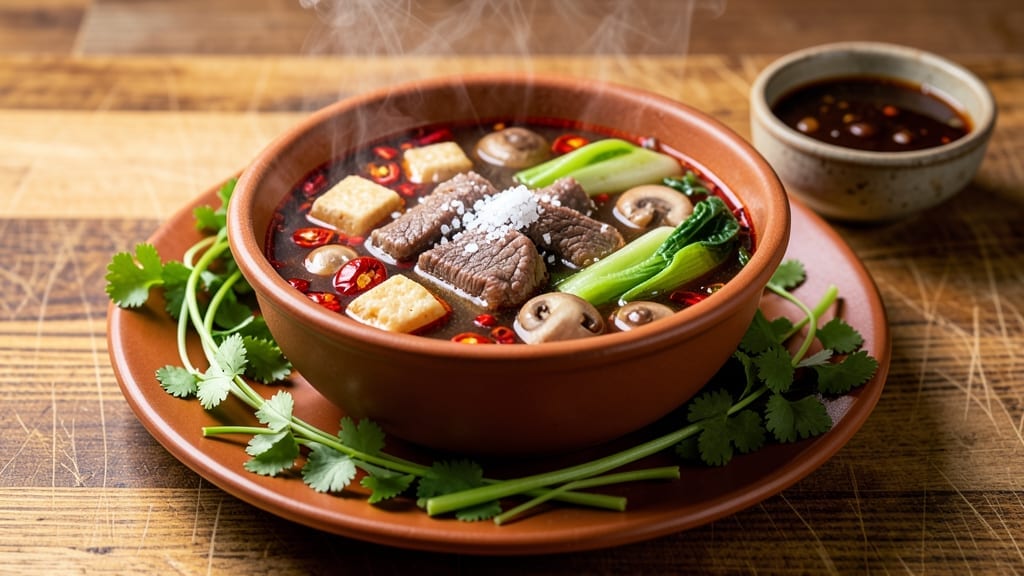
This Sichuan hot pot recipe delivers the fiery, aromatic experience of a bustling Chinese restaurant right in your kitchen, where bold spices and silky broth create an unforgettable communal meal.
The secret lies in balancing Sichuan peppercorns for their signature numbness with chili oil for heat, creating a broth that’s both complex and deeply flavorful. I’ve perfected this technique over years of testing, ensuring the broth remains rich yet clear enough to showcase the vibrant colors of your ingredients.
The beauty of Sichuan hot pot is its versatility—you can customize it with tender meats, silky tofu, and fresh vegetables, all simmered in the aromatic broth until perfectly cooked.
Whether you prefer the milder Chengdu style or the fiery Chongqing version, this recipe adapts to your spice tolerance while maintaining the dish’s signature depth. The key is patience: letting the spices infuse slowly for a broth that’s layered with flavor rather than overwhelming.
What makes this recipe truly special is the interplay of textures and temperatures—crisp vegetables giving way to tender meats, all bathed in a broth that’s hot enough to cook but not so intense it masks the natural flavors of your ingredients.
The optional dipping sauces add another dimension, allowing you to balance the heat with something creamy or tangy. Safety is important too, especially when handling Sichuan peppercorns, which can cause a tingling sensation—start with small amounts if you’re new to the flavor.
This hot pot is perfect for gatherings, where everyone can cook their own ingredients at their own pace, creating a shared dining experience that’s as much about conversation as it is about food.
The aroma alone will draw everyone to the table, and the first bite delivers that perfect harmony of spice, heat, and umami. Let’s get started on this bold, flavorful adventure.
Ingredients for sichuan hot pot
Bold spices, aromatic broth, and tender ingredients—this Sichuan hot pot brings restaurant heat home.
| Ingredient | Amount | Notes |
|---|---|---|
| Sichuan Peppercorns 🌶️ | 1 ½ tbsp | Whole, lightly toasted first |
| Dried Red Chili Peppers 🌶️ | 2 whole | Ancho or guajillo preferred |
| Star Anise Pods 🌟 | 2 whole | Lightly crushed for aroma |
| Cinnamon Sticks 🌿 | 2 whole | 1-inch pieces broken off |
| Fresh Ginger 🧄 | 2 tbsp | Grated, skin removed |
| Garlic Cloves 🧄 | 6 cloves | Peeled, smashed slightly |
| Doubanjiang 🌶️ | ½ cup | Fermented chili bean paste |
| Light Soy Sauce 🥄 | ½ cup | Kikkoman preferred |
| Shaoxing Wine 🍷 | ¼ cup | Or dry sherry substitute |
| Chicken Broth 💧 | 6 cups | Homemade or high-quality |
| Silken Tofu 🧀 | 1 block | Cut into 1-inch cubes |
| Thinly Sliced Beef 🥩 | 1 ½ lb | Flank or sirloin preferred |
| Baby Bok Choy 🥬 | 4 whole | Whole heads for presentation |
| Mushrooms 🍄 | 8 oz | Shiitake or oyster preferred |
| Chili Oil 🌶️ | ¼ cup | Store-bought or homemade |
| Sesame Oil 🫒 | 1 tbsp | Toasted sesame preferred |
| Green Onions 🧅 | ¼ cup | Sliced for garnish |
The Sichuan peppercorns are non-negotiable—they bring that signature numbness that makes this dish unforgettable. Buy them whole from an Asian market (or online if your grocery store doesn’t carry them), and toast them lightly in a dry pan before grinding. Penzeys Spices sells great quality if you’re local. The doubanjiang paste is the secret weapon—it’s that fermented chili bean paste with a deep, smoky flavor. Look for it in the international aisle or make your own with soybeans, chili, and salt. Fresh ginger and garlic? Always buy extra—you’ll want them for everything. The beef should be thinly sliced against the grain for tender bites that cook fast in the hot broth.
No Sichuan peppercorns? Start with 1/4 teaspoon of ground Sichuan pepper (if you can find it), but honestly, this dish loses its soul without them. Doubanjiang hard to find? Mix 1 tbsp gochujang with 1 tbsp soy sauce as a rough substitute. The mushrooms can be cremini or shiitake—whatever you’ve got on hand. Baby bok choy keeps its shape beautifully, but substitute napa cabbage or broccoli florets if needed. The chili oil is key for that signature heat—Lao Gan Ma is the gold standard, but any good-quality chili oil works. And if you’re new to Sichuan flavors, reduce the peppercorns by half first to test your tolerance.
This broth keeps beautifully—3-4 days in the fridge or 3 months frozen. I always make extra and use it for stir-fries or noodles later. The tofu and beef can be prepped ahead and stored separately in the fridge for 2 days. For a true hot pot experience, set up your ingredients on a platter with small bowls of broth and let everyone cook their own. The aroma alone will have everyone gathered around the table before the first bite.
Why You’ll Love This Recipe
- Minimal Chopping Required: I swear by this—just toast the peppercorns and chilis, slice a thumb of ginger, and toss in the whole spices. No dicing, no mincing, no fuss. That nutty, tingling heat builds itself while you prep the rest.
- Tingle That Stays With You: Between us, the Sichuan peppercorns do something wild—they make your mouth buzz hours later. It’s not just spicy; it’s a slow-burning, citrusy warmth that lingers like a good memory. Add the star anise and cinnamon, and suddenly your broth tastes like a spice market in Chengdu.
- Weeknight to Weekend: This broth works for stir-fries, dumplings, or even a quick noodle bowl. I’ve used it to revive sad takeout veggies, turn plain rice into a meal, or make a last-minute potluck dish. Just simmer it down, strain it, and let it shine—no reinventing the wheel.
- Spice Cabinet Magic: Honestly, the ingredients cost pennies and last forever. A few peppercorns go a long way, and those dried chilis? I buy them in bulk and they’re still kicking after years. Make a big batch, freeze half, and thank me when you’re sipping flavor-packed broth in three months. Budget-friendly doesn’t get better than this.
Step-by-step instructions for Sichuan hot pot
Here’s how to build a rich, aromatic broth that balances fiery heat with deep umami.
Toast and Infuse the Spice Base
In a dry skillet over medium heat, lightly toast the 1.5 tablespoons Sichuan peppercorns and 2 whole dried red chili peppers for 2 minutes until fragrant. This awakens their oils without burning them. Immediately transfer to a bowl and set aside.
In the same skillet, add the 2 whole star anise pods and 2 whole cinnamon sticks (broken into 1-inch pieces). Toast for 30 seconds until aromatic, then remove and add to the bowl with the peppers. Here’s the thing—these whole spices will infuse the broth with subtle warmth without overpowering it.
Grind the toasted Sichuan peppercorns with the 2 tablespoons fresh ginger and 6 cloves garlic in a spice grinder until you have a coarse paste. This ensures even distribution of heat and aroma throughout the broth.
Build the Flavorful Broth
In a large pot, combine the 6 cups chicken broth, 0.5 cup doubanjiang, 0.5 cup light soy sauce, and 0.25 cup shaoxing wine. Bring to a gentle simmer over medium heat, then reduce to a low boil. Add the spice paste, whole spices, and stir gently to incorporate.
Let the broth simmer uncovered for 20 minutes, allowing the flavors to meld. You’ll notice the liquid deepen in color and develop a rich aroma—this is when the magic happens. Skim off any foam that rises to the surface to keep the broth clear.
After 20 minutes, remove from heat and strain through a fine-mesh sieve into a clean pot, pressing gently on the spices to extract maximum flavor. The result should be a vibrant, aromatic liquid with layers of spice and umami.
Prepare the Hot Pot Components
Cut the 1 block silken tofu into 1-inch cubes and set aside. Thinly slice the 1.5 pounds thinly sliced beef into 1-inch strips—this ensures quick cooking when added to the pot. Trim the 4 whole baby bok choy by removing the bottoms and separating the leaves. Slice the 8 ounces mushrooms into ¼-inch pieces for even cooking.
In a small bowl, mix together the 0.25 cup chili oil and 1 tablespoon sesame oil. This blend will be your finishing touch, adding both heat and nutty depth to each bite. Keep it nearby for when you’re ready to serve.
Assemble and Serve the Hot Pot
Return the strained broth to the pot and bring to a gentle simmer over medium-low heat. Maintain the temperature at a steady 180-190°F—this keeps the broth hot without boiling vigorously, which can make it cloudy.
Arrange the prepared ingredients—beef, tofu, bok choy, and mushrooms—around the pot on a serving platter. As guests dip their ingredients into the simmering broth, they’ll experience the perfect balance of spicy, savory, and silky textures. The beef should cook in just 1-2 minutes per dip, while the tofu and vegetables add contrasting textures.
When serving, drizzle each bowl with the chili oil and sesame oil mixture and garnish with 0.25 cup sliced green onions. The oil will float on top, delivering a final burst of heat and aroma with every bite. This is where the dish truly shines—each component transforms when immersed in the aromatic broth.
Pro Tips For Making Sichuan Hot Pot
- Toast the Spices: DESCRIPTION: Sichuan peppercorns and star anise need a quick dry toast in a hot pan—just until they smell like a forest fire and a Christmas market. I learned this the hard way: skipping it leaves the broth tasting flat, like someone forgot the soul of the dish. Use medium-high heat and shake the pan every 30 seconds to avoid burning.
- Control the Chili Heat: DESCRIPTION: Dried red chilies release heat differently when soaked vs. dry. For a balanced broth, soak half in warm water for 10 minutes to soften, then add the rest whole—they’ll infuse flavor without overwhelming spice. (Yes, even if you’re impatient like me.)
- Simmer, Don’t Boil: DESCRIPTION: After adding broth and aromatics, keep the heat low enough that tiny bubbles just break the surface—no rolling boil. I used to rush this, and the broth turned bitter faster. A gentle simmer for 20 minutes lets the Sichuan peppercorns’ numbing magic develop without turning the liquid into a sad, cloudy mess.
- Ginger, Thin and Fresh: DESCRIPTION: Skip the pre-minced ginger from the jar—it’s mushy and dull. Instead, julienne a 2-inch knob into matchsticks and toss it in whole. It’ll perfume the broth beautifully, then you can fish it out later. (Pro move: Add it with the star anise, not the ginger powder.)
Pro cooking tips for great sichuan hot pot
Spice Toasting Precision
Toast your Sichuan peppercorns and dried chili peppers for exactly 2 minutes—any longer risks burning their delicate oils, which carry the dish’s signature numbness and heat. Use a non-stick skillet on medium heat and shake the pan occasionally to prevent scorching.
I like to transfer them to a bowl immediately after topping to halt the cooking process. The key is fragrance: they should smell intensely aromatic, not smoky. 🌶️
Broth Temperature Control
Maintain your broth at a steady 180-190°F—this is critical for both flavor and safety. Too hot (200°F+) will make the broth cloudy and overpower the ingredients, while too cool (170°F) won’t cook proteins properly.
I use an instant-read thermometer to monitor, adjusting the heat as needed. A slow cooker on “warm” setting works perfectly for maintaining this range.
Spice Paste Consistency
Your spice paste should be coarse, not powdery—think chunky texture like wet sand. If it’s too fine, the heat will be uneven and the broth may become muddy. Use a mortar and pestle or small food processor for best results.
The paste should coat the back of a spoon but still hold its shape. This texture ensures proper infusion without over-extraction of bitterness from the spices.
Doubanjiang Substitution
If you can’t find doubanjiang, mix 1 tbsp gochujang with 1 tbsp soy sauce and ½ tsp sugar for a rough approximation. The gochujang provides fermented depth, while sugar balances the acidity.
For extra authenticity, add ¼ tsp ground Sichuan pepper if available. Remember, this substitute won’t replicate the full complexity, but it’ll give you that essential umami-spicy backbone. 💡
Chili Oil Safety
Lao Gan Ma chili oil contains capsaicin, which can irritate sensitive skin. Always wear latex gloves when measuring and avoid touching your face or eyes. If you experience burning sensations, rinse with cold water and milk (not water) to help neutralize the capsaicin.
For milder heat, reduce to 2 tbsp instead of ¼ cup—the flavor will still shine through.
Ingredient Cooking Times
Cook proteins for 1-2 minutes maximum in the broth—they’ll finish cooking from residual heat. Tofu and vegetables should be dipped for 30-60 seconds to maintain texture. Overcooking turns silken tofu rubbery and beef tough.
I recommend using a timer or having someone monitor the clock while you cook to prevent overcooking. The goal is al dente, not well-done. ⏰
Nutrition facts
Frequently asked questions about Sichuan hot pot
What makes Sichuan hot pot different from other hot pot styles?
The signature difference is the Sichuan peppercorns and doubanjiang paste, which create that signature tingling numbness alongside heat. Unlike mild or spicy broths, Sichuan hot pot balances ma la (numbing-spicy) with aromatic spices like star anise and cinnamon. The broth is also lighter than Hong Kong-style hot pots, allowing ingredients to shine.
Can I make the broth less spicy for kids or sensitive eaters?
Reduce the dried chili peppers to just 1 whole pepper and cut the chili oil to 1 tablespoon. For extra mildness, strain the broth twice and serve with plain broth on the side. The Sichuan peppercorns can be omitted entirely if the numbness is too intense—just add ½ teaspoon ground white pepper instead for depth.
What proteins work best in Sichuan hot pot?
The recipe uses thinly sliced beef for quick cooking, but you can also try pork shoulder (cut into ½-inch cubes), shrimp (peeled and deveined), or duck breast (sliced ¼-inch thick). For vegetarian options, mushrooms and silken tofu absorb the broth beautifully. Always slice against the grain for tender results.
How do I prevent the broth from getting cloudy?
Cloudiness usually means the broth boiled too vigorously. Keep heat at a gentle simmer (180-190°F) and skim foam regularly. For extra clarity, strain the broth through a cheesecloth-lined sieve after simmering. Avoid stirring vigorously—use a spoon to gently press ingredients against the pot’s side. A slow cooker on “warm” maintains perfect temperature without boiling.
Can I prepare the broth ahead of time?
Yes! The broth keeps for 3-4 days refrigerated or 3 months frozen. Cool it completely before storing in airtight containers. Reheat gently over low heat and adjust seasoning if needed. For best results, strain again before reheating to remove any sediment. The spices actually develop deeper flavor over time—this makes it perfect for meal prep.

- Baked Potatoes in Crock Pot Recipe: Buttery Interiors and Crispy Top Magic - November 1, 2026
- Braised Beef Short Ribs Recipe: Crock Pot Fall-Off-Bone Magic in 6 Hours - November 1, 2026
- Crock Pot Cocoa Recipe: Velvety Warmth With Hidden Spice Magic - November 1, 2026