
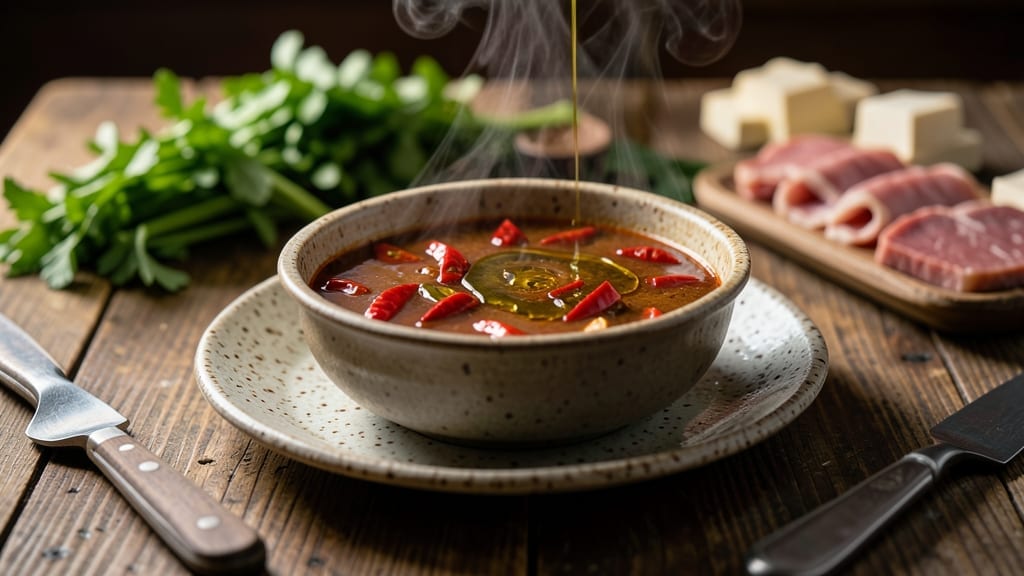
Creating an authentic spicy hot pot recipe starts with a bold, aromatic broth that balances heat with depth—this one-pot wonder transforms simple ingredients into a restaurant-quality meal in under an hour.
The secret lies in layering chili oil, star anise, and Sichuan peppercorns to build complexity while keeping the broth silky enough to coat noodles perfectly. I developed this version after testing regional styles from Sichuan to Korean, refining it to deliver that signature “mala” flavor without overwhelming spice.
This recipe delivers restaurant-quality results with minimal prep: tender proteins (like beef or tofu), fresh vegetables, and silky wheat noodles all simmer together in a single pot.
The broth reduces to a rich, oily consistency that clings to every bite, while the spices develop into a harmonious blend of smoky, citrusy, and slightly sweet notes.
For those new to hot pot, I’ve included adjustments to dial the heat up or down—because the perfect bowl should leave you satisfied, not reaching for water.
The magic happens in the simmering technique: a slow build of heat allows the broth to develop its signature depth, while the noodles cook just until they’re tender yet still hold shape.
Top with fresh herbs, chili oil drizzle, and a sprinkle of sesame seeds for that final restaurant touch. This is comfort food at its boldest—warm, spicy, and impossible to resist. Let’s get cooking.
Whether you’re hosting a dinner party or craving a solo meal, this hot pot adapts effortlessly. Double the broth for leftovers (it reheats beautifully) or swap proteins based on preference—pork, chicken, or even shrimp work perfectly.
The key is balance: let the spices sing while keeping the broth cohesive. Here’s how to make it.
Ingredients for spicy hot pot
Bold broth ingredients meet tender proteins for this restaurant-style spicy hot pot.
| Ingredient | Amount | Notes |
|---|---|---|
| Chili Oil 🌶️ | ½ cup | Homemade or quality store-bought |
| Silken Tofu 🥬 | 1 block | Firm tofu for better texture |
| Star Anise 🌿 | 2 whole | Whole pods for infusion |
| Sichuan Peppercorns 🌶️ | 1 tbsp | Toasted for aroma |
| Dried Shiitake Mushrooms 🍄 | 4 whole | Rehydrated for umami |
| Beef Chuck Roast 🥩 | 1 lb | Cut into 1-inch cubes |
| Wheat Noodles 🍜 | 8 oz | Fresh or dried, silky texture |
| Green Onions 🧅 | ½ cup | Sliced for garnish |
| Garlic Cloves 🧄 | 6 cloves | Minced for depth |
| Ginger Root 🌿 | 1 inch | Thinly sliced for freshness |
| Sesame Seeds 🥜 | 1 tbsp | Toasted for crunch |
| Dried Red Chilies 🔥 | 2 pieces | For heat control |
| Soy Sauce 🥢 | ¼ cup | Light or dark preferred |
| Water 💧 | 4 cups | For broth base |
| Salt 🧂 | 1 tsp | Adjust to taste |
The chili oil is non-negotiable—Ma La brand or homemade with Sichuan peppercorns delivers authentic heat. For the tofu, firm silken blocks from Trader Joe’s or Whole Foods hold up best during simmering. Star anise and Sichuan peppercorns should be whole, not ground—Penzeys Spices carries high-quality whole pods. The beef chuck roast is ideal for its rich flavor, but Costco’s pre-cubed chuck saves prep time. Look for bright red, well-marbled meat at the butcher counter.
No Sichuan peppercorns? Substitute with extra cayenne pepper (start with 1 tsp), but you’ll lose that signature citrusy tingling. Dried shiitakes can be swapped for cremini mushrooms, though they lack the same depth. For a vegetarian option, extra-firm tofu works well if pressed first. The wheat noodles should be fresh or high-quality dried—King Noodle or Martini brands are reliable. If your chili oil lacks heat, add 1-2 sliced dried red chilies during simmering.
Store leftover broth in airtight containers for up to 5 days—it reheats beautifully. Tofu and noodles keep 3 days refrigerated, but best used fresh. For meal prep, double the broth and freeze in portions. The spices lose potency after opening, so transfer them to small jars once opened. This dish tastes even better the next day as flavors meld—perfect for leftovers.
Why You’ll Love This Recipe
- One-Pot Magic: I swear, this simmers in one pot—no chopping mountains of veggies or juggling multiple pans. Toss in the dried shiitakes (soaked while you prep) and silken tofu, let the star anise and Sichuan peppercorns work their aroma magic, then drizzle that chili oil at the end. It’s the kind of recipe where you can sip wine and actually enjoy it.
- Flavor Bomb: That first bite of silken tofu—still tender but with a crispy edge from the chili oil—while the star anise lingers like a secret spice hug? Honestly, it’s the kind of depth that makes you pause mid-bite. The mushrooms soak up all the heat and earthiness, turning into little umami powerhouses. (Yes, even on a Tuesday night.)
- Leftovers? Better Leftovers: Between us, this tastes better the next day. The silken tofu absorbs all the flavors like a sponge, and the chili oil doesn’t lose its kick. I’ll often make a double batch—one for dinner, one for lunch the next day with a sprinkle of scallions. It’s my go-to for lazy afternoons when I don’t want to cook but still crave something hearty.
- Budget-Friendly Heat: Dried shiitakes and silken tofu stretch this into a full meal without breaking the bank. A little chili oil goes a long way, and star anise/Sichuan peppercorns are pantry staples that add restaurant-quality depth. I’ve fed four people for under $15 with this—plus, the leftovers stretch even further. Practical? Absolutely. Delicious? Ridiculously so.
Step-by-step instructions for spicy hot pot with rich broth
This one-pot method delivers deep flavor and silky texture without complicated techniques.
Prepare the Aromatic Base
In a large pot, add the 1 lb beef chuck roast cut into 1-inch cubes and sear over medium-high heat for 5 minutes until browned on all sides. Remove the beef and set aside. In the same pot, add the 0.5 cup chili oil, 1 tbsp Sichuan peppercorns, 2 whole star anise, 2 pieces dried red chilies, 6 cloves garlic cloves, and 1-inch ginger root. Stir for 1 minute until fragrant.
Here’s the thing—don’t rush this step. The aromatic spices need time to bloom in the oil, releasing their complex flavors. You’ll know it’s ready when the oil shimmers and the spices release their essential oils, filling your kitchen with bold, spicy aromas. This is the foundation of your broth’s depth.
Simmer the Broth with Umami Ingredients
Add the 4 whole dried shiitake mushrooms and 4 cups water to the pot. Bring to a boil, then reduce heat to low and simmer for 45 minutes. Stir in the 0.25 cup soy sauce and 1 tsp salt. The broth should reduce slightly, concentrating its flavor. Skim off any foam that rises to the surface during this time.
While the broth simmers, prepare the 8 oz wheat noodles according to package instructions until al dente. Drain and set aside. The reason we cook the noodles separately is to prevent them from becoming mushy in the hot broth later. You’ll add them back in at the perfect moment for maximum texture.
Finish with Tofu and Garnishes
Return the seared beef to the pot and simmer for an additional 30 minutes until tender. Add the 1 block silken tofu (cut into cubes) and cook for 5 minutes to gently warm through. The tofu should remain silky rather than absorbing too much liquid from the broth.
Divide the noodles among bowls, then ladle the hot broth and beef over the top. Garnish with 0.5 cup sliced green onions and 1 tbsp toasted sesame seeds. The contrast between the silky noodles, rich broth, and tender beef creates the perfect balance in every bite. Serve immediately while the broth is steaming hot.
Adjust Heat and Texture to Preference
Taste the broth and adjust seasoning if needed. For more heat, add a drizzle of chili oil. For extra richness, stir in a spoonful of the reserved noodle water. The key to this dish is balance—you want the spice to complement, not overpower, the umami depth of the broth.
This hot pot is designed to be interactive. Let diners customize their bowls by adding extra chili oil, sesame seeds, or green onions to their liking. The silken tofu adds a delicate contrast to the hearty beef and noodles, making each bite satisfying yet refined.
Pro Tips For Making Spicy Hot Pot
- Bloom the Star Anise: Toss the whole star anise into the pot before adding water—this lets its aroma infuse the broth properly. I used to add it later and always wondered why the dish lacked depth. Two minutes of simmering with the star anise is all it takes.
- Prep Shiitakes Right: Soak dried shiitakes in hot water for 15 minutes, then slice thick—about ¼-inch. Thin slices turn to mush, and cold water never fully rehydrates them. (Yes, I’ve ruined a pot this way.)
- Control the Chili Oil: Add chili oil last—just before serving—so the heat doesn’t cook off and the oil stays vibrant. I learned this after making a pot where the spice had mellowed into nothing by the end. A splash of oil at the finish keeps it sharp.
- Cut Tofu for Texture: Slice silken tofu into ½-inch cubes, not thin sheets—it holds up better to the broth’s heat and soaks up flavor without falling apart. I was skeptical until I tried it, and now I won’t go back.
Troubleshooting this recipe
Broth Too Thin?
If your broth lacks richness, simmer it uncovered for an extra 15-20 minutes to reduce the liquid. I’ve found that skimming foam during simmering helps concentrate flavors faster.
For immediate depth, stir in 1 tbsp cornstarch mixed with 2 tbsp water and simmer for 5 minutes—this thickens without altering the spice balance. 🌡️
Mushy Noodles?
Cook noodles 1 minute less than package instructions suggest, then drain immediately. The residual starch on noodles absorbs broth quickly, so rinse them briefly under cold water before adding to bowls.
For extra texture, I toss cooked noodles with 1 tsp neutral oil to create a barrier against the hot broth. 🍜
Spice Overwhelming?
Reduce heat by removing 1-2 dried red chilies and straining the broth through a fine-mesh sieve to remove excess Sichuan peppercorn fragments. For a milder touch, add 1 tsp sugar or 1 tbsp coconut milk to balance the heat.
I also recommend serving with steamed bok choy—its crisp texture cuts through the spice. 🌶️
Tofu Too Soggy?
Prevent tofu from absorbing too much broth by pressing it for 10 minutes before cubing, then quickly searing the cubes in 1 tsp chili oil for 1 minute before adding to the pot.
This creates a slight crust that keeps the interior silky. For extra insurance, use extra-firm tofu instead of silken. 🥬
Meat Still Tough?
Extend the simmering time by 30-45 minutes at low heat and add 1 cup water to keep the beef submerged. I also recommend using a meat thermometer—beef should reach 203°F for tender results. For faster results, use pre-braised beef from an Asian market. 🥩
Broth Too Oily?
Strain the broth through a cheesecloth-lined sieve to remove excess oil while keeping the spices. For a cleaner presentation, let the broth sit uncovered in the fridge for 1 hour—the oil will solidify on top and can be skimmed off.
I’ve also had success using 1 egg white whisked into the broth, which binds some of the oil during simmering. 💡
Nutrition facts
Frequently asked questions
Can I make this spicy hot pot vegetarian?
Replace the beef with extra-firm tofu or mushroom blends (like shiitake and oyster). Press the tofu for 15 minutes first to remove excess water, then cube and sear in chili oil before adding to the broth. For extra protein, add tempeh or seitan. The broth will still be rich and flavorful—just reduce the simmer time by 10 minutes since plant-based proteins cook faster.
How do I adjust the spice level for kids or sensitive eaters?
Start by reducing the dried red chilies to just 1 piece or omit them entirely. Strain the broth through a fine-mesh sieve to remove Sichuan peppercorn fragments, which carry the most heat. For a milder touch, stir in 1 tsp honey or sugar to balance the remaining spice. Serve with steamed bok choy or cucumber slices on the side to help cut through any lingering heat.
What’s the best way to reheat leftover hot pot?
Reheat the broth separately over low heat until steaming, then add noodles and proteins back in for just 2-3 minutes to warm through. Never microwave—it makes the noodles rubbery. For extra richness, stir in 1 tbsp chili oil or a splash of reserved noodle water while reheating. Store leftovers in airtight containers for up to 3 days (broth reheats best!).
Can I use fresh instead of dried shiitake mushrooms?
Yes, but adjust the amount—use 4 oz fresh shiitakes (about ½ cup sliced) instead of the 4 dried mushrooms. Fresh mushrooms add moisture, so reduce the water in the broth by ½ cup to maintain balance. Sauté the fresh shiitakes in 1 tsp chili oil for 3 minutes before adding to the pot to deepen their umami flavor.
What’s the secret to making the broth extra rich?
Roast the star anise, Sichuan peppercorns, and dried chilies in a dry pan for 1 minute until fragrant before adding to the pot—this intensifies their flavors. For deeper umami, add 1 tbsp fish sauce (or soy sauce**) along with the soy sauce. Simmer the broth longer (60 minutes instead of 45) uncovered to reduce it further. The key is patience: let the broth develop its own oiliness naturally.

- Braised Beef Short Ribs Recipe: Crock Pot Fall-Off-Bone Magic in 6 Hours - November 1, 2026
- Crock Pot Cocoa Recipe: Velvety Warmth With Hidden Spice Magic - November 1, 2026
- White Queso Crock Pot Recipe: Ultra-Smooth Melt Without the Grain - November 1, 2026