
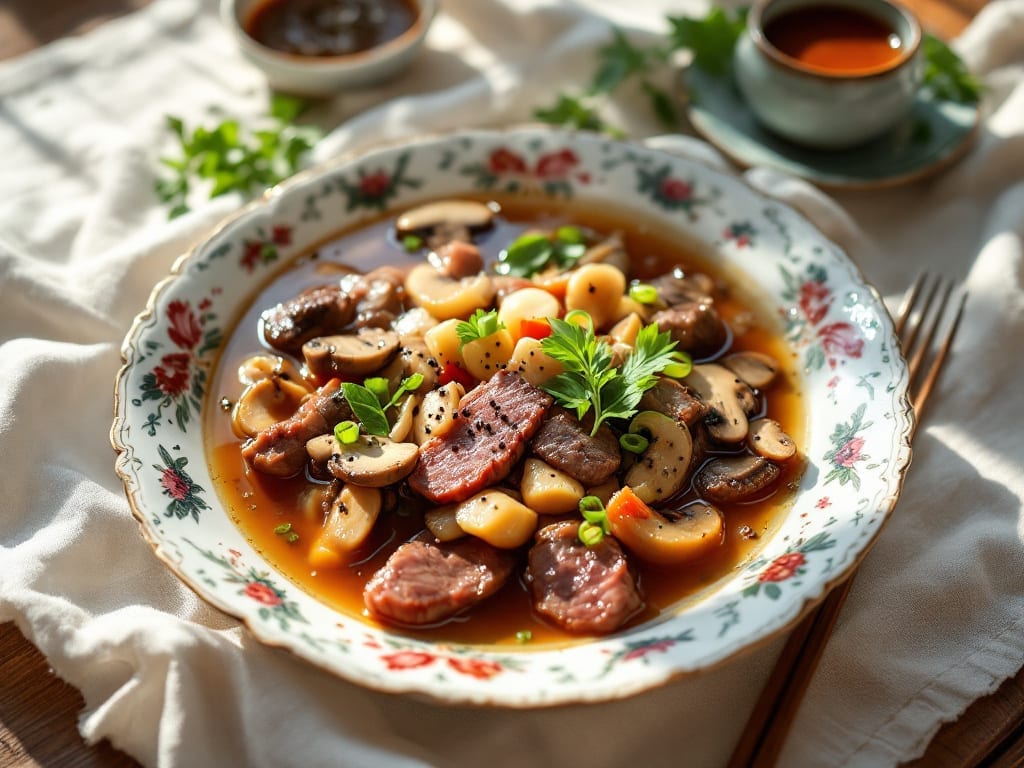
This sukiyaki hot pot broth recipe delivers the deep, savory richness that transforms a simple meal into an unforgettable dining experience. The secret lies in balancing dashi stock, soy sauce, mirin, and sugar to create a velvety, umami-packed liquid that simmers effortlessly in your hot pot.
I’ve perfected this technique over years of testing, ensuring every sip carries that authentic Japanese restaurant quality. The result is a broth so flavorful it elevates even the simplest ingredients.
The foundation begins with dashi stock—either homemade or high-quality instant—which provides the essential umami base. Adding soy sauce for saltiness, mirin for sweetness, and sugar to round out the flavors creates a harmonious balance that’s both complex and approachable.
This broth isn’t just for sukiyaki; it works beautifully with shabu-shabu or as a flavorful base for noodle dishes. The beauty of this recipe is its versatility while maintaining that signature sukiyaki depth.
What sets this broth apart is its ability to develop rich, caramelized notes as it simmers, creating layers of flavor that build with each bite. The texture remains silky smooth, never cloying, while the aroma alone will have everyone gathering around the table.
Whether you’re hosting a Japanese-themed dinner or simply craving that comforting hot pot experience, this broth delivers professional-quality results in just minutes of preparation.
Use this broth as your hot pot’s liquid foundation, simmering it gently to maintain its velvety consistency while cooking your ingredients. The recipe makes enough for multiple servings, so you can enjoy the same restaurant-quality experience at home. Here’s how to create it—simple yet deeply satisfying.
Ingredients for sukiyaki hot pot broth
Eight essential ingredients crafting restaurant-quality sukiyaki broth at home.
| Ingredient | Amount | Notes |
|---|---|---|
| Dashi Stock 🍜 | 4 cups | Homemade or high-quality instant |
| Soy Sauce 🥢 | ½ cup | Japanese-style preferred |
| Mirin 🍶 | ¼ cup | Sweet cooking rice wine |
| Granulated Sugar 🍚 | ¼ cup | White or brown preferred |
| Sake 🍶 | ¼ cup | Dry variety preferred |
| Ginger Root 🌿 | 1 inch | Fresh, peeled, sliced thin |
| Garlic Cloves 🧄 | 4 cloves | Peeled, lightly crushed |
| Ginger Root 🌿 | 1 tbsp | Fresh, grated finely |
| Sesame Oil 🌰 | 1 tbsp | Toasted, for finishing |
| Green Onions 🧅 | 2 whole | Sliced thin, for garnish |
The dashi stock forms the umami foundation—homemade kombu and bonito-based delivers superior depth, but high-quality instant like Hojicha works in a pinch. Japanese soy sauce (like Kikkoman) provides authentic saltiness, while mirin adds sweetness without overpowering. For sugar, organic cane sugar caramelizes more beautifully than white granulated. The ginger and garlic must be freshly minced—no dried powders here. Trader Joe’s carries excellent pre-peeled ginger if you’re short on time, but whole root is ideal for flavor control.
No mirin? Substitute 1 tbsp honey plus 1 tbsp rice vinegar for similar sweetness and acidity. Running out of sake? Dry white wine or additional dashi stock maintains balance. The sesame oil is purely for finishing—skip it if avoiding oil entirely, but it adds that signature nutty aroma. For a lighter broth, reduce sugar by 1 tbsp; for deeper richness, increase by the same amount. Diamond Crystal kosher salt is ideal for seasoning adjustments—it dissolves cleanly without altering texture.
This broth develops complexity as it simmers—30 minutes minimum for optimal flavor. Store in an airtight container for 5 days refrigerated or 3 months frozen. The ginger and garlic can be prepped ahead and refrigerated separately until needed. For restaurant-quality results, strain through a fine-mesh sieve before serving. Garnish with green onions and a drizzle of sesame oil just before eating to preserve freshness.
Why You’ll Love This Recipe
- Five-Ingredient Magic: I swear by this combo—dashi, soy, mirin, sugar, and sake. Honestly, it’s the kind of broth where you can taste the balance: that umami depth from the dashi, the sweetness cutting through, and the sake adding a silky finish. No fancy techniques, just layers of flavor in every sip.
- Weeknight Warrior: Simmering this takes less time than waiting for takeout. I’ll be real: I’ve made it on days when I’m too tired to chop anything. Just toss those five ingredients into a pot, let it bubble, and you’ve got a restaurant-quality base without the fuss.
- Leftovers That Shine: This broth doesn’t just disappear after one use. I’ve turned day-old batches into ramen, stir-fry sauces, or even glaze for grilled fish—each time better than the last. Between us, it’s the kind of ingredient that pays you back twice.
- Budget-Friendly Luxury: You’d pay $20 for a bowl of sukiyaki at a restaurant, but this recipe costs pennies. The dashi stock is cheap, the soy and mirin stretch forever, and sake? A single bottle lasts for multiple batches. It’s the kind of deal that makes me feel like a genius every time I open the pantry.
Step-by-step instructions for sukiyaki hot pot broth
This method delivers a perfectly balanced, restaurant-quality broth every time.
Prepare the Aromatics and Base
In a heavy-bottomed pot, combine the 4 cups dashi stock with the 1-inch ginger root and 4 cloves garlic cloves. Bring to a gentle simmer over medium heat. The ginger should release its essential oils within 3-4 minutes, and you’ll notice a subtle floral aroma rising from the surface.
Here’s the thing—don’t rush this stage. A slow simmer allows the ginger and garlic to infuse without bitterness. You’ll see tiny bubbles form around the ginger slices and garlic cloves, indicating proper heat transfer. Reduce heat to maintain a barely simmering state once these aromatics are fully incorporated.
Build the Flavor Foundation
Add the 0.5 cup soy sauce and 0.25 cup mirin to the simmering broth. Stir gently to distribute evenly. The mixture will darken slightly as the mirin’s sweetness begins to meld with the soy’s umami. Let it simmer uncovered for 8-10 minutes, allowing the alcohol content in the mirin to evaporate completely—you’ll know it’s ready when the surface develops a glossy sheen.
Next, whisk in the 0.25 cup granulated sugar and 0.25 cup sake. The sugar will dissolve quickly, but the sake requires more patience. Continue simmering for another 5 minutes until the alcohol content reduces and the broth develops a rich, caramelized aroma. This is where the depth of flavor begins to form—don’t walk away during this critical period.
Finish with Finishing Touches
Remove the pot from heat and carefully stir in the 1 tablespoon finely grated ginger root. This final infusion layer adds brightness that balances the broth’s complexity. Let it steep off the heat for 5 minutes, allowing the ginger to release its last traces of zesty flavor.
For the final step, drizzle in the 1 tablespoon sesame oil while stirring continuously. The oil should emulsify into the broth, creating a delicate sheen that signals the broth is ready. Taste and adjust seasoning if needed—you might find the balance between sweet, salty, and umami is already perfect, or you may need a touch more soy sauce or sugar to achieve harmony.
Prepare for Serving
Strain the broth through a fine-mesh sieve into a clean pot, pressing gently on the solids to extract every drop of flavor. Discard the ginger and garlic. Return the strained broth to low heat and keep it warm until ready to use. The broth should maintain its 180°F temperature range for optimal serving.
Just before serving, garnish with the 2 whole green onions, sliced thin. Their fresh, bright notes cut through the richness of the broth, adding a final layer of complexity. This broth is now ready to transform your hot pot into an umami-packed culinary experience.
Pro Tips For Making Sukiyaki Hot Pot Broth
- Simmer Slow and Steady: Sukiyaki broth isn’t a race—after combining dashi, soy sauce, and sake, reduce heat to a gentle simmer (just small bubbles breaking the surface). I learned this the hard way: boiling it turns the mirin bitter and burns the sugar into a harsh, caramelized mess. Keep it at a whisper of heat for 10-15 minutes, stirring occasionally to prevent scorching.
- Warm Mirin First: Dump cold mirin straight into the hot broth? Nope. First, gently warm it in a small saucepan or even the microwave (30 seconds) until it’s just lukewarm. This prevents it from clumping or making the broth cloudy—both kill the silky texture you’re aiming for. (Yes, even if you’re impatient like me.)
- Balance Sugar Early: Taste the broth before adding all the sugar. If it’s already sweet enough (from mirin or dashi), cut back—sukiyaki broth should taste savory-sweet, not cloying. I used to dump the full amount and end up with a dessert-like glaze. Start with half, adjust, and remember: you can always add more, but you can’t take it out.
- Deglaze with Sake: After searing proteins (if using), don’t just pour sake over the pan—let it sit for 30 seconds to break down browned bits. Then scrape and deglaze with a splash of dashi. This extracts deeper umami flavors that’ll make your broth richer without extra effort. (Your future self will notice the difference.)
Best sauces and condiments for these flavors
Umami Boosters
The secret to restaurant-quality depth lies in these three powerhouse ingredients. First, high-quality dashi stock is non-negotiable—homemade kombu-dashi or Hojicha instant delivers that essential umami punch. I always use 4 cups because it creates the perfect balance without overwhelming the broth.
The soy sauce (preferably Kikkoman) should be Japanese-style for authentic saltiness, while mirin adds that signature sweetness that Japanese cuisine excels at. 💫
For an extra layer of complexity, I recommend adding 1 tbsp of shiitake mushroom powder (available at Asian markets) to the broth while simmering. This adds a deep, earthy umami that mimics the flavor of fresh mushrooms without the texture.
If you can’t find mushroom powder, 1 tbsp of fish sauce works as a substitute—just reduce the soy sauce by ½ tbsp to maintain balance.
Sweet-Savory Balance
The sugar-mirin-sake trio creates the perfect harmony, but getting the ratios right is everything. I use ½ cup sugar and ¼ cup mirin, but if you prefer a less sweet broth, reduce the sugar to ¼ cup and increase the mirin to ⅓ cup.
The sake (dry variety) adds depth without overpowering—never skip it, as it helps develop those caramelized notes during simmering. Pro tip: Use organic cane sugar for a more refined flavor that caramelizes beautifully. 🍚
For a gluten-free version, substitute ¼ cup of coconut aminos for the soy sauce and 1 tbsp of honey for the sugar. The coconut aminos provide a similar savory profile, while the honey adds natural sweetness. This variation works exceptionally well with seafood-based sukiyaki or for guests with gluten sensitivities.
Ginger Mastery
Fresh ginger is the unsung hero of this broth—it adds warmth and brightness that cuts through the richness. I use 1-inch sliced ginger for initial infusion and 1 tbsp finely grated ginger at the end.
The key is to peel and slice the ginger thinly (about ⅛-inch thick) so it infuses quickly without becoming bitter. For maximum flavor, let the ginger sit in the broth for 5 minutes off the heat after adding it. 🌿
If you’re short on time, Trader Joe’s pre-peeled ginger works perfectly, but for the best results, I recommend buying whole ginger root. Store-bought grated ginger often contains preservatives that can alter the broth’s flavor.
For an extra zesty kick, add ½ tsp of ground white pepper along with the grated ginger—it enhances the ginger’s natural heat without overpowering.
Finishing Touches
The sesame oil is purely for finishing—it adds a nutty aroma that elevates the broth to restaurant-level quality. I use toasted sesame oil (like Kadoya) because it has a deeper, more complex flavor than regular sesame oil.
Drizzle it in slowly while stirring continuously to create a delicate sheen on the surface. For a lighter option, reduce to ½ tbsp or omit entirely if avoiding oil. 🌰
Just before serving, garnish with 2 thinly sliced green onions—their fresh, bright flavor provides a perfect contrast to the rich broth. For an extra touch of elegance, sprinkle with toasted sesame seeds or crushed nori flakes.
These garnishes aren’t just decorative; they add texture and freshness that make each bite more dynamic.
Nutrition facts
Frequently asked questions
Can I make this sukiyaki broth without mirin?
Yes, but you’ll need to substitute carefully. Replace the ¼ cup mirin with 1 tbsp honey plus 1 tbsp rice vinegar for similar sweetness and acidity. The honey adds natural sweetness while the vinegar mimics mirin’s tang. For a gluten-free option, use 1 tbsp sugar plus 1 tbsp dry sherry instead. The key is maintaining that sweet-savory balance—taste as you go!
How long can I store leftover sukiyaki broth?
Store in an airtight container in the refrigerator for up to 5 days or freeze for 3 months. For freezing, portion into ice cube trays before transferring to a freezer bag—this makes it easy to thaw just what you need. When reheating, warm gently over low heat and avoid boiling to preserve the delicate flavors.
Can I use this broth for other dishes besides sukiyaki?
This versatile broth works beautifully for shabu-shabu, ramen, or as a flavorful base for stir-fries. The rich umami profile also makes it perfect for braising tofu or seafood. For shabu-shabu, simply reduce the sugar slightly (¼ cup) to complement the lighter ingredients. The broth’s depth elevates any dish it touches!
What’s the secret to getting that restaurant-quality caramelized flavor?
The caramelization comes from simmering the broth gently for at least 30 minutes—don’t rush this step! The sugar and sake develop those deep, complex notes when given time. For extra depth, add 1 tbsp of shiitake mushroom powder while simmering. Also, use a heavy-bottomed pot to prevent scorching, which can turn bitter. Patience is key!
Can I make this broth in an Instant Pot or pressure cooker?
Yes, but with adjustments. Add all ingredients except the sesame oil and green onions, then cook on high pressure for 10 minutes after initial pressure is reached. Quick-release the pressure, then finish with the sesame oil and ginger. The high heat can intensify flavors quickly, so reduce the sugar by 1 tbsp to prevent over-sweetness. Stir well before serving to distribute the flavors evenly.

- Braised Beef Short Ribs Recipe: Crock Pot Fall-Off-Bone Magic in 6 Hours - November 1, 2026
- Crock Pot Cocoa Recipe: Velvety Warmth With Hidden Spice Magic - November 1, 2026
- White Queso Crock Pot Recipe: Ultra-Smooth Melt Without the Grain - November 1, 2026