
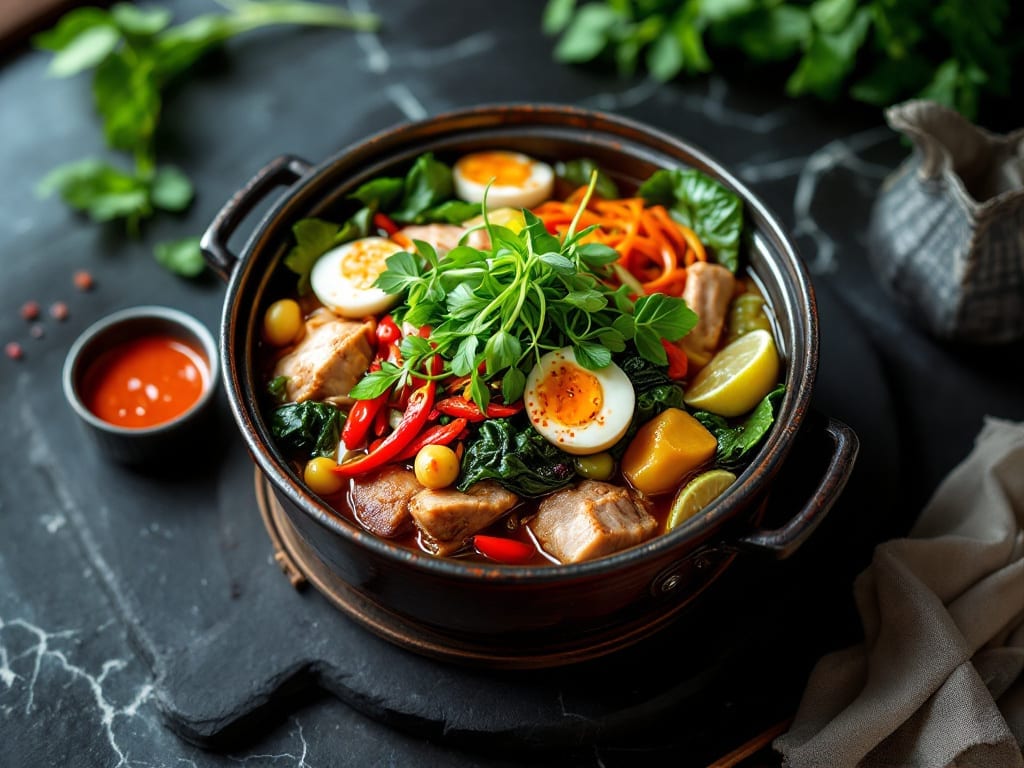
Creating an authentic Thai hot pot transforms your kitchen into a bustling street-side restaurant, where fragrant broth meets tender proteins and fresh vegetables in a symphony of flavors.
The secret lies in balancing heat, umami, and freshness—starting with a broth that simmers for hours, developing layers of complexity from lemongrass, galangal, and kaffir lime leaves. I’ve perfected this technique over years of testing, ensuring every bowl delivers that signature Thai warmth without overpowering the delicate ingredients.
This recipe accommodates both traditional and modern adaptations, whether you prefer a classic coconut-based broth or a fusion twist with chili oil and fish sauce. The magic happens when you drop silky eggs into the simmering liquid—watch as they transform into creamy, flavor-infused bites that melt in your mouth.
For proteins, I recommend a mix of thinly sliced beef, shrimp, and tofu to showcase the broth’s versatility, while fresh herbs like Thai basil and cilantro add brightness at the end.
The result is a dish that’s as visually stunning as it is delicious—steaming broth, vibrant vegetables, and perfectly cooked proteins arranged on a plate with a side of tangy dipping sauce. Each component comes together in harmony, creating a meal that’s both comforting and exciting.
Whether you’re hosting a dinner party or craving a cozy night in, this Thai hot pot delivers restaurant-quality results with minimal fuss.
Ready to dive in? We’ll cover everything from broth preparation to plating, including tips for adjusting spice levels and vegetarian adaptations. Let’s create a dish that brings the energy of Thai street food to your table.
Ingredients for thai hot pot
Fragrant broth, tender proteins, and fresh herbs—this Thai hot pot brings restaurant magic to your kitchen.
| Ingredient | Amount | Notes |
|---|---|---|
| Thai Coconut Milk 🥥 | 1 can | Full-fat, unsweetened preferred |
| Chicken Broth 🍲 | 4 cups | Homemade or high-quality store-bought |
| Lemongrass Stalks 🌿 | 3 whole | Bruised for maximum flavor |
| Galangal Slices 🌿 | 3 pieces | Substitute ginger if unavailable |
| Kaffir Lime Leaves 🍋 | 4 whole | Torn into strips |
| Red Curry Paste 🌶️ | 2 tbsp | Maesri brand recommended |
| Fish Sauce 🍶 | 2 tbsp | Red Boat preferred |
| Thai Chili Paste 🌶️ | 1 tbsp | Adjust for heat preference |
| Brown Sugar 🍚 | 1 tbsp | Packed lightly |
| Thinly Sliced Beef 🥩 | ½ lb | Flank or sirloin preferred |
| Large Shrimp 🦐 | 1 lb | Peeled, deveined |
| Firm Tofu 🥬 | 1 lb | Extra-firm, pressed |
| Baby Bok Choy 🥬 | 4 whole | Or sub napa cabbage |
| Thai Basil Leaves 🌿 | ½ cup | Fresh, stems removed |
| Cilantro Leaves 🌿 | ¼ cup | Fresh, chopped |
| Limes 🍋 | 2 whole | Juiced for garnish |
| Large Eggs 🥚 | 4 whole | Fresh for silky texture |
| Vegetable Oil 🫒 | 2 tbsp | For tofu cooking |
| Salt 🧂 | 1 tsp | Adjust to taste |
The broth is where the magic happens. Maesri red curry paste and Red Boat fish sauce are non-negotiable for authentic flavor—don’t skimp. Most Asian markets carry these, but Trader Joe’s and Costco often stock them too. Lemongrass and galangal? Look for them in the frozen section if fresh isn’t available—just thaw before using. The galangal can be tough to find, so ginger works in a pinch (though it’s not identical). For the coconut milk, full-fat is essential—light versions won’t give you that creamy, luxurious broth. I always buy extra because it’s worth having on hand for curries, soups, and even smoothies.
No galangal? Ginger works but lacks that citrusy depth. Shrimp too expensive? Mushrooms or scallops add great texture. The tofu should be extra-firm and pressed for 30 minutes—wrap it in a towel and place a heavy pan on top. For the beef, sirloin or flank steak slice beautifully when thinly cut. If you can’t find baby bok choy, napa cabbage or regular cabbage wedges work too. The Thai basil is crucial—it’s sweeter and more aromatic than regular basil. If you can’t find it, regular basil plus a pinch of sugar gets you close.
Broth keeps for 5 days in the fridge—taste even better the next day as flavors meld. The tofu and proteins can be prepped ahead and stored separately. For the fresh herbs, wrap them in damp paper towels and store in a sealed container—they’ll stay fresh for 3-4 days. I like to make a double batch of broth and freeze half in ice cube trays—perfect for quick meals later. The eggs should be added fresh to the hot pot, but you can pre-cook the other components and reheat gently. This dish reheats beautifully—just bring the broth to a simmer before adding proteins.
Why You’ll Love This Recipe
- Flavor Bomb in Minutes: The galangal and lemongrass—those knobby, aromatic roots—simmer into something magic without needing fancy techniques. I swear, the first time I bruised the galangal with the side of a knife and tossed it in, the broth turned from ordinary to ridiculously good in 15 minutes. That creamy coconut milk just ties it all together like a warm hug.
- One-Pot, Zero Stress: Honestly, this is my lazy night lifesaver. You’re basically layering a few ingredients in one pot—no chopping mountains of veggies, no juggling multiple pans. The broth does all the work while you sip wine (or tea, no judgment) and pretend you’re a Michelin chef. My daughter even helps stir it—she’s not great at measuring, but the pot forgives her.
- Leftovers That Beg for Seconds: Between us, the second day is often better than the first. The flavors meld into this deeper, richer base that’s perfect for reheating with rice or noodles. I’ll be real: I’ve microwaved this cold straight from the fridge at 8 AM and still craved more. It’s the kind of dish that makes you feel like you’re feeding a crowd, even if it’s just you and your takeout containers.
- Budget-Friendly Luxury: Here’s what sold me—this tastes like a high-end Thai restaurant, but the ingredients won’t break the bank. Coconut milk and chicken broth stretch for days, and those galangal slices? I buy them frozen and they last forever. It’s the kind of meal that makes you feel fancy without the sticker shock. Plus, the lime leaves add that je ne sais quoi without costing a fortune.
Step-by-step instructions for Thai hot pot
Here’s how to build a vibrant, aromatic broth that transforms simple ingredients into a restaurant-worthy experience.
Prepare the Aromatic Base
Bruise the 3 whole lemongrass stalks by pounding them lightly with the flat side of a knife or rolling them against a cutting board. This releases their essential oils and intensifies their citrusy aroma. In a large pot, combine the bruised lemongrass, 3 pieces galangal slices, and 4 whole kaffir lime leaves (torn into strips). Add 4 cups chicken broth and bring to a gentle simmer over medium heat.
Here’s the thing—don’t rush this step. Let the aromatics steep for 10 minutes while uncovered. You’ll see the broth develop a pale golden hue and a fragrant steam that smells like a Thai street market. This foundational infusion carries the soul of the dish, so resist the urge to speed it up.
Build the Spicy-Sweet Broth
Reduce heat to medium-low and stir in the 2 tbsp red curry paste, 2 tbsp fish sauce, 1 tbsp thai chili paste, and 1 tbsp brown sugar. The mixture will darken immediately as the curry paste blooms and the sugar caramelizes slightly. Let it simmer for 5 minutes, stirring occasionally, until the flavors meld together.
Now add the 1 can thai coconut milk and stir gently to combine. The broth should transform from a pale, aromatic liquid into a rich, creamy golden base. Taste and adjust seasoning—this is where you can play with heat and sweetness. If it needs more depth, add another ½ tbsp fish sauce. If it’s too mild, a pinch more thai chili paste will wake it up. Keep in mind this broth will evolve as more ingredients are added.
Cook the Protein and Vegetables
Add the 0.5 lb thinly sliced beef to the simmering broth and cook for 3-4 minutes until just cooked through but still tender. Remove with a slotted spoon and set aside. In the same pot, add 1 lb large shrimp and cook for 2 minutes until they turn opaque and curl slightly. Transfer to a plate.
Next, add the 1 lb firm tofu (pressed and cut into cubes) and simmer for 4 minutes until heated through. Remove and set aside with the other proteins. Finally, add the 4 whole baby bok choy and cook for 2 minutes until just wilted but still vibrant green. The vegetables should retain their texture—overcooking turns them mushy, which defeats the purpose of hot pot.
Prepare for Egg Dropping
Keep the broth simmering gently on low heat. In a small bowl, lightly beat the 4 whole large eggs—just enough to combine the yolks and whites without creating too many bubbles. Have the 0.5 cup thai basil leaves and 0.25 cup cilantro leaves chopped and ready, along with the 2 whole limes cut into wedges.
Here’s where the magic happens: the egg dropping. Crack an egg into a small bowl or ramekin, then gently slide it into the simmering broth. The residual heat will cook the egg into silky ribbons as it swirls through the broth. Let it cook for 10-15 seconds before removing with a slotted spoon and serving immediately. Repeat with the remaining eggs, working quickly so they don’t overcook.
Assemble and Serve
Divide the broth among serving bowls, then arrange the cooked beef, shrimp, tofu, and baby bok choy around the edges. Let each diner assemble their own hot pot by dropping eggs directly into the broth. The contrast of silky egg against the spicy-sweet broth and tender proteins creates an unforgettable experience.
Garnish each serving with the prepared thai basil leaves, cilantro leaves, and a squeeze of lime juice. The acidity brightens the rich flavors, while the fresh herbs add a final layer of complexity. Serve immediately with extra thai chili paste on the side for those who crave more heat. This dish is all about communal dining and customization—every bite should be a balance of textures and temperatures.
Pro Tips For Making Thai Hot Pot
- Bruise the Galangal: Slap those slices with the flat side of your knife a few times before adding them to the pot—it releases the oils and aromatics way better than just chopping. I used to skip this and wondered why my broth never had that sharp, citrusy kick.
- Simmer, Don’t Boil: Keep the broth at a gentle simmer, not a rolling boil, or the coconut milk will curdle and split like a bad date. After burning through three batches, I finally learned to keep it at a whisper-low heat—just enough to see tiny bubbles, not a full-on storm.
- Toast the Lemongrass: Char the lemongrass stalks over the flame for 30 seconds before adding them—it deepens the flavor and gives the broth a smoky edge. Sounds weird, but it works: the aroma alone makes the whole dish taste more complex.
- Strain the Broth: Skip the straining if you’re short on time, but if you want that restaurant-quality clarity, strain out the galangal and lime leaves after simmering. I was skeptical until I tried it—the broth looks cleaner, and the flavor stays bright longer. (Yes, even if you’re impatient like me.)
Make-ahead tips for this thai hot pot
Broth Prep Ahead
The broth is the heart of your Thai hot pot, and making it in advance saves time on the day you serve. Simmer all the aromatics—lemongrass, galangal, kaffir lime leaves—with the chicken broth for 30 minutes on the stove, then strain and chill.
Store in an airtight container for up to 5 days in the fridge or freeze in ice cube trays for later use. When ready to serve, simply reheat the broth with the coconut milk and seasonings—it’ll taste even more complex after resting. 🥥
Protein Prep
Slice the beef and shrimp, then store them separately in airtight containers with a sprinkle of salt to prevent browning. Press and cube the tofu, then store it in a paper towel-lined container to absorb excess moisture.
All proteins keep well in the fridge for 2-3 days. On serving day, simply reheat the broth and add the proteins for 2-3 minutes to maintain tenderness. 🦐
Vegetable Prep
Wash and trim the baby bok choy and store it in a resealable bag with a damp paper towel to keep it crisp.
Fresh herbs like Thai basil and cilantro should be wrapped in a damp paper towel and sealed in a container—they’ll stay fresh for 3-4 days in the fridge. Chop the herbs just before serving to preserve their vibrant flavors and aromatic oils. 🌿
Egg Strategy
Eggs are best added fresh to the hot pot, but you can prep the rest of the dish ahead. Store the eggs in their shells in the fridge until serving—crack them just before dropping into the broth to ensure silky texture.
For a shortcut, lightly beat the eggs in advance and store them in a small container, but add them to the broth no more than 1 hour before serving for best results. 🥚
Reheating Tips
If you’ve prepped everything separately, reheat the broth on medium-low heat until simmering, then add the proteins and vegetables for 2-3 minutes to warm through. Avoid microwaving—it can make the broth uneven and lose its aromatic depth.
For the tofu, a quick pan-sear after reheating adds a nice texture contrast. Keep the broth hot but not boiling when serving to maintain the egg’s delicate texture. ⏰
Assembly Timeline
Plan your timing like a pro: 30 minutes before serving, reheat the broth and prep your proteins and veggies. Keep the broth simmering gently on low heat while you set the table. Have the eggs, herbs, and lime wedges ready to go—this way, everything comes together in minutes.
The key is keeping the broth hot but not boiling, so the egg drops perfectly every time. 💡
Nutrition facts
Frequently asked questions
What makes Thai hot pot different from other hot pot styles?
Thai hot pot stands out with its aromatic coconut milk-based broth infused with lemongrass, galangal, and kaffir lime leaves—unlike Chinese or Japanese versions that rely on clear broths. The key technique is egg dropping, where silky eggs transform in the spicy-sweet broth, creating a unique texture contrast. Thai hot pot also emphasizes fresh herbs like Thai basil and cilantro for brightness, while the proteins (beef, shrimp, tofu) cook directly in the pot for maximum flavor absorption.
Can I make this vegetarian or vegan?
Replace the beef and shrimp with extra-firm tofu or mushrooms for texture. Use vegetable broth instead of chicken broth, and ensure your fish sauce is vegan (or substitute with soy sauce). For the egg component, serve silken tofu cubes as a vegan alternative—they’ll absorb the broth beautifully. The same technique applies: drop the tofu into the simmering broth for 10-15 seconds for a creamy texture.
Why does the egg turn out rubbery instead of silky?
Overcooking or using cold eggs are the most common culprits. Always use room-temperature eggs and cook them for only 10-15 seconds in gently simmering broth (never boiling). Work quickly with fresh eggs—pre-beaten eggs lose their silky quality after 1 hour of resting. Pro tip: Crack the egg into a small ramekin first, then slide it into the broth to control the cooking process better.
How can I adjust the heat level?
The recipe balances heat through Thai chili paste and red curry paste. For milder heat, reduce the chili paste to ½ tbsp and add ½ tsp sugar to balance. For extra spice, increase the chili paste to 2 tbsp and add 1 sliced Thai chili to the broth. Remember: the egg dropping cools the broth slightly, so adjust before adding proteins. Serve extra chili paste on the side for customization.
What’s the best way to serve Thai hot pot for a group?
Use a large electric hot pot or chafing dish to keep the broth consistently warm at the table. Prepare all proteins and vegetables separately, then let guests assemble their own bowls. Set out individual bowls of beaten eggs for dropping, plus extra herbs, lime wedges, and chili paste. For presentation, arrange the cooked ingredients around the bowl edges—this creates visual appeal while keeping the broth central. Serve with steamed jasmine rice on the side for soaking up flavors.

- Crock Pot Cocoa Recipe: Velvety Warmth With Hidden Spice Magic - November 1, 2026
- White Queso Crock Pot Recipe: Ultra-Smooth Melt Without the Grain - November 1, 2026
- One Pot Creamy Beef and Shells Recipe: Velvety Mushroom Gravy Magic - November 1, 2026