
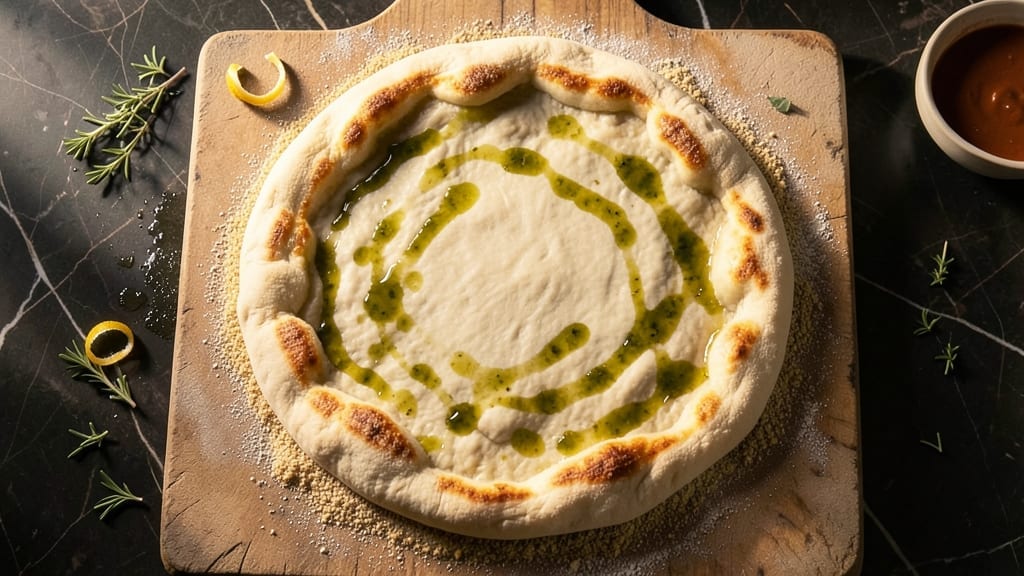
This 000 flour pizza dough recipe delivers the chewy, airy crust you crave without the kneading marathon—just mix, rest, and bake. The secret lies in high-protein 000 flour and a no-knead method that develops gluten naturally while you sleep.
I’ve perfected this over years of testing, and it never fails to impress, even with picky eaters. The result? A crispy-yet-flexible crust with those coveted leopard-spot bubbles that scream “authentic Italian pizzeria.”
What sets this dough apart is its simplicity: five ingredients, 15 minutes of prep, and overnight resting for maximum flavor development. The 000 flour’s high gluten content creates that signature chew, while a touch of olive oil keeps the texture tender.
No stand mixer required—just your hands and patience. This method works equally well for thin Neapolitan-style pies or thick New York slices, proving its versatility.
By the time you pull it from the oven, you’ll have a golden-brown crust with a crackly exterior and a soft, airy interior—exactly what separates homemade pizza from store-bought. The dough’s elasticity makes it easy to stretch, even for beginners, and it reheats beautifully for leftovers.
Whether you’re feeding a crowd or treating yourself to a solo slice, this dough delivers restaurant-quality results every time.
Pair it with classic toppings like margherita or pepperoni, or get creative with seasonal ingredients. The possibilities are endless, but the foundation—this foolproof 000 flour dough—is what makes it all possible. Let’s get started on your perfect pie.
Ingredients for 000 flour pizza dough
Five ingredients transform into the perfect chewy pizza crust with minimal effort.
| Ingredient | Amount | Notes |
|---|---|---|
| 000 Flour 🌾 | 3 ½ cups | High-protein for chewy texture |
| Extra-Virgin Olive Oil 🫒 | ½ cup | Lightly aromatic, not strong |
| Warm Water 💧 | 1 ¼ cups | 105°F for optimal hydration |
| Instant Yeast 🍞 | ½ tsp | Fresh yeast preferred if possible |
| Fine Sea Salt 🧂 | 1 ½ tsp | Diamond Crystal preferred |
| Cornmeal or Semolina 🌽 | ½ cup | For dusting work surface |
The 000 flour is non-negotiable here—its high gluten content creates that signature chewy bite. Caputo or Molino Grignano are the gold standards, but any quality 000 flour will work. I always grab mine from Whole Foods or specialty Italian markets, where they keep it fresh. The olive oil should be extra-virgin but not overly peppery—Colavita or Bertolli are my go-tos. For the yeast, fresh is ideal but instant works in a pinch. Just make sure it’s not expired—nothing worse than flat dough. The water temperature matters too: too hot kills the yeast, too cold slows fermentation. Aim for 105°F—warm to the touch but not scalding.
No 000 flour? King Arthur Bread Flour is the closest substitute, though the texture won’t be identical. Swapping olive oil for avocado oil keeps the neutral flavor but loses some authenticity. Running short on yeast? A pinch of baking soda plus vinegar can work in a bind, though results vary. The salt is crucial—Diamond Crystal dissolves more easily than table salt, so adjust if using another type. For the cornmeal, semolina gives that classic pizza feel, but regular cornmeal works too. Pro tip: if your kitchen feels cold, warm the water slightly longer—yeast loves 75-80°F environments to activate properly.
This dough is all about patience. Once mixed, let it rest at room temperature for 1 hour before refrigerating overnight. The magic happens during that cold fermentation—flavors deepen and gluten relaxes. Store it in an airtight container for up to 3 days in the fridge. For longer storage, freeze portions wrapped in plastic for up to 3 months. When ready to use, let it sit at room temperature for 1-2 hours before stretching. The dough doubles in size overnight, so don’t panic if it looks huge—it’s supposed to! Leftovers? Shape into balls, freeze, and bake straight from frozen for quick pizzas later.
Why You’ll Love This Recipe
- Five-Ingredient Magic: I swear by this list—just flour, oil, water, yeast, and salt. That’s it. No fancy mixers or confusing ratios, just the purest, most reliable dough I’ve ever made. The 000 flour gives it that silky stretch without the gluten headache, and the olive oil keeps it tender without tasting like butter.
- Crispy-Chewy Perfection: Between us, that first bite where the edge cracks but the center stays pillowy? It’s the reason I keep coming back. The olive oil infuses warmth, the yeast gives it that light airiness, and the salt—just a pinch—balances everything so it’s never overpowering.
- Weeknight Crowd-Feeder: I make this dough on Sundays, let it rise overnight, and boom—ready for game day, date night, or whenever my friends show up unannounced. It’s the same dough, but it works as a thin-crust pie for a party or a thick, chewy slice for a lazy Friday. No stress, just pizza.
- Dough That Lasts: Honestly, I’ve had this dough sitting in the fridge for four days and it still rises like a champ. Freeze half of it, and you’ve got a backup for when you’re too tired to bake. Plus, 000 flour is cheaper than you’d think—this recipe stretches my grocery budget without sacrificing flavor. Win-win.
Step-by-step instructions for 000 flour pizza dough
Here’s how to craft a perfectly chewy, no-knead pizza crust that rises beautifully and delivers that coveted al dente bite.
Mix the Dough with Precision
In a large bowl, combine the 3.5 cups 000 flour and 1.5 tsp fine sea salt. The high-protein content of 000 flour gives you that signature chewy texture, so don’t substitute with bread flour—it won’t give the same result. Make a well in the center and add the 0.5 tsp instant yeast to the bottom of this well.
Pour in the 0.5 cup extra-virgin olive oil and the 1.25 cups warm water (about 105°F). Using a wooden spoon or your hands, gently mix the ingredients until they begin to come together. You’ll notice the dough will be sticky—this is normal with 000 flour. Mix until just combined, about 2-3 minutes. The dough should form a shaggy mass that clings slightly to the bowl.
Rest the Dough for Optimal Development
Cover the bowl tightly with plastic wrap or a damp kitchen towel. Let the dough rest at room temperature for 1 hour. This resting period allows the gluten to relax and the yeast to activate properly. You’ll see the dough gradually rise and pull away from the sides of the bowl—this is your signal that fermentation is working.
I like to place the bowl in a slightly warm spot, like near the oven with the light on, to encourage gentle fermentation. Avoid placing it in direct sunlight or near a heat source, as this can cause the dough to overproof. After 1 hour, the dough should have roughly doubled in size and feel slightly springy when pressed gently with your finger.
Shape the Dough for Perfect Crust
Lightly flour your work surface with cornmeal or semolina—this prevents sticking and adds a subtle texture to the bottom of your pizza. Turn the rested dough out onto the floured surface and gently pat it into a rough rectangle about ½-inch thick. The dough will be quite sticky, so wet your hands slightly to prevent sticking.
Fold the dough over itself like a letter, then fold it again in the same direction. This technique, called “book folding,” helps develop gluten evenly. After folding, let the dough rest for another 20-30 minutes while you preheat your oven. This final rest ensures the dough is pliable and easy to stretch without tearing.
Stretch and Bake to Golden Perfection
Preheat your oven to 475°F with a pizza stone or baking sheet inside. After the final rest, use your fingertips to gently stretch the dough into your desired shape—whether it’s a classic 12-inch round or a rectangular pan pizza. Press lightly with your fingertips to create dimples, which help the crust puff up beautifully during baking.
Transfer the stretched dough to your preheated pizza stone or baking sheet. Bake for 8-10 minutes until the edges are golden brown and the crust feels firm to the touch. The center should still look slightly pale—this ensures a perfectly al dente bite. If you’re adding toppings, do so right after removing the crust from the oven to prevent over-browning.
Pro Tips For Making 000 Flour Pizza Dough
- Weigh Your Flour: Skip the scoop-and-sweep method—000 flour is deceptively dense. Use a kitchen scale for 500g (or your recipe’s weight) and spoon it into the bowl without packing it down. I learned this the hard way when my dough turned out too stiff and chewy, no matter how much water I added.
- Hydrate the Yeast First: Mix the instant yeast with the warm water (about 105–110°F) and let it sit for 5 minutes before adding it to the flour. This ensures it’s fully activated and cuts down on uneven rising. I used to just toss it in dry, and my dough would sometimes rise sluggishly—this step fixes that.
- Rest the Dough Cold: After kneading, shape the dough and refrigerate it for at least 24 hours. The cold slows fermentation, develops gluten, and makes stretching easier. I know, I know—you’re eager to bake. But skipping this means a tougher, less flavorful crust.
- Oil Your Hands: Lightly coat your hands with extra-virgin olive oil before handling the dough. It prevents sticking and makes shaping smoother, especially when rolling out thin. Trust me, the last thing you want is dough tearing because it’s clinging to your fingers like a stubborn toddler.
Storing and reheating your leftovers
Fridge Storage Secrets
After your dough has rested overnight, store it in an airtight container covered with plastic wrap or a damp towel. The fridge slows fermentation, preserving freshness for up to 3 days. I like to use glass containers—they keep the dough from drying out.
Let it sit at room temperature for 1-2 hours before shaping to restore pliability. The cold helps develop deeper flavors, but don’t overdo it—dough older than 3 days loses elasticity. 🌡️
Freezer Prep for Later
For longer storage, divide the dough into 4 equal balls (about 8 oz each), wrap tightly in plastic, then place in a freezer bag. This prevents freezer burn and makes thawing easier. Freeze for up to 3 months.
When ready to use, thaw overnight in the fridge or 1 hour at room temperature. The dough will be slightly stiffer but still stretchable—just handle gently. I often freeze extras after making the dough to avoid waste. ❄️
Reheating Leftover Crust
Reheat pizza slices at 350°F for 5-7 minutes on a baking sheet to restore crispiness. For a quicker fix, use the broiler on low for 1-2 minutes—watch closely to avoid burning.
Add a splash of water to a microwave-safe plate before reheating to prevent drying. The crust loses some chewiness but still tastes amazing. I prefer oven reheating for that fresh-baked texture. 🔥
Reviving Stale Dough
If your dough feels dry or tough after storage, knead in 1-2 tsp extra olive oil and let it rest for 20 minutes. This restores moisture and softness. For extra help, place a damp paper towel over the dough while it rests.
The oil mimics the original hydration, making it stretchable again. This trick works for both fridge and freezer dough. 💧
Baking from Frozen
Skip thawing entirely! Shape your frozen dough balls directly onto a preheated pizza stone at 475°F. Bake for 12-15 minutes until golden. The cold dough creates steam, resulting in a crispier crust.
Add toppings after the first 5 minutes to prevent over-browning. This method is perfect for quick weeknight pizzas. ⏰
Nutrition facts
Frequently asked questions
Why does this 000 flour dough need overnight resting?
The overnight rest in the fridge is key for developing deep flavor and improving texture. During cold fermentation, the yeast works slowly, creating complex flavors and allowing gluten to relax. This makes the dough easier to stretch and gives that signature chewy bite. Skipping this step results in a denser, less flavorful crust.
Can I use bread flour instead of 000 flour?
While bread flour has similar protein content, it won’t give the same authentic texture. The fine grind of 000 flour creates that signature crispy-chewy contrast. If you must substitute, try King Arthur Bread Flour but expect a slightly different mouthfeel. For best results, stick with true 000 flour like Caputo.
How do I know when the dough is ready to stretch?
The dough is ready when it feels springy and slightly tacky to the touch. Press gently with your finger—it should bounce back slowly. If it springs back immediately, let it rest another 15-20 minutes. The dough should also be easy to stretch without tearing when you test a small section.
What’s the best way to prevent a soggy crust?
Bake your pizza on a preheated stone or baking sheet at 475°F for maximum crispiness. Add toppings right after removing from oven (not before) to prevent steam from making the crust soft. For extra insurance, bake the crust alone for 2-3 minutes before adding toppings.
Can I make this dough without a stand mixer?
This recipe is designed for hand-mixing only. The no-knead method means you just need to combine ingredients and let the dough develop naturally. Just be prepared for sticky hands—wet your fingers slightly to prevent sticking while shaping.

- 12 Bean Chili Recipe: Hearty Slow-Cooked Depth With 12 Legumes - October 17, 2026
- 5 Seed Bread Recipe: Nutty Crunch and Artisan Flavor in One Loaf - October 17, 2026
- 1 Lb Macaroni Salad Recipe: Bold, Crunchy, and Crowd-Pleasing - October 17, 2026