
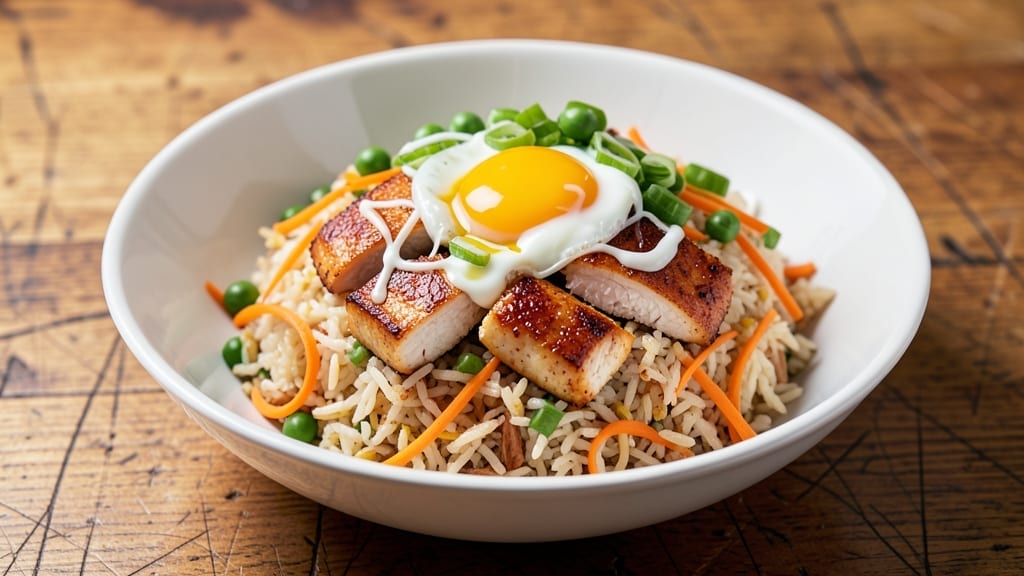
Mastering a 1 cup fried rice recipe is all about precision and balance—this one delivers restaurant-quality results in a single pan. The secret lies in using day-old rice (never fresh) and high heat to create that signature wok-like texture while keeping every ingredient perfectly cooked.
I’ve refined this recipe over years of testing, ensuring the protein stays tender, the veggies stay crisp, and the seasoning is spot-on without overpowering.
This version packs in protein with your choice of chicken, shrimp, or tofu, along with a mix of peas, carrots, and scallions for color and crunch. The sauce—a simple blend of soy sauce, sesame oil, and a touch of ginger—adds depth without drowning the dish.
What sets this apart is the one-pan method, which minimizes cleanup while maximizing flavor through quick, high-heat stir-frying.
By the end, you’ll have a golden, aromatic bowl of fried rice with tender protein, vibrant vegetables, and a savory-sweet sauce clinging to every grain. The texture is crisp yet tender, and the flavors are perfectly balanced—no soggy bits or bland aftertaste.
This is the kind of dish that tastes like a home-cooked meal but with the efficiency of a weeknight dinner.
Whether you’re prepping for lunchboxes, meal prepping for the week, or just craving a quick, satisfying meal, this recipe scales effortlessly. The instructions are straightforward, and the ingredients are simple—no fancy techniques required. Let’s get cooking!
Ingredients for 1 cup fried rice
Precision ingredients for one-pan fried rice—each plays a role in texture and flavor harmony.
| Ingredient | Amount | Notes |
|---|---|---|
| Day-Old Cooked White Rice 🍚 | 1 cup | Cold, preferably from 1-2 days ago |
| Boneless Chicken Breast 🍗 | ½ lb | Cut into 0.5-inch cubes, boneless skinless preferred |
| Frozen Peas 🥦 | ¼ cup | Thawed, no need to drain |
| Carrots 🥕 | ¼ cup | Julienned into thin matchsticks |
| Green Onions 🧅 | ¼ cup | Sliced into 0.25-inch pieces, white and green parts separated |
| Eggs 🥚 | 2 whole | Beaten, for binding |
| Light Soy Sauce 🍶 | 2 tbsp | Low-sodium preferred for balance |
| Dark Soy Sauce 🍶 | 1 tbsp | For depth of color |
| Sesame Oil 🫒 | 1 tbsp | Toasted, for aroma |
| Fresh Ginger 🌿 | 1 tsp | Finely grated, or 0.5 tsp ground ginger |
| Vegetable Oil 🫒 | 1 tbsp | High smoke point, like avocado or canola |
| Salt 🧂 | ¼ tsp | Adjust to taste after cooking |
| White Pepper 🌶️ | ¼ tsp | Freshly ground preferred |
The rice is non-negotiable—day-old, cold grains create that signature wok texture. Day-Rice or Trader Joe’s frozen rice are lifesavers for last-minute meals. For protein, chicken breast stays tender when cut uniformly, but shrimp or tofu work equally well if you prefer. The carrots should be julienned into thin matchsticks—they cook faster and stay crisp. Green onions add freshness, so separate the white and green parts: the whites cook down, while the greens stay bright for garnish. Fresh ginger is ideal, but ground ginger works in a pinch—just halve the amount.
No light soy sauce? Substitute with regular soy sauce plus 0.5 tsp sugar to mimic the balance. Sesame oil can be swapped for toasted peanut oil if you’re avoiding sesame allergies. For a vegetarian version, replace chicken with extra-firm tofu pressed for 15 minutes or chickpeas for protein. The peas can be fresh, but frozen is more convenient—just thaw them first. If you’re short on time, pre-shredded carrots from the salad bar section work, though they’ll cook faster. The beaten eggs bind everything together, so don’t skip them—they add richness without overpowering.
Store cooked fried rice in an airtight container for up to 4 days in the fridge, though it reheats best within 2 days. For freezing, portion into single-serving containers—it reheats beautifully in the microwave with a splash of water. The sauce components (soy sauces, sesame oil) can be pre-mixed and stored for 1 month in the fridge. To reheat, use medium heat on the stovetop with a splash of water to restore moisture. This dish scales perfectly for meal prep—double the batch and freeze half for later.
Why You’ll Love This Recipe
- No Chopping Chaos: I use pre-shredded carrots and frozen peas—no knife skills required. The only thing I dice is the chicken, and even that’s just rough chunks. Honestly, this is the kind of recipe that lets me multitask while pretending to be productive.
- Umami Bomb: That crispy chicken and day-old rice combo? It’s like a flavor explosion. The green onions add a fresh kick, and the peas bring sweetness—every bite has layers. Between us, I’ve made fried rice before, but this one actually tastes like it belongs in a restaurant.
- Lunchbox Hero: Pack it cold or reheat it—this holds up perfectly. I make a big batch on Sundays, and by Wednesday, it’s still the star of my work lunch. My kid even sneaks it into her school lunchbox (yes, even on a Tuesday).
- Budget Win: A single chicken breast and a bag of frozen veggies stretch across multiple meals. No wasted ingredients, no last-minute grocery runs. It’s the kind of dish that makes me feel smart about my grocery bill while still feeding my family real, satisfying food.
Step-by-step instructions for one-pan protein-packed fried rice
Transform simple ingredients into a restaurant-quality fried rice with this efficient, flavor-packed method.
Prep Ingredients for Maximum Flavor and Texture
Start by preparing all ingredients simultaneously for efficiency. Cut the 0.5 lb boneless chicken breast into 0.5-inch cubes—uniform size ensures even cooking. Julienne the 0.25 cup carrots into thin matchsticks for quick cooking and visual appeal. Slice the 0.25 cup green onions into 0.25-inch pieces, separating the white and green parts for balanced color and flavor.
In a small bowl, whisk together the 2 whole eggs until just combined—no need to overbeat. Finely grate the 1 tsp fresh ginger for aromatic depth. Thaw the 0.25 cup frozen peas if needed, but don’t drain them; the moisture helps steam the peas during cooking. Measure out the sauces: 2 tbsp light soy sauce, 1 tbsp dark soy sauce, and 1 tbsp sesame oil in separate small bowls for precise addition.
Cook Chicken and Vegetables in Stages
Heat 1 tbsp vegetable oil in a large skillet or wok over medium-high heat until shimmering. Add the chicken cubes in a single layer, spreading them out to avoid crowding. Cook undisturbed for 2-3 minutes until the edges turn opaque and the chicken releases easily from the pan. Remove and set aside on a plate.
In the same pan, add the julienned carrots and white parts of the green onions. Stir-fry for 1-2 minutes until the carrots soften slightly but retain their bright color. Add the thawed peas and cook for another 30 seconds until heated through. Return the chicken to the pan and mix briefly to combine.
Scramble Eggs and Combine with Rice
Reduce heat to medium and add a thin layer of vegetable oil if needed to prevent sticking. Pour in the beaten eggs and scramble gently with a spatula, folding the mixture as it sets. Once the eggs are just set but still slightly moist (about 30-45 seconds), add the 1 cup day-old cooked white rice, breaking up any clumps with your spatula.
Here’s where the magic happens: Pour the 2 tbsp light soy sauce, 1 tbsp dark soy sauce, and 1 tbsp sesame oil over the rice mixture. The dark soy sauce will give the fried rice its signature deep color while enhancing the umami flavor. Sprinkle the 0.25 tsp salt and 0.25 tsp white pepper evenly over the mixture.
Stir-Fry to Perfect Texture and Flavor
Increase heat to high and stir-fry vigorously for 3-4 minutes, using a wide spatula to cut through the rice and scrape up any browned bits from the bottom of the pan. The rice should be heated through and slightly crispy around the edges. Add the green parts of the sliced green onions and the 1 tsp finely grated fresh ginger, stirring for another 30 seconds to incorporate.
Taste and adjust seasoning if needed—this is your opportunity to balance the flavors. The fried rice should be savory, slightly sweet from the soy sauces, and aromatic from the sesame oil and ginger. If it’s too dry, add 1-2 tablespoons of water and stir-fry for another minute to steam the rice slightly.
Finish and Serve Immediately
Remove the fried rice from heat and let it rest for 1 minute to allow the flavors to meld. Serve immediately while hot, garnished with additional green onions if desired. The texture should be a perfect balance: slightly crispy edges on the rice, tender chicken, and bright, fresh vegetables.
This one-pan method keeps everything hot and flavorful while minimizing cleanup. The day-old rice is crucial—it’s dry enough to crisp up during cooking but still moist enough to absorb the sauce. Enjoy your protein-packed fried rice with a side of steamed greens or a simple cucumber salad for a complete meal.
Pro Tips For Making 1 Cup Fried Rice
- CRISP THE CHICKEN FIRST: Cut the boneless chicken into ¼-inch pieces and sear them in a dry, smoking-hot pan for 2-3 minutes before removing. This locks in juices and gives your fried rice actual meaty flavor instead of bland, overcooked shreds—especially important when working with a small 1-cup batch where every bite counts.
- BREAK THE RICE CLUMPS: Spread the day-old rice on a baking sheet and microwave it for 30 seconds with a splash of water. Then, use the back of a fork to aggressively smash any remaining clumps—this prevents gummy rice in your final dish. (Yes, it looks like you’re attacking the rice, but trust me.)
- DON’T OVERMIX THE PEAS: Toss in the frozen peas last and stir just once or twice—you’re not making a smoothie. Overworking them turns them to mush, and you’ll end up with a sad, watery texture instead of bright, pop-in-your-mouth pea bursts. Add them when the rice is nearly done and the pan is just off the heat.
- USE THE GREEN ONIONS WISELY: Finely chop the white parts of the green onions (about 2 tablespoons) and reserve the greens for garnish. Sauté the whites with the chicken first—they add depth without overpowering, while the bright green tops stay crisp for that restaurant-style finish. (Pro move: sprinkle them on after plating.)
Common mistakes when making great 1 cup fried rice
Overcrowding the Pan
This is the #1 mistake I see—packing too much into the pan at once. When you overcrowd, the ingredients steam instead of searing, leading to mushy rice and soggy veggies. I’ve learned to work in batches: cook the chicken first, then veggies, then eggs, and finally the rice.
This ensures everything gets that perfect crisp-tender texture. A 12-inch skillet or wok is ideal for this recipe—it gives enough space for ingredients to breathe while still allowing high heat. 🔥
Using Fresh Rice
Freshly cooked rice is a fried rice disaster because it’s too moist and sticky. The grains clump together, making it impossible to achieve that signature wok texture. Always use day-old rice—it’s dry enough to crisp up during cooking but still moist enough to absorb the sauce.
Pro tip: Spread the cooked rice on a tray and refrigerate uncovered for 30 minutes to speed up the drying process. If you’re in a pinch, Trader Joe’s frozen day-old rice works perfectly.
Skipping the Eggs
The eggs aren’t just for binding—they add richness and help distribute the sauce evenly throughout the rice. Without them, the fried rice can taste flat and dry. I recommend using room-temperature eggs for even cooking.
Scramble them just until set (about 30-45 seconds) so they stay slightly moist and blend seamlessly with the rice. If you’re avoiding eggs, try silken tofu as a substitute, but it won’t have the same texture.
Low and Slow Cooking
Fried rice is all about high heat and quick cooking. If you cook it on low heat, the rice will turn out mushy, and the flavors will be bland. Once you add the rice to the pan, crank the heat to high and stir-fry vigorously for 3-4 minutes.
The goal is to create a Maillard reaction on the rice grains, giving them that delicious crispy exterior. A wok or cast-iron skillet is perfect for this—both retain heat exceptionally well.
Ignoring the Sauce Balance
Using only light soy sauce will leave your fried rice tasting flat, while too much dark soy sauce can make it overly salty. The key is to use both: 2 tbsp light soy sauce for flavor and 1 tbsp dark soy sauce for color and depth.
Don’t forget the sesame oil—it adds an aromatic punch. Taste as you go and adjust seasoning with salt or white pepper if needed. I also like to add a pinch of white pepper instead of black pepper to keep the dish looking bright and clean. ✨
Not Resting the Fried Rice
After cooking, let the fried rice rest for 1 minute before serving. This allows the flavors to meld and the rice to absorb any remaining sauce. Skipping this step can result in a dish that tastes uneven or overly dry.
While it rests, give it a quick stir to redistribute any sauce that might have settled at the bottom of the pan. This is also a great time to garnish with extra green onions or a drizzle of toasted sesame oil for added freshness.
Nutrition facts
Frequently asked questions
Why does the recipe call for day-old rice?
Day-old rice is essential because fresh rice is too moist and sticky, making it impossible to achieve the crisp-tender texture fried rice is known for. The grains need to be dry enough to crisp up during cooking but still absorb the sauce properly. If you don’t have day-old rice, spread freshly cooked rice on a tray and refrigerate it uncovered for 30 minutes to speed up the drying process.
Can I make this recipe vegetarian?
Replace the chicken with extra-firm tofu (pressed for 15 minutes) or chickpeas for protein. For extra flavor, marinate the tofu in 1 tbsp soy sauce and 1 tsp sesame oil before cooking. The rest of the recipe stays exactly the same, and you’ll still get that perfect crispy texture.
What’s the best pan for this recipe?
A 12-inch wok or cast-iron skillet is ideal because they retain heat well and allow for high-heat stir-frying. If you don’t have either, a heavy-bottomed stainless steel or nonstick skillet will work too. Just make sure it’s large enough to avoid overcrowding—this ensures the ingredients sear properly instead of steaming.
How do I adjust the seasoning if I don’t have dark soy sauce?
Dark soy sauce adds color and depth, but you can substitute it with a mix of 1 tbsp regular soy sauce and ½ tsp sugar to mimic its flavor profile. For color, add a pinch of turmeric or paprika (just ¼ tsp)—it won’t taste the same but will give the fried rice a richer hue. Always taste as you go and adjust with extra soy sauce or salt if needed.
Can I meal prep this fried rice?
Yes, but it reheats best within 2 days for optimal texture. Store in an airtight container in the fridge and reheat in the microwave with a splash of water or on the stovetop over medium heat, stirring occasionally. For freezing, portion into single-serving containers—it reheats beautifully but may lose some crispiness. Avoid reheating more than once.

- Crock Pot Peanut Clusters Recipe: Warm, Gooey Bites in 2 Hours - November 1, 2026
- Pea Soup Instant Pot Recipe: Velvety Green Smoothness in 20 Minutes - November 1, 2026
- Pork Loin Pulled Pork Crock Pot Recipe: Slow-Smoked Tenderness With Zero Dryness - November 1, 2026