
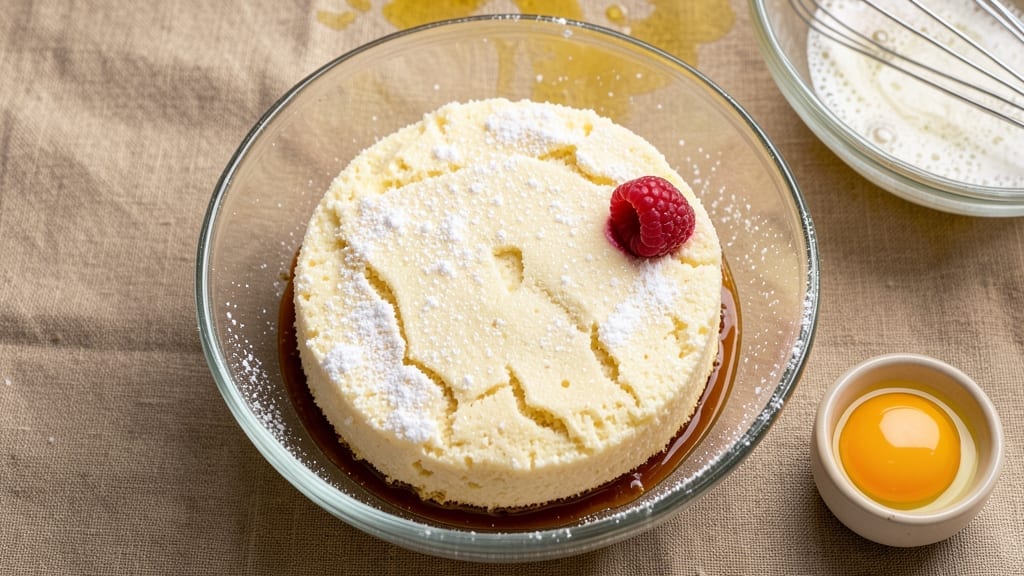
This 1 egg sponge cake recipe delivers the same ethereal lightness as richer versions—just with half the yolks and all the magic. The secret lies in properly whipping the egg foam to trap air, then gently folding in dry ingredients to preserve that delicate structure.
I developed this recipe after years of testing minimal-egg baking, and it consistently delivers perfectly tender layers with just one egg’s power.
The process requires precision: whipping the egg until it triples in volume and forms stiff peaks, then folding in sifted flour and sugar to maintain that airy texture. No special equipment is needed—just a bowl, whisk, and oven set to 350°F.
The cake bakes in 25-30 minutes, emerging with a golden crust and a crumb so light it practically dissolves on the tongue.
What makes this recipe remarkable is its versatility—add vanilla extract or lemon zest for flavor without compromising texture. Serve it with fresh berries, whipped cream, or dusted with powdered sugar for a dessert that feels both elegant and effortless.
The single egg provides all the structure and moisture needed, making this the ultimate foolproof sponge cake.
Perfect for special occasions or weeknight treats, this recipe scales easily for layer cakes or single servings. The key is patience during the folding stage—rushing collapses the air pockets. Trust the process, and you’ll achieve bakery-quality results with minimal ingredients. Let’s get baking!
Ingredients for 1 egg sponge cake
Nine essential ingredients transform one egg into bakery-worthy sponge cake layers.
| Ingredient | Amount | Notes |
|---|---|---|
| Large Egg 🥚 | 1 whole | Room temperature, separated |
| Granulated Sugar 🍚 | 1 ¼ cups | Superfine preferred for dissolving |
| All-Purpose Flour 🌾 | 1 ½ cups | Sifted, spooned lightly |
| Unsalted Butter 🧈 | ¼ cup | Melted, cooled slightly |
| Vanilla Extract 🌿 | 1 tbsp | Pure, high-quality preferred |
| Baking Powder 🍞 | ½ tsp | Aluminum-free for tender crumb |
| Salt 🧂 | ¼ tsp | Fine sea salt preferred |
| Lemon Zest 🍋 | 1 tbsp | Fresh, finely grated |
| Whole Milk 🥛 | ¼ cup | Room temperature |
The egg quality is non-negotiable—farm-fresh or organic from Whole Foods or Trader Joe’s delivers superior foam stability. Room temperature eggs whip to triple volume with stiff peaks, a critical step for structure. For the flour, King Arthur or Gold Medal brands are ideal—their protein content ensures tender yet sturdy crumb. Superfine sugar dissolves faster, preventing graininess, though regular granulated works if pulsed briefly in a food processor. The butter should be European-style (like Plugrá) for higher fat content and smoother texture.
No vanilla extract? Almond extract at half the amount works, though flavor differs. Substitute lemon zest with orange zest for a brighter note. The milk can be swapped for almond or oat milk, though whole dairy ensures optimal moisture. For a nut-free version, omit the milk entirely and increase melted butter by 1 tbsp. If your oven runs hot, reduce temperature to 325°F to prevent over-browning. For extra insurance against dryness, brush warm layers with simple syrup (equal parts sugar and water, heated until dissolved).
Store baked layers at room temperature in an airtight container with parchment between them for 2 days. For longer storage, freeze layers individually wrapped in plastic for up to 3 months. Thaw at room temperature before assembling. The cake’s delicate structure benefits from immediate assembly—don’t refrigerate until fully cooled to prevent condensation. For serving, dust with powdered sugar or top with fresh berries to complement the cake’s natural sweetness.
Why You’ll Love This Recipe
- No Fuss, Just Fluff: I swear by this recipe when I’m too tired to measure more than three ingredients. One egg, sugar, flour, butter—just fold and bake. The magic happens in the whisking, not the prep.
- Butter-Soft Perfection: That single stick of butter melts into the batter so smoothly, giving it this just-baked richness without being heavy. The vanilla? Oh, it’s the secret—subtle but undeniable.
- Breakfast or Dessert: Honestly, I eat it for breakfast with jam, then again for dessert with whipped cream. It’s the kind of cake that doesn’t judge your schedule—whether you’re grabbing a quick snack or celebrating something small.
- Pantry Staple, Zero Waste: Between us, this recipe uses what you already have. No weird substitutions, no leftover ingredients gathering dust. And if you bake a second one? It stays fresh for days, sliced between layers of jam or frosting.
Step-by-step instructions for 1 egg sponge cake
Master the technique of whipping egg foam to create a light, airy sponge cake with perfect height and texture.
Separate and Whip the Egg Whites to Stiff Peaks
Begin by separating the 1 whole Large Egg into its whites and yolk. Place the egg whites in a spotlessly clean, grease-free mixing bowl—any trace of fat will prevent proper whipping. I use a glass or metal bowl for this step to ensure maximum hygiene.
Using a stand mixer fitted with the whisk attachment, whip the egg whites on low speed until foamy, about 1 minute. Gradually add the 1.25 cups Granulated Sugar in a slow, steady stream while continuing to whip. Increase the speed to high and whip for 5-7 minutes until the egg whites form stiff peaks that hold their shape when the whisk is lifted. The peaks should be glossy and stand upright—this is critical for the cake’s structure.
Whip the Egg Yolk with Butter and Flavorings
In a separate bowl, combine the egg yolk with the 0.25 cup Unsalted Butter (melted and cooled slightly), 1 tbsp Vanilla Extract, 1 tbsp Lemon Zest, and the 0.25 cup Whole Milk. Whip this mixture on medium speed for 2-3 minutes until it becomes pale, thick, and slightly mousse-like. This step ensures the yolk incorporates air and blends seamlessly with the egg whites later.
Next, sift together the 1.5 cups All-Purpose Flour, 0.5 tsp Baking Powder, and 0.25 tsp Salt into the yolk mixture. Gently fold with a spatula until just combined—avoid overmixing, which can deflate the egg whites. The batter should be smooth but slightly thick, with no visible flour streaks.
Fold the Yolk Mixture into the Egg Whites
Now, carefully fold one-third of the whipped egg whites into the yolk mixture using a spatula, cutting through the center to create a well. This step gently incorporates the yolk without deflating the air in the egg whites. Once combined, fold in another third, then the final third, using a gentle, scooping motion. The goal is to maintain as much air as possible while integrating the two mixtures.
After folding, the batter should be thick, glossy, and hold its shape when spooned—this indicates proper aeration. If the batter looks too thin, it may need a few more folds to stabilize. Avoid overmixing at this stage, as it can cause the cake to sink.
Bake at Low Heat for Even Rise
Preheat your oven to 350°F and prepare two 8-inch round cake pans by lining the bottoms with parchment paper. Grease the pans lightly with butter or nonstick spray to prevent sticking. Divide the batter evenly between the pans, smoothing the tops with a spatula.
Bake the cakes for 25-30 minutes, or until the tops spring back when pressed gently and a toothpick inserted into the center comes out clean. The cakes should rise slightly and develop a golden hue. I like to bake them at a lower temperature for longer to ensure even cooking and prevent overbrowning. Rotate the pans halfway through baking for uniform heat distribution.
Cool and Serve for Maximum Moisture
Remove the cakes from the oven and let them cool in the pans for 5 minutes. Then, invert them onto a wire rack to cool completely. This cooling process is essential—rushing it can cause the cakes to collapse. Once fully cooled, you can slice them into thin layers for filling or serve them whole for a delicate, airy texture.
For best results, store the cakes in an airtight container at room temperature for up to 2 days or refrigerate for up to 5 days. The sponge cake’s lightness and tenderness come from the whipped egg foam, so handling it gently ensures it retains its signature texture. Serve with fresh berries, whipped cream, or a dusting of powdered sugar for a classic finish.
Pro Tips For Making 1 Egg Sponge Cake
- Whip Eggs to Ribbon Stage: Use a stand mixer or hand mixer—no half-measures here. The egg-sugar mix should coat the back of a wooden spoon and hold its shape for a few seconds when the beaters are lifted. I learned this the hard way after a cake that collapsed like a deflated balloon; that extra 30 seconds of whipping makes all the difference.
- Melt Butter Slowly: Warm the butter in the microwave for 10-15 seconds, then stir until just melted—not hot, not greasy. Drizzle it into the egg mixture in a thin stream while mixing on low. After burning three batches, I finally figured out that butter straight from the fridge or too-hot butter ruins the texture.
- Sift Flour Like You Mean It: Don’t just dump the flour—sift it twice if you’re feeling fancy. The goal is to aerate it and avoid dense pockets in your cake. I skip this when I’m lazy, but the difference in crumb is noticeable. A fine-mesh sieve works best, and tap it gently on the counter to break up any clumps.
- Bake Until Springy: Check doneness by pressing the center lightly—it should spring back, not jiggle. If the top browns too fast, tent loosely with foil. My grandmother swore by this, and she was right: underbaking just a little keeps the sponge tender, while overbaking turns it into a brick. Aim for 25-30 minutes at 350°F (175°C), but always trust your finger over the timer.
Best sauces and condiments for this dish
Classic Vanilla Glaze
This simple 3-ingredient glaze elevates your sponge cake instantly. Combine ½ cup powdered sugar with 1 tbsp heavy cream and ½ tsp vanilla extract in a small bowl. Whisk until smooth, then drizzle over cooled layers.
The glaze adds subtle sweetness without overwhelming the delicate cake texture. For extra shine, brush with 1 tsp apricot jam warmed slightly. 💛
Lemon Curd Filling
Bright citrus cuts through the richness perfectly. Make a quick lemon curd by whisking ½ cup lemon juice, ⅓ cup sugar, 2 tbsp butter, and 1 egg yolk over low heat until thickened.
Spread between layers while warm. The acidity balances the cake’s natural sweetness while adding a professional touch. Store-bought curd works in a pinch—just warm it slightly before using. ✨
Chocolate Ganache
For a decadent twist, melt ½ cup dark chocolate chips with ¼ cup heavy cream in a double boiler. Let cool slightly before spreading between layers. The ganache’s richness contrasts beautifully with the light sponge.
For extra flair, top with chopped toasted nuts or a sprinkle of sea salt. Use 70% cacao chocolate for balanced sweetness. 🍫
Berry Compote
Fresh or frozen berries create a vibrant topping. Simmer 1 cup mixed berries with 2 tbsp sugar and 1 tsp lemon juice for 5 minutes until syrupy. Strain seeds if desired, then cool completely.
The berries’ natural juices infuse the cake with freshness. For a summer variation, use raspberries or blackberries. Serve at room temperature for best texture. 🍓
Cream Cheese Frosting
This tangy frosting adds a luxurious finish. Beat 8 oz cream cheese, ½ cup butter, 2 cups powdered sugar, and 1 tsp vanilla until smooth.
Spread between layers and on top. The frosting’s slight tartness complements the cake’s delicate sweetness. For extra stability, chill the cake for 30 minutes before serving. 🥛
Honey-Drizzle Option
A drizzle of warm honey adds natural sweetness and shine. Heat 2 tbsp honey with 1 tsp lemon juice until runny, then drizzle over the cake. The honey’s floral notes enhance the vanilla flavor.
For a spiced variation, add ¼ tsp cinnamon to the honey mixture. This works beautifully with both plain or flavored cakes. 🍯
Nutrition facts
Frequently asked questions
Can I make this sponge cake without a stand mixer?
Use a hand whisk and strong arm—whip the egg whites in a spotless bowl for 8-10 minutes until stiff peaks form. The key is patience: work in short bursts to avoid fatigue. For the yolk mixture, use a fork or small whisk to combine ingredients thoroughly. Just be extra gentle when folding to preserve all that air!
Why does my cake sink in the middle?
Most likely, the egg whites weren’t whipped enough or were deflated during folding. Make sure your egg whites form stiff peaks that hold their shape, and fold the yolk mixture in gently using a spatula. Also, avoid opening the oven door early—heat loss causes collapse. Bake until a toothpick comes out clean!
Can I substitute the milk with something else?
Yes! Use almond milk, oat milk, or even water in equal amounts. For richer texture, add 1 extra tablespoon of melted butter to compensate. The milk adds moisture and tenderness, but these alternatives work well—just expect slightly less moist crumb.
How do I make this recipe vegan?
Replace the egg with ¼ cup aquafaba (chickpea brine) whipped to stiff peaks. Use vegan butter and flax eggs (1 tbsp ground flax + 3 tbsp water) for the yolk mixture. The texture will be slightly denser but still delicious. For best results, add 1 extra tbsp of flour to compensate for the egg’s binding properties.
Can I bake this in a different pan size?
Yes, but adjust baking time. For a 9-inch pan, bake 20-25 minutes (thinner layers cook faster). For a 6-inch pan, bake 30-35 minutes (thicker layers need more time). Use the toothpick test to check doneness—insert in the center until it comes out clean. Rotate pans halfway for even baking!

- Pea Soup Instant Pot Recipe: Velvety Green Smoothness in 20 Minutes - November 1, 2026
- Pork Loin Pulled Pork Crock Pot Recipe: Slow-Smoked Tenderness With Zero Dryness - November 1, 2026
- Baked Potatoes in Crock Pot Recipe: Buttery Interiors and Crispy Top Magic - November 1, 2026