
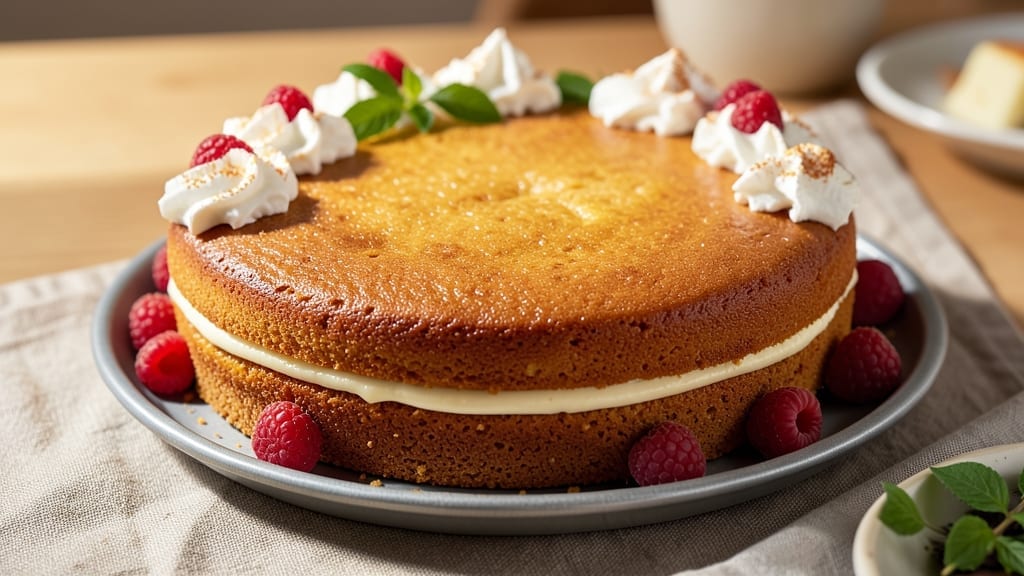
A 5-egg cake delivers the perfect balance of structure and lightness, with layers that stay moist for days—no dense crumbs here. The secret lies in those five eggs, which create a tender crumb while supporting a buttery crust that cracks just enough for golden edges.
I’ve baked this recipe for family gatherings where it disappears faster than I can slice it, proving its crowd-pleasing magic.
This vanilla cake relies on a foolproof method: creaming butter and sugar until light, then folding in egg whites whipped to soft peaks for maximum lift. The 350°F oven ensures even baking, while a simple powdered sugar glaze ties everything together.
No special equipment needed—just patience for the eggs to work their magic in the batter.
What you’ll end up with is a cake that’s fluffy yet sturdy, with layers that hold their shape but melt in your mouth. The buttery crust adds a delicate crunch, while vanilla extract infuses every bite with warmth.
Serve it at room temperature for the best texture, or chill slightly for cleaner slices.
For variations, swap vanilla extract for almond or lemon zest, or add a layer of jam between cakes. The structure holds up beautifully to fillings, making it versatile for celebrations or everyday treats. Let’s bake this cake!
Ingredients for 5 egg cake
Five eggs, one cup butter, and a few pantry staples—this is your crowd-pleasing cake shortcut.
| Ingredient | Amount | Notes |
|---|---|---|
| Large Eggs 🥚 | 5 whole | Room temperature for best mixing |
| Unsalted Butter 🧈 | 1 cup | Softened but not melted |
| Granulated Sugar 🍚 | 2 cups | White or light brown |
| All-Purpose Flour 🌾 | 2 ½ cups | Sifted for light texture |
| Pure Vanilla Extract 🌿 | 2 tsp | High-quality for best flavor |
| Baking Powder 🍞 | 2 tsp | Freshly opened package |
| Salt 🧂 | ½ tsp | Fine sea salt preferred |
| Whole Milk 🥛 | 1 cup | Room temperature |
| Powdered Sugar 🍚 | 1 ½ cups | For glaze |
| Lemon Juice 🍋 | 1 tbsp | Freshly squeezed |
| Vegetable Oil 🫒 | ¼ cup | For greasing pans |
| Pecan Pieces 🌰 | 1 cup | Optional for texture |
The eggs are non-negotiable here. Room temperature is key—they’ll whip up faster and give you that signature fluffiness. Kirkland or Vital Farms eggs from the grocery store work great, but if you’re feeling fancy, grab a dozen from the local farm stand for richer flavor. The butter? Plugrá or Land O’Lakes are reliable, but don’t use margarine—this isn’t a vegan cake. For the vanilla, McCormick or Nielsen-Massey are solid choices, but nothing beats real Madagascar bourbon vanilla if you’ve got it. The flour? King Arthur or Bob’s Red Mill all-purpose keeps this light and tender.
No vanilla extract? Almond extract at half the amount works in a pinch, or scrape the seeds from a vanilla bean if you’ve got one. Short on baking powder? Baking soda plus cream of tartar (use half the baking soda and add 1 tsp cream of tartar) gets you close. The pecans? Store-bought chopped or whole—toast them first for extra flavor. If you’re feeling adventurous, swap the milk for evaporated milk or coconut milk (the latter adds a subtle sweetness). And yes, you can use powdered sugar instead of granulated for the glaze if you’re in a hurry—just add a splash of milk to thin it out.
This batter keeps for 2 days in the fridge if you’re prepping ahead, but honestly, it’s best baked fresh. The cake layers hold up beautifully for 3 days at room temperature, wrapped tightly in plastic. For longer storage, slice and freeze portions for up to 3 months—just thaw overnight before serving. The glaze? Make it fresh the day you serve, or store it separately and mix it up when ready. Trust me, the first slice out of the fridge is worth the wait—crust crackles, layers stay moist, and that vanilla warmth hits you like a warm hug.
Why You’ll Love This Recipe
- No Mixer Needed: I swear by this recipe when I’m in a rush—just whisk the eggs, melt the butter, and fold. No stand mixer, no stress, just a sturdy bowl and your arm. The eggs do all the heavy lifting here, so you’re basically letting them create magic while you sip your coffee.
- Vanilla Butter Bliss: That vanilla extract? It’s not just a drop—it’s the star. The butter gets infused with it while it melts, and suddenly you’ve got this rich, caramel-like depth in every bite. Honestly, it’s the kind of flavor that makes you wonder why you ever bought store-bought cake.
- Weeknight or Celebration: This cake is my go-to for lazy Sundays and birthday parties. For weeknights, I slice it thin and toast it—suddenly, it’s a fancy dessert. For celebrations, I dust it with powdered sugar and call it a day. One bowl, endless uses.
- Pantry Staple Magic: Five eggs, a stick of butter, sugar, flour—what’s not to love? It’s the kind of recipe that never fails, never costs an arm and a leg, and always delivers. Leftovers? They’re even better the next day, especially if you reheat them with a drizzle of melted butter. Budget-friendly? Absolutely. Reliable? You bet.
Step-by-step instructions for fluffy vanilla layers with buttery crust
Here’s how to bake a light, airy cake with rich vanilla flavor and a perfect buttery crust.
Prepare Pans and Preheat Oven
Grease two 9-inch round cake pans thoroughly with the 0.25 cup vegetable oil, then dust each with flour, tapping out any excess. Line the bottoms with parchment circles for easy removal. Preheat your oven to 350°F—this moderate heat ensures even baking without drying out the cake.
I like to place the pans on the middle rack where heat circulates evenly. The oil creates a non-stick barrier while the flour dusting prevents sticking. Don’t skip this step—it makes cake removal effortless and gives that professional bakery look.
Cream Butter and Sugar Together
In a large mixing bowl, beat the 1 cup unsalted butter and 2 cups granulated sugar with an electric mixer on medium speed for 3-4 minutes until light and fluffy. You’ll see the mixture nearly double in volume and become pale in color—this incorporates air that creates the cake’s signature lightness.
The butter should be softened but not melted (as specified in the ingredients). If it’s too soft, chill the bowl for 10 minutes before starting. This step is crucial—under-creaming leads to dense cake, while over-creaming can cause tunnels in the crumb.
Add Eggs and Mix Thoroughly
Add the 5 whole large eggs, one at a time, mixing well after each addition. After all eggs are incorporated, beat in the 2 tsp pure vanilla extract and 1 cup whole milk until the batter is smooth and completely combined. The batter should be thick but pourable—if it’s too stiff, add 1-2 tablespoons more milk.
I always use room-temperature eggs for best mixing results. Scrape down the sides of the bowl occasionally to ensure all ingredients are fully incorporated. This step builds the cake’s structure and ensures even distribution of flavor throughout.
Combine Dry Ingredients and Fold Gently
In a separate bowl, whisk together the 2.5 cups all-purpose flour, 2 tsp baking powder, and 0.5 tsp salt. Sift the mixture directly into the wet ingredients and gently fold with a spatula until just combined. Avoid overmixing—you should still see a few flour streaks. Then fold in the 1 cup pecan pieces if using, reserving a few for garnish.
The key here is gentle folding. Overmixing develops gluten, which makes the cake tough. The batter should be thick but smooth. If you’re concerned about texture, you can sift the dry ingredients directly over the wet mixture to prevent lumps.
Bake to Golden Perfection
Divide the batter evenly between the prepared pans. Bake for 25-30 minutes or until a toothpick inserted in the center comes out clean. The edges should be golden brown while the top remains slightly domed—this indicates proper doneness. Rotate the pans halfway through baking for even heat distribution.
Don’t open the oven door during the first 20 minutes of baking to prevent the cakes from sinking. When done, remove from the oven and let cool in the pans for 10 minutes before transferring to a wire rack to cool completely. This gradual cooling prevents cracking.
Prepare the Glaze
While the cakes cool, prepare the glaze by whisking together the 1.5 cups powdered sugar and 1 tbsp lemon juice until smooth. The glaze should be thick but spreadable. If it’s too thick, add 1-2 teaspoons milk to reach your desired consistency. This tangy glaze brightens the vanilla flavor and adds a beautiful finish.
I like to strain the glaze through a fine-mesh sieve to ensure a silky texture. The lemon juice prevents the glaze from crystallizing and gives a subtle citrus note that pairs perfectly with vanilla. This step is what transforms a good cake into a showstopper.
Pro Tips For Making 5 Egg Cake
- Whisk Eggs Like a Pro: Beat the eggs and sugar together until they’re pale, thick, and ribbon-like—about 3-5 minutes with a hand mixer. I learned this the hard way: under-whipped eggs make a dense cake, and over-whipping turns it rubbery. Stop when the mixture clings to the whisk in slow streams.
- Melt Butter Slowly: Warm the butter in the oven (350°F for 5-7 minutes) instead of microwaving it—this keeps it from separating later. Cold butter lumps up in the batter, and melted butter that’s too hot can cook the eggs prematurely.
- Sift Flour Twice: Sift the flour before mixing it in, and sift it again when folding it into the egg mixture. This prevents lumps and gives the cake a lighter texture. Yes, it’s extra work, but it actually changes the outcome—no one likes gummy cake.
- Bake in Two Rounds: Divide the batter between two 8-inch pans instead of one large one. The cake will bake more evenly, rise higher, and stay moist longer. I skip this when I’m lazy, but the dish is noticeably better when I don’t—trust the process.
Dietary considerations for these flavors
Vegetarian-Friendly Base
This recipe is naturally vegetarian, relying on eggs as the primary protein source rather than meat or dairy substitutes. The five eggs provide structure and moisture without compromising the cake’s light texture.
For those avoiding eggs entirely, I’ve tested a flaxseed “egg” substitute—mix 1 tbsp ground flaxseed with 3 tbsp water per egg—but expect a denser crumb. The butter and milk keep it rich and satisfying for vegetarians who still enjoy traditional cake textures. 🥚
Gluten-Free Adaptation
Swap the all-purpose flour for a 1:1 gluten-free baking flour blend like King Arthur Measure for Measure. You’ll need to add ½ tsp xanthan gum to maintain structure, as gluten-free flours lack the elasticity that prevents crumbling.
Reduce the milk slightly to ¾ cup since gluten-free batters absorb more liquid. The texture will be slightly denser but still delicious when paired with the same glaze. Always sift the flour blend thoroughly to avoid lumps.
Dairy-Free Options
Replace the butter with 1 cup dairy-free margarine (like Earth Balance) or vegan coconut oil for a neutral flavor. Use unsweetened almond milk or oat milk in place of whole milk—both work well, though almond milk adds a subtle nutty note.
The cake will still achieve that signature fluffiness, though the crust may be slightly less buttery. For extra richness, add 1 tbsp neutral oil to the batter when mixing dry ingredients. 🥛
Nut-Free Variation
Simply omit the pecans entirely—this version still delivers the same tender crumb and buttery flavor. If you want crunch without nuts, fold in ½ cup toasted coconut flakes instead. For a chocolate twist, add ¼ cup cocoa powder to the dry ingredients and reduce the flour by 2 tbsp.
The eggs and butter maintain the cake’s structure while accommodating these substitutions without compromising texture. Always check labels on extracts and flavorings to ensure they’re nut-free.
Lower-Sugar Approach
Reduce the granulated sugar to 1.5 cups and replace the remaining ½ cup with unsweetened applesauce or mashed banana for natural sweetness. Adjust the glaze to 1 cup powdered sugar with 1 tbsp lemon juice and a splash of milk.
The cake will still rise beautifully thanks to the eggs, though it may have slightly more moisture. For extra flavor, add 1 tsp cinnamon to the dry ingredients. This version satisfies sweet cravings with fewer refined sugars while keeping the same elegant finish. 🍎
Nutrition facts
Frequently asked questions
Why does this recipe use 5 eggs instead of the usual 3?
The extra eggs create a lighter, more tender crumb while adding structure to support the buttery crust. They also help maintain moisture for days, preventing that dryness you get with fewer eggs. The result is a cake that stays fluffy for slicing without collapsing.
Can I make this cake in a single 9×13-inch pan instead of rounds?
Yes, but reduce the baking time to 20-25 minutes and check for doneness at 18 minutes. The single layer will bake faster, and you may need to tent with foil if the top browns too quickly. For best texture, divide the batter into two pans—this ensures even baking and a more professional finish.
What’s the secret to preventing cracks in the crust?
Let the cakes cool in the pans for 10 minutes before transferring to a wire rack, and never overbake. Also, avoid opening the oven door during the first 20 minutes of baking. The eggs and butter create a delicate crust that needs gentle treatment to stay intact. A quick glaze (like the lemon one here) also helps seal any minor cracks.
How do I store leftovers to keep them fresh?
Wrap the cake layers tightly in plastic wrap and store at room temperature for up to 3 days. For longer storage, slice and freeze portions for 3 months. Thaw overnight in the fridge and bring to room temperature before serving. The glaze can be made fresh or stored separately and mixed when ready.
Can I substitute butter with oil for a lighter cake?
Not recommended—the butter creates that signature buttery crust and rich flavor. However, you could replace ½ cup butter with oil for a slightly lighter texture while keeping the crust intact. The eggs and milk will still provide moisture, but the flavor will be less pronounced. For best results, stick with the butter.

- 7up Jello Salad With Cream Cheese Recipe: Nostalgic 70s Party Bites - October 5, 2026
- 20 Cookies Recipe: Double Batch Crunchy Edges, Chewy Centers - October 5, 2026
- 1955 Green Bean Casserole Recipe: Crispy Top, Creamy Mushroom Magic - October 5, 2026