
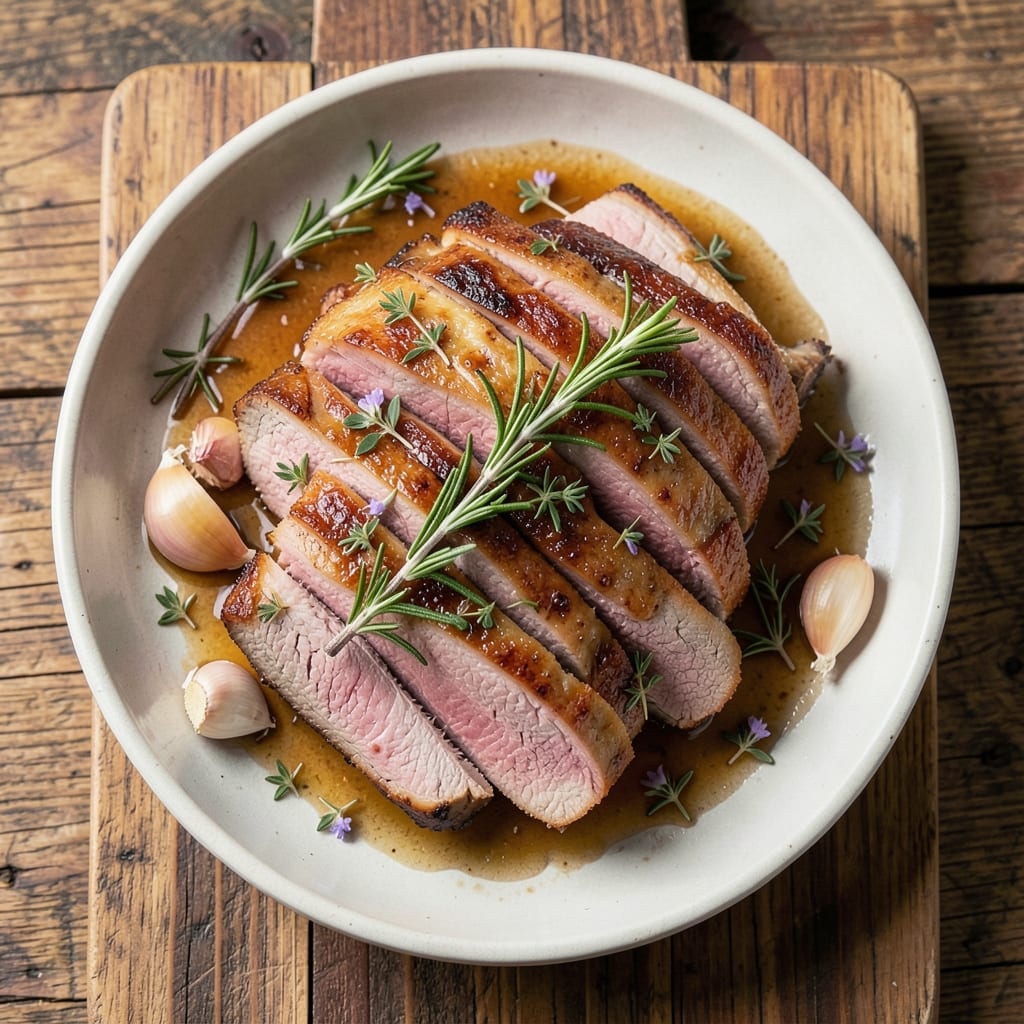
A 1 lb pork loin roast cooked to perfection delivers tender, juicy meat with a flavorful crust that’s impossible to resist. This herb-crusted method ensures a pink center that stays moist while developing a golden, aromatic exterior—just like my first roast at Chef Chen’s kitchen.
The secret lies in precise temperature control and a simple herb blend that elevates simple pork into something extraordinary.
What sets this recipe apart is the balance between searing and slow roasting. You’ll start with a high-heat sear to lock in juices, then finish at a lower temperature to guarantee that juicy pink center everyone craves.
The herb crust adds depth without overpowering the natural sweetness of the pork, making it versatile enough for weeknight dinners or special occasions.
By the time you serve this roast, you’ll have a perfectly cooked centerpiece that’s tender yet firm, with a crust that crackles under your knife.
The aromas alone will have everyone gathering at the table, and the first bite delivers that perfect harmony of savory, herby, and slightly caramelized flavors that define great pork roasting.
Pair it with apple compote for a classic touch or roasted root vegetables for a heartier meal. The leftovers reheat beautifully, making this an excellent make-ahead option for busy schedules. Let’s get started on creating your best pork roast yet.
Ingredients for 1 lb pork loin roast
Here’s what transforms simple pork into a restaurant-worthy herb-crusted masterpiece.
| Ingredient | Amount | Notes |
|---|---|---|
| Bone-In Pork Loin Roast 🐖 | 1 lb | Center-cut, 1-inch thick |
| Extra-Virgin Olive Oil 🫒 | 2 tbsp | High-quality, fruity variety |
| Fresh Rosemary 🌿 | ¼ cup | Finely chopped, stems removed |
| Fresh Thyme 🌿 | ¼ cup | Leaves only, stems removed |
| Garlic Cloves 🧄 | 6 cloves | Peeled, smashed slightly |
| Kosher Salt 🧂 | 1 ½ tsp | Diamond Crystal preferred |
| Freshly Ground Black Pepper 🌶️ | 1 tsp | Coarsely ground |
| Unsalted Butter 🧈 | 2 tbsp | Cold, cubed |
| Dried Mustard 🌶️ | 1 tsp | For crust depth |
| Apple Cider Vinegar 🍎 | 1 tbsp | For brightness |
| Granulated Sugar 🍬 | 1 tsp | Balances flavors |
| Fresh Sage Leaves 🌿 | ⅛ cup | Whole leaves, lightly crushed |
The pork loin is your star—look for a center-cut roast with good marbling for juiciness. Costco or Whole Foods carry excellent options, but any butcher will trim it to your exact thickness. Thinner cuts (under 1 inch) cook faster, while thicker ones need longer roasting. Pat it dry before seasoning—this helps the crust form. I always buy mine 24 hours ahead so it can dry out slightly in the fridge, which keeps it juicier during cooking. The herb blend is where magic happens: fresh rosemary and thyme add earthy depth, while the garlic and mustard create that perfect balance of savory and slightly tangy.
No fresh herbs? Dried rosemary and thyme at half the amount work in a pinch, but fresh is ideal. Substitute 1 tbsp fresh parsley if you’re missing sage. For the butter, European-style unsalted butter (like Plugrá) melts more cleanly than American brands. The apple cider vinegar adds brightness—white wine vinegar is a good swap if you’re out. If your roast is lean, don’t skip the sugar; it helps caramelize the crust. For extra richness, add 1 tbsp cream cheese to the herb mix. And trust me, room-temperature butter spreads better than cold cubes—just let it sit out for 10 minutes.
This roast reheats beautifully—350°F for 10-15 minutes brings it back to perfection. Wrap tightly in foil to retain moisture. Store leftovers for up to 4 days in the fridge or 3 months frozen. For make-ahead prep, assemble the herb crust a day ahead and refrigerate it on the roast. The flavors meld overnight, giving you even more depth. Slice against the grain for the most tender bites—every cut should reveal that juicy pink center we’re after. Leftovers make amazing sandwiches or tacos the next day.
Why You’ll Love This Recipe
- Minimal Prep Required: I swear by this—just rub the roast with olive oil, tuck in those whole garlic cloves (no mincing!), and scatter the rosemary and thyme sprigs. Ten minutes max, and you’re done.
- Crispy-Creamy Magic: That bone-in cut delivers juicy perfection, while the herbs and garlic sear into a fragrant crust. Honestly, the first bite makes you forget you didn’t spend hours in the kitchen.
- Weeknight to Weekend: Slice it for sandwiches, shred it for tacos, or serve it whole with roasted veggies. My daughter even sneaks bites straight from the pan—no judgment here.
- Leftovers That Don’t Suck: This roast actually improves the next day. Thin slices for salads, cubes for fried rice, or just reheated with a splash of broth. No sad, dry pork here.
Step-by-step instructions for herb-crusted pork loin roast
Here’s how to transform your pork loin into a restaurant-worthy centerpiece with tender pink meat and aromatic herb crust.
Prepare the Herb Crust Mixture
In a small bowl, combine the 0.25 cup fresh rosemary, 0.25 cup fresh thyme, 6 cloves garlic cloves, 1 tsp dried mustard, 1 tbsp apple cider vinegar, 1 tsp granulated sugar, 1.5 tsp kosher salt, and 1 tsp freshly ground black pepper. Use your fingers to gently crush the garlic cloves and bruise the herb leaves – this releases their essential oils and intensifies the flavor. The vinegar and sugar will create a perfect balance of tangy brightness and subtle sweetness that complements the pork beautifully.
Add the 2 tbsp extra-virgin olive oil to the herb mixture and stir until everything is thoroughly coated and evenly distributed. The oil will help bind the crust to the pork while adding richness. Let this mixture sit at room temperature for 10 minutes while you prepare the roast – this allows the flavors to meld together and creates a more cohesive crust.
Season and Coat the Pork Loin
Pat the 1 lb bone-in pork loin roast completely dry with paper towels, making sure to remove all moisture from the surface. This step is crucial for developing that beautiful crust – any moisture will prevent proper browning. Place the roast on a cutting board and use your hands to gently press the herb mixture all over the surface, making sure to get it into every crevice and along the bone.
Press the mixture firmly into the meat, allowing the oils and aromatics to penetrate the surface. The crust should adhere well to the dry pork. This isn’t just seasoning – the herbs will infuse the meat during cooking, creating layers of flavor from the outside in. Let the coated roast sit at room temperature for 20 minutes before roasting, which ensures even cooking throughout.
Roast to Juicy Perfection
Preheat your oven to 425°F and position a rack in the middle position. Place the herb-coated pork loin roast on a wire rack set inside a roasting pan – this allows air to circulate underneath, promoting even browning. Roast for 20 minutes to allow the crust to form and develop color. You’ll know it’s ready when the crust is deeply golden brown and the pork begins to release its juices.
After the initial searing period, reduce the oven temperature to 325°F and continue roasting for 20-25 minutes for a medium-rare center (or until the internal temperature reaches 145°F when measured at the thickest part of the roast). The bone-in cut will help regulate the cooking temperature, ensuring the meat stays juicy. The roast is done when it reaches 145°F internally and the juices run clear when pierced with a meat thermometer.
Rest and Finish with Butter
Remove the pork loin from the oven and transfer it to a cutting board. Tent loosely with aluminum foil and let it rest for 15 minutes – this crucial step allows the juices to redistribute throughout the meat, preventing them from running out when you slice. During this time, place the 2 tbsp unsalted butter in a small saucepan over low heat and melt it, then remove from heat.
After resting, brush the melted butter over the surface of the roast, allowing it to penetrate the crust and enhance the herb flavors. The butter will add a final layer of richness that complements the aromatic herbs. Slice the pork loin against the grain into ½-inch thick slices and serve immediately with the pan juices reduced by half and drizzled over the top.
Pro Tips For Making 1 Lb Pork Loin Roast
- Sear Before Roasting: Hit that pork loin with a screaming-hot pan first—no skimp here. A 3-4 minute sear on both sides locks in juices and builds flavor, while the bone-in piece gets extra caramelization. I used to skip this, and the roast always tasted flat by comparison.
- Trim the Fat, Not the Flavor: Scrape off any silverskin or excess fat from the roast, but leave the thin layer of fat on the cut—it’s what renders into golden, crispy bits during roasting. My grandmother swore by this, and she was right: that fat is your friend, not the enemy.
- Don’t Crowd the Herbs: Sprinkle rosemary and thyme lightly—about 2 sprigs each—so they crisp up instead of steam. Too many stems mean sad, soggy herbs. Place garlic cloves directly on the meat, not in the pan, so they caramelize into the crust.
- Rest It Like Your Life Depends On It: After roasting, tent that pork loin with foil and let it sit for at least 10 minutes—yes, even if you’re starving. The meat will stay juicy, and slicing it early will turn your perfect roast into a sad, dry mess. (I know, I know, but trust the process.)
Dietary considerations for this recipe
Gluten-Free Adaptation
This herb-crusted pork loin is naturally gluten-free, but the crust can be enhanced with a few adjustments. I always recommend using gluten-free breadcrumbs (like Bob’s Red Mill) mixed with 1 tbsp olive oil and 1 tsp dried herbs for a thicker coating.
Simply press this mixture onto the pork after the initial herb application for extra texture. The crust will still stick beautifully to the dry pork surface, creating that perfect golden-brown sear. 🌟
Dairy-Free Options
For those avoiding dairy, skip the butter finishing step and use coconut oil instead. Melt 2 tbsp coconut oil and brush it over the roast after resting—it adds richness without dairy.
You can also replace the butter in the herb crust with olive oil for a completely dairy-free preparation. The flavor remains just as vibrant, and the crust stays perfectly crisp.
Low-Sodium Adjustments
If you’re watching sodium intake, reduce the kosher salt to ½ tsp and boost flavor with 1 tbsp lemon zest or 1 tsp smoked paprika in the herb crust. I also recommend using low-sodium chicken broth (2 tbsp) instead of apple cider vinegar to add depth without extra salt.
The pork will still develop a flavorful crust while keeping sodium levels in check.
Allergen-Friendly Swaps
For nut allergies, ensure all ingredients are certified nut-free (like the extra-virgin olive oil). If mustard is a concern, replace the dried mustard with 1 tsp onion powder for a similar depth of flavor.
For egg-free binding, mix 1 tbsp cornstarch into the herb crust to help it adhere better to the pork. These swaps keep the dish safe without sacrificing taste.
Keto-Friendly Considerations
This roast is already keto-friendly, but watch the sugar content. Reduce the granulated sugar to ½ tsp or omit it entirely—your crust will still caramelize beautifully. The apple cider vinegar adds tanginess without carbs, and the herb crust provides all the flavor you need.
Pair it with cauliflower mash or a simple avocado salad to keep the meal low-carb and satisfying. 💪
Nutrition facts
Frequently asked questions
Can I use a boneless pork loin instead of bone-in?
Yes! For a 1 lb boneless pork loin, reduce the roasting time by about 5-10 minutes since it cooks faster without the bone’s insulating effect. The herb crust will still work perfectly, but watch the internal temperature closely—it should reach 145°F at the thickest part. Boneless cuts also slice more easily for sandwiches or salads.
What’s the best way to keep my pork loin juicy?
The key is not overcooking—use a meat thermometer for accuracy! Remove the roast from the oven when it hits 145°F (medium-rare), then let it rest for 15 minutes before slicing. This allows juices to redistribute. Also, patting the meat dry before seasoning helps the crust form without steaming the meat.
Can I make this recipe in a slow cooker?
Not ideal for this herb-crusted method, but you can adapt it! Sear the roast first in a skillet, then transfer to the slow cooker with the herb mixture. Cook on Low for 4-5 hours until 145°F internal temp. The crust won’t be as crispy, but the meat will stay tender. For best results, stick to the oven method for that perfect golden crust.
How do I store and reheat leftovers?
Store leftovers in an airtight container for up to 4 days in the fridge. Reheat slices in a 350°F oven for 10-15 minutes or microwave in 30-second bursts with a damp paper towel. For sandwiches, reheat lightly to avoid drying out. The herb crust reheats beautifully, but the meat’s texture is best fresh or gently warmed.
What sides pair best with this roast?
For a classic meal, try roasted root vegetables (carrots, parsnips) or apple compote to complement the herb flavors. For a lighter option, a spinach salad with balsamic dressing balances the richness. My go-to at The Smoky Pig is creamy mashed sweet potatoes**—the sweetness contrasts perfectly with the savory crust.

- Baked Potatoes in Crock Pot Recipe: Buttery Interiors and Crispy Top Magic - November 1, 2026
- Braised Beef Short Ribs Recipe: Crock Pot Fall-Off-Bone Magic in 6 Hours - November 1, 2026
- Crock Pot Cocoa Recipe: Velvety Warmth With Hidden Spice Magic - November 1, 2026